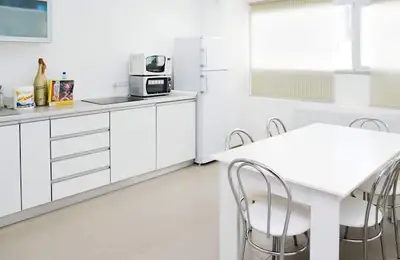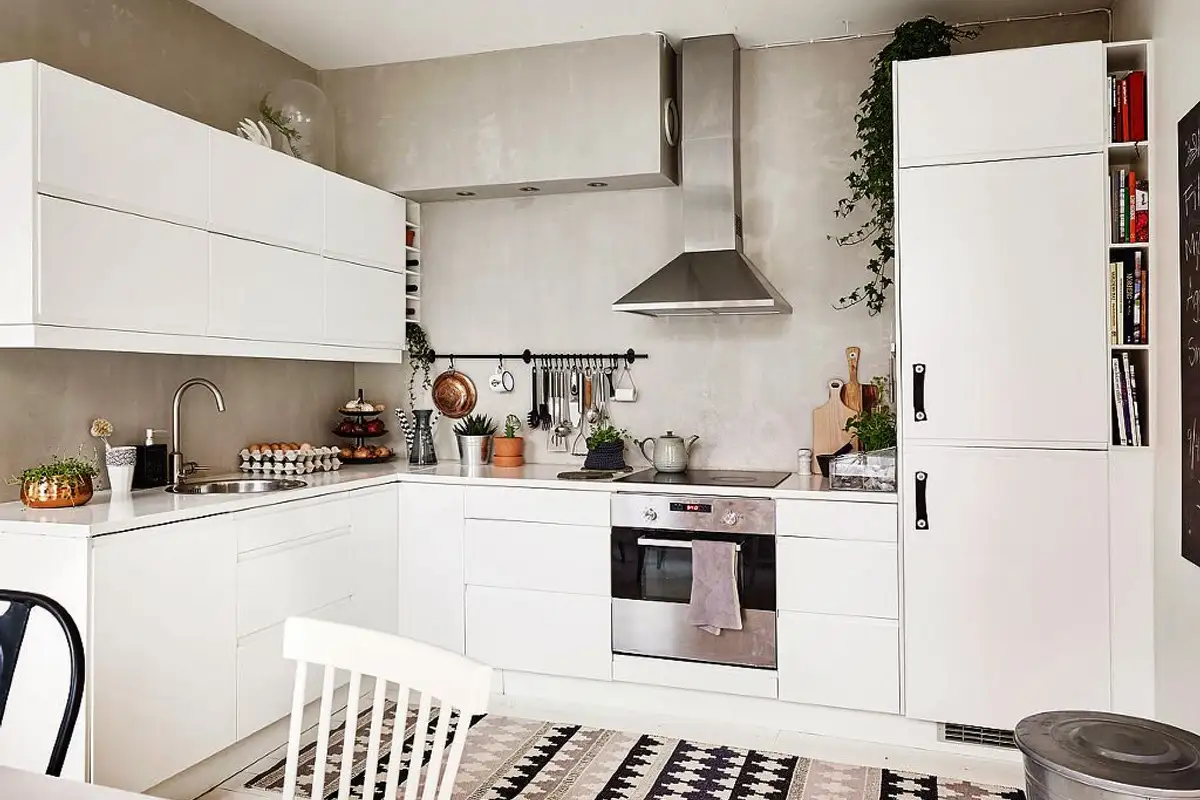
The potential of white in a design is recognized. With the power to reflect light and amplify space, any room can benefit from these advantages. The kitchen is no exception.
Recent designs show that white kitchens are gaining ground in the preferences of both designers and clients alike. Whether we're talking about all-white furniture or the walls of the room, white allows us to play with other colors and integrate them in various forms into the design.
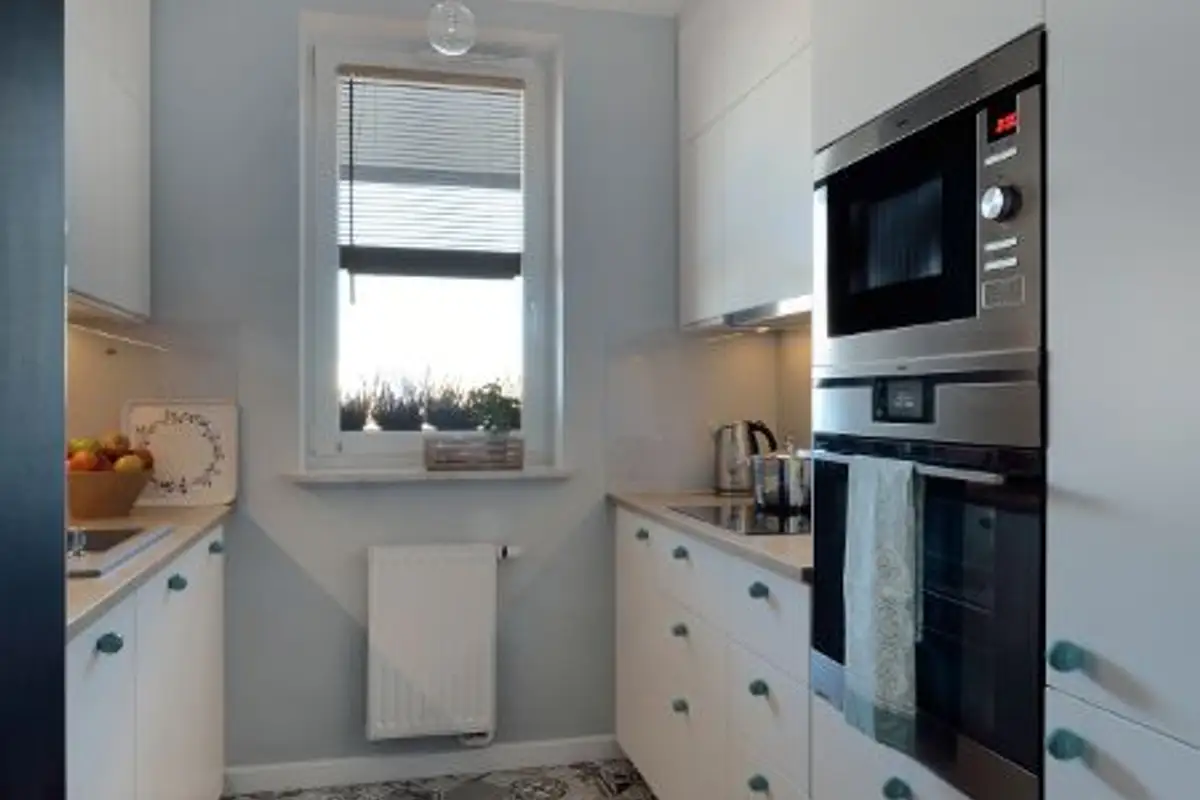
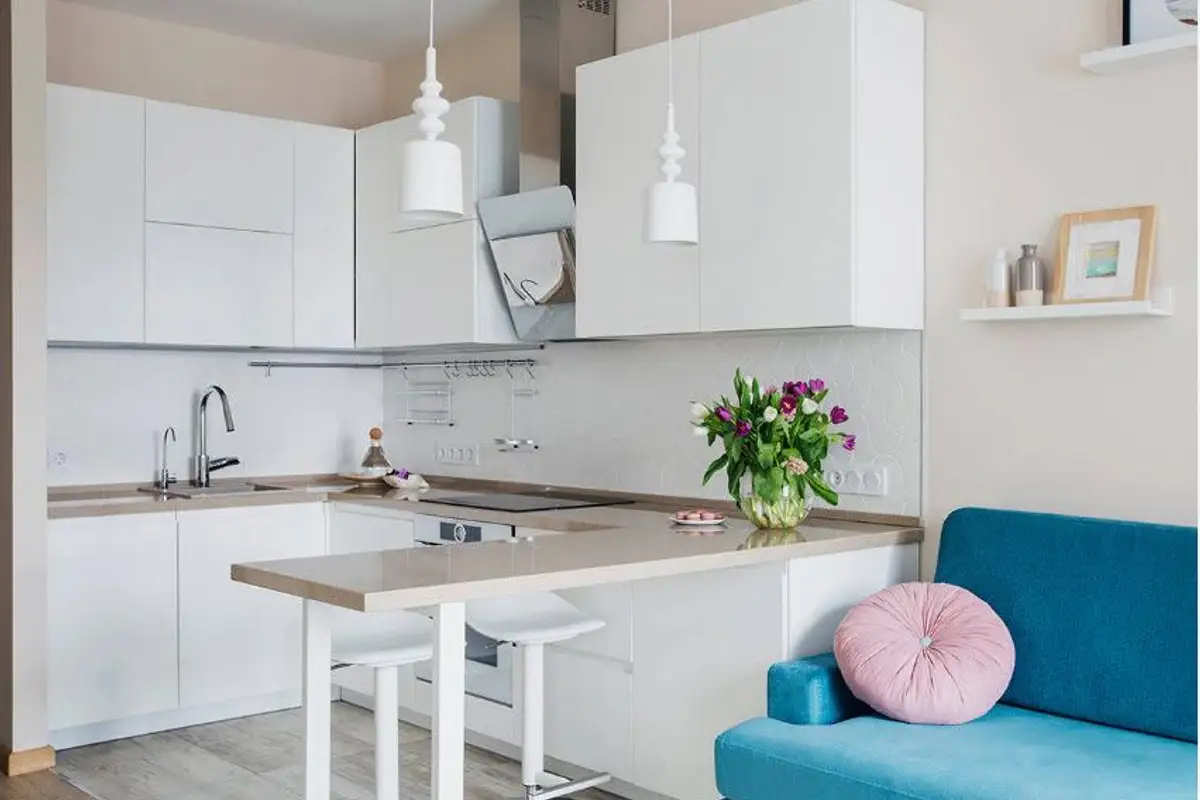
In small kitchens, white supports the arrangement, removing that feeling of claustrophobia and overcrowding.
Too much white doesn't harm like other colors. Too much red, green, or blue will certainly create grotesque decors, but the more white is used, the more it enhances a space.
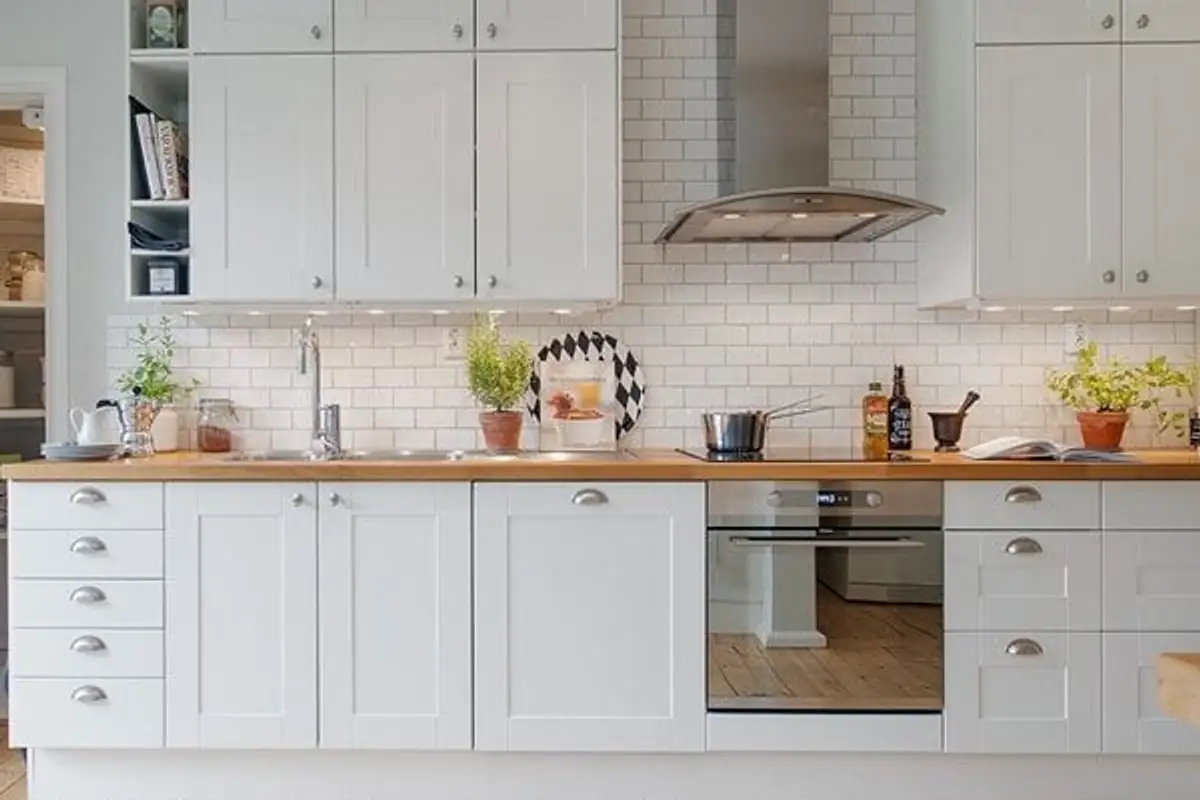
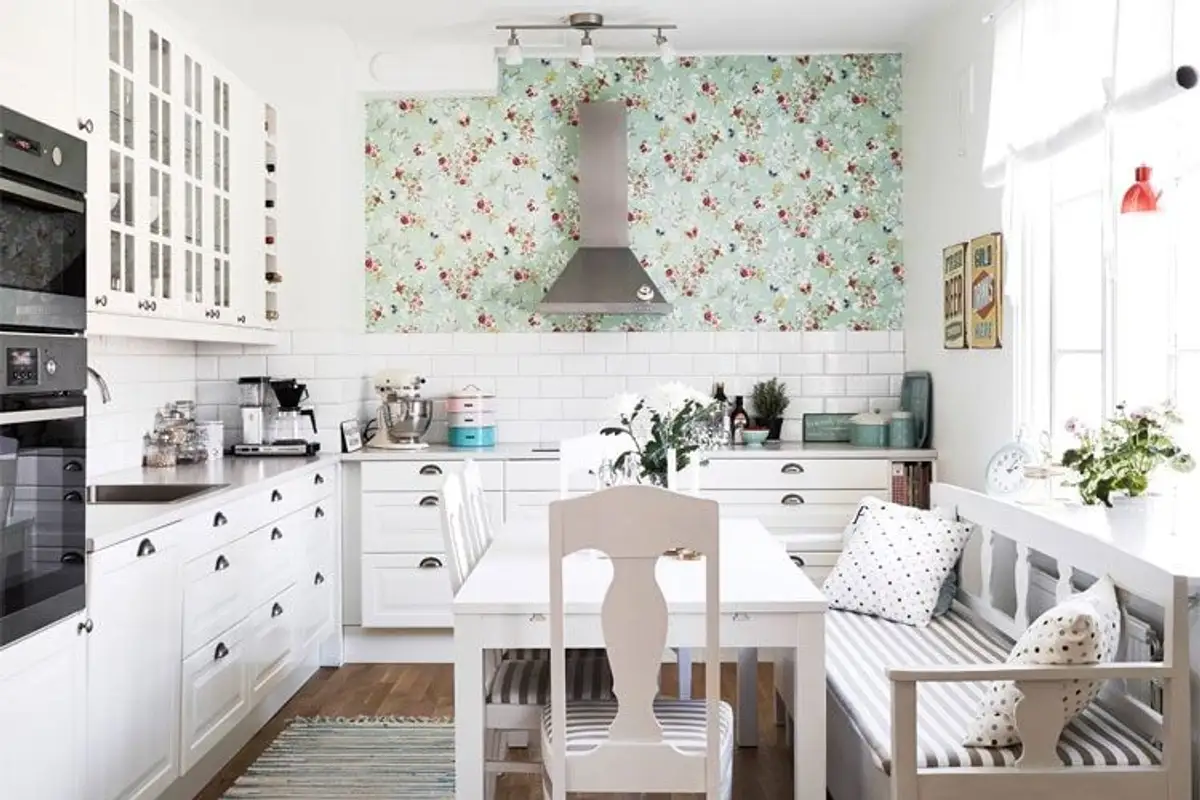
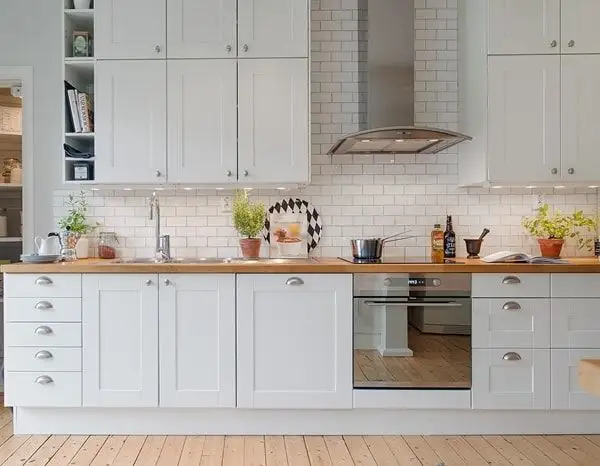
Back to kitchens. White creates a pleasant contrast with wood. So, a wooden floor or laminate parquet or even ceramic tiles that mimic the look of wood will guarantee you a successful combination. For walls, you can choose tiling with faience or just the portion of wall between the furniture units.
Models are varied; mosaic type is in fashion or subway type (format of tiles that appeared at the beginning of the 1900s in New York subway stations). Subway-type faience can be all white, but arranged in different ways (interlaced horizontally, vertically, diagonally, or fir tree pattern).
A worktop made of composite granite or quartz with gray or black accents will break the monotony of a decor that is too white and will bring an extra touch of interest to the arrangement. From the classic black and white contrast, colors can be gradually added through accessories such as curtains, rugs, tablecloths, or cooking utensils.
The amount of color depends on each individual and can vary from discreet tones to strong chromatic accents.