50 Small Kitchen Makeovers: Inspiration and Useful Tips for Designing Them
We all want a perfect kitchen. Very few dream of a small kitchen, but small kitchens are a reality for many people, especially in the case of kitchens in apartment blocks.
We all want a perfect kitchen. Very few people dream of a small kitchen, but small kitchens are a reality for many, especially in the case of kitchens in apartment blocks.
Open Gallery A successful layout must take into account the role of the kitchen for us and our family. How do we relate to this space? Do we spend more time here in the morning or evening? Or only on weekends? Do we have a separate place to eat or is it integrated into the kitchen?
Article summary:
General tips
Ergonomics, the work triangle and how to furnish according to the shape of the space
Small kitchen: closed or integrated into an open-space?
Suitable furnishing styles for small kitchens
Materials, finishes, colors
Furniture for a small kitchen
Efficient solutions for organization and storage
Appliances
Natural and artificial light in a small kitchen
Conclusions
Resources
General tips
The idea of furnishing a small kitchen must also be functional, practical and carefully planned.
When furnishing a small block kitchen, opt for made-to-order furniture and up to the ceiling to make the most of every square centimeter you have.
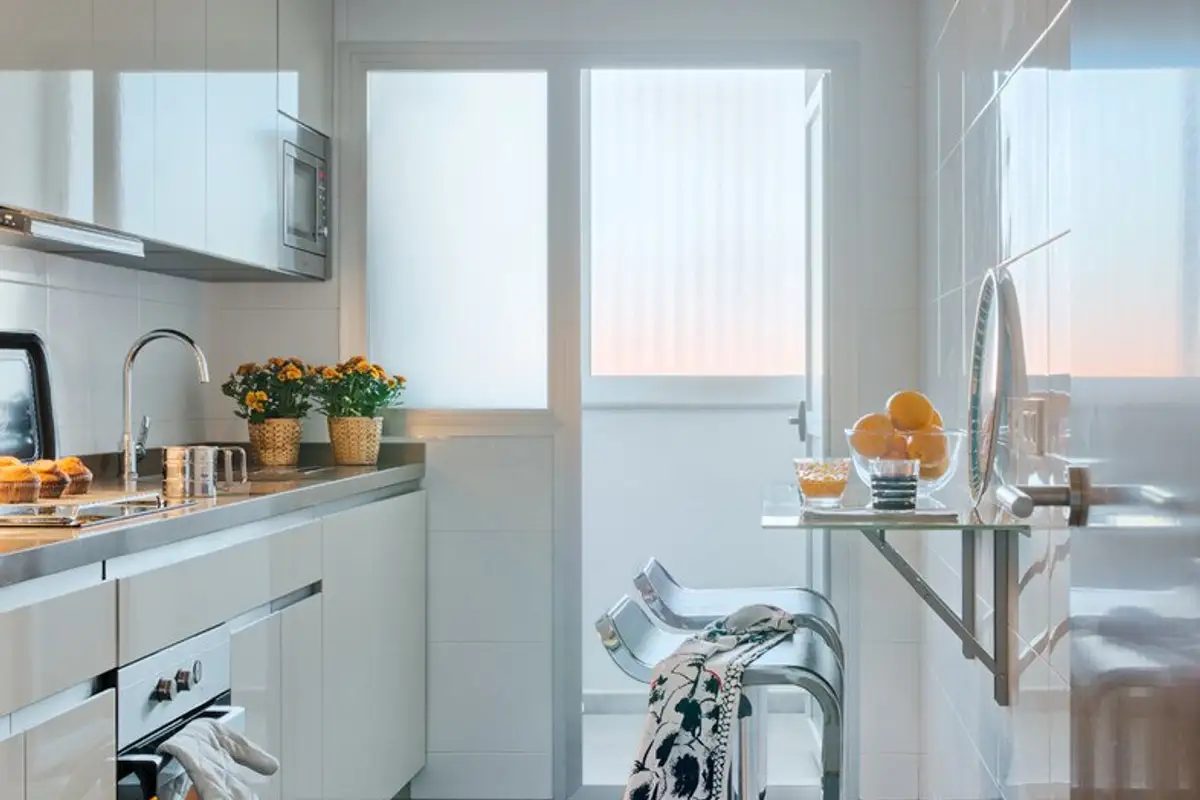
Don't hesitate to implement nonconformist ideas – an extendable wall table or setting up a bar/table at the windowsill, an island that doubles as a worktop and dining area. Choose built-in appliances to save space and create a sense of order and airiness.3
For the furnishing of a small kitchen, every designer emphasizes the importance of a very well-defined sketch/concept before any investment in furniture, installations, appliances and other equipment. When the space is small, every centimeter both horizontally and vertically is extremely valuable and must be exploited to the maximum!
Organization is another important factor in the case of small spaces in general and small kitchens in particular, considering that the kitchen is the place where many objects of different sizes accumulate over time.
Ergonomics, the work triangle and how to furnish according to the shape of the space
The kitchen work triangle is a concept frequently used in architecture and interior design; it refers to the ergonomics of the space allocated to the kitchen, the recommended relationship between cooking areas, storage areas and food preparation areas.
The ideal kitchen is one where the user can move effortlessly in the center of the work triangle without a long interruption to their activity.
Most furnishing ideas for small and narrow kitchens take advantage of the wall with the window, as it is important for the room to be bright. Instead of covering it with a storage cabinet because you feel the need to create as many such spaces, you can place the storage under the windowsill.
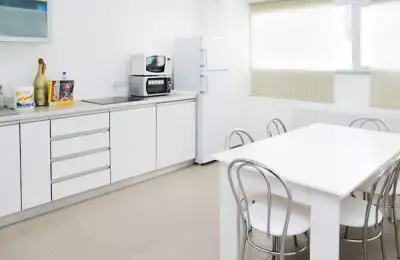
For furnishing a small kitchen, it is recommended to choose furniture on two parallel sides, linear furniture or furniture in an L-shape.
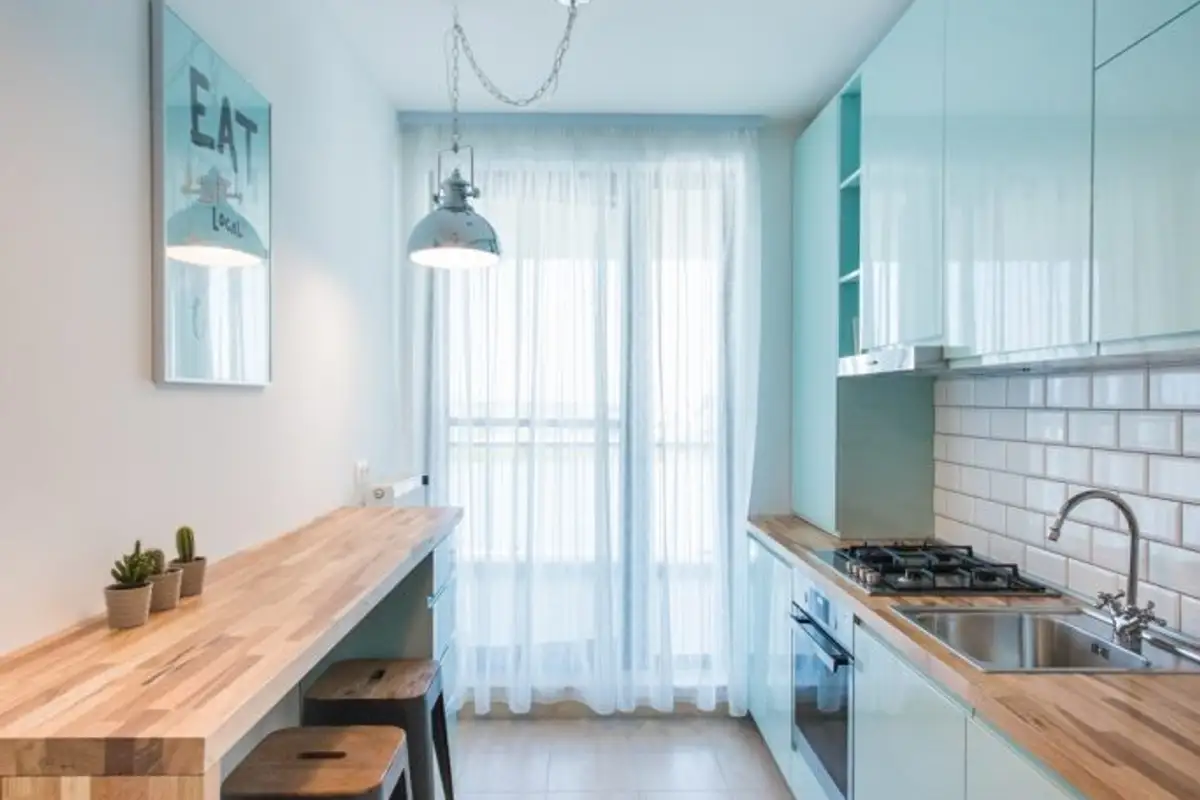
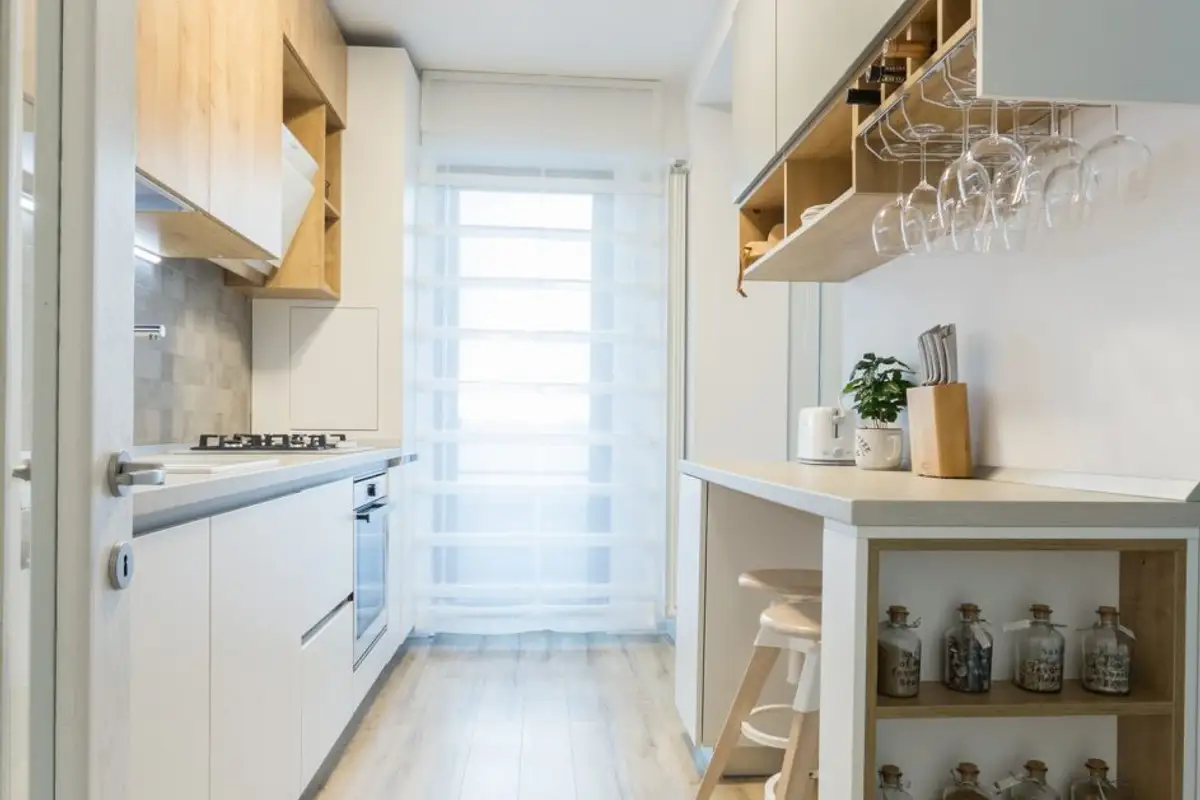
A kitchen with furniture arranged on two sides has two opposite workspaces, creating a configuration similar to a hallway. The kitchen with furniture on two sides is suitable for narrow spaces, with a width of approximately 2 - 3 meters.
In this type of kitchen, it is recommended that the placement of the oven (hot zone) be opposite the sink and refrigerator (which represent the cold zone in kitchen configuration schemes).
A kitchen with furniture on two opposite sides represents an extremely functional space, allowing for effortless movement within the work triangle. Through carefully selected furniture pieces, configuring this type of kitchen easily becomes a representation of modern and contemporary style, perfectly adapted for any home.
Designing a kitchen with furniture on two sides leads to the creation of an efficient work triangle. Most work triangles function with two elements of the triangle on one wall, the third being positioned on the opposite wall.
Vertical space can be fully utilized for mounting kitchen cabinets and open shelves, aiming to create sufficient storage space.
Small kitchens with furniture arranged on two sides offer multiple advantages: accessibility to every area of the kitchen, quick and easy cleaning of the space, ample storage space.
A linear kitchen is perhaps the simplest form of configuring this space; all kitchen components are located on a single wall. This type of kitchen is most commonly found in small apartments and studios.
To maximize the efficiency of this kitchen configuration, the sink should be placed between the cooking area and the refrigerator; it's important to check beforehand how the appliance doors open to avoid obstructing traffic flow and specific activities.
Linear kitchens feature a minimalist design, common for apartments, attics, and studios. This configuration is also easily adaptable to larger homes, as the furniture line can be extended as needed according to the available space.
Arranging all kitchen components on a single wall creates an open space while simultaneously increasing the level of visual comfort. Moreover, this type of linear kitchen represents a cost-effective option as it requires a minimum amount of materials and low installation costs.
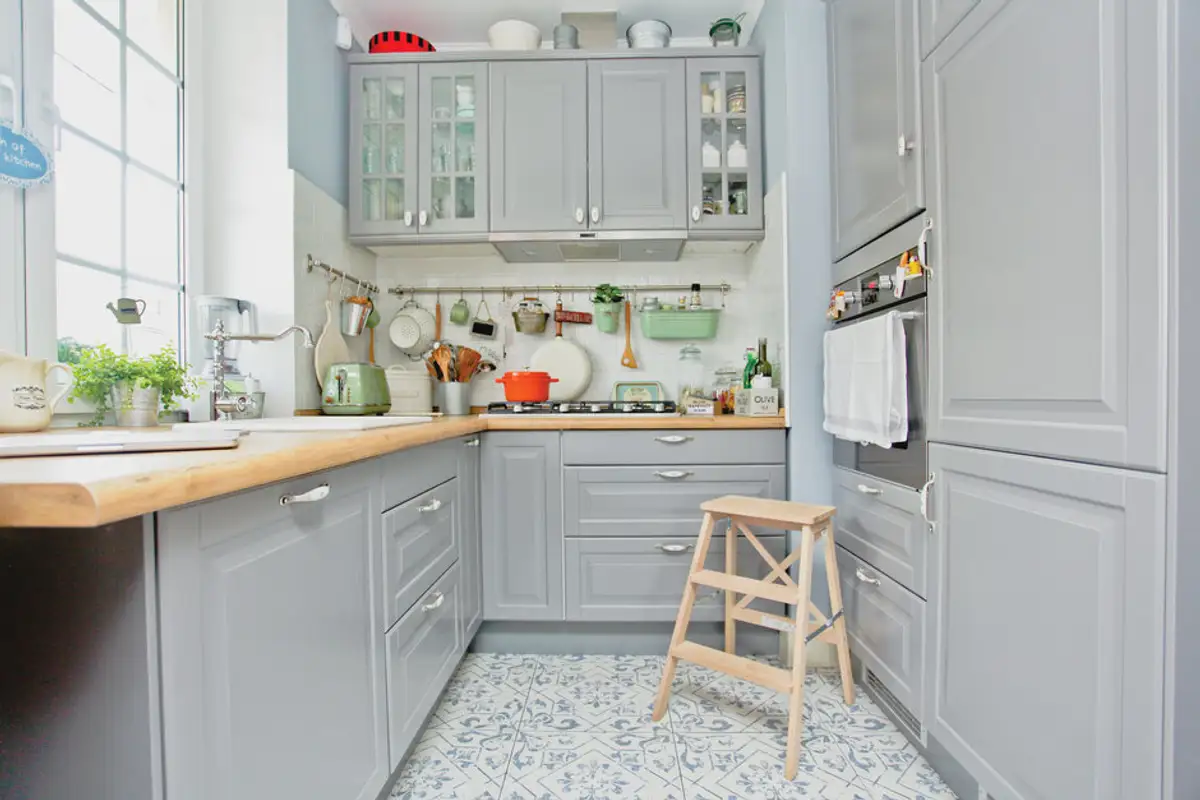
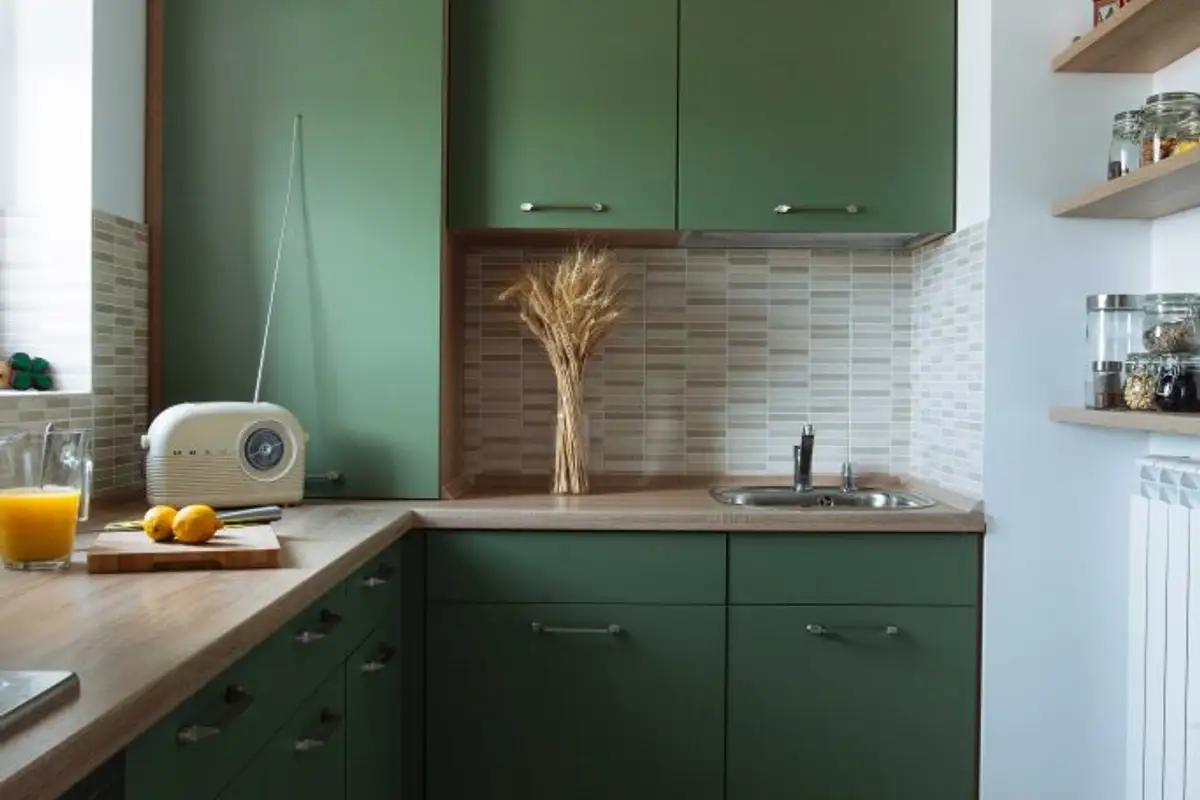
The layout of an L-shaped kitchen is rightfully one of the most popular and classic designs; it's an extremely flexible design that can be adapted to various sizes and design styles. Moreover, it's one of the most ergonomic kitchen models. This configuration facilitates the creation of a "work triangle.
With adequate distance between the oven, refrigerator, and sink, this L-shaped arrangement will transform cooking into a pleasure.
Small Kitchen: Closed or Integrated into an Open Space?
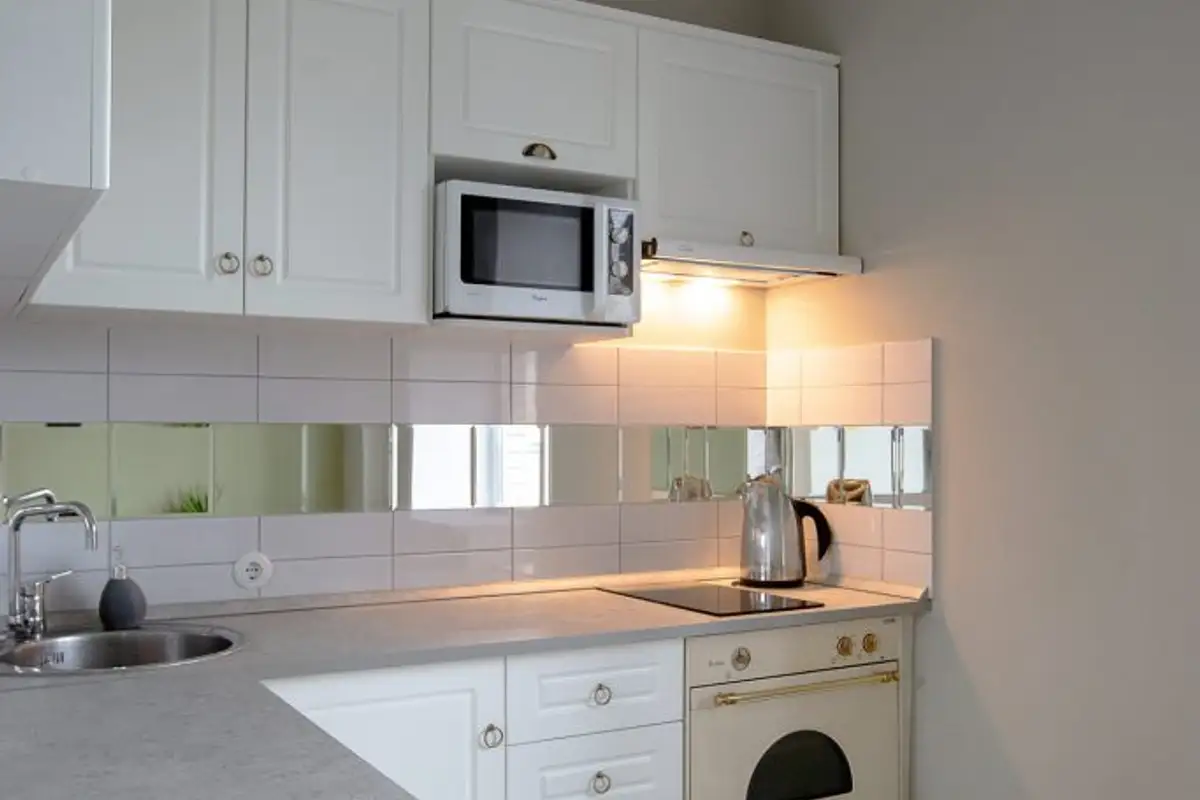
To create a sense of spaciousness, you can opt to transform a closed kitchen into an open space. If the architecture doesn't allow for this, consider installing mirrors or semi-opaque panels with reflective properties to give the impression of a larger space.
There have been and likely will continue to be countless discussions, opinions, and viewpoints regarding this delicate subject, with arguments both for and against each of the two variants.
As a general rule, kitchens where cooking is frequent and extensive are recommended to be closed (even with glass walls) and as airtight as possible towards adjacent rooms to prevent the migration of odors and excessive humidity, even if the kitchen is naturally or mechanically ventilated.
Designing an open-space kitchen presents many advantages for people for whom culinary art is not a hobby, but also for those who cook with passion and wish to organize themselves in a larger space than the kitchen area itself.
An open-space kitchen offers the possibility for those who want to try different recipes to organize themselves much better, presenting multiple advantages.
Having more space to use and the possibility of better ventilation will give you the opportunity to prepare any dish you desire without worrying about the necessary ventilation afterwards.
A closed kitchen is ideal for people who like to experiment with as many culinary recipes as possible and want a special place to do so.
Separation from the rest of the house allows for the creation of a multitude of recipes, regardless of the food prepared, while also protecting the home environment from the activity carried out in the kitchen, simultaneously creating that sense of intimacy, separation from the rest of the activities in the dwelling.
Styles
The furniture that decorates a classic kitchen has the primary role of delighting the eye, with practicality coming second. Light-colored wood, ceramic lighting fixtures and flooring made of natural materials, such as marble or wood, complete the picture.
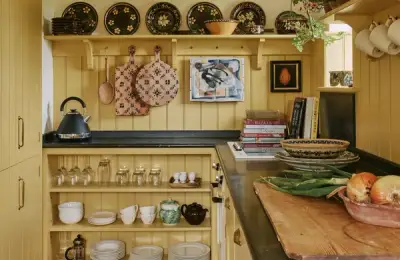
Whether you choose to go for Romanian tradition or draw inspiration from the Bavarian style, wooden beams on the ceiling should not be missing in the case of a rustic style. A countertop made of the same material will match very well with retro appliances but with as modern functions as possible.
The size of the kitchen should not represent an impediment when it comes to expressing personality. Decorative elements that are as suitable as possible for each individual home can help you achieve a truly satisfactory result.
Materials, Finishes, Colors
We can still consider a neutral color palette which, together with stainless steel appliances and chrome finishes, outlines a kitchen of high refinement that will increase the value and aesthetic result of the entire home.
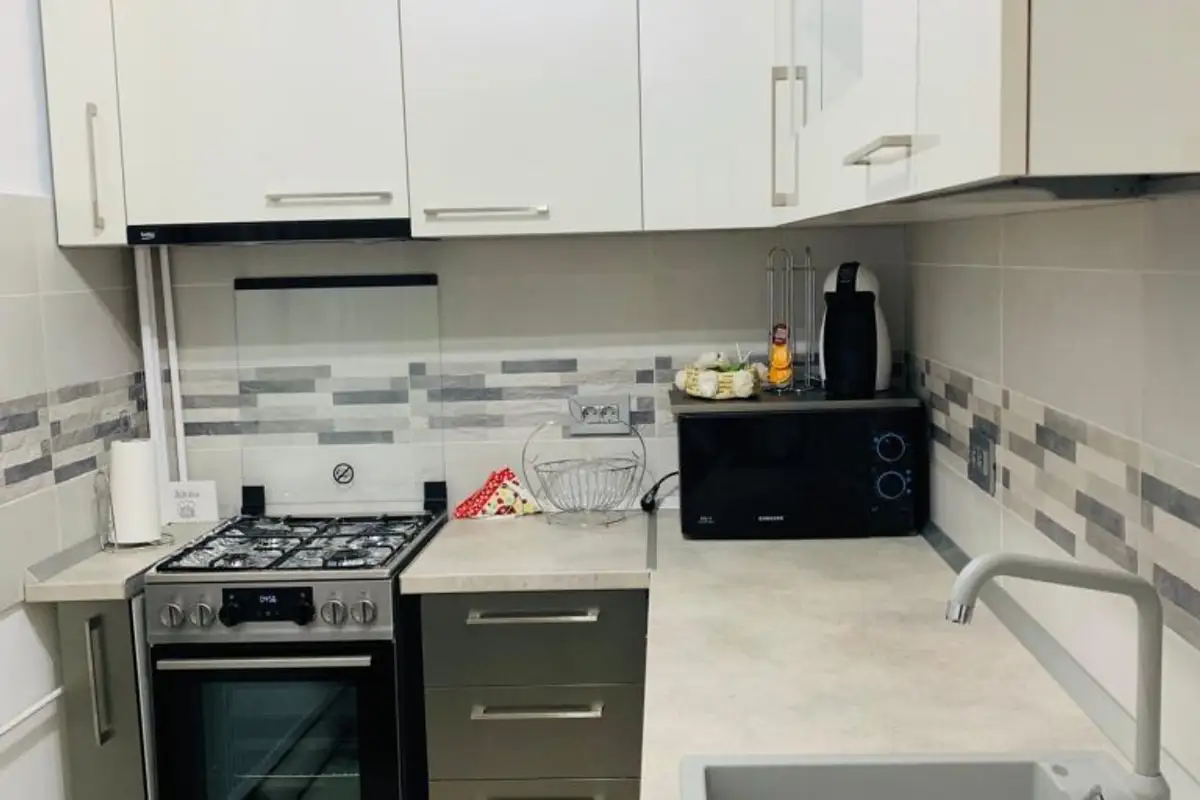
In the design of small and very small kitchens, warm colors and light shades are recommended, which can create the illusion of a larger space and thus one that offers freedom of movement. Those at Piatra Online recommend a Latte Classic polished travertine countertop if you are guided by Mediterranean design, or one made of white Volakas marble.
The use of different shades of white is recommended, as well as the addition of different textures through materials or wallpaper, with the aim of intensifying and diversifying the chromatic potential of the kitchen.
Painting the walls in neutral, light shades is ideal for a small kitchen. Colors such as brown, beige and ivory will create a sense of open, airy space. An overall monochromatic look helps unify all the elements in the kitchen.
Whether it's a brand new kitchen or the renovation of an existing one, glass is a key material for furnishing a small space; both transparent glass used for the doors of wall cabinets and colored glass used as a splashback between the worktop and hanging furniture.
If you opt for floor-to-ceiling cabinets, they should only be equipped with display cases with glass doors. This will open up the space in a way that opaque doors will not be able to do in a small room.
Ceramics is not the only element that can reflect light in a small kitchen. If you choose glossy fronts, you can achieve the same effect. Glossy MDF fronts, painted or foiled, manage to reflect light and create the illusion of a larger space.
While it has been emphasized so far that it is ideal to use light-colored finishes in a small and narrow kitchen, there are countless examples that show that this can be done differently, using the depth advantages of dark colors and shades.
Using a black glass anti-glare surface, for example, the surface will reflect the space while its dark hue will give it depth. Combining with all-black fronts, the entire wall with kitchen furniture appears to be visually removed, visually enlarging the space.9 lovedeco
The worktop is the central piece of the kitchen. On the one hand, a work front, on the other hand, a decorative piece that gives solidity to the whole assembly, the worktop must be resistant to shocks and scratches.
A granite countertop will be a mandatory option in the case of an elegant interior, and its execution is very meticulous. The support pillars must be very strong, and the flatness of the plate and the cutouts made in it must be very precise. Finally, the edges of the countertop will be finished with an angle grinder with an abrasive disc.
If you have chosen to decorate your kitchen in a rustic style, an oak countertop is a requirement. Well-finished and varnished oak wood in several layers can be used entirely. This solution will give you very good wear resistance, as well as very good tolerance to the high temperature of containers just taken off the stovetop burner.
A modern apartment, decorated in an eclectic style, is not complete without a properly equipped kitchen. A marble countertop is a very durable one, but demanding due to its vulnerability to liquids and staining substances. Its pores must be sealed with a special lacquer, which extends the life of the marble.12
Among the ideas for small kitchen layouts is the use of narrow tiles for the floor. Sizes such as 15 x 30 cm, 61 x 30.5 cm, 45.7 x 30.5 cm are recommended, as they create the impression of a larger, more open space.
From the same category of tricks that will make the space appear larger is the chromatic game. In this sense, it is not advisable to cover the walls entirely with a single type of natural stone. An even bigger mistake would be for the flooring to be the same color as the walls.
Opt instead for mosaics or small stone tiles, with which you can create borders or geometric patterns, but without exaggeration.
There is a risk that too many spots of color or too many lines will close the space and, more than that, "suffocate" it. Chromatic contrast is recommended, but attention: the use of a maximum of three colors in combinations of natural stone is recommended. 13
Small kitchen furniture
In a small modern kitchen that does not have enough space for an island or a bar table, you can opt for an extendable wall table, which transforms into a useful cupboard immediately after you finish eating.
The concept of modernism in the kitchen is built on the practicality of a piece of furniture and the way it maintains the coherence of the decor. Each element must be chosen according to the available surface, always keeping in mind the importance of open space.14
You might think that a wall used for a table or breakfast nook is wasted storage space, but that's not how we should look at it. You can frame the breakfast nook with tall shelves or cabinets and use them to store items such as fine china or tableware, precious decorative accessories.
When space has a higher value, it can be difficult to maximize the functional aspects of a kitchen. The solution: keep an island on wheels that you can move according to your needs. Having an island on wheels is a small change you can make in your kitchen that will make a world of difference to how you function in your space.15
Efficient organization and storage solutions
Even if spacious kitchens are easier to furnish according to one's liking, this doesn't mean that owners of small kitchens cannot enjoy equally modern and ingeniously organized spaces.
In fact, the keyword in the case of small kitchen arrangements is organization: it is essential for every element to have a clearly defined role, the chosen colors to create the illusion of a more spacious space, and the arrangement of furniture pieces to ease our tasks, not complicate them.17
Simple solutions for lasting effects are within everyone's reach. Save space in cupboards and drawers by carefully organizing the products you have. You can hang spice packets on the cupboard door or inside to avoid chaos every time you use them. Keep in mind that these solutions will help you save time when cooking.
Once your space and mind are organized, it will be much easier for you to find everything you need in a timely manner.18
For coffee, tea, or other foods in larger quantities, opt for jars of different sizes, which you can place on shelves or in cupboards. You can install some shelves or supports even on a wall near the kitchen to avoid cluttering the walls.
There are also countertop supports that can help you keep several kitchen accessories in one place and always at hand. Functional furniture will help you orient yourself easily when cooking or working in the kitchen. Install drawers placed strategically to be within reach at every main point in the kitchen.
An extendable table will help you save space, using it only when needed – especially if the dining area is also in the kitchen.19
Sort your dishes and cooking utensils so that you are left with only those strictly necessary and used most frequently. The most important rule when you have a small kitchen is to keep things tidy, including in the drawers.
Use storage solutions even in the most impossible places or corners of the kitchen furniture. Every centimeter counts when organizing space in a small kitchen.
The most efficient storage solutions are vertical ones, so you can transform an edge of a cupboard or even a piece from the center into a vertical drawer where to store spice containers, dishes, utensils, etc.
L-shaped furniture will help you save space and not overload the walls too much. Keep the kitchen countertop as free as possible and don't cram too many containers or decorations. If you keep the space airy and organized, you will notice that you are not so aware of the small size of the space.20
If you want to set up a dining area in a small kitchen, the solution is a bench with storage. For chairs that need to be pulled out from under the table to sit comfortably, you should have enough room to maneuver, about 50-60 centimeters available, while a fixed bench helps you use efficiently even a small space.
In addition, the storage box can be used for dishes and utensils.
Another option is an extendable wall table and folding chairs: you use them only when needed, and the rest of the time you fold them and enjoy the free space. 21
Appliances
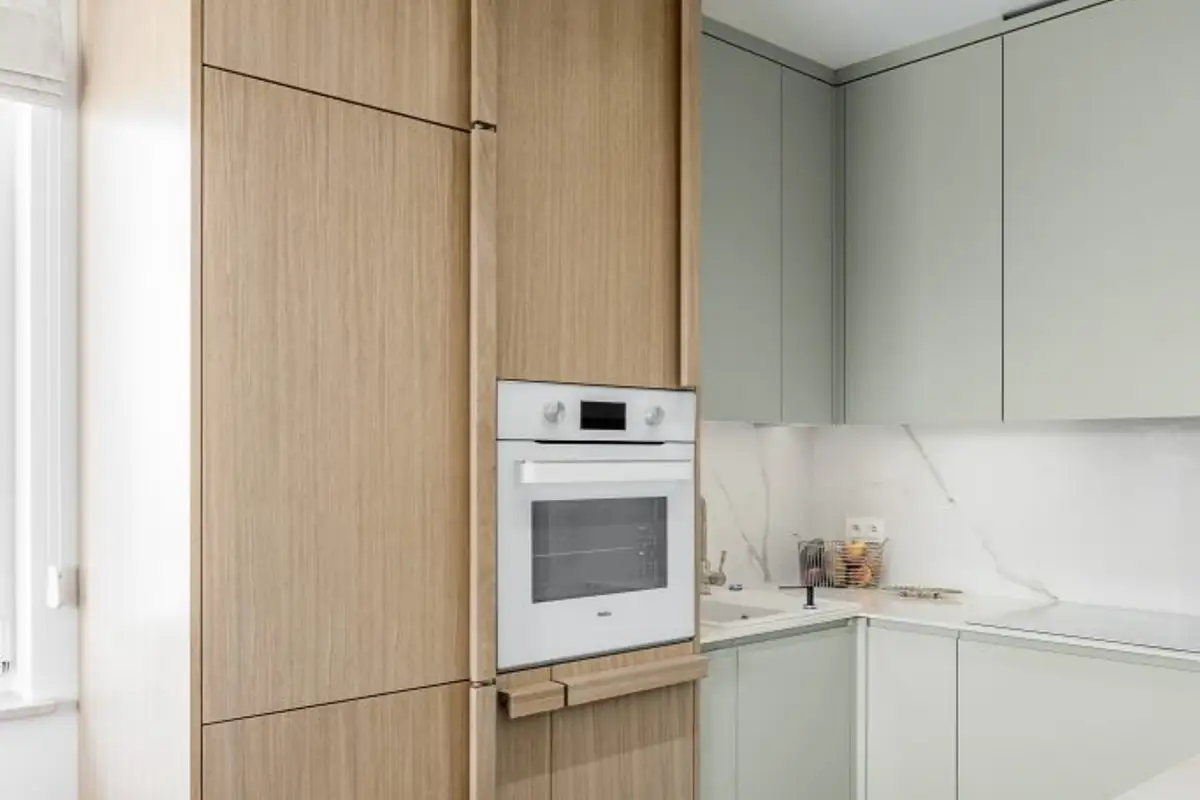
The stove can also be replaced with a hob and an oven that can be mounted separately, depending on the design of the furniture. Thus, under the built-in hob in the worktop, you can design a cupboard with drawers, and the oven can be integrated into one of the cupboards22.
Wood tones and grays look great in combination with the black finish of appliances. A kitchen with black appliances and wooden furniture tends towards the traditional and has a welcoming feel, while one whose furniture has light gray shades will seem more modern and even bright, despite the black-gray combination.
The most used object in a kitchen? We don't need a stove to prepare a salad, for example, and we probably bake cakes less often, but it would be impossible to cook even the simplest food without using the sink at least once, and implicitly, the faucet. In fact, statistics say that the kitchen faucet is used an average of up to 90 times in a single day.
An intuitive design is, in light of this detail, absolutely mandatory.
The modern character of a kitchen is also given by the efficiency of the sink and kitchen faucet chosen. The bowl must be spacious enough but proportional to the size of the room, the material it is made of must be resistant, durable and easy to clean, and the kitchen faucet must have the latest technologies to make cooking a real pleasure.
Ergonomics matters a great deal in a functional kitchen and technological innovations offer maximum efficiency in an attractive design, so you need to take advantage of all their advantages.
The current generation of kitchen sinks generally relies on four types of materials: stainless steel, composite, ceramic and glass. Each of these has certain advantages that recommend it for your kitchen, but the most modern and which benefits from revolutionary technology is composite.
Natural and artificial light in a small kitchen
If you don't have a large enough window to provide natural light, you need to take care of this aspect as well, because dark kitchens appear even smaller than they actually are.
Use artificial light intelligently. In this sense, pendant lights are ideal for numerous models of small kitchens, furnished in a modern, Scandinavian style. Also, another idea would be to add lamps on shelves or LEDs in the work area.
The results of proper lighting are best seen precisely in small kitchens, where appliances are usually mounted close together due to lack of space, and any change, no matter how small, in the level of brightness can create unwanted shadows and reflections.
The most successful kitchens are those that manage to combine the unique character of natural light with the utility of artificial lighting. The aim is to achieve a balance.
Correct lighting is vital for creating the sensation of a more spacious kitchen and fooling the eye. The stronger the luminous flux, the larger the space will be perceived. Natural light is preferred, so if you have the opportunity to put in skylights or glass doors, this will make your kitchen feel instantly bigger.
Alternatively, add lights under wall cabinets or at the base of floor units. Make sure you don't use a shade that reduces the amount of light. Spotlights are ideal for maximum light.
Optimal lighting in a small kitchen combines multiple types of lighting in a stratified approach. This facilitates the complete distribution of light in the space, resulting in a pleasant atmosphere that allows personalization of the lighting level of certain areas, depending on needs.
There are three types of lighting: general lighting – ceiling-mounted fixtures that provide diffuse brightness throughout the space (lighting fixtures: ceiling lamps); task lighting – fixtures mounted above work areas, intended to ensure an adequate amount of light (lighting fixtures: pendant lights, table or floor lamps directed towards the work area); accent lighting – fixtures mounted on the underside of shelves, or within other decorative elements, intended to highlight impressive details (lighting fixtures: spotlights).
Illuminating a two-sided kitchen: while this type of configuration defines efficient space use, there's a risk of feeling cramped, especially when the lighting isn't sufficient. However, the right mix of general lighting, task lighting, and accent lighting will open up the visual space and create a pleasant and comfortable atmosphere.
It is recommended to use ceiling lights along the entire length of the kitchen to create an adequate level of general lighting, dispersed throughout the room.
Proper kitchen surface illumination is essential and can be achieved through pendant lights mounted under the upper cabinets. This will ensure your countertops, sink, and oven benefit from a special radiance.
Accent lighting will amplify the aesthetics of a kitchen with two-sided furniture. By using a light cone in the upper part of the cabinets, the ceiling will appear higher and a unique visual interest element will be added. Accent lighting will highlight the attractive features of the kitchen to minimize the feeling of narrow space.
Illuminating a linear kitchen: for general lighting, pendant lights and spotlights are a suitable choice. Considering the configuration of this type of kitchen, it is recommended to install lighting fixtures with reflectors, whose light spreads along the entire kitchen. This type of lighting can be adjusted towards the countertop and other work areas in the kitchen.
An L-shaped kitchen benefits from a greater amount of natural light compared to a kitchen with furniture on two sides.
Furthermore, the corner of this type of kitchen tends to be in shadow, so it needs to be highlighted with a lighting fixture (spotlights, track lighting, etc.). Recessed lights, chandeliers, and pendant lights successfully fulfill the function of general illumination.
The kitchen has become more than just the space where food is prepared or family meals are shared. Perhaps we no longer live in a time when so much cooking is done at home, which changes its perceived role. Therefore, the elements integrated into the décor must respond to current needs.
3 This comprehensive guide provides essential ideas and tips for creating your dream kitchen. From layout planning to choosing the perfect appliances, we'll walk you through every step of the process. Discover inspiring design trends, learn about functional storage solutions, and get expert advice on selecting durable and stylish materials. Whether you're renovating an existing space or starting from scratch, this guide will empower you to create a kitchen that is both beautiful and practical.
Please provide the Romanian text you would like me to translate.Decorating a small kitchen can be challenging, but with careful planning and smart design choices, you can create a functional and stylish space. Here are some tips to help you maximize your small kitchen's potential:
**Embrace Light Colors:** Opt for light and airy colors for walls, cabinets, and countertops. This will make the space feel larger and more open. White, cream, pale blue, and soft green are all excellent choices.
**Maximize Vertical Space:** Install tall cabinets that reach the ceiling to take advantage of every inch of vertical space. Open shelving can also be a great way to add storage while keeping the kitchen feeling light and airy.
**Choose Compact Appliances:** Consider investing in smaller appliances like a compact refrigerator, dishwasher, or oven. This will free up valuable counter and floor space.
**Multifunctional Furniture:** Opt for furniture pieces that serve multiple purposes, such as a kitchen island with built-in storage or a dining table that can double as a workspace.
**Mirrors and Reflective Surfaces:** Strategically placed mirrors can create the illusion of more space by reflecting light and making the room appear larger. Consider using mirrored backsplashes or hanging a large mirror on one wall.
**Declutter Regularly:** Keep countertops and surfaces clear of clutter to maximize the feeling of spaciousness. Invest in storage solutions like baskets, drawers, and organizers to keep everything tidy.
**Let There Be Light:** Ensure your kitchen has ample natural light. If possible, install larger windows or a skylight. Supplement with artificial lighting, such as pendant lights over the island or under-cabinet lighting, to brighten up dark corners.
Remember, even the smallest kitchen can be transformed into a functional and stylish space with a little creativity and planning.
21,23 Designing a small kitchen in a block of flats can be a real challenge, but with a bit of creativity and smart planning, you can transform it into a functional and stylish space. Here are some tips to help you maximize your small kitchen:
**Choose light colors:** Light colors reflect more light, making the space feel larger and airier. Opt for white, cream, pastel shades, or even light wood tones for cabinets and walls.
**Maximize vertical space:** Install tall cabinets that reach the ceiling to take advantage of every inch of storage. Open shelving can also be a great way to display your favorite dishes and add visual interest.
**Multifunctional furniture:** Consider using a kitchen island with built-in storage or a table that can double as a workspace.
**Smart storage solutions:** Utilize drawer dividers, pull-out shelves, and corner organizers to keep everything tidy and easily accessible.
**Mirrors:** Strategically placed mirrors can create the illusion of more space by reflecting light and making the room appear larger.
**Minimalist decor:** Avoid cluttering the countertop with too many appliances or decorative items. Keep it clean and simple for a more spacious feel.
**Lighting:** Good lighting is essential in any kitchen, but especially in small spaces. Use a combination of overhead lighting, task lighting under cabinets, and accent lighting to brighten up the room.
Remember, even the smallest kitchen can be transformed into a functional and stylish space with careful planning and smart design choices.
2.28 Small kitchens are a common challenge for many homeowners, especially in urban areas where space is limited. But don't despair! With clever design and smart solutions, you can create a functional and stylish kitchen, even in the smallest of spaces.
Here are some tips to maximize your small kitchen:
* **Embrace vertical space:** Install tall cabinets that reach the ceiling to maximize storage. Consider open shelving for frequently used items and decorative touches. * **Choose light colors:** Light colors reflect more light, making the space feel larger and airier. Opt for white, cream, or pastel shades for your walls, cabinets, and countertops.
* **Multifunctional furniture:** Invest in pieces that serve multiple purposes, such as a kitchen island with built-in storage or a dining table that can double as a workspace. * **Smart appliances:** Choose compact appliances designed for small spaces, such as slimline dishwashers and under-counter refrigerators.
Remember, even the smallest kitchen can be transformed into a functional and beautiful space with careful planning and creative solutions.
A 50 sq m apartment and how its design can inspire you.see more
Scandinavian style interior design Elegance and comfort in just 23 sqm see the layout here
Charming 38 sq m studio decorated in vibrant colors. See the layout.here
Functionality and elegance in shades of grey are seen throughout the entire design.here
Modern design in shades of gray and purple see the entire design here
The memory of a seaside vacation is reflected in the entire design.here
Elegant transformation of a 40 sqm studio into a 45 sqm apartment - see the layout.here
Modern 56 sq meter apartment for a family of 5.View the layout
Turquoise accents in the design of an 8 sq m kitchen in Bucharest see more
Bright and colorful layout for a 3-bedroom apartment View the layout
Classic style interior design for a 2-room apartment of 36 sqm.see more
Trendy design for a 37 square meter studio in Bucharest View the layout
Scandinavian space with feminine accents for a 2-room, 38 sq m apartment.see more
I am an interior architect. I love shaping new spaces and admiring existing ones. Passions: writing (everything starts with a pen and plenty of ink), arranging photos in albums, and discovering places full of stories.