Even if it's freezing outside, spring can arrive indoors. To grow the seedlings needed for next year's vegetable garden, we need a lot of patience and special attention.
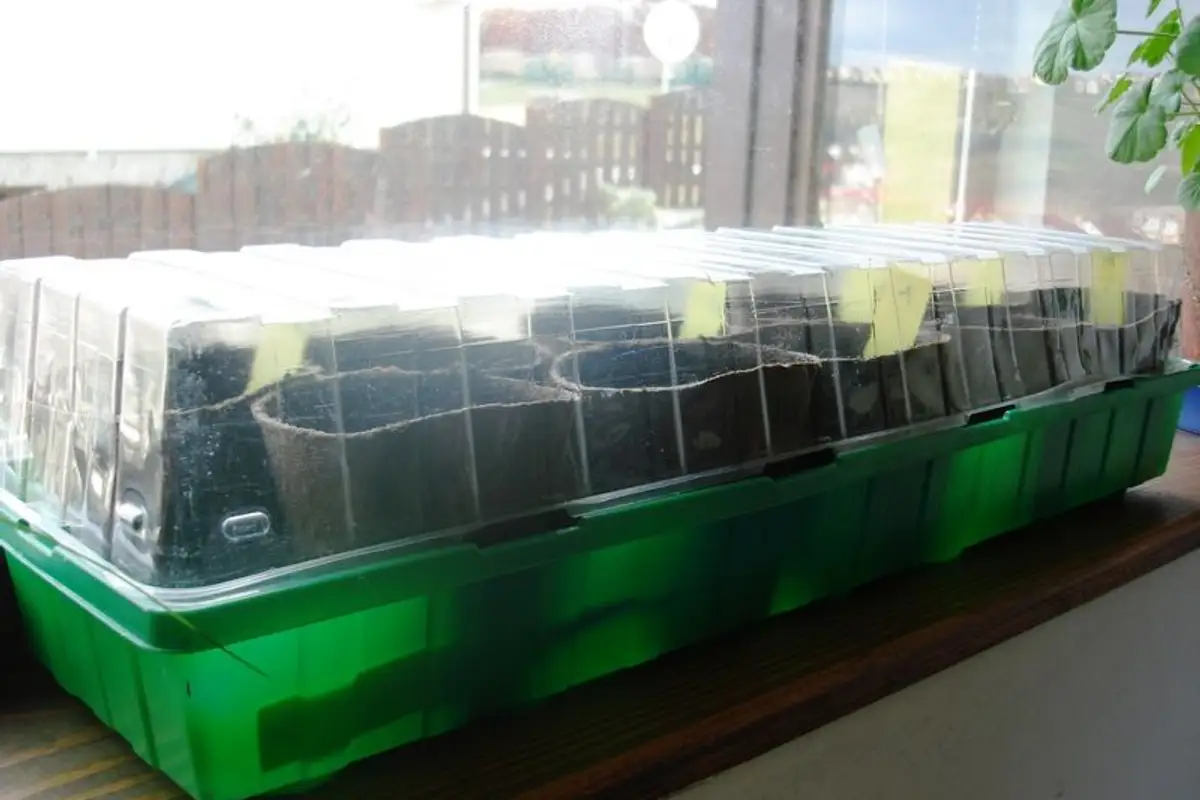
Heat-loving varieties feel good in small improvised greenhouses on the windowsill, where they are protected from the wind and bathed in sunlight. On the windowsill, we can cultivate various types of vegetables: tomatoes, zucchini, peppers, cucumbers, basil.
First, you need to prepare the container for sowing. It is important to choose the right container: pots, clay pots or any kitchenware that you no longer use. The only conditions are to be able to fill it with at least 2.5 cm of soil and to have holes underneath to ensure drainage of excess water.
If we want to sow large-sized seeds (such as cucumbers or zucchini), we can also use peat pots and trays. In these, we can cultivate several seedlings separately, but still apart from each other. Since only one or two seeds are sown in each indentation, the seedlings have enough room for development from the beginning.
These containers can also be replaced with egg cartons: the paper absorbs water well, thus solving the drainage problem as well. Regardless of the type of container, we need to ensure drainage for excess water. We can plug the hole at the base with a shard from a broken clay pot. This way, the hole will not clog and the excess water will drain directly out.
A layer of sand is spread over the shard at the bottom of the container. In shallow containers, this drainage layer should not be thicker than 0.5 cm, but in taller containers it can even be 2 cm. To prevent the seedling from drying out until the seeds germinate, we will cover the containers with glass or foil. When the first leaves appear, we need to uncover the container.
The quality of the soil plays an important role in the growth and faster development of the vegetable. The potting mix found in specialty stores is not the most suitable, so it's best to prepare the necessary soil ourselves. To do this, we mix two-thirds compost with one-third clean sand, to which a little leaf mold is added.
We fill the container with this mixture, leaving a space of at least 1 cm at the top unoccupied by the soil mixture, which serves to retain water during watering. Next, we carefully tamp down the soil and finally water it with a fine sprinkler.