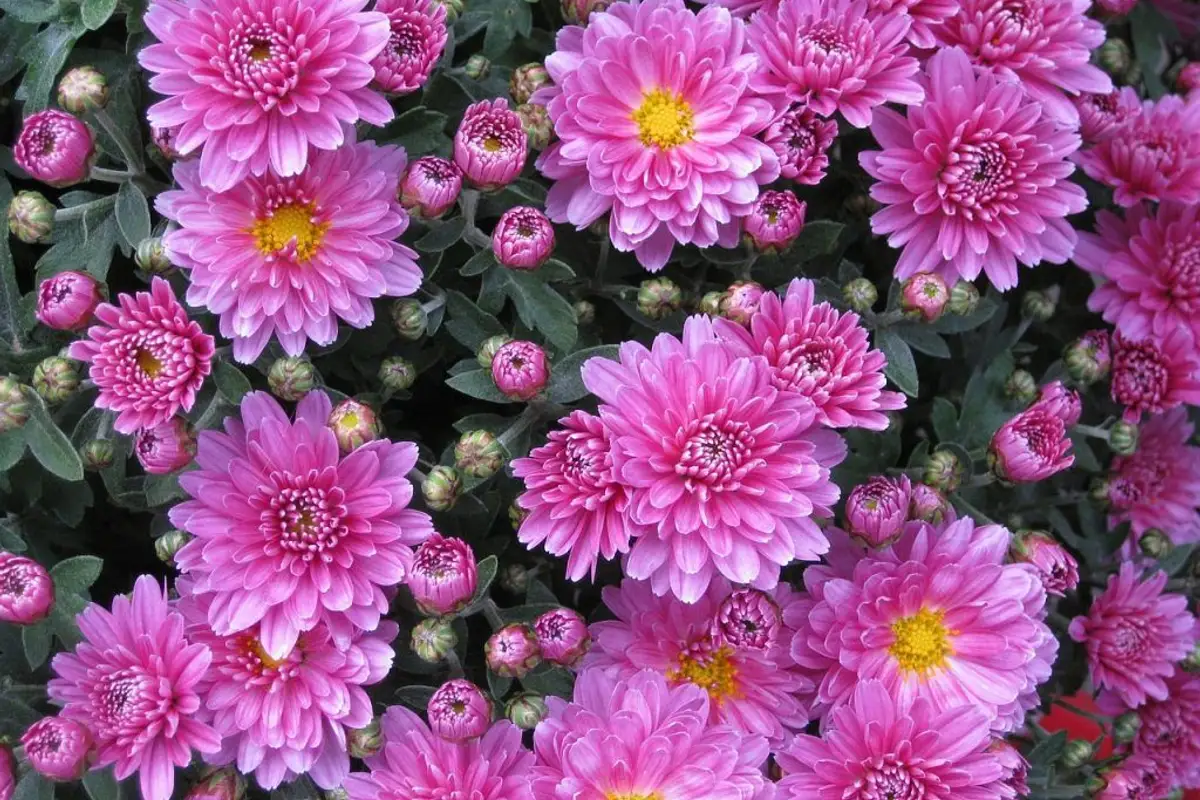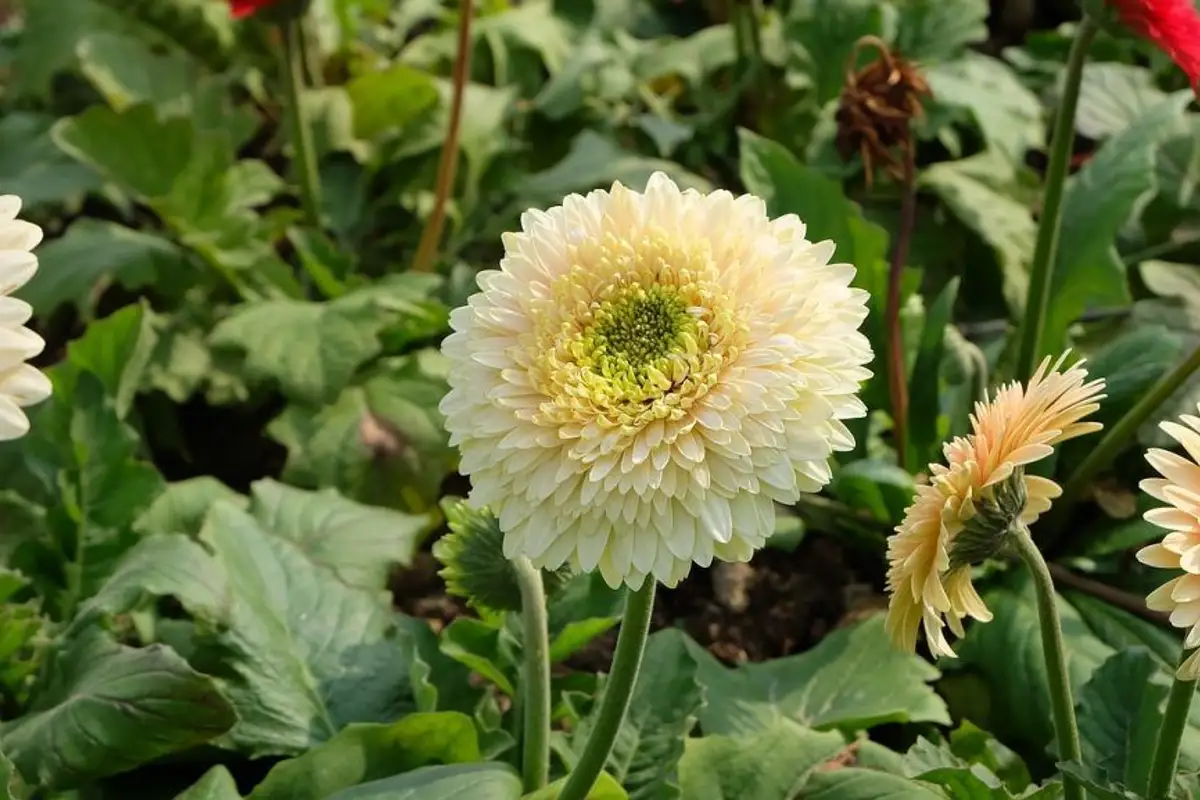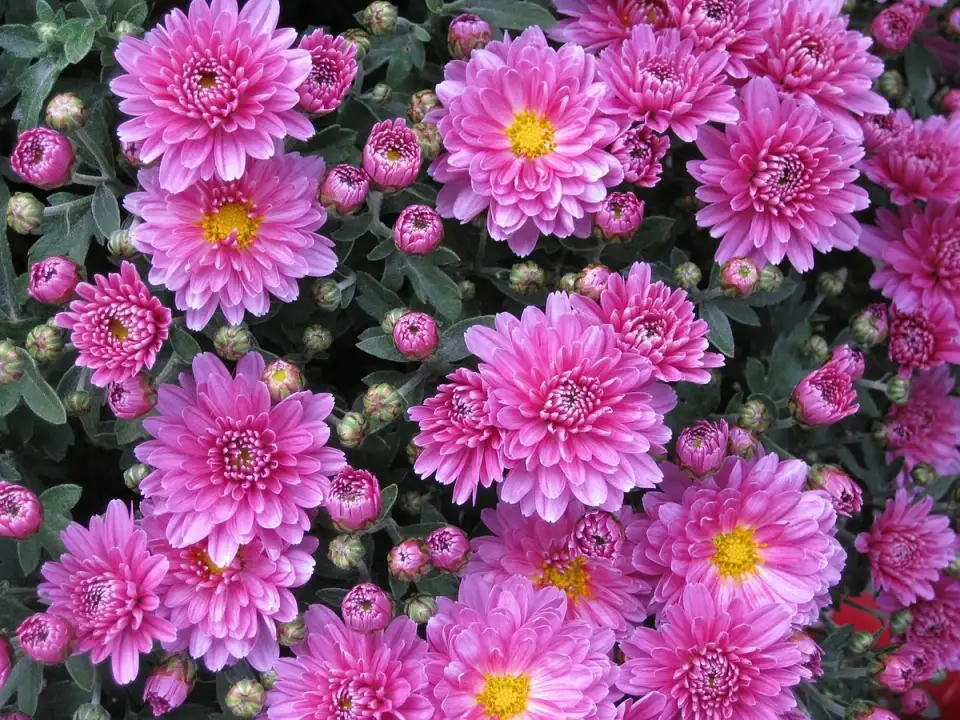
Chrysanthemums, known also as tufanele, dumitrite, or autumn daisies, are a genus of flowers comprising approximately 30 perennial plant species belonging to the Asteraceae family, native to Asia and northeastern Europe.
Planting and Caring for Chrysanthemums
The flowers, vibrantly colored, are gathered in calyxes of various shapes, sizes, and types: daisies, anemones, spider (paianjen), pompon, globular. The plant can be led with one or more floral stems, and each stem can be led with a single inflorescence at the top (standard chrysanthemum or uniflora) or with multiple inflorescences at the top (bush chrysanthemum, spray, bouquet).
Pruning work is of great importance in a chrysanthemum culture, and the most important of these, in order to obtain the type of flower, is budding. More precisely, to obtain the standard chrysanthemum, after budding, only one bud, the main one or a secondary one but which is best placed, is left on the plant, the rest being eliminated.
To obtain the bush chrysanthemum, or "Dutch" as it is sometimes called in some flower shops, the main bud is removed through this work and, optionally, some of the lateral buds.
Bud removal is done by breaking them off when they are large enough to be grasped between the fingers, but the work must be repeated several times, depending on the growth characteristics of the variety.
Although cultivated as an annual plant, chrysanthemum is a perennial. It dominates gardens in the fall, blooming from late August to late November.
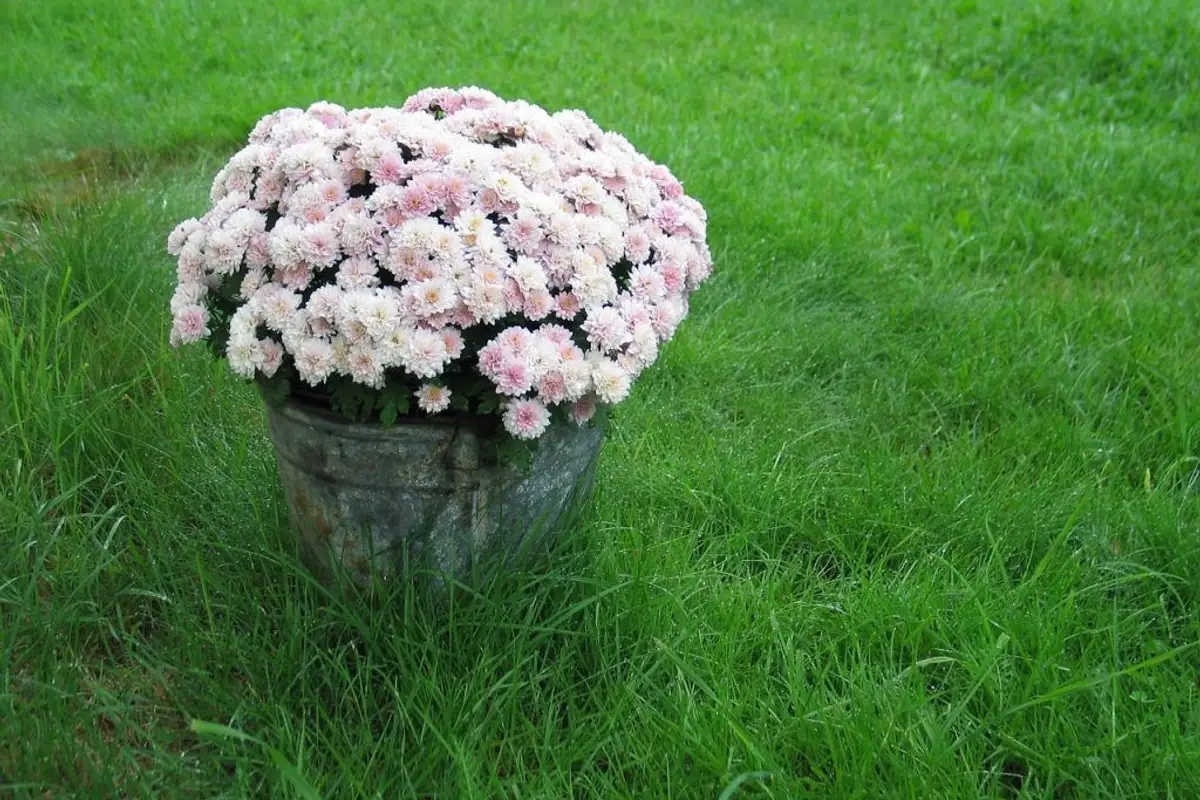
To "behave" at its best, chrysanthemum needs well-drained soil exposed to sun or shade. It is grown in pots or planters. Watering should be done frequently but not excessively, preferably early in the morning.
If planted in a planter or pot, it requires monthly fertilization. However, if planted in the garden, it does not require any additional fertilization.
Symbolism
Chrysanthemum has a positive connotation in countries such as Japan, the United States, or Australia, where it symbolizes Mother's Day. It is the flower of light and the sun in Japan, and for the Chinese, it generally represents rest, peace, but also serene life, except for the white chrysanthemum, which signifies mourning or sorrow.
On the other hand, in many European countries, it is considered a funeral flower, being used at funerals. In fact, in the West, it is customary to bring chrysanthemums to relatives who have passed away on All Saints' Day (November 1st), thus signifying regret for the deceased.
In Europe, giving these flowers on occasions with a romantic character or on happy events in our lives is avoided, but in countries such as the USA, Japan, or China, these flowers are received with a smile. Among Romanians, however, red chrysanthemums, also known as dumitrite, are associated with peace, reconciliation, forgiveness, but also sadness.