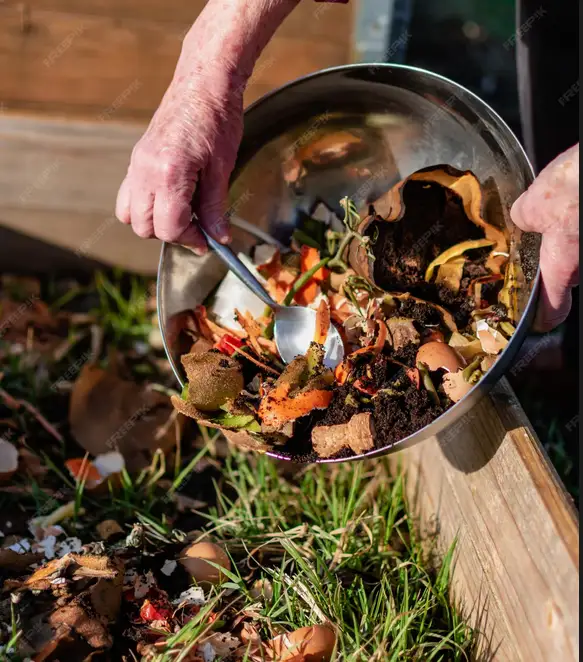
Compost is one of the simplest and most effective ways to transform vegetable waste into a natural fertilizer, beneficial for the garden and the environment. Whether we are talking about dry leaves, vegetable stems, fruit peels or grass clippings, all of these can be valued to nourish the soil and plants.
Thus, what was once considered waste becomes an ally of the garden's health.
The composting process involves the decomposition of organic matter under the action of bacteria and microorganisms in the soil. This decomposition transforms vegetable waste into humus, a material rich in essential nutrients such as nitrogen, phosphorus and potassium.
Using compost improves soil structure, increases its water retention capacity and helps develop healthy plant roots. In addition, compost contributes to reducing dependence on chemical fertilizers, being an ecological and sustainable solution.
Creating compost is simpler than it seems. In larger gardens, a special bin or dedicated corner can be set up where vegetable waste is collected and left to decompose gradually.
It is recommended to alternate layers of green waste, rich in nitrogen, such as vegetable scraps or cut grass, with layers of brown waste, rich in carbon, such as dry leaves or small twigs. This alternation favors uniform decomposition and accelerates the composting process.