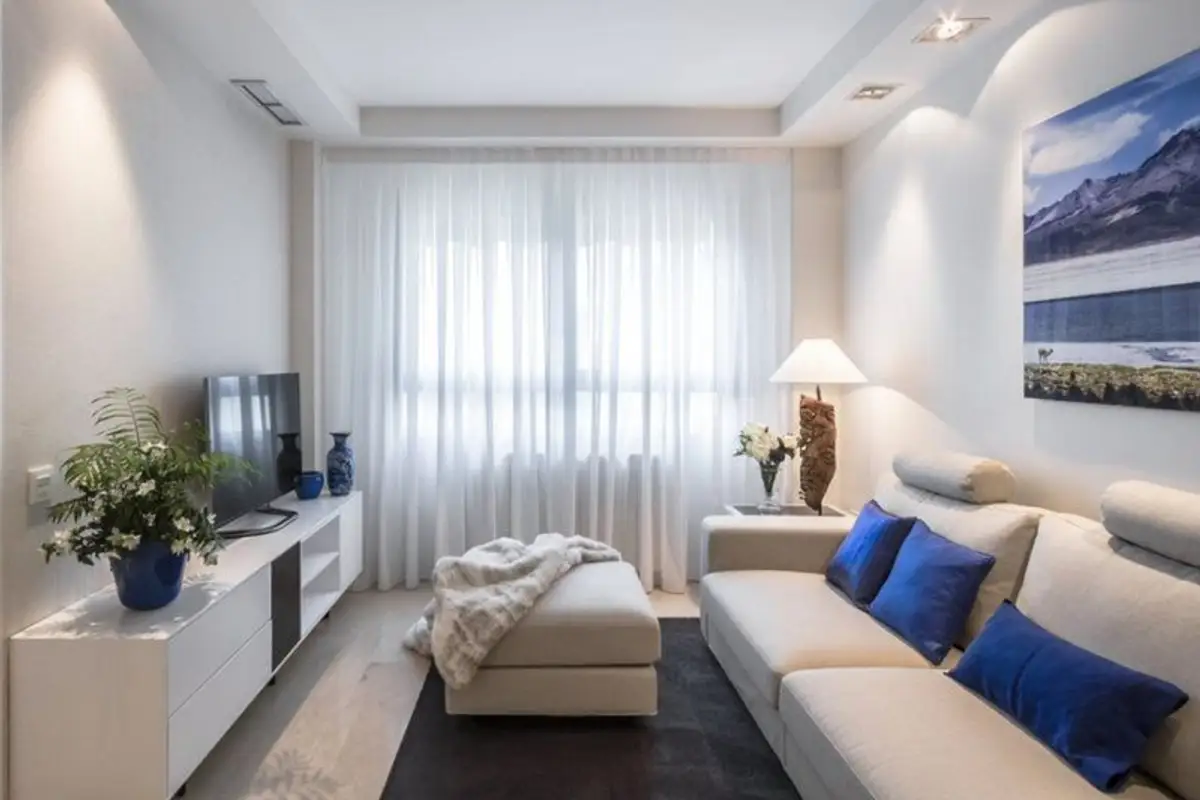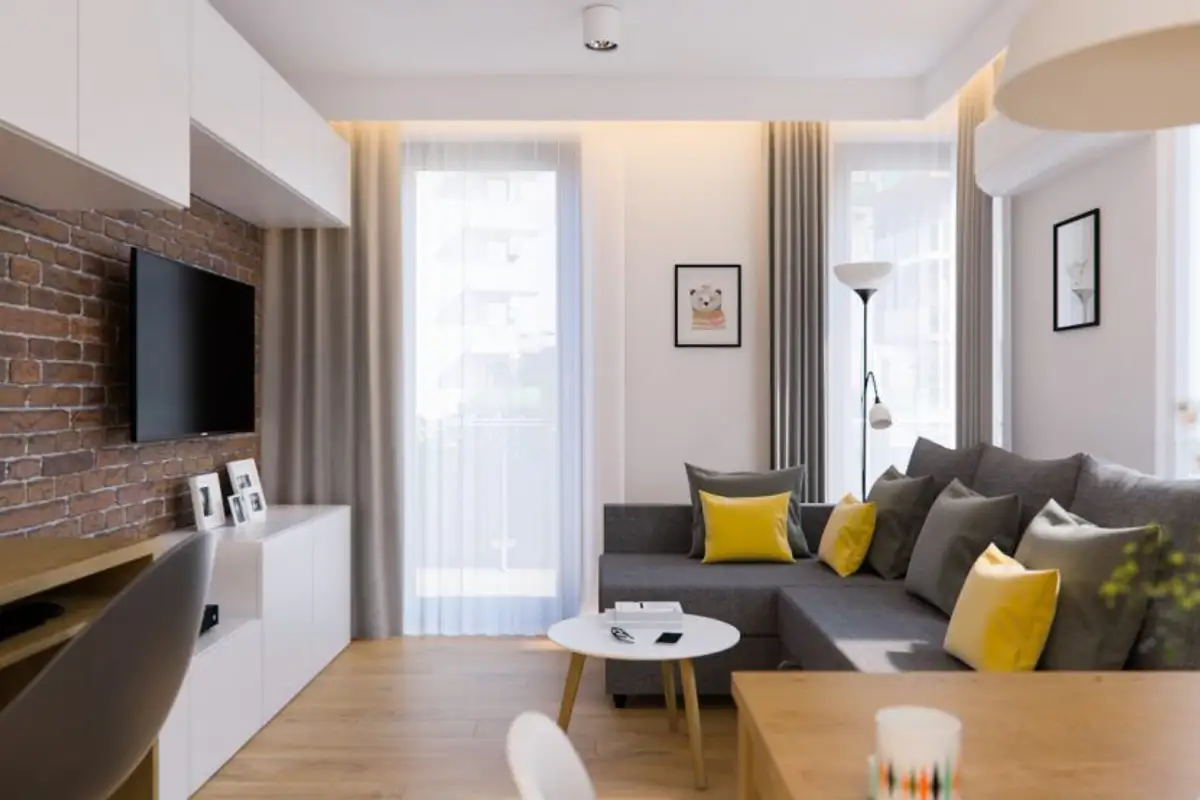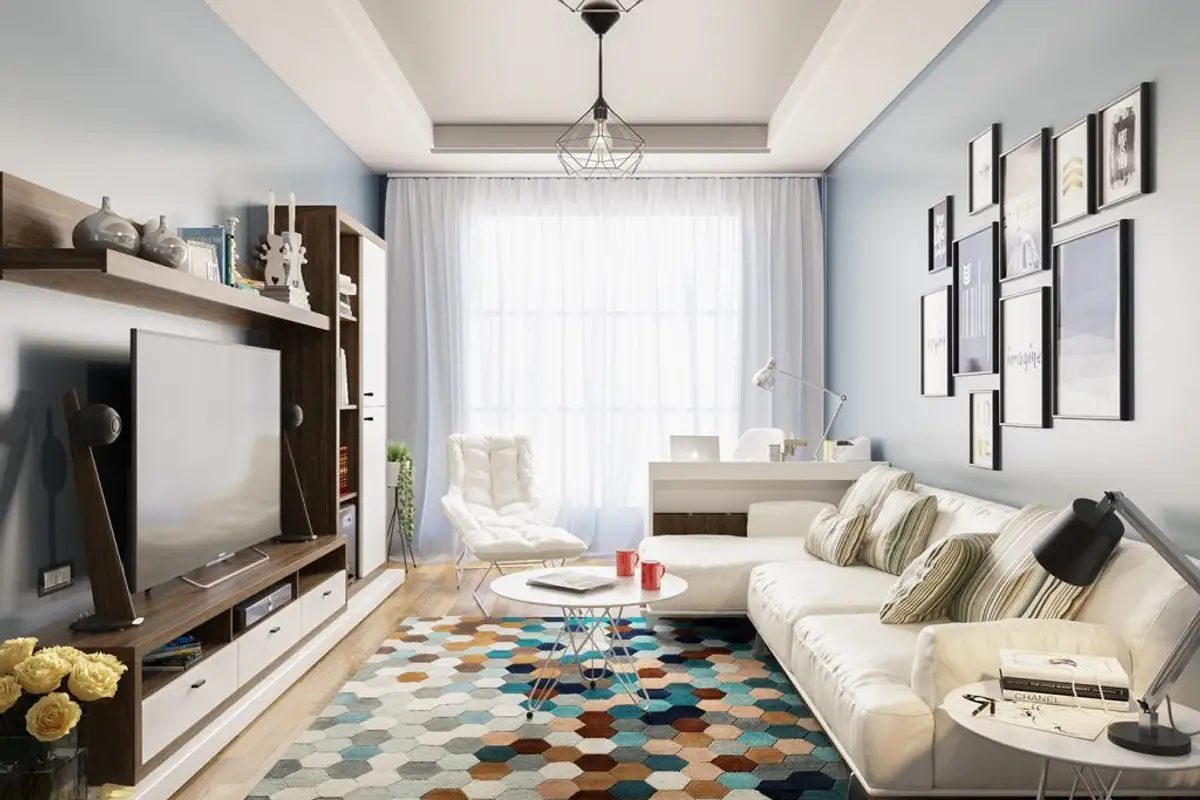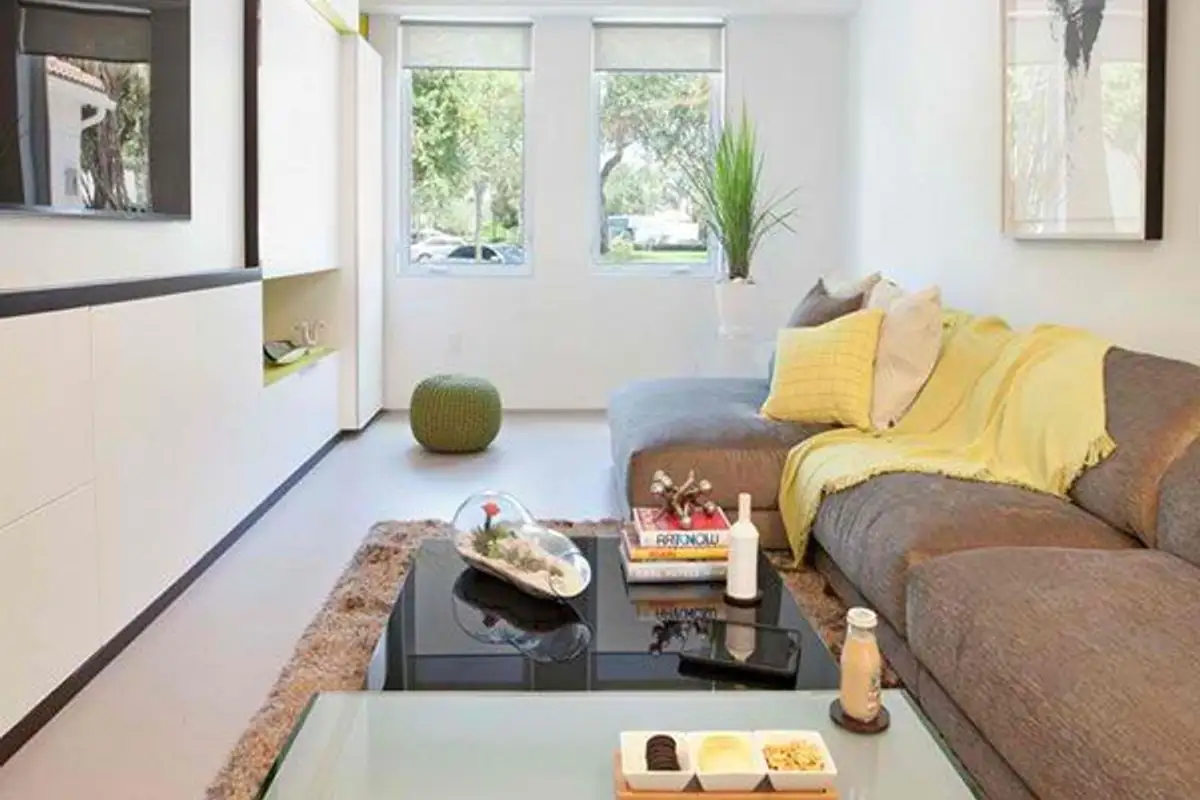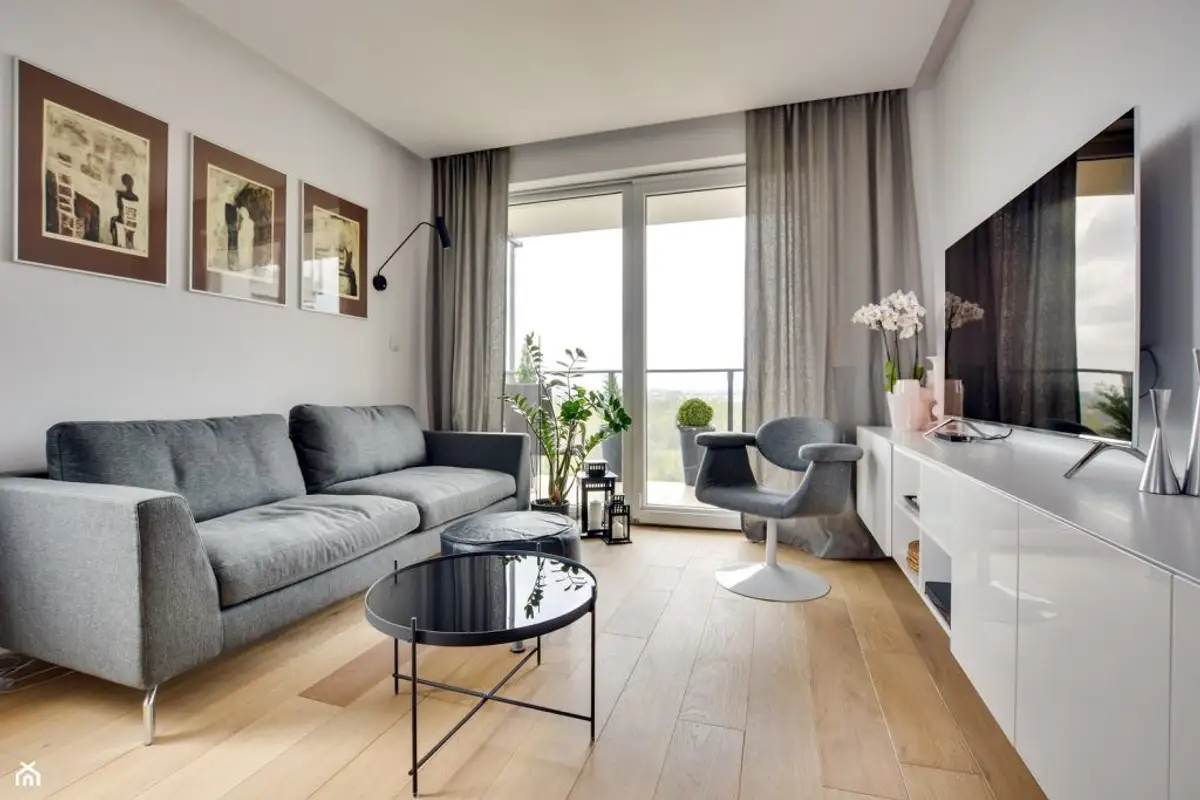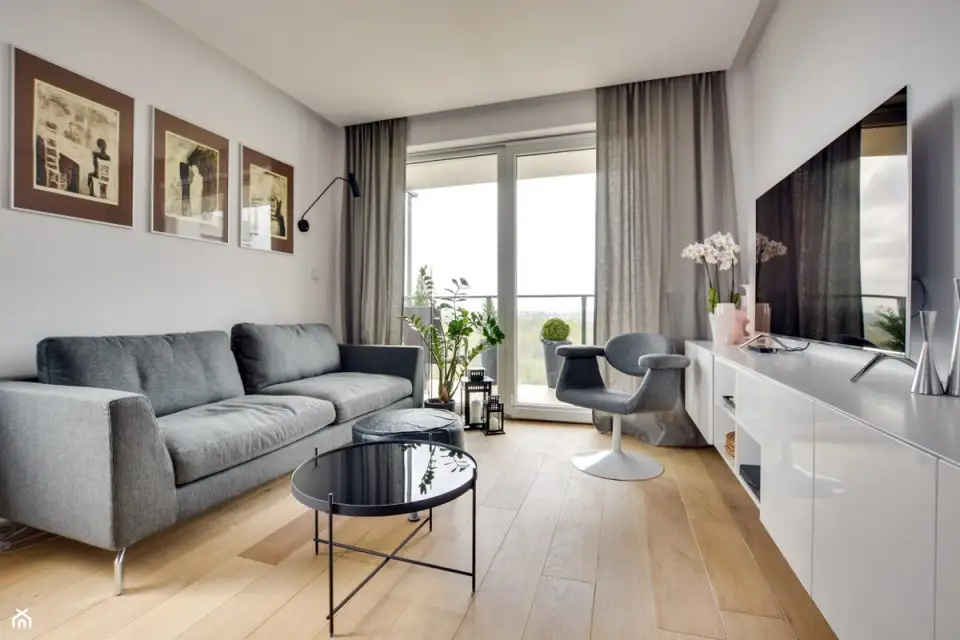
Although it may have a larger surface area, a long and narrow living room will be more difficult to furnish than a square room, even if it is smaller. Finishes, colors, furniture pieces, all the elements that will make up the decor need to be adapted to the space, hence the need for guidance in such a living room.
Open GalleryOne of the first things designers recommend is to observe the opening of the respective space. Only after consulting an engineer or architect can we consider removing a wall, usually the one towards the kitchen, thus widening the room and transforming it into a coherent open space.
If demolition is not permitted, then we consider other furnishing options to efficiently exploit this space.
One of the simplest things you can do is use colors. Using light shades can easily result in an amplification of the space. Another trick we recommend is to use darker colors on the shorter sides. This creates the visual effect of bringing the two opposite walls closer together.
Keep lighter colors for the long sides as they will make the living room appear larger. You don't necessarily have to paint the walls in different shades, but you can achieve the same effect with a piece of furniture in a darker color; it could be a bookcase or a multifunctional wardrobe.
Regarding the arrangement of furniture, a minimalist approach is needed. The less furniture, the better. Set up the pieces that are priorities based on your or your family's needs. Pay attention to the furniture arrangement! In a long and narrow living room, you will be tempted to place all the furniture against the wall along the length of the room.
This will create an unpleasant tunnel effect that highlights the length of the room even more, making it narrower. Go for the idea of outlining different zones to bring dynamism to the decor.
Choose a sofa model suitable for the space (with an optimal length so as not to occupy the entire wall) or even a corner sofa type if you want to do away with armchairs. This will create a conversation area. Then, with the help of an armchair, you could outline a reading nook by the window to take advantage of natural light as much as possible.
Add a floor lamp for extra style. Between the sofa and the armchair, you could integrate a medium-height bookcase with open shelves (so as not to block the light from the windows).