French accents are the ones that convey elegance and romance regardless of the room they adorn. Moreover, they are two of the well-defined characteristics of the Provençal style, a style whose name is inspired by the Provence region, located in southern France.
The transformation of this kitchen harmoniously combines two rustic influences: one with a mountainous character and the other with a marine character. We are talking about shades of lavender, earth, turquoise, and a multitude of textures.
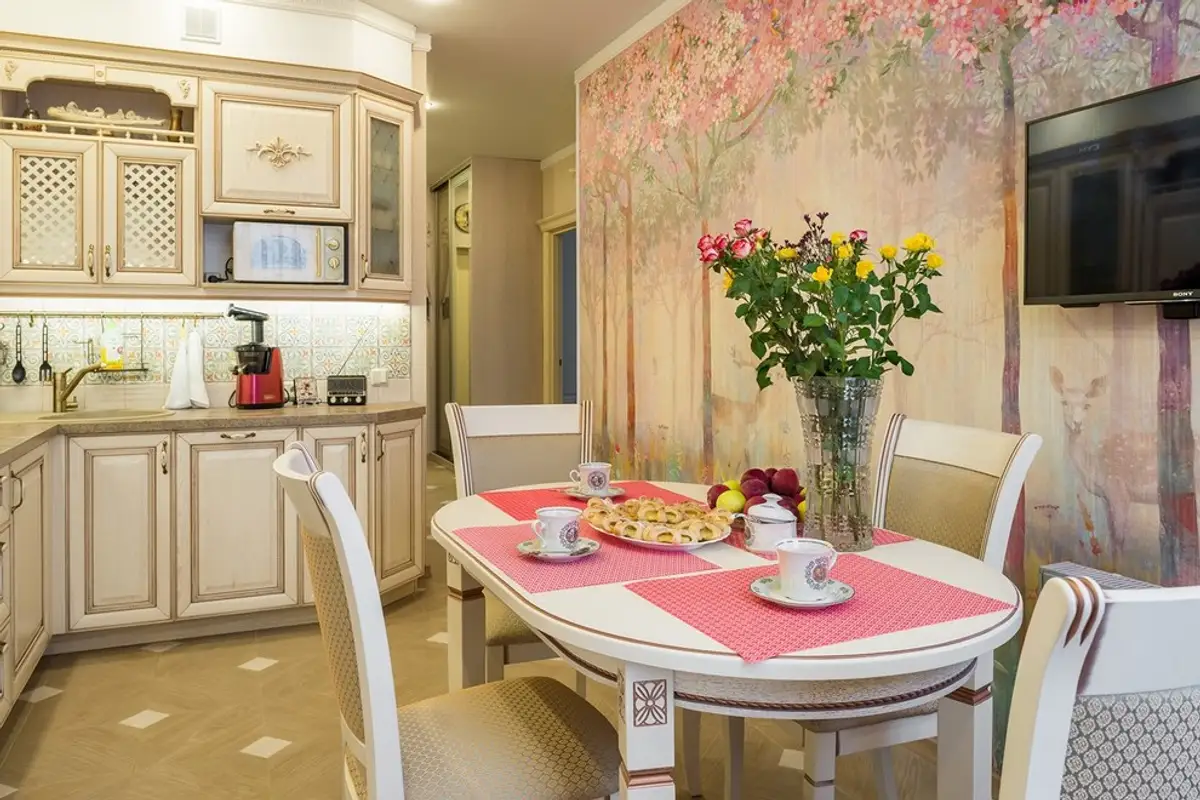
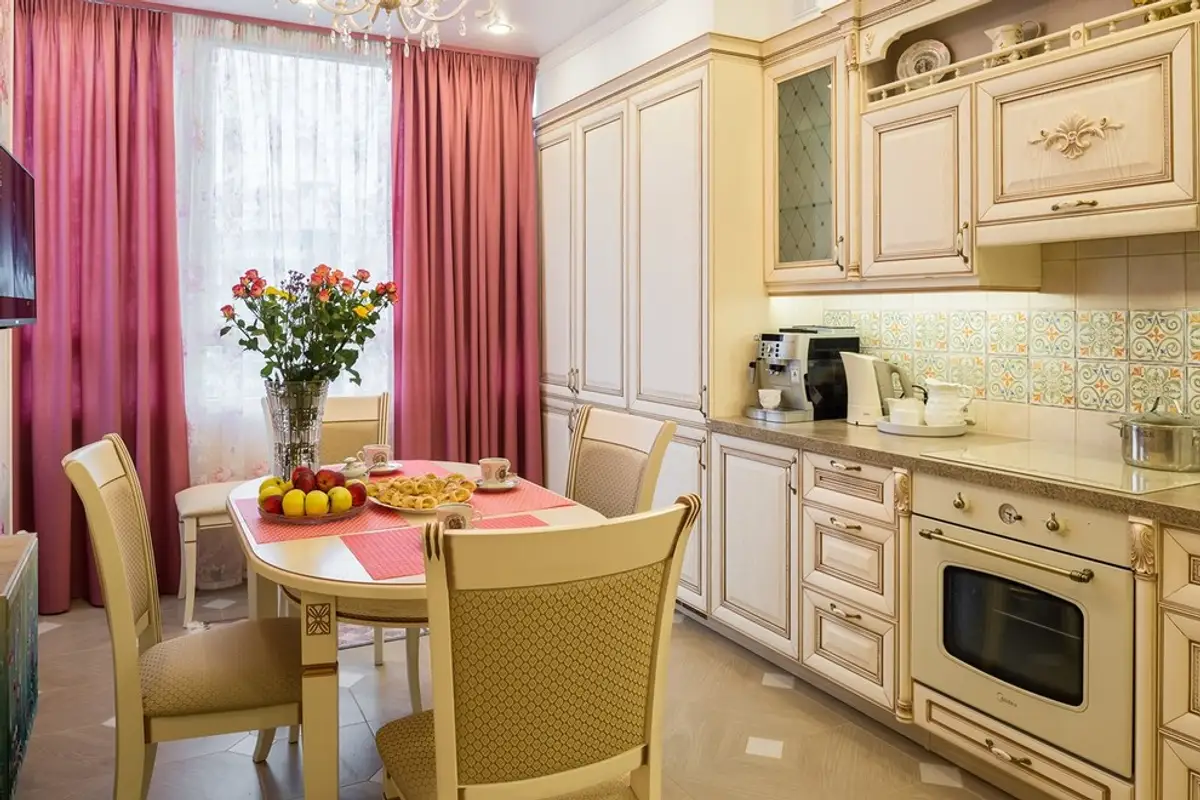
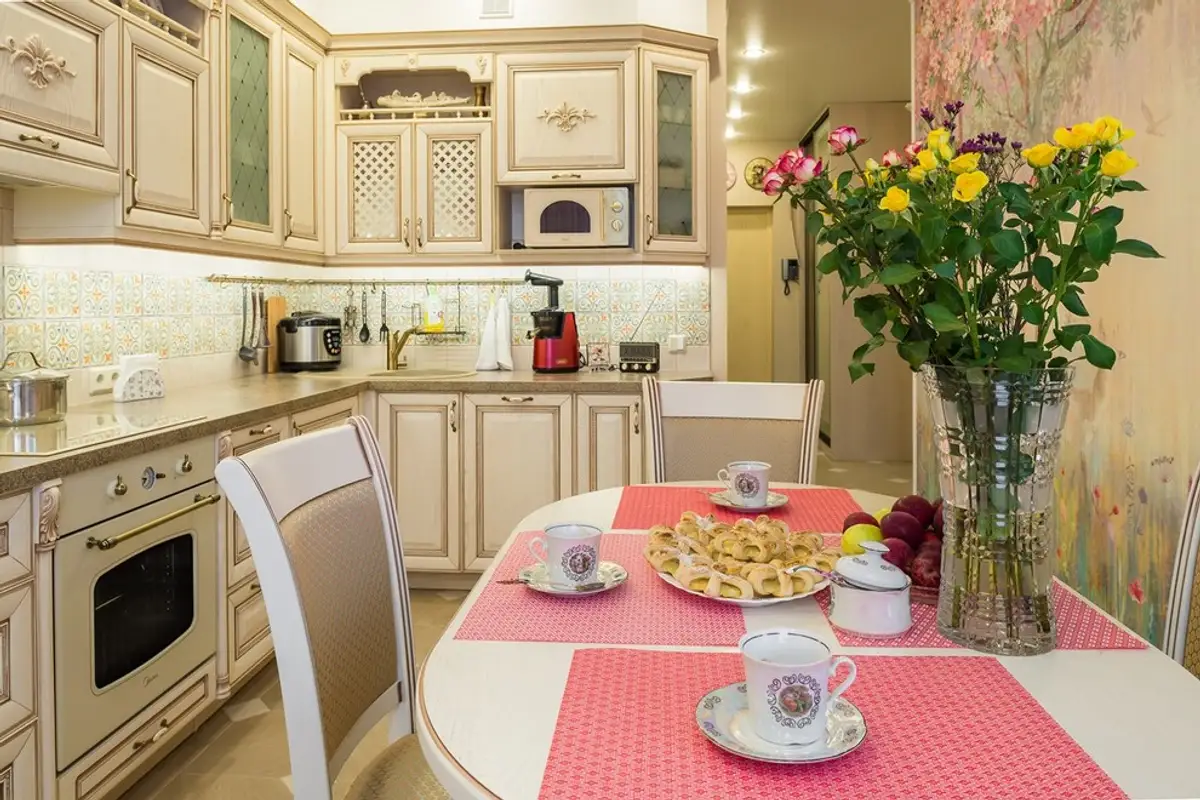
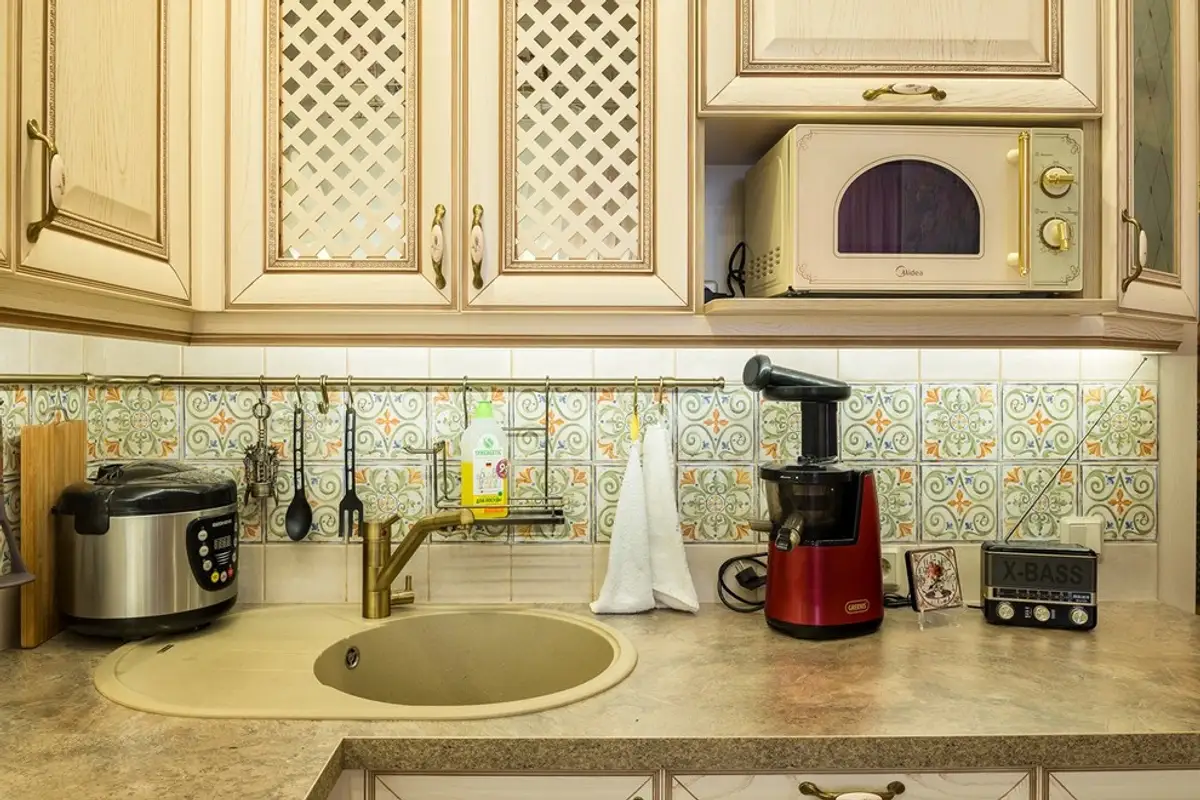
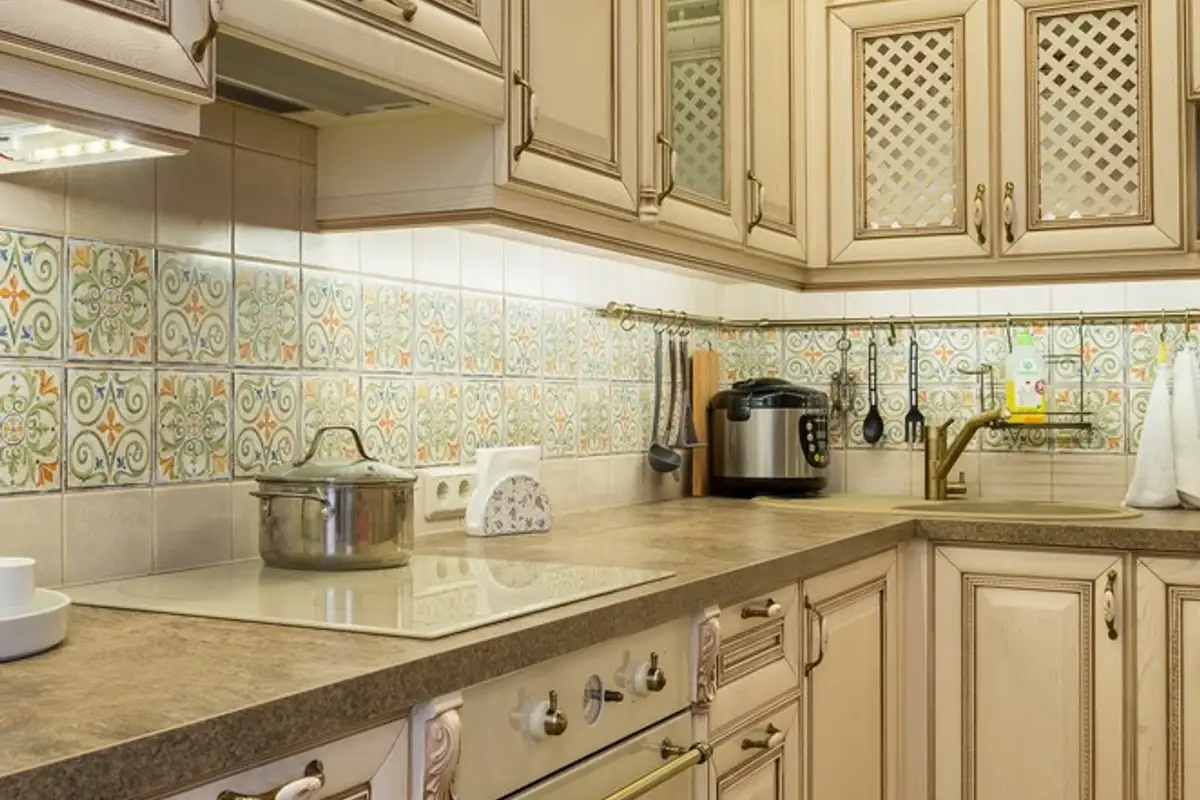
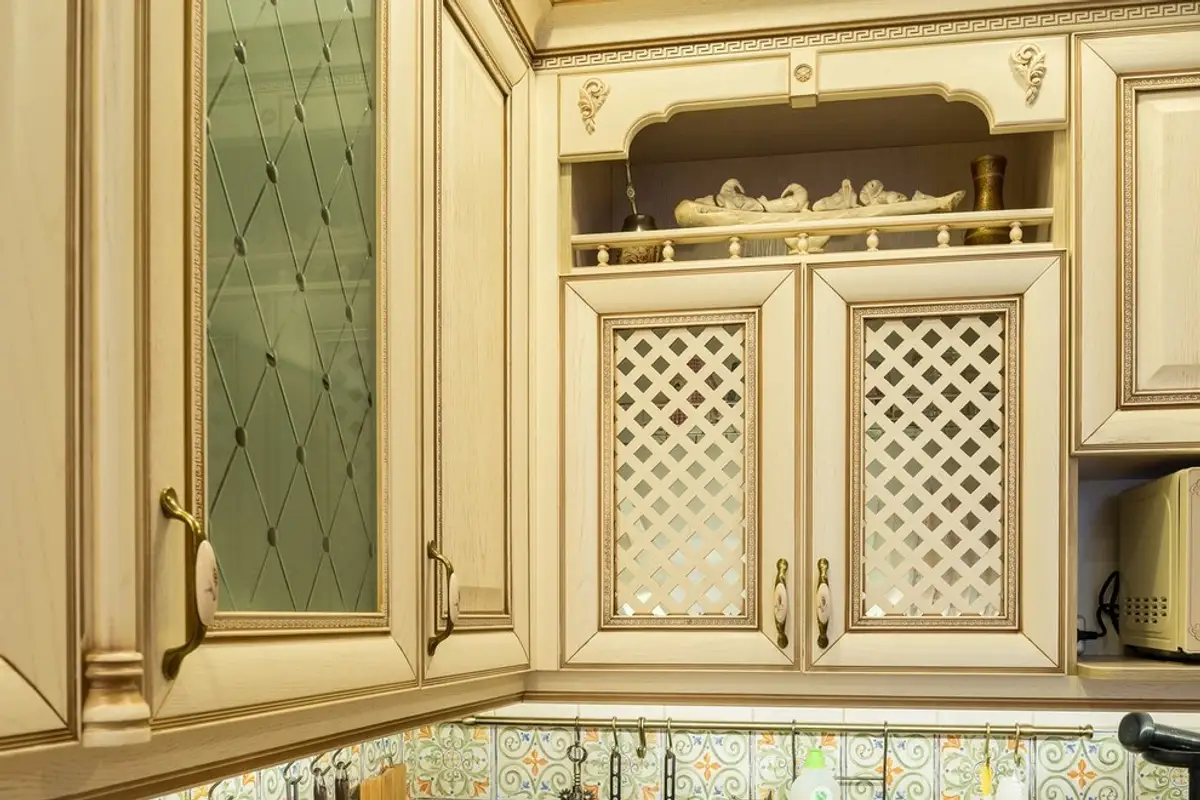
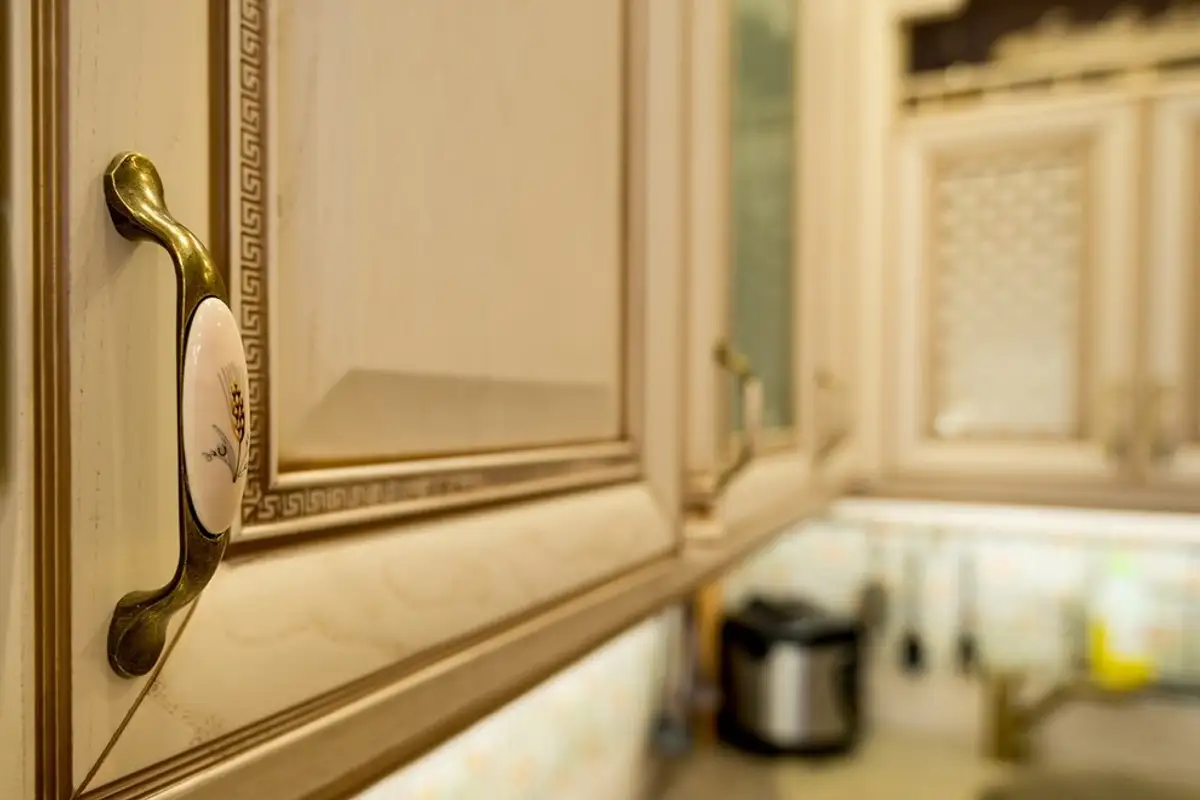
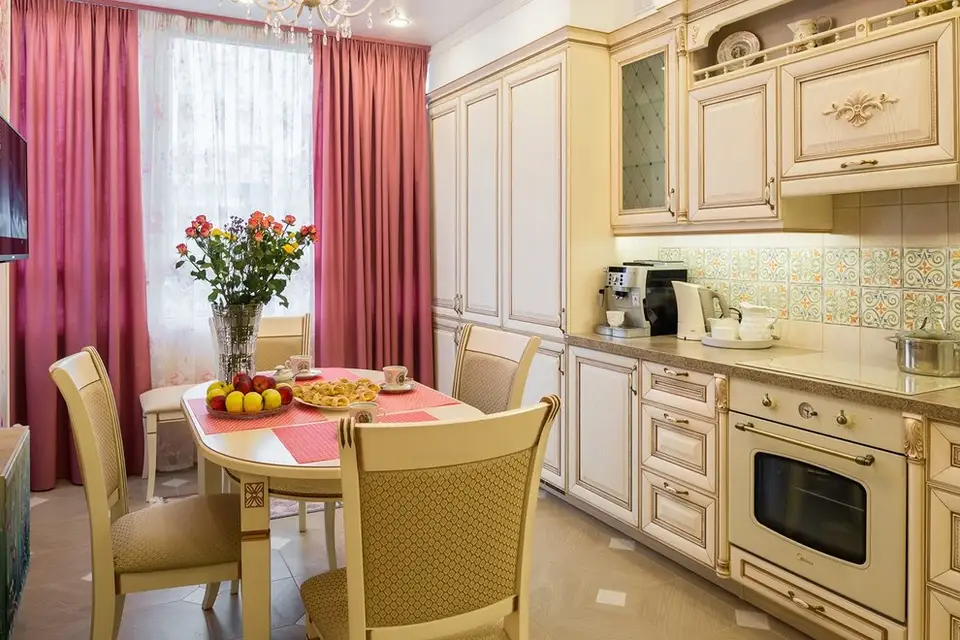
The division is easily made symmetrically, into two zones that manage to clearly transmit characters of the two influences. The corner furniture, with a grand character, presents an elegant and classic design, with meticulous details that add feminine and precious accents. The predominant beige shade is joined by dark lines and gold details found mainly in the design of the handles.
The retro style is also highlighted by the design of the appliances that complete the image of the classic, feminine decor.
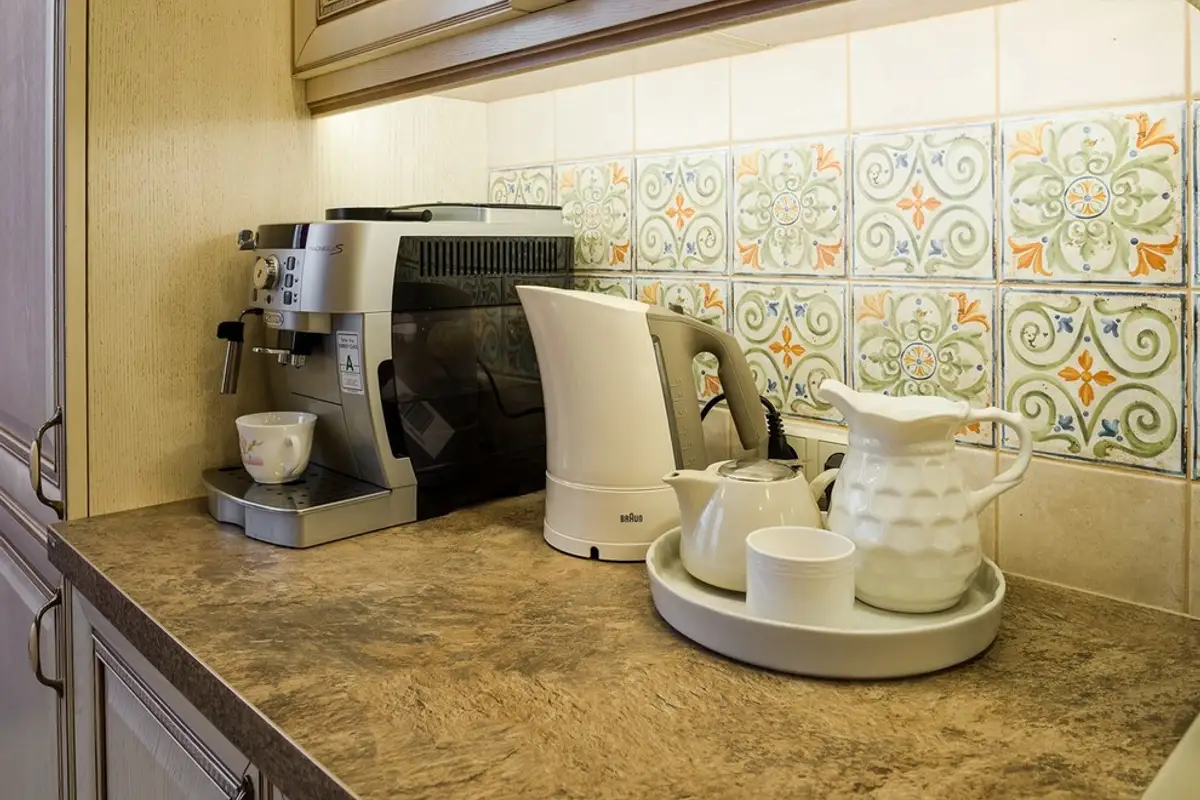
The geometric details that adorn the windows of the doors and suspended furniture cabinets are also found in the texture of the floor, which will provide continuity and homogeneity to the entire room. For the presence of marine-inspired details is necessary, shades of green and blue are revealed by the pattern of the faience tiles that separate the countertop from the upper cabinets.
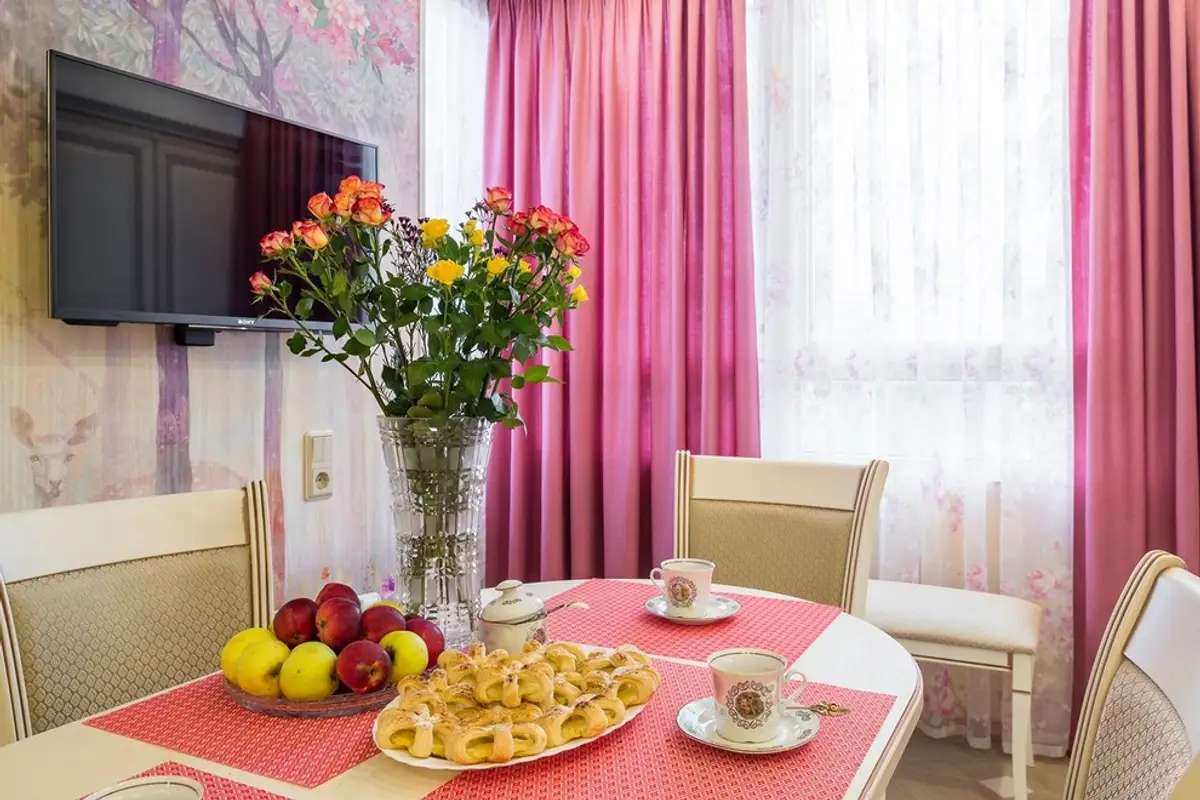
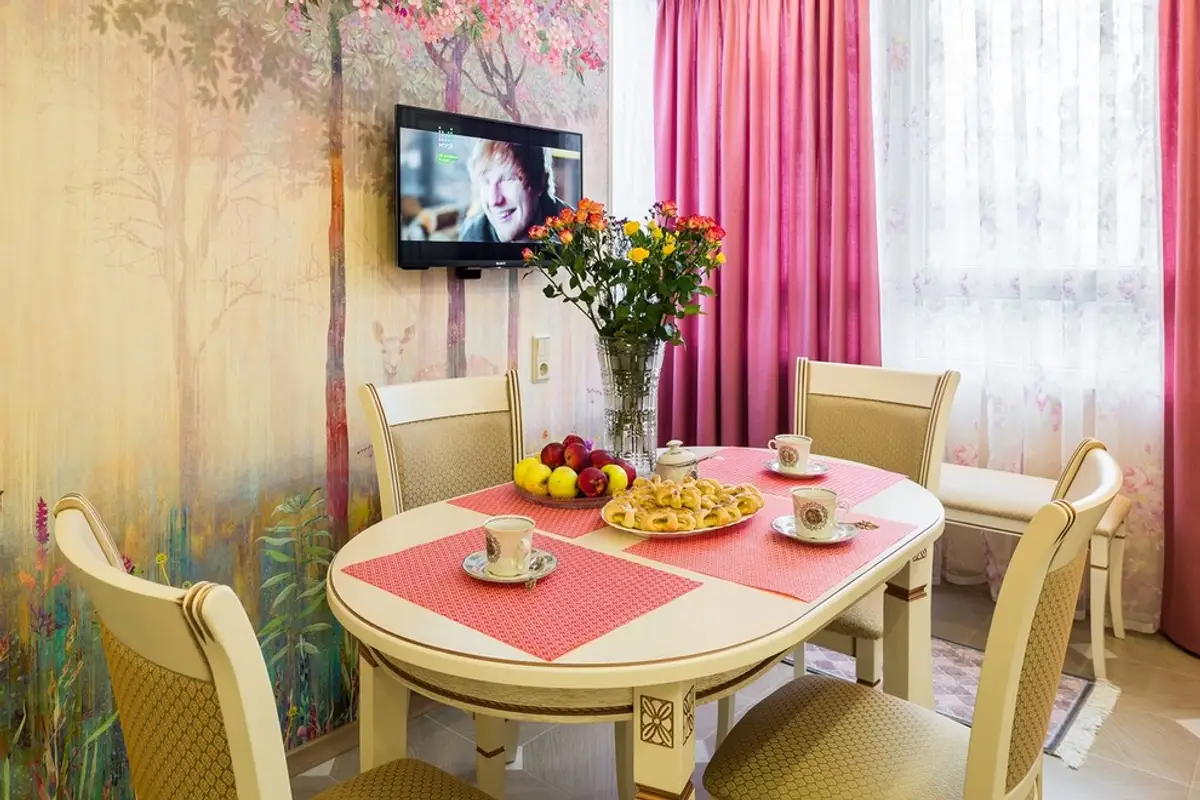
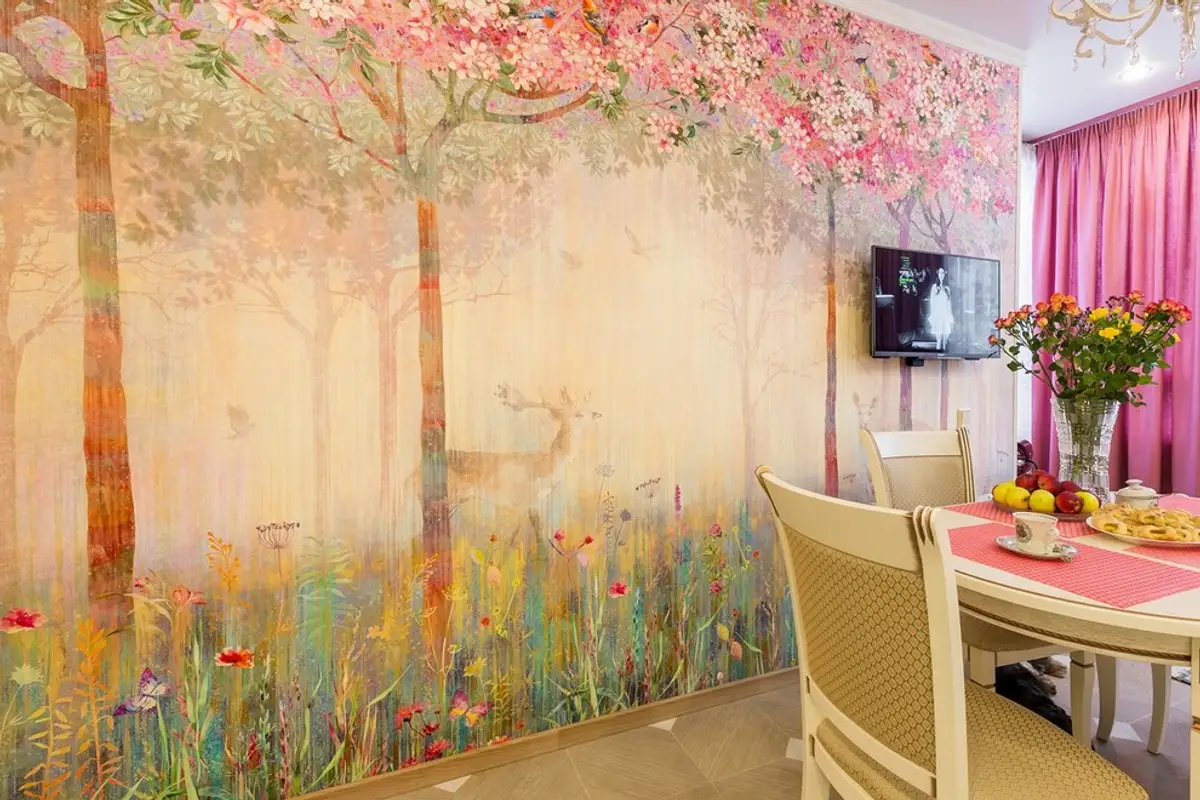
Through decor and finishes, the dining area transforms into a perfect space for relaxation. Feminine accents become intense through the introduction of pink in fairly large quantities, both in textile elements, murals, and accessories.
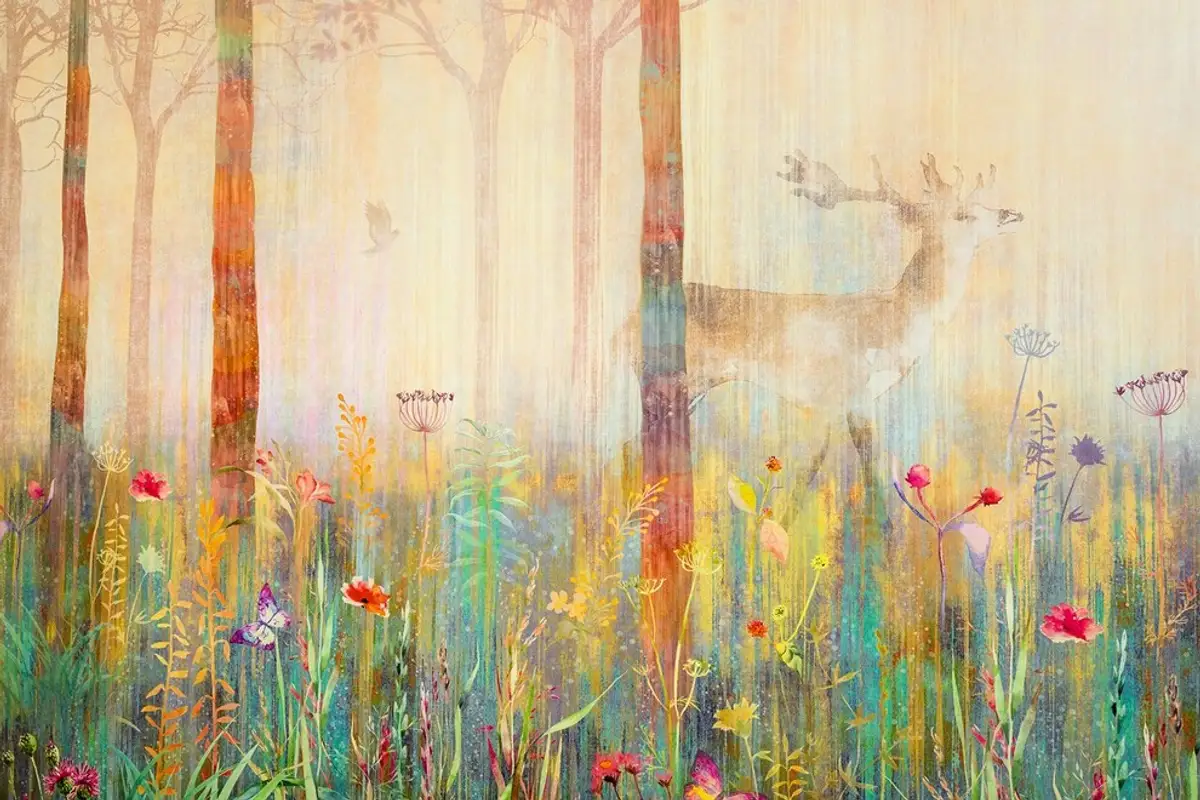
The design of the oval table and the chairs that surround it respects the classic lines of the entire kitchen set. Romanticism comes to the forefront through the mural decoration with manual paintings illustrating nature in a poetic style.
Chromatically, the use of bright and warm shades adds a touch of naturalness and invigorates the entire room, thus creating a springtime atmosphere. To this image is added intense natural light which is allowed to penetrate inside with the help of a fine, immaculate curtain.
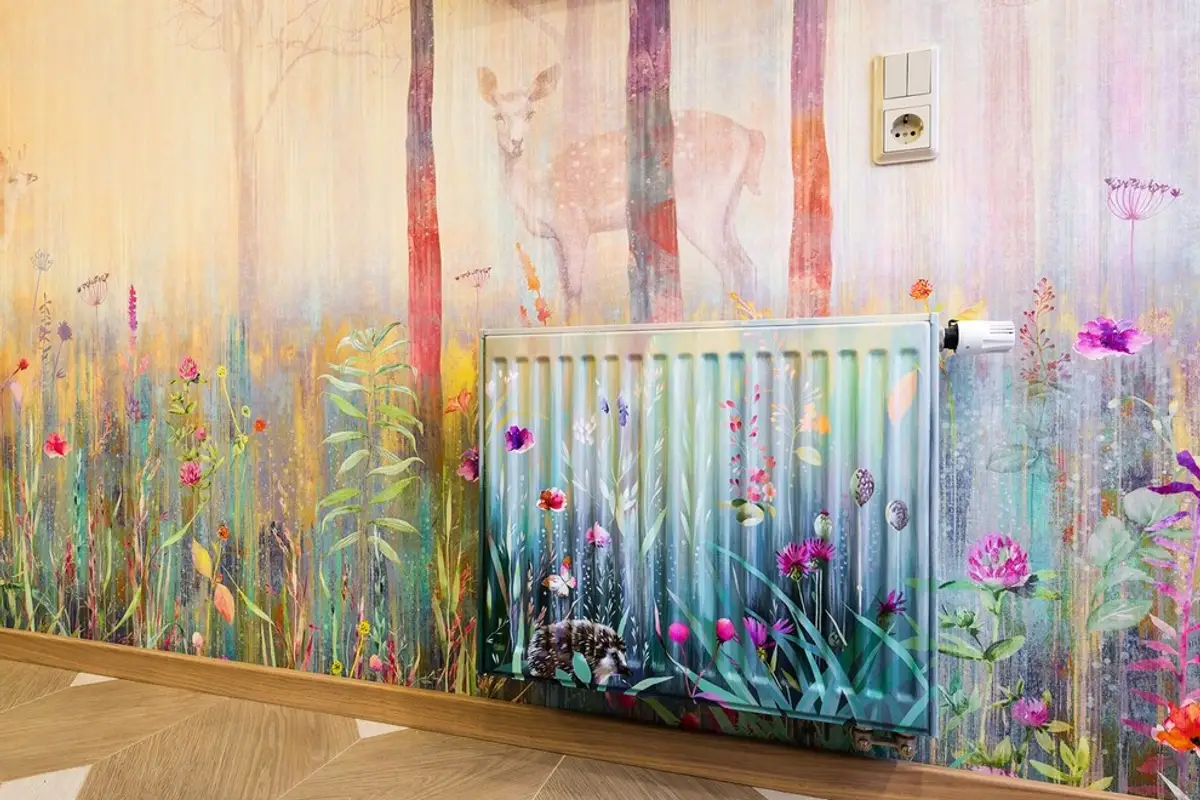
Unlike other arrangements that take into account mural painting, here are also introduced elements that are found in the same frame, as is the case with the heating installation which, in turn, receives an artistic aspect.
We cannot omit the design of the artificial lighting components that make the transition between two opposite temporal planes. In the case of the chandelier, the image is placed in a classic medieval era, while regarding the lighting of the upper cabinets of the kitchen furniture, LED strips are the ones that bring the arrangement into the modern temporal plane.