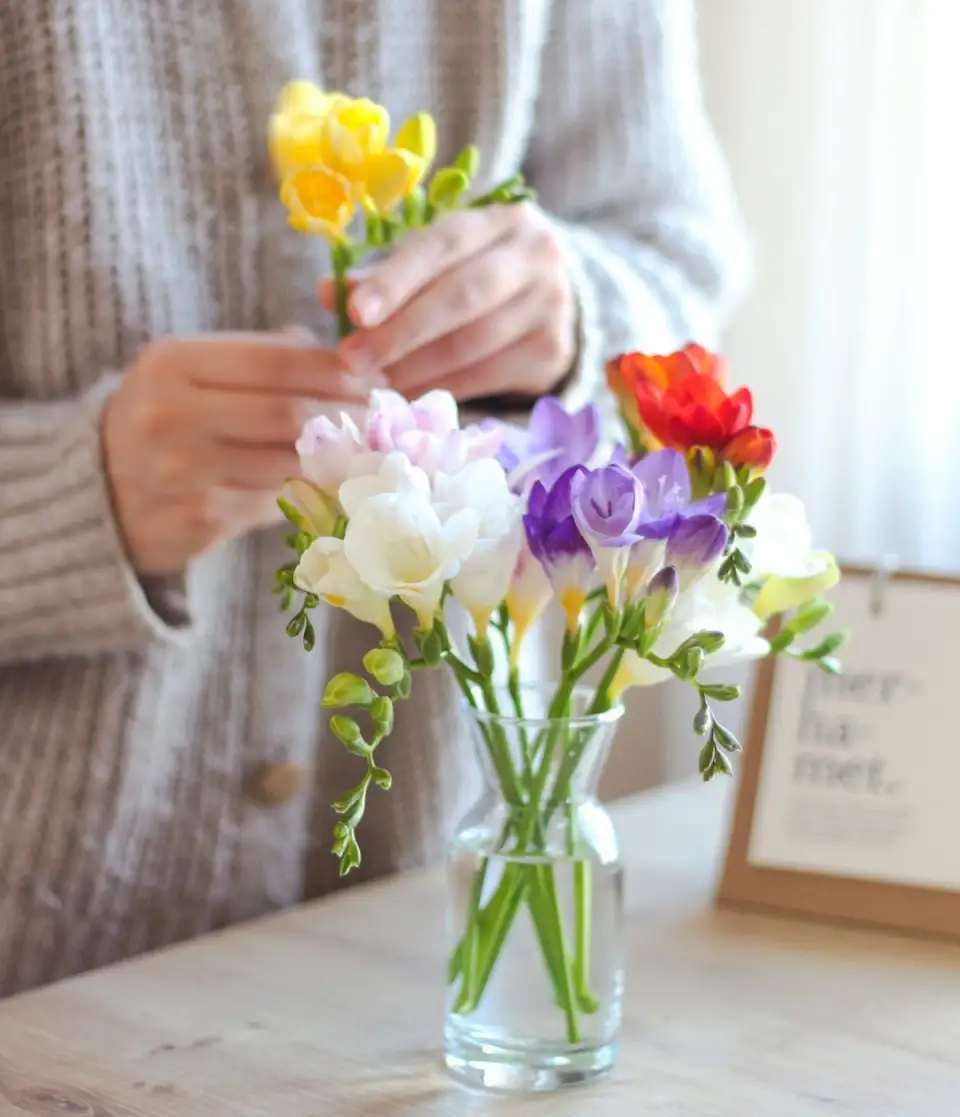
When spring arrives, among the multitude of flowers that delight us, freesia holds a place of honor. Much loved for its delicate fragrance, freesia also conquers us with the beauty of its colorful flowers. Therefore, for those who prefer this flower, we will present below more details about freesia.
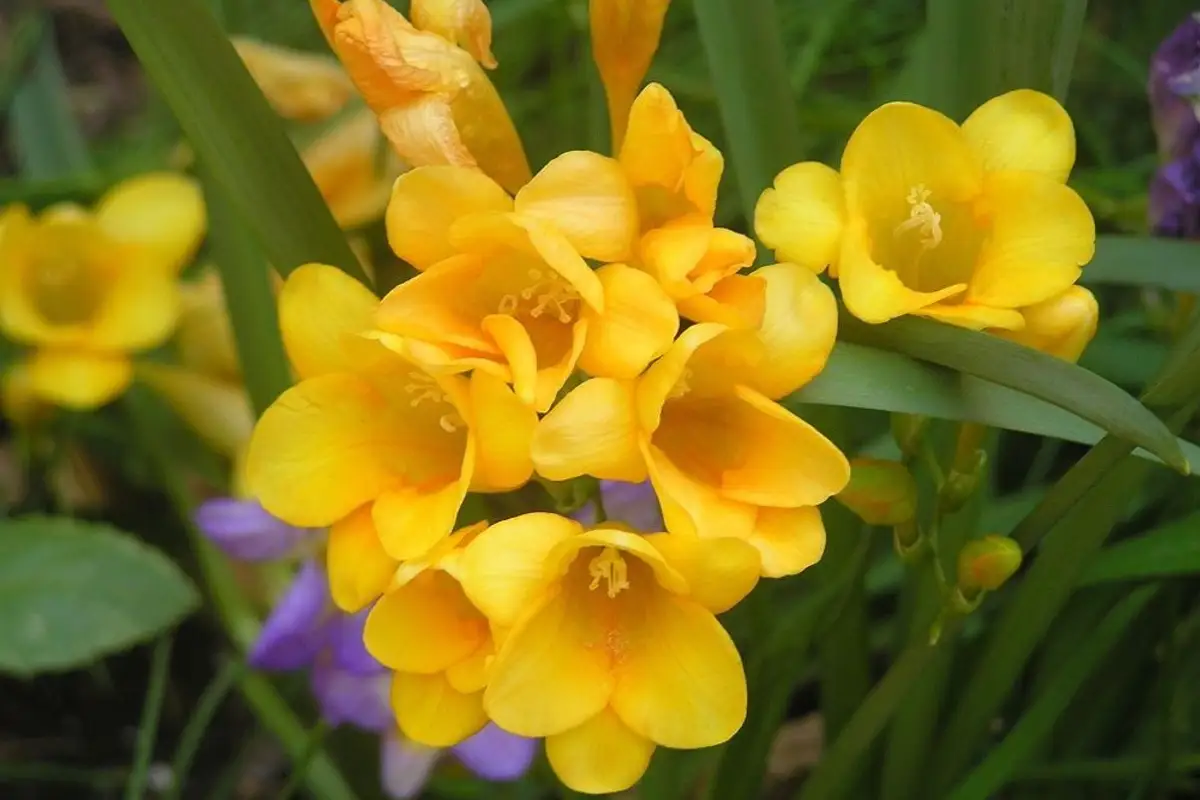
Photo: Hissetmehurriyeti Freesia originates from southern Africa and was first imported to Europe at the end of the 19th century. No less than 12 species of freesia come from the Cape of Good Hope, South Africa, and two others come from tropical Africa, one of which has a distribution range north of the Equator, up to Sudan.
The name of the plant dates back to 1886 and was given in honor of the German doctor, Heinrich Theodor Freese (1795-1876) by botanist Christian Friedrich Ecklon (1795-1868). The popular Romanian name for plants of the genus Freesia is Frezie or sometimes Fresie.
Freesias are herbaceous, perennial plants with thin roots that penetrate deep into the soil. The long stem, 10 – 40 cm tall, bears several leaves arranged in two rows, lacking petioles, 10 – 30 cm long and as thin as swords. The floral stalk is very thin and sometimes curved. The flowers are allogamous, hermaphroditic, protogynous, being grouped into decorative inflorescences in the form of a unilateral spike.
They are simple or involuted, trumpet-shaped, very delicate, colored in various pale shades (white, yellow, cream, orange, pink, red, purple, violet), pleasantly fragrant, and their scent is similar to that of hyacinth by connoisseurs. The fruit is a capsule with three valves containing about 15 angular or round seeds, brownish-pinkish in color.
Freesias are garden plants, most often cultivated for their pleasant fragrance and delicate appearance. In the conditions of the temperate climate characteristic of our country, freesias are grown in greenhouses.
Freesia Propagation
Care Tips
Therefore, choose a clean vase and fill it with tap water at room temperature and cut the flower stems diagonally on a 3-5 cm portion with a clean, sharp knife or scissors. Also, to keep the flowers longer, add fertilizer for cut flowers and do not position the freesias in drafts, directly in the sun's rays or near a heat source.
Fill the vase regularly with tap water. It is also important where you place the vase with freesia flowers. It is preferable not to place freesias near a bowl of fruit because fruits emit ethylene gas which will cause them to wilt faster.
Great Lovers of Light
Since freesias originate from Africa, they have no problems adapting to the climate in our country, but only if some rules are respected. These plants have thin stems, sword-shaped leaves and flowers resembling palms, in rainbow colors, and are great lovers of sunlight. Therefore, freesias must be planted in places where sunlight reaches easily.
In addition, the flowers must be protected from frost and freezing, as they do not withstand temperatures below 5 degrees Celsius.