Furniture items made from P AL or M DF? This is often a dilemma faced by buyers who wish to purchase various furniture pieces. Most buyers consider the design, color, and shapes of the furniture, as well as the materials it is made from.
P AL and MDF are among the most popular materials, the difference between them being that furniture made from MDF is slightly more expensive than that made from P AL. In addition to this, there are also other details related to the quality of these materials. Knowing these details is very useful so that the decision to purchase a particular piece of furniture can be made intelligently.
Furniture from P AL
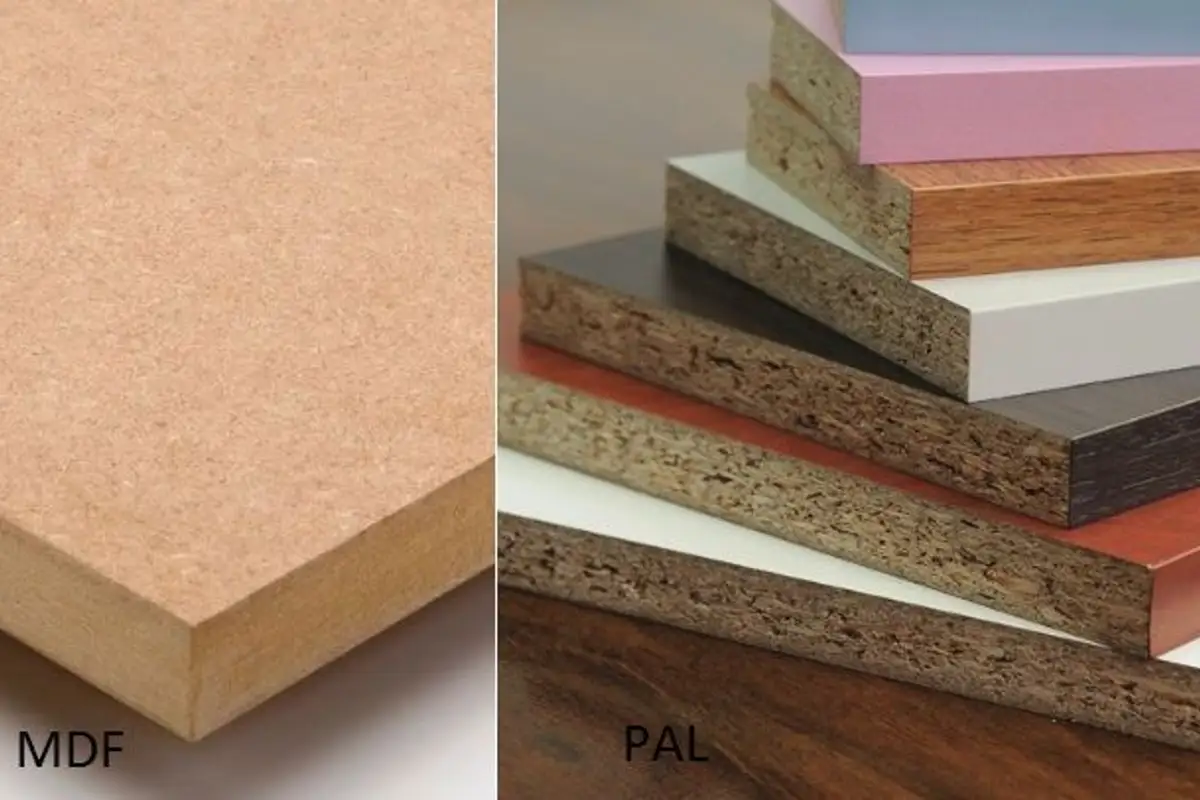
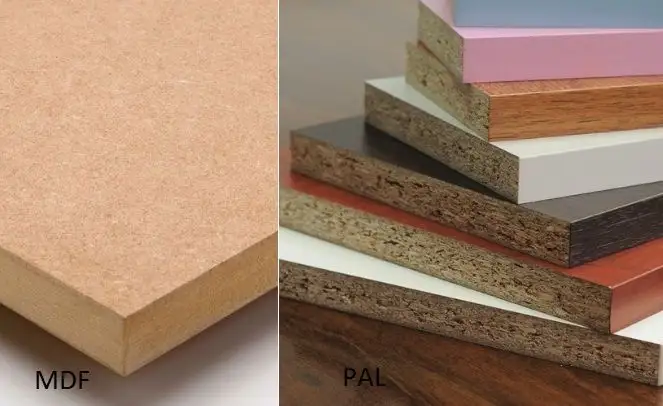
The name P AL stands for Placi Aglomerate de Lemn and represents a three-layer board made from finely chopped wood mixed with glue and then hot-pressed. The inner layer is composed of coarse particles, while the outer layers are formed from very fine micro-particles. This gives it certain qualities: a smooth surface that is resistant to scratches.
The advantage of P AL is its lower cost, making it preferred by both furniture manufacturers and customers. Another advantage is the wide range of colors available for the melamine (the colored layer applied over the board), the speed of execution, and the low weight.
The disadvantages of P AL-ul are represented by its sensitivity to steam, humidity, and temperature differences which can lead over time to the swelling of the material and implicitly a shorter lifespan for furniture pieces made from this material.
From P AL, both series and custom-made furniture can be produced, especially for types of furniture that are not for bathrooms or kitchens, where the environment is humid.
Furniture from MDF
MDF stands for Medium Density Fiberboard and represents a board made from finely chopped wood chips pressed together with glue. Although it has a similar manufacturing process to plywood (PAL), MDF has a much higher density, making it workable on the surface.
One advantage of M DF is that the edges of fronts can be rounded, eliminating the need for edging which is applied in the case of P AL melamine.
Due to the fact that MDF has a much higher density, this makes the material harder, thus allowing it to successfully replace solid wood. Furniture made from MDF has a longer lifespan and can be used in spaces with high humidity.
There are several types of MDF fronts: painted MDF, melamine-coated MDF, veneered MDF, and foiled MDF. Disadvantages: higher price, greater weight, and more expensive processing.
Combining these two materials can be the best solution for creating high-quality furniture. Using P AL-ul for interior compartments or support parts and generally for parts that are not visible, while M DF for exterior parts such as door fronts, tabletops, and the outer sides of shelves.