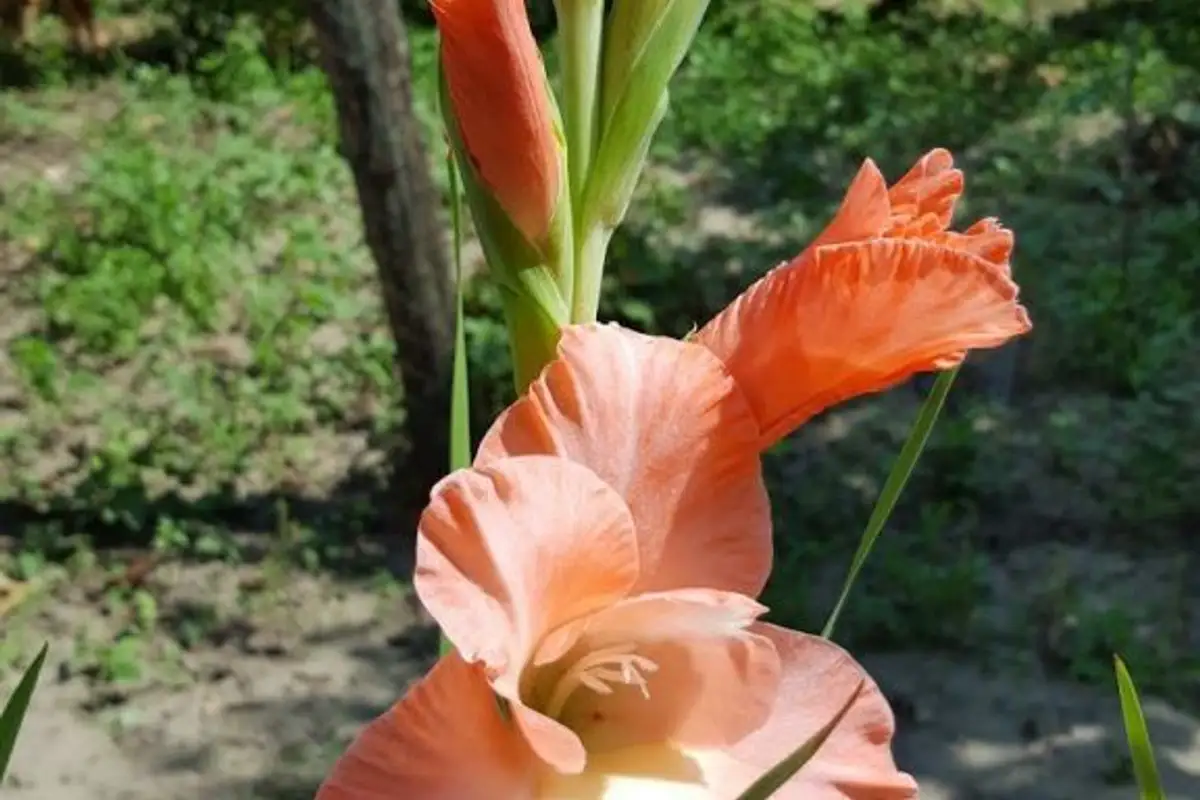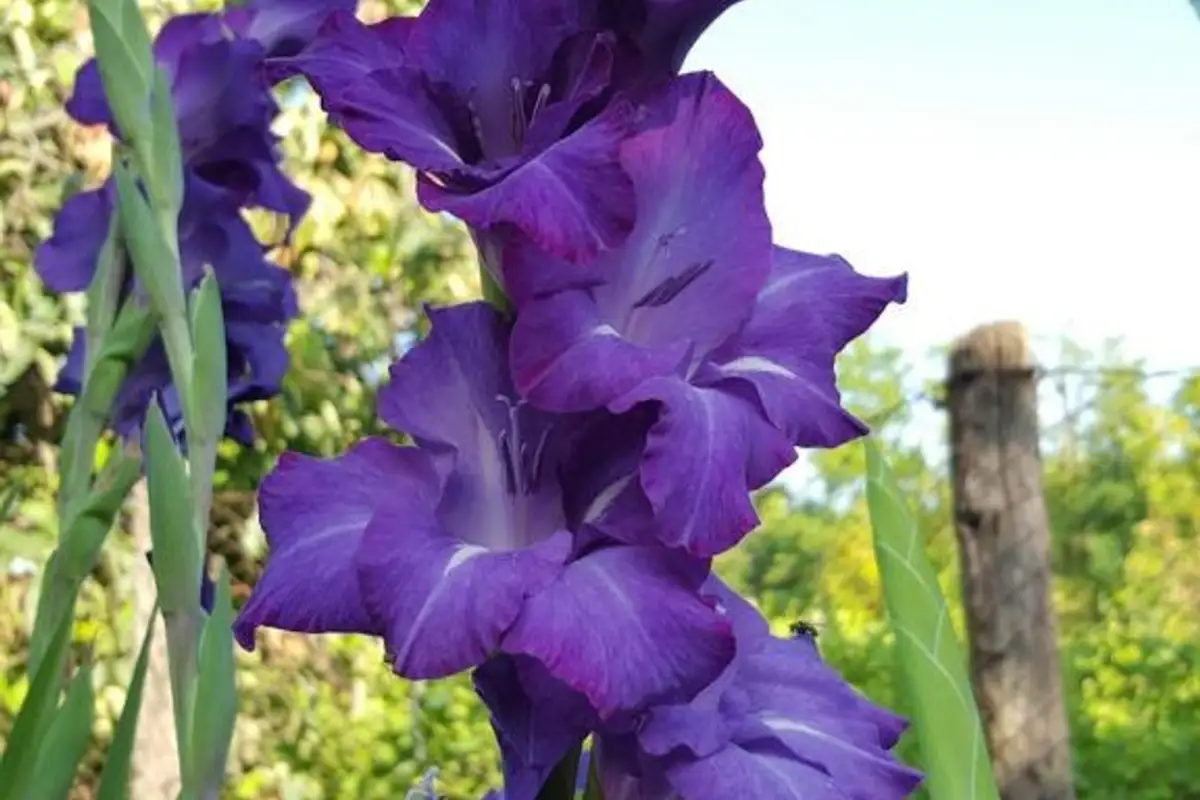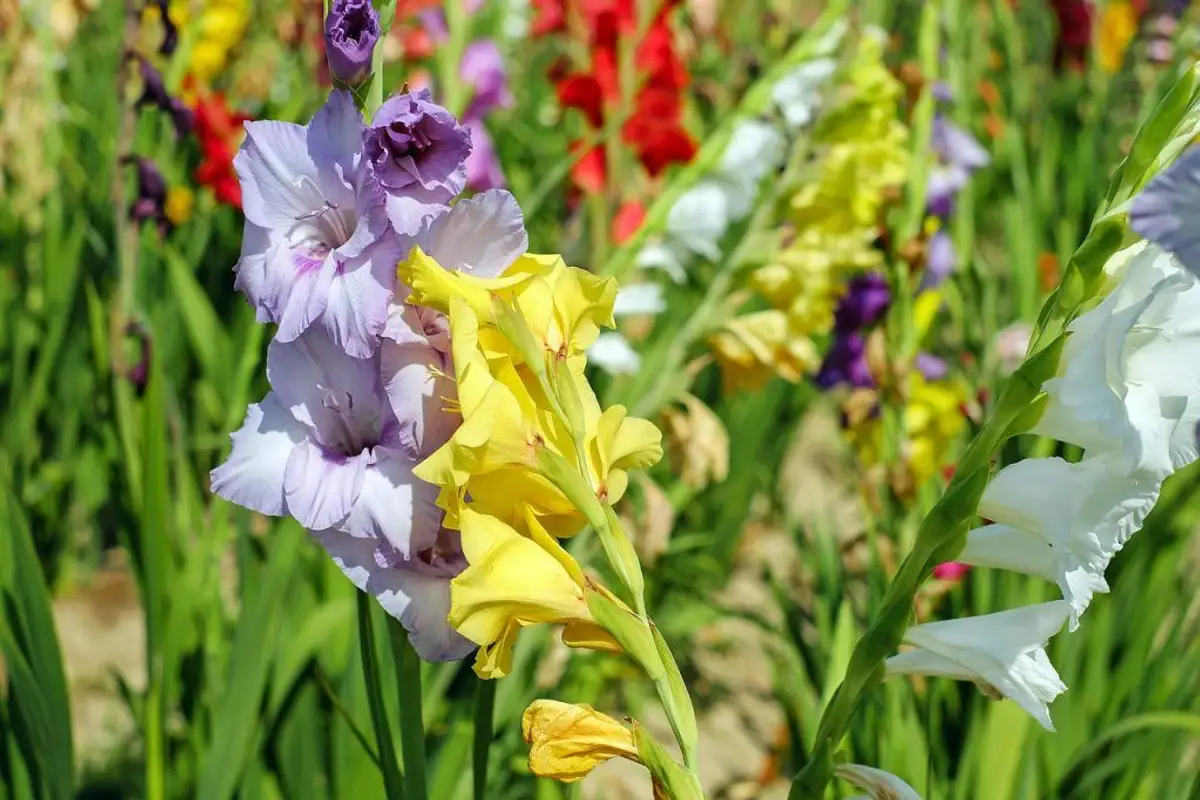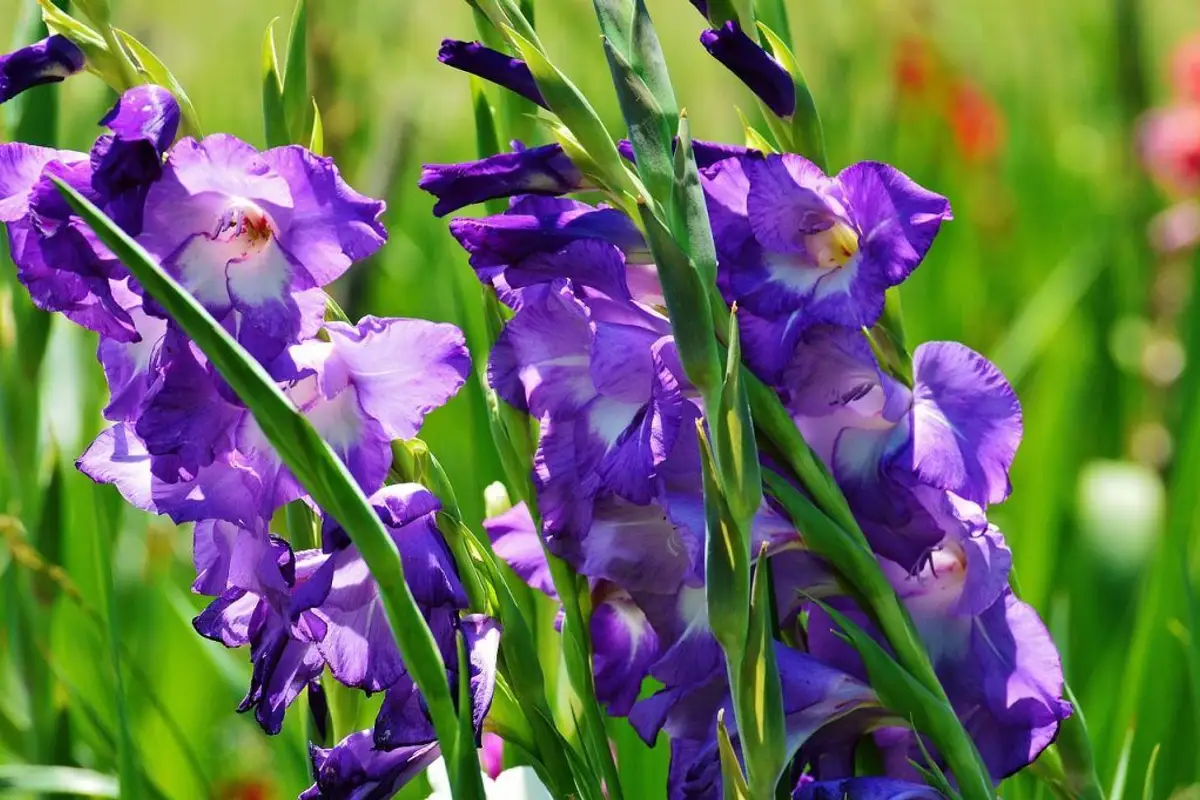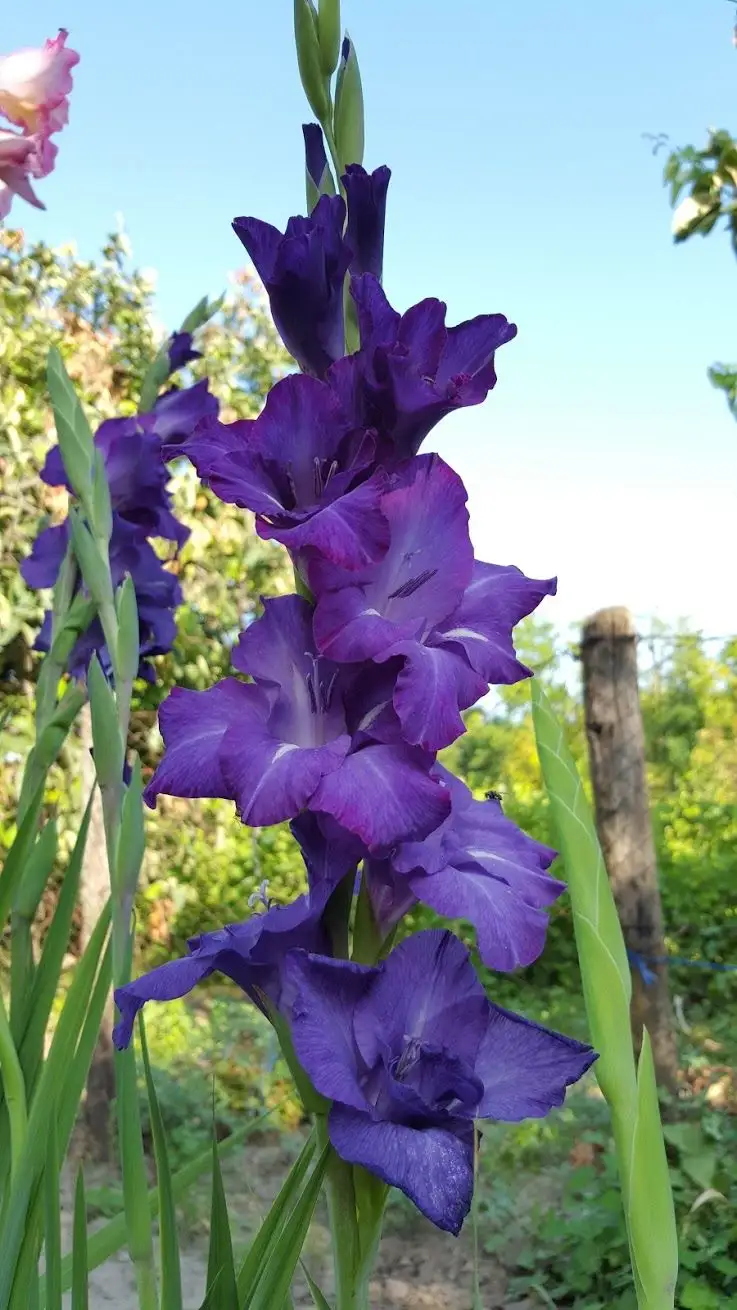
Gladiola is a flower native to South Africa and the Mediterranean basin. The name gladiola comes from the Latin word "gladius," which means sword, hence the flower's nickname "sabiuta" (little sword). This name was given due to its elongated, pointed stem. The flowers grow oriented on one side, in a spike shape.
These flowers are usually associated with adventure and are a symbol of authoritative love, hasty but unwavering.
Planting Plant them at a shallow depth
Gladiolus planting is done in spring, immediately after the frost has passed and the soil has warmed up to 10-12°C. Avoid planting bulbs in heavy, cold, and wet soil as this will significantly delay plant emergence. The planting period is crucial for flowering and proper bulb development.
It will depend on the precocity of the cultivated varieties and the soil and climate conditions of the respective region.
The optimal planting period for gladioli is April; for warmer regions with light soils, late March and early April, and for colder regions with heavy soils, late April and early May (planted bulbs can withstand a mild and short frost) to achieve flowering from July to October.
In case of semi-shade and shade, the flowers will be of inferior quality.
Care
To have beautiful gladioli that will become the queens of your garden, you need to perform some maintenance work on them, which we present below.
Hoeing. These operations are carried out to destroy the crust and weeds and can be done whenever necessary, especially after heavy rains. Usually, 4-5 hoeings are performed so as not to injure the plants.
Soil mulching. This operation is carried out to retain moisture in the soil, maintain a more constant temperature at soil level, combat weeds, and neutralize the destructive effect of heavy rainfall. Mulching is done by covering the soil with straw, peat moss, hay, sawdust after the first hoeing or after the plants have emerged.
Watering. It is obviously done whenever necessary. If the planted area is not equipped for irrigation, watering can be done with a hose or sprinkler.
Staking. Even if you don't know much about it, it is a mandatory operation, especially in areas where there are winds and the plants cannot support themselves vertically. Staking is done with wooden stakes over 1 meter high. For support, trellises can be mounted and a net can be made.
Additional fertilization. The operation is carried out either by dissolving complex minerals in water or by administering them in solid form.
Earthing up. It is usually done where staking has not been performed, 5-6 weeks before flowering, and requires a lot of attention so as not to cut or injure the plants. Earthing up prevents leaning and falling of the plants.
Gladiolus diseases are generally caused by fungi, bacteria, and viruses, but they can also be caused by physiological accidents. Control measures are based on treating the bulbs after harvest and before planting with mercury-based substances or disinfecting the soil with steam and chemicals.