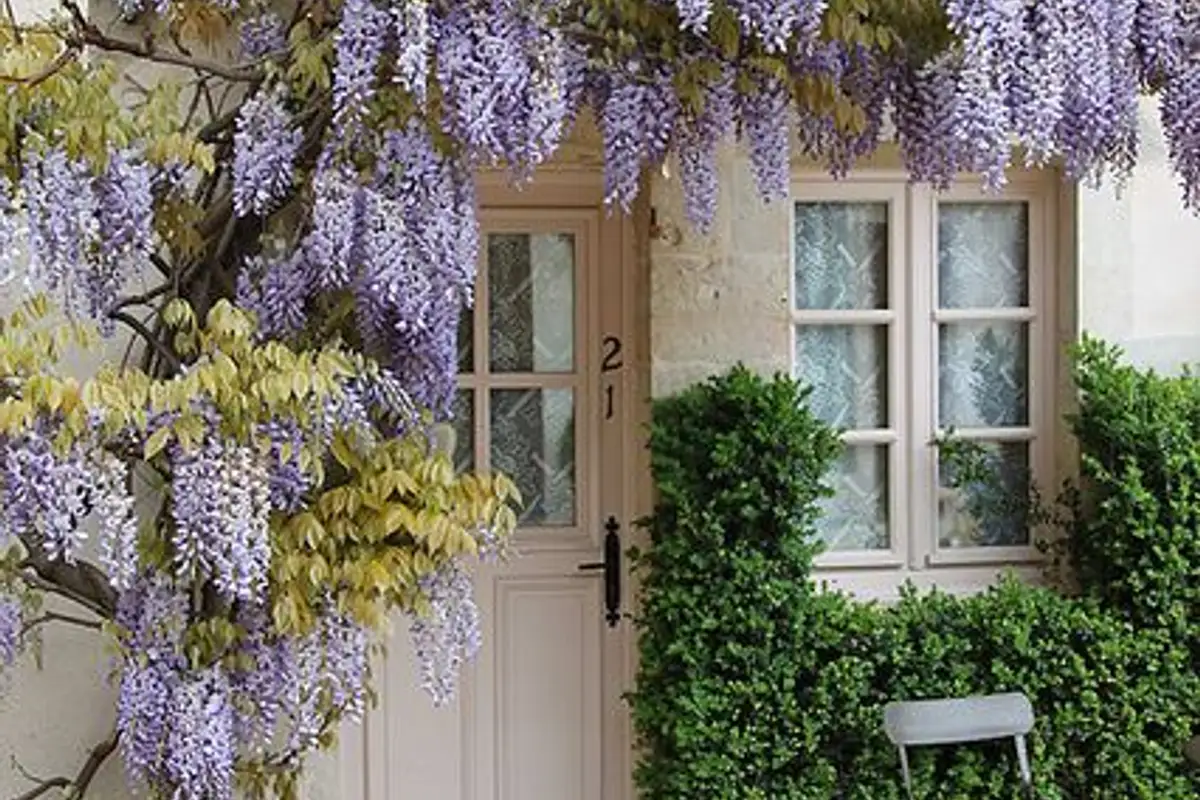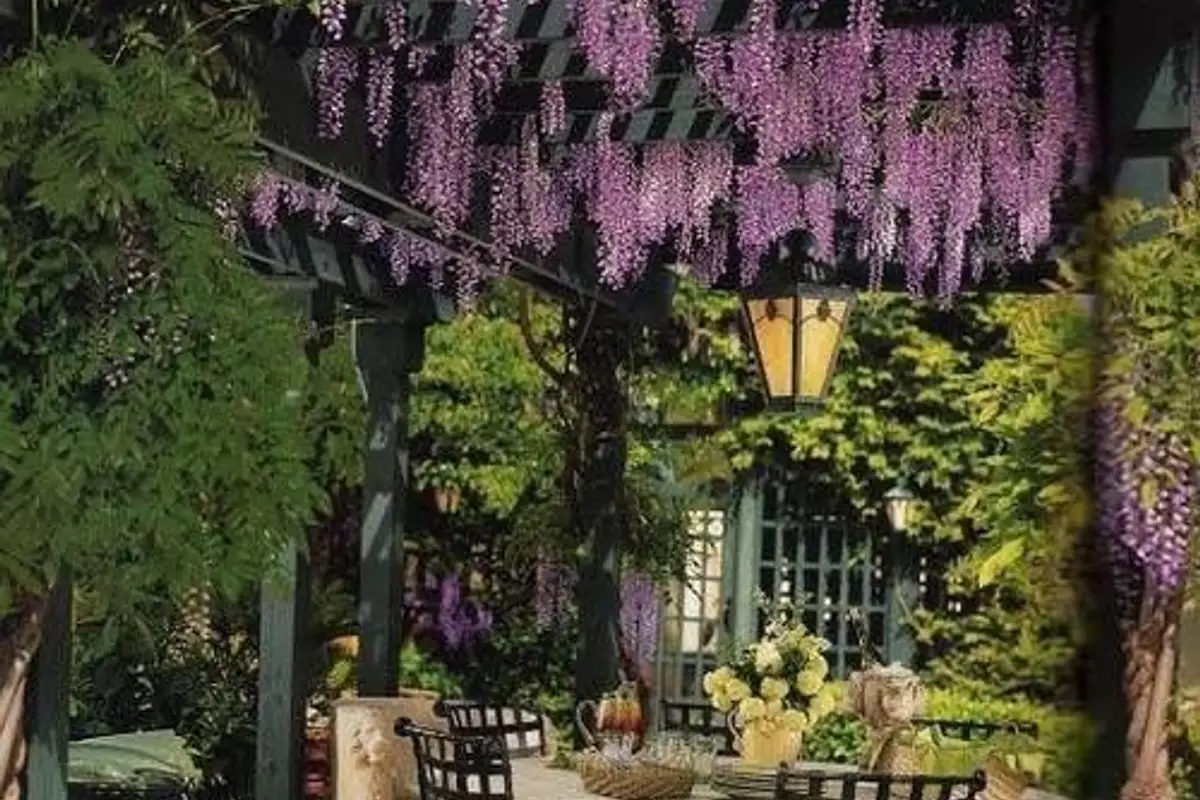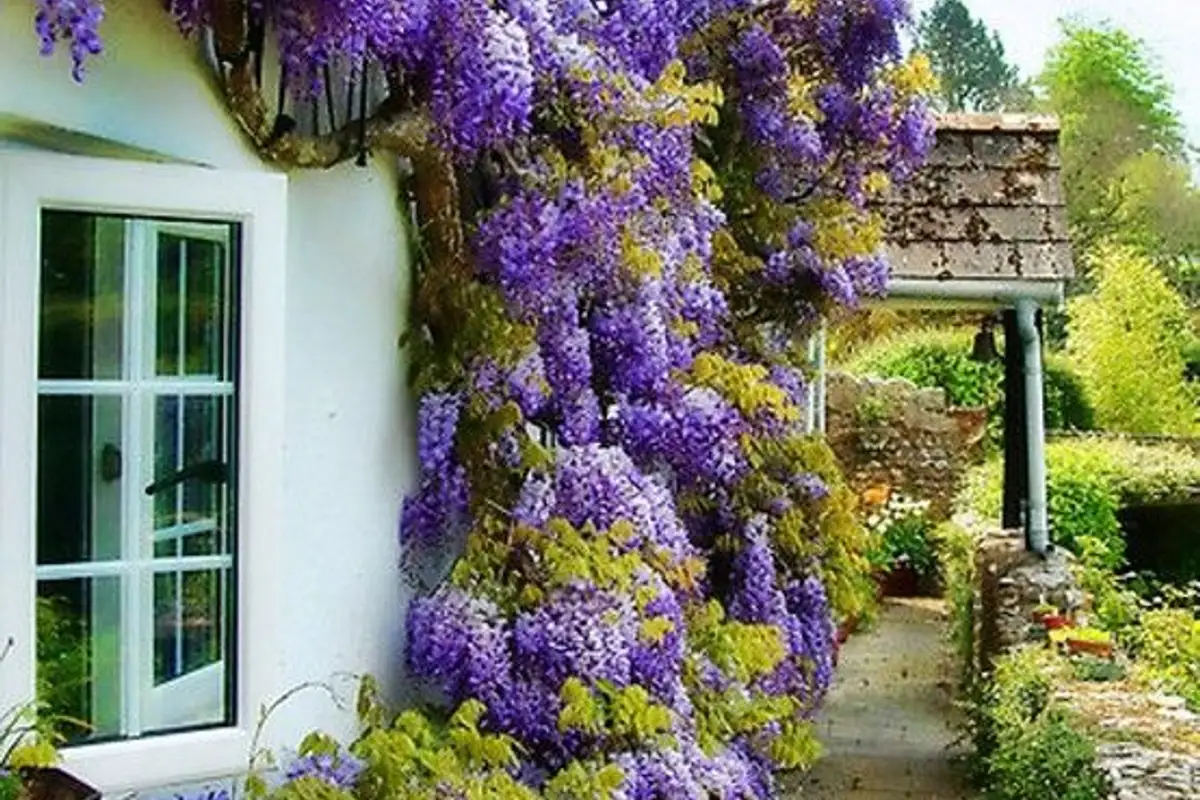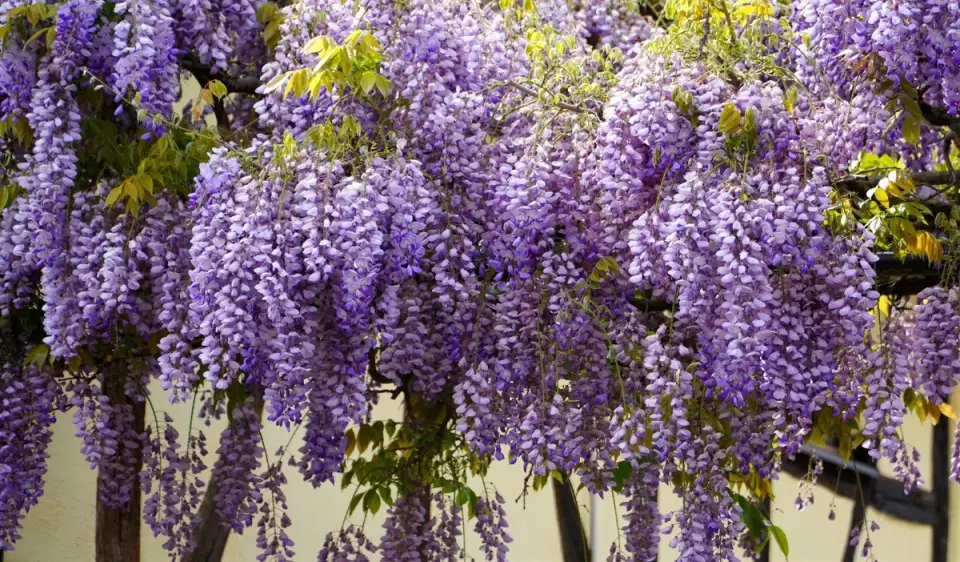
Glycine Wisteria is a climbing plant native to Japan that has a very fast growth rate, and during its flowering period transforms the place where it is cultivated into a true fragrant cascade.
This ornamental plant is impressive not only for its beauty but also for the speed at which it grows, reaching up to 4 meters in height in a single summer. The flowers resemble those of the lilac tree except for their color, which leans towards violet.
vironmental conditions
If you are considering planting it in your yard, it would be best to place it next to a wall so that it can grow vertically. Wisteria needs to be planted in spacious locations, as both its roots and branches need ample space to develop.
This plant species does not have particular soil requirements but prefers sunny locations.
Multiplication
The simplest way to obtain a wisteria shrub is from cuttings. A cutting is obtained by cutting a mature branch of about 10–12 centimeters and planting it in a pot with soil. We will transplant the new shrubs into the garden the following year, in spring or autumn.
Propagation can also be done by seeding. Glycine seeds are in the pods formed after the flowers have passed, but the seed propagation method is quite laborious.
Sowing can be done either in a greenhouse or indoors. Place one seed in a pot with soil, press lightly and water. Once the plant has sprouted, it should be removed from the pot and moved to the location you have chosen. Ideally, the location should be sunny. Planting will take place in mid-May, or in November, if you sowed them last autumn.
Care