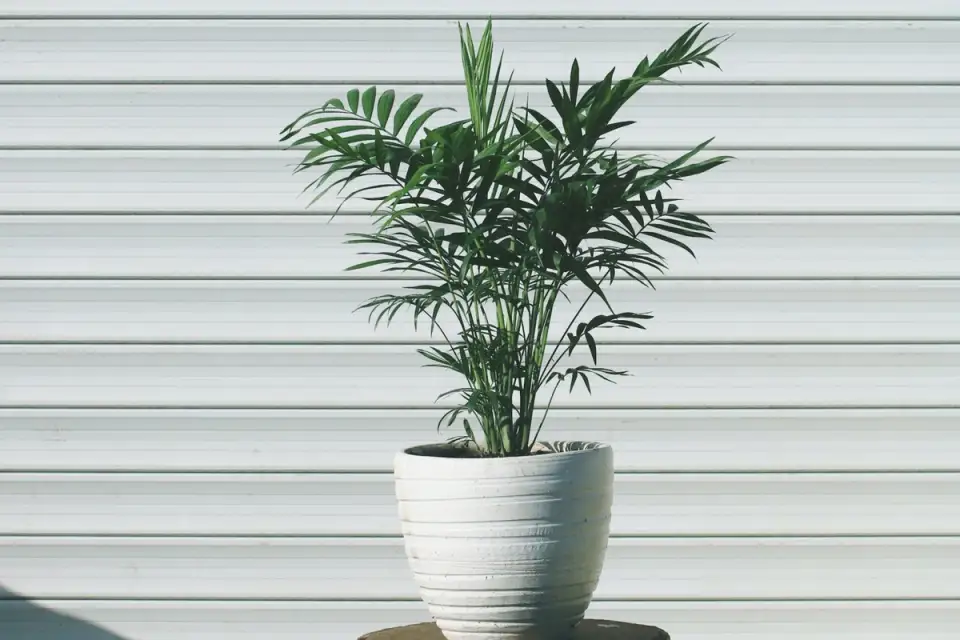
The Bamboo Palm, scientifically known as Chamaedorea seifrizii, is a decorative plant native to the tropical jungles of Central and South America. While there are countless types of decorative palms that can be grown both indoors and outdoors, the Bamboo Palm is an excellent choice.
First and foremost, it doesn't require special care, being easy to maintain and developing harmoniously at a fairly rapid pace. Moreover, this type of palm will bring numerous benefits to the homeowners where it is placed.
The Bamboo Palm is found in nature in the shade of other trees in tropical jungles. It grows in the form of a cluster of grouped stems, each with rings along its entire length, like those of bamboo, hence its name. Each stem is crowned with an open crown of leaves, which are approximately 50 centimeters long.
The height it usually reaches is about two meters, but under suitable conditions, such as humidity, luminosity, and semi-shade, it can exceed three meters.
Positioned under direct sunlight, there is an increased risk that the palm will dry out and you will no longer be able to enjoy the energy transmitted through the green color of its leaves and its simple presence.
However, the Bamboo Palm is an extremely tolerant plant, capable of adapting to different environments. It can be grown both indoors and outdoors, resisting well even in conditions of low light and dry air.
Its presence in any room in your house will significantly enhance the atmosphere with its particular palm appearance, characterized by bamboo-like features.
It is recommended to place it in spaces with high ceilings due to the height it can reach.
Benefits of this type of palm
In addition to its particularly pleasant appearance, the Bamboo Palm will bring a number of other benefits to its owners.
One characteristic recognized by researchers is its ability to purify the air in the room where it is located. Chamaedorea seifrizii proves more efficient at removing toxins than related palm species such as Chrysalidocarpus lutescens and Rhapis excelsa.
Various materials and substances can produce a high degree of indoor pollution. One factor contributing to indoor pollution is thermal or acoustic insulation, which can be made with harmful materials. Toxic substances can also be released into the air due to the composition of some paints, varnishes, finishing solutions, or cleaning products.
Other factors that can be dangerous to health are cigarette smoke, carpet and drapery fibers, or mold.
According to research conducted by several NASA researchers, the Bamboo Palm is on the list of plants that can protect against the harmful effects of ammonia, formaldehyde, and benzene. Formaldehyde is a vapor that can cause respiratory and neurological problems, as well as several types of cancer.
The Bamboo Palm will also reduce bacteria and fungi present in the air, adding the necessary humidity to combat respiratory and allergic conditions. Pollutants are absorbed through the leaves, so it is important to keep them clean by regularly wiping away dust with a damp cloth. The plant's leaves will absorb carbon dioxide, releasing oxygen into the air.