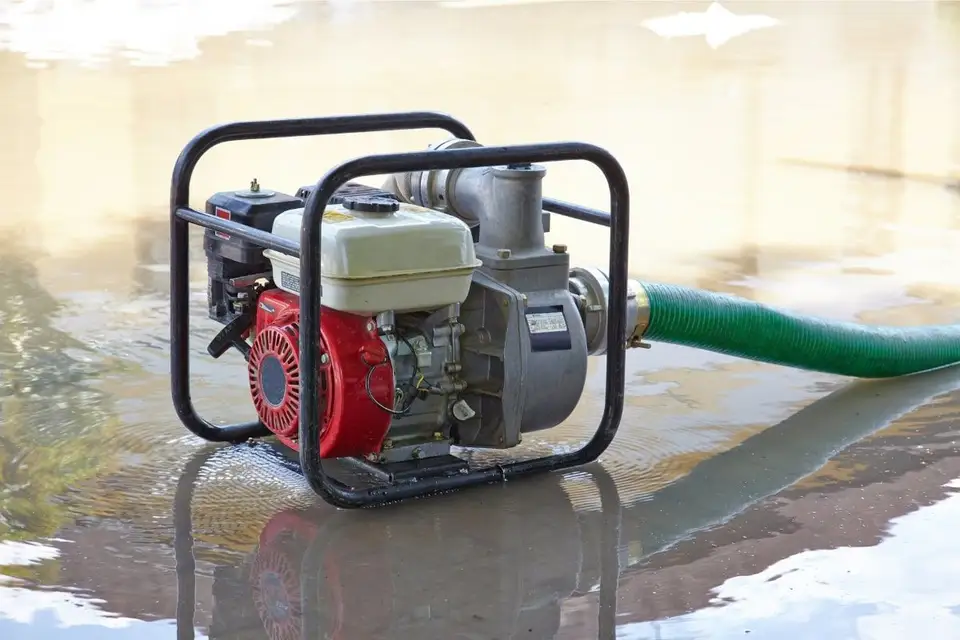
Water pumps are an essential component of modern infrastructure, being indispensable both in rural and urban households and in numerous industrial fields. In households, these appliances enable the constant water supply to dwellings that are not connected to public networks or require an additional system to maintain pressure in installations.
They are also used for irrigating gardens, filling reservoirs, supplying water to heating plants, or evacuating wastewater from basements and cellars. In the industrial sector, water pumps play a vital role in processes such as equipment cooling, liquid transport, water filtration, or maintaining sewage and drainage systems.
The importance of water pumps is highlighted by the increased efficiency they bring to water consumption and distribution, thus contributing to reducing losses, optimizing resources, and increasing user comfort.
On a continuously developing market with increasingly advanced technologies, it is essential to understand what types of pumps exist, what their technical characteristics are, which model suits your needs, and how they should be maintained for safe and long-lasting operation. This guide will help you make informed and efficient choices.
1. Why do you need a water pump?
Advantages of using a water pump:
Reduced water bills
Increased efficiency in household or industrial processes
Flexibility in installation and use depending on the purpose
2. Types of water pumps – classification and uses Choosing the right type of pump is essential to achieve optimal results and prevent malfunctions. Water pumps are mainly divided into two main categories: surface pumps and submersible pumps. Each of these has multiple subtypes and applications.
a) Surface Pumps
Used for:
Water supply to homes
Garden irrigation
Drawing water from shallow wells
Examples: Hydrofoors – for continuous water supply in households
Centrifugal pumps – frequently used in industrial and agricultural applications
b) Submersible Pumps They are fully submerged in water and work by pushing the liquid to the surface.
Used for: Deep wells
Dirty or particulate water (e.g., from flooded basements or cellars)
Heavy industrial applications
Examples: Deep well submersible pumps – ideal for drilled wells
Sewage pumps – with integrated grinder for complex discharges
c) Other popular types of water pumps Self-priming pumps – easy to use, ideal for irrigation
Grinder pumps – useful for households not connected to the sewer system
Circulation pumps – for heating or air conditioning systems