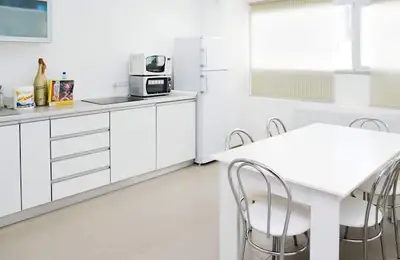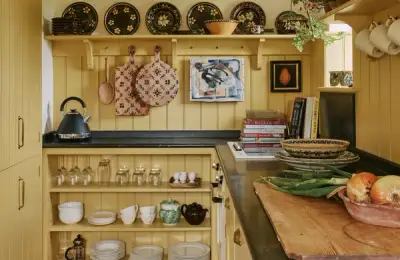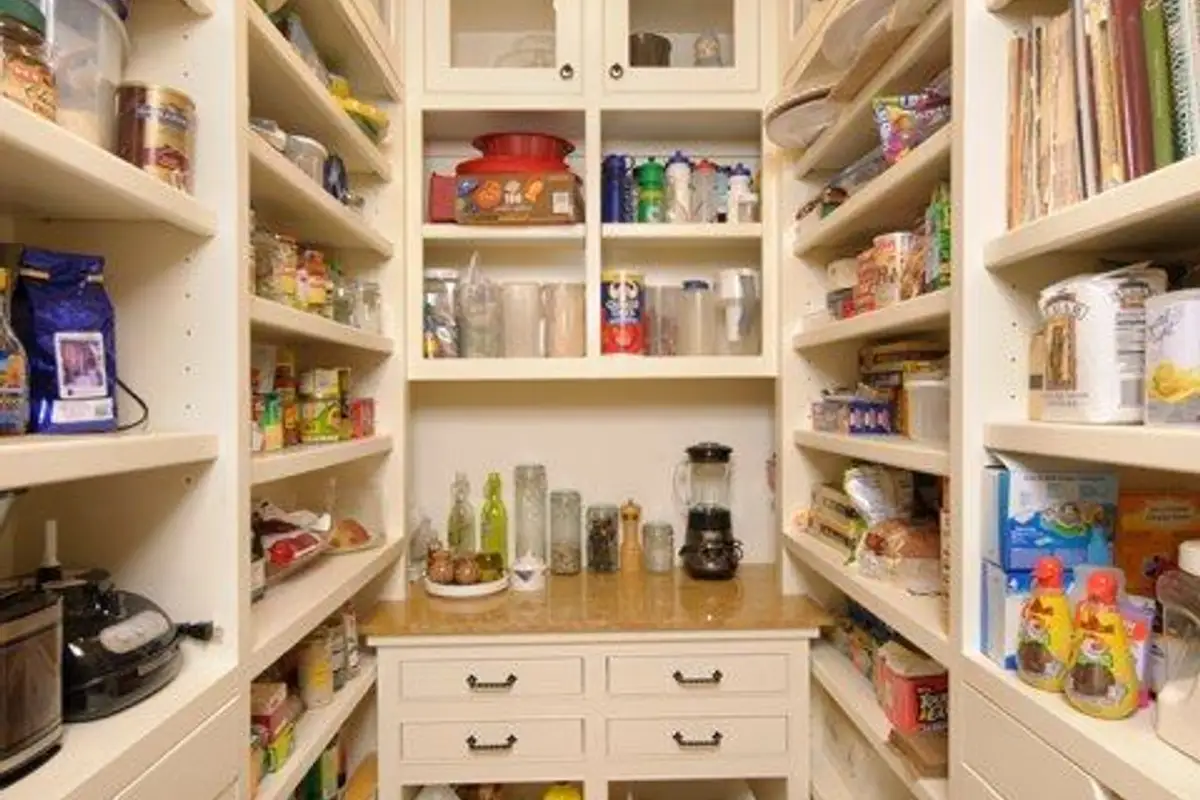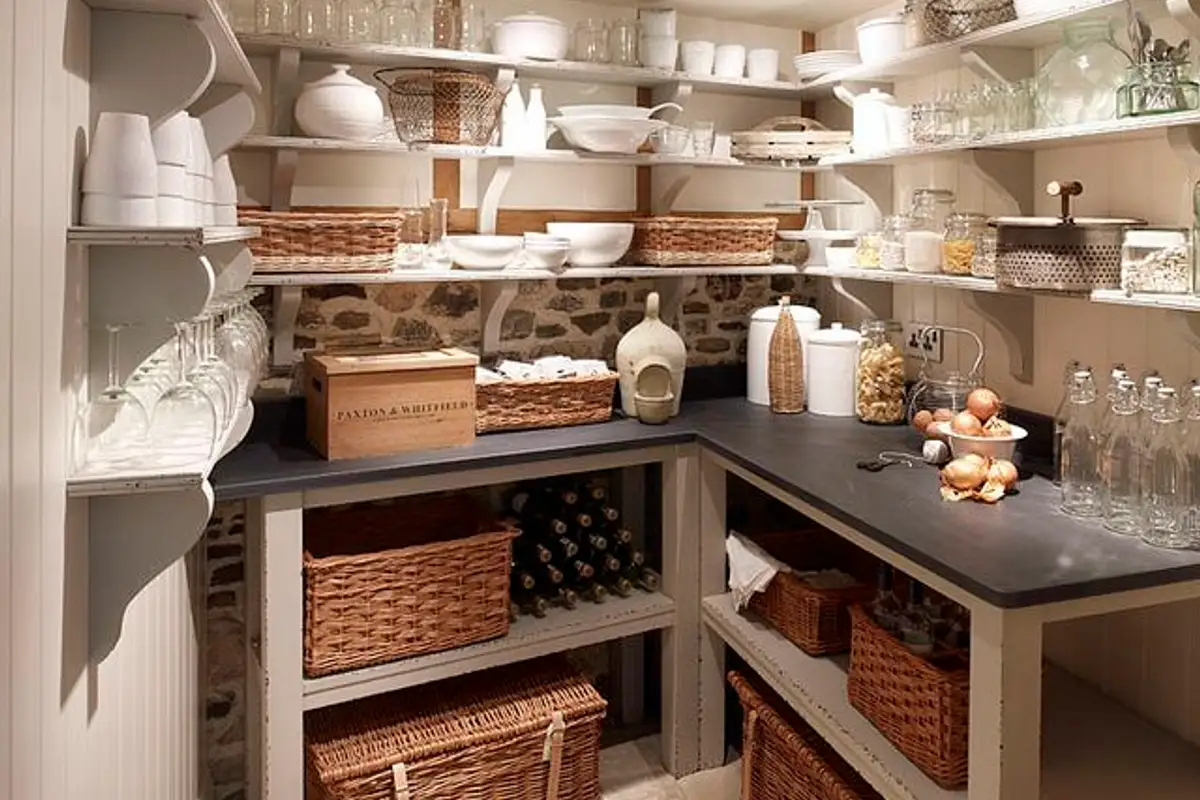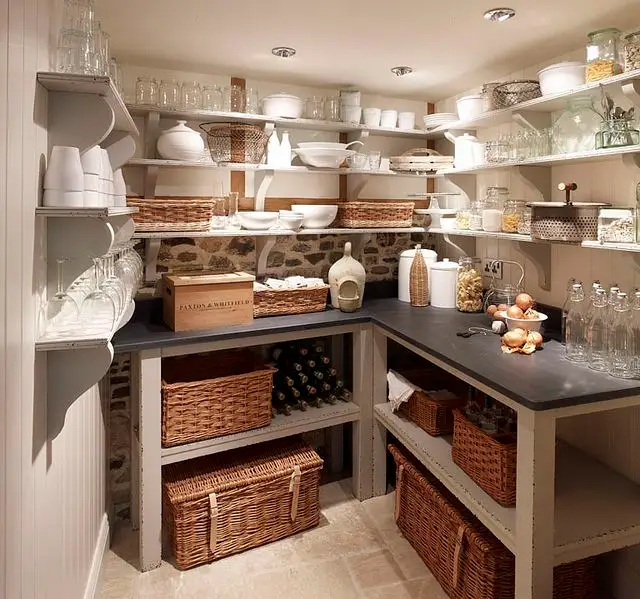
For all kitchen accessories, from frying pans and pots to jars of jams and preserves, as well as fruits and vegetables, the pantry is the ideal place to store them. Whether it's located in the kitchen or hallway, we all know how useful this storage space is in our homes.
If you are among those who are preparing to furnish a pantry, the following tips will be helpful.
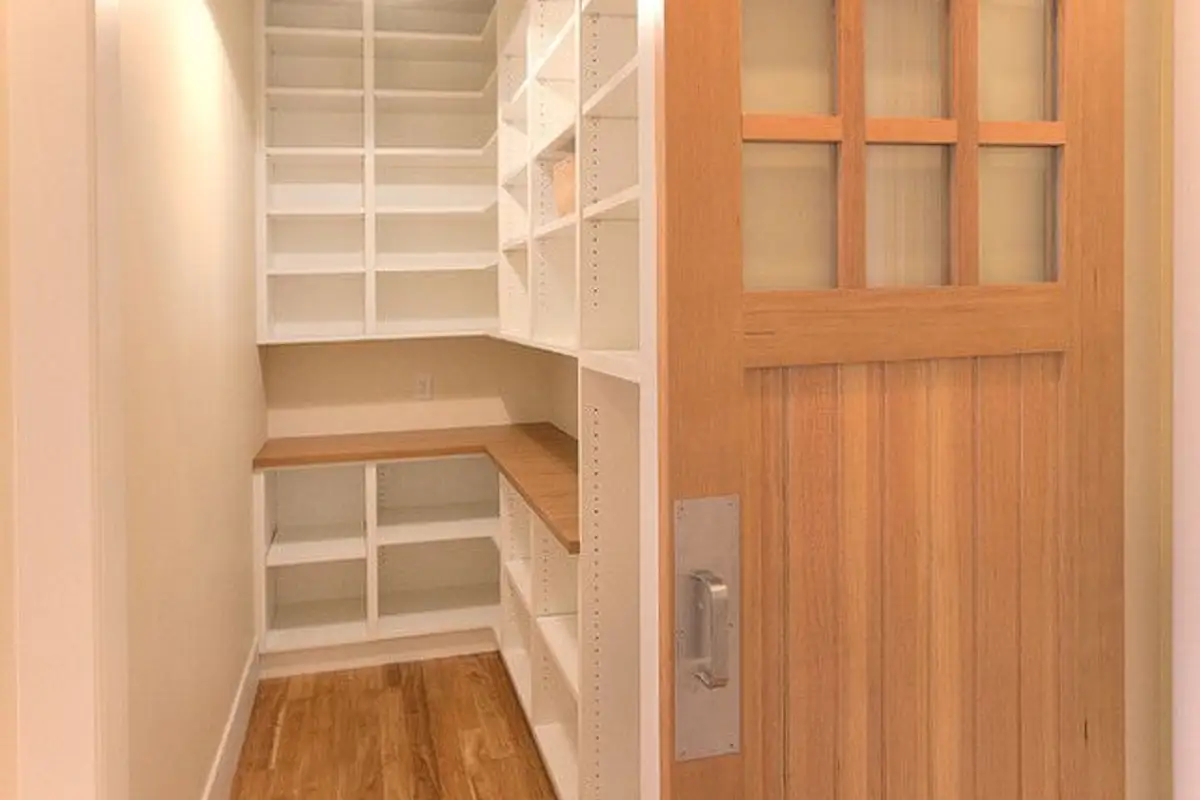
Let's start with the door. How will it open? Inward, outward, or will you install a sliding door? It's good to consider this aspect, especially if the space is small. A door that gets in the way is the last thing you want. An outward-opening door is the right option as it provides more space inside the pantry.
Inward-opening doors limit access to shelves and racks, especially those stored in the pantry.
As everywhere in the house, it's important to have efficient lighting. This aspect is often overlooked. The pantry is a closed and dark space. Think about needing light to easily reach the top shelves and avoid mixing up jars. Choose warm lighting and a small fixture that can be easily attached to the ceiling.
Also, make sure the switch is easily accessible, either inside the pantry or just outside near the door.
Think about the arrangement of shelves and racks, especially how high they will be and how you will reach them. If you choose to mount shelves all the way up near the ceiling, make sure you can reach them. A child's stool that you always keep handy or a mini-ladder are two solutions to consider.
If the space you have for the pantry is located next to the kitchen, you can maintain the kitchen layout for continuity and consistency. This refers to the type of material and colors used. However, no one is stopping you from experimenting if you wish.
You can choose to paint a wall or part of a wall in an accent color and that area can be dedicated to specific products that household members can easily identify. The shape of the shelves and racks can vary, some can be longer and others narrower, or you can opt for only suspended shelves of the same size.
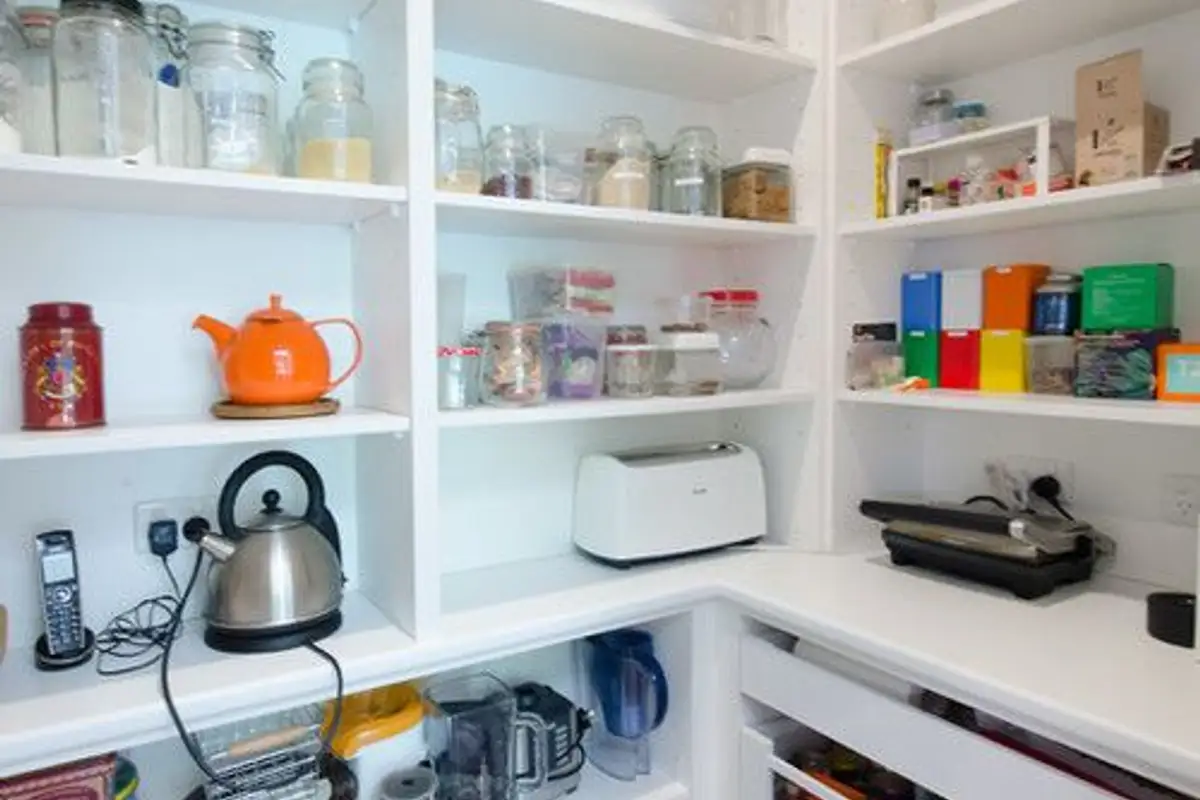
Consider how you will arrange things in the pantry. Place the items you use most on the front shelves, accessible as soon as you enter the pantry. Make sure the shelves are not too deep so that you can see everything on them, by placing small objects in front and larger items in the back.
Heavy pots can be stored on wider shelves in the lower part of the pantry. In the upper part towards the ceiling, you can place items that are used less often.
If the space in the pantry is limited, make the most of every portion of this room. Thus, corner-type shelves can be mounted, thus gaining storage space. When planning the types of shelves, consider the sizes of the pots or appliances you will store in the pantry.