The bathroom is perhaps the most intimate space in our homes, a private area where we prepare for a new workday. Considering that bathrooms often lack natural light, the focus is on artificial lighting. Here's what you should consider:
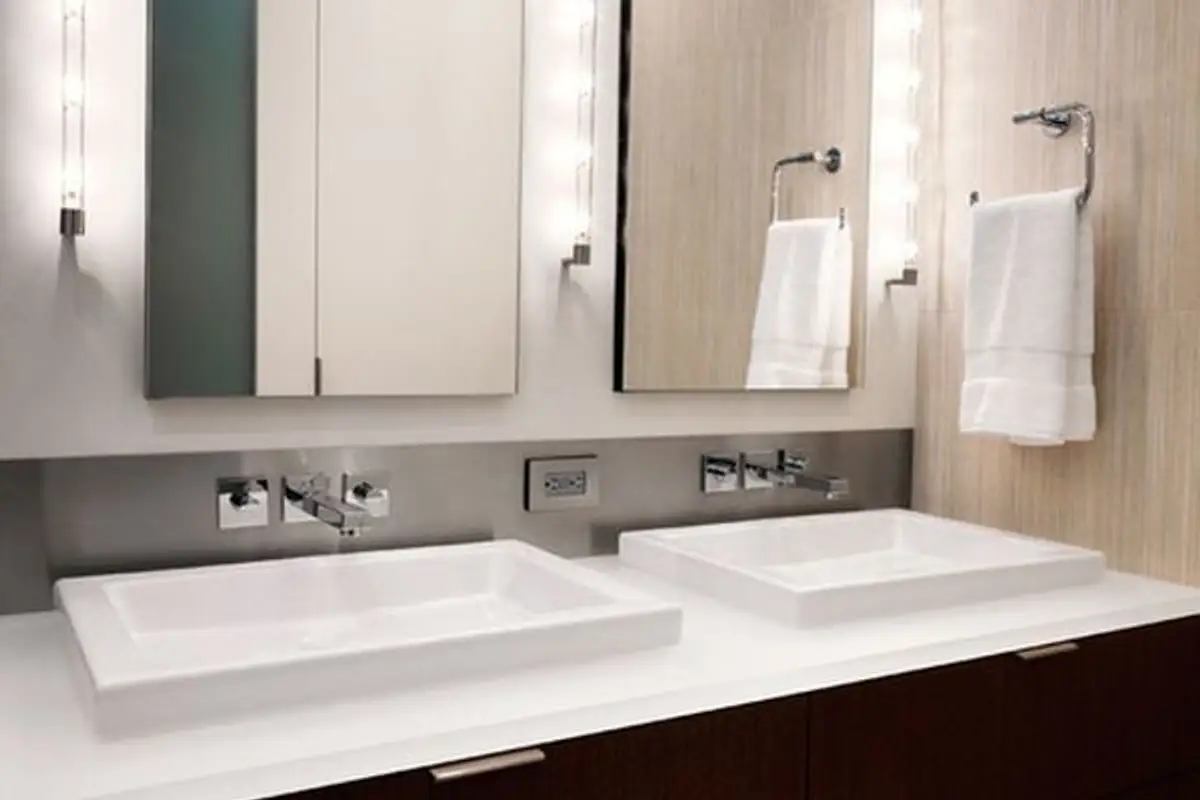
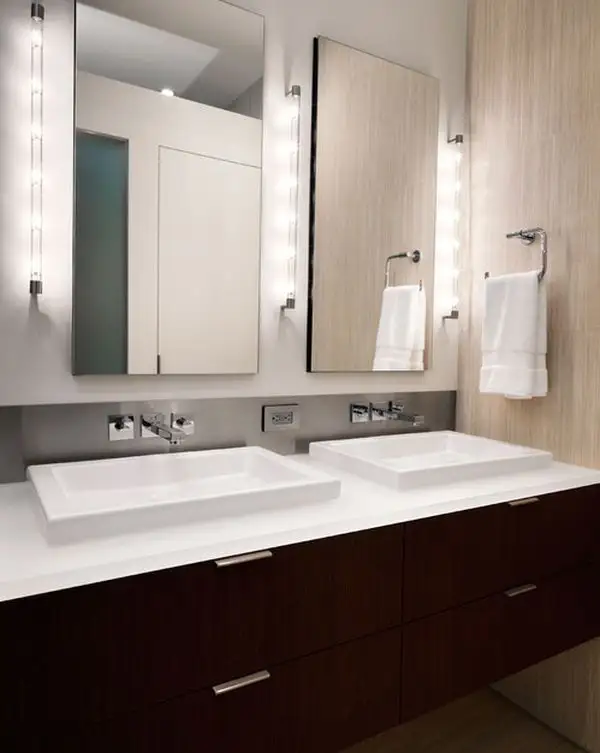
Opening GalleryFunctional Lighting Functional lighting refers to the primary light source needed in a room. In the case of the bathroom, the fixture is most often placed around the mirror. Specialists recommend mounting sconces at eye level to avoid shadows.
The best way to illuminate is from above, directly over the mirror, and from the sides, with the light directed towards the face. This allows you to apply makeup, shave, or take care of oral hygiene in a way that doesn't strain your eyes.
Avoid ceiling lighting as this will create shadows on the face of the person looking in the mirror, resulting in an unpleasant aging effect.
The bulb should have between 75 and 100 watts for incandescent bulbs or approximately 50 watts for halogen bulbs. The appearance of the light is also important. Therefore, white, cool light is recommended for the bathroom. However, this depends on personal preferences as some people may prefer a yellow, warmer, and more pleasing light to the eyes.
In addition, it's good for the exterior covering of the bulb to be made of frosted glass to protect eyesight.
Ambient Lighting
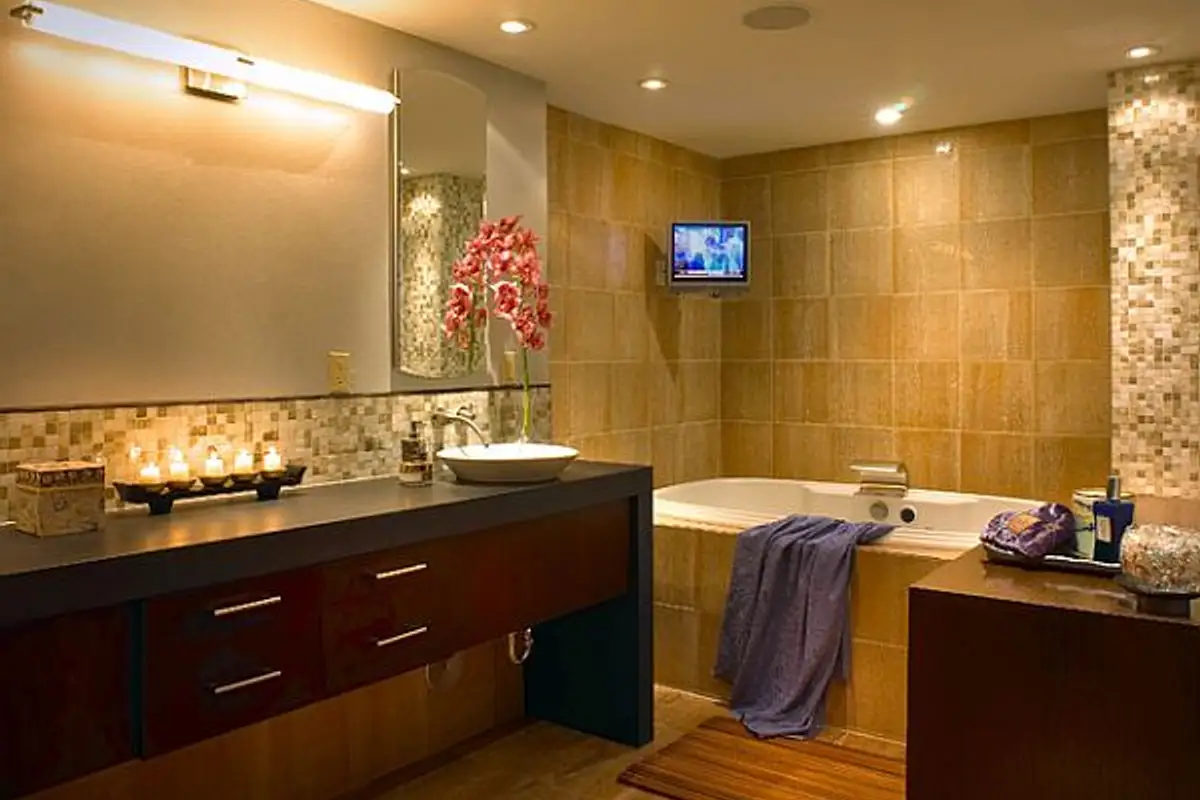
For shower cubicles, precision lighting will be necessary. You can use recessed spotlights directly in the shower area or, if applicable, near the bathtub.
When purchasing bathroom light fixtures, make sure that the lamps or sconces are waterproof and suitable for a humid environment, thus protecting you and extending the life of the fixture.
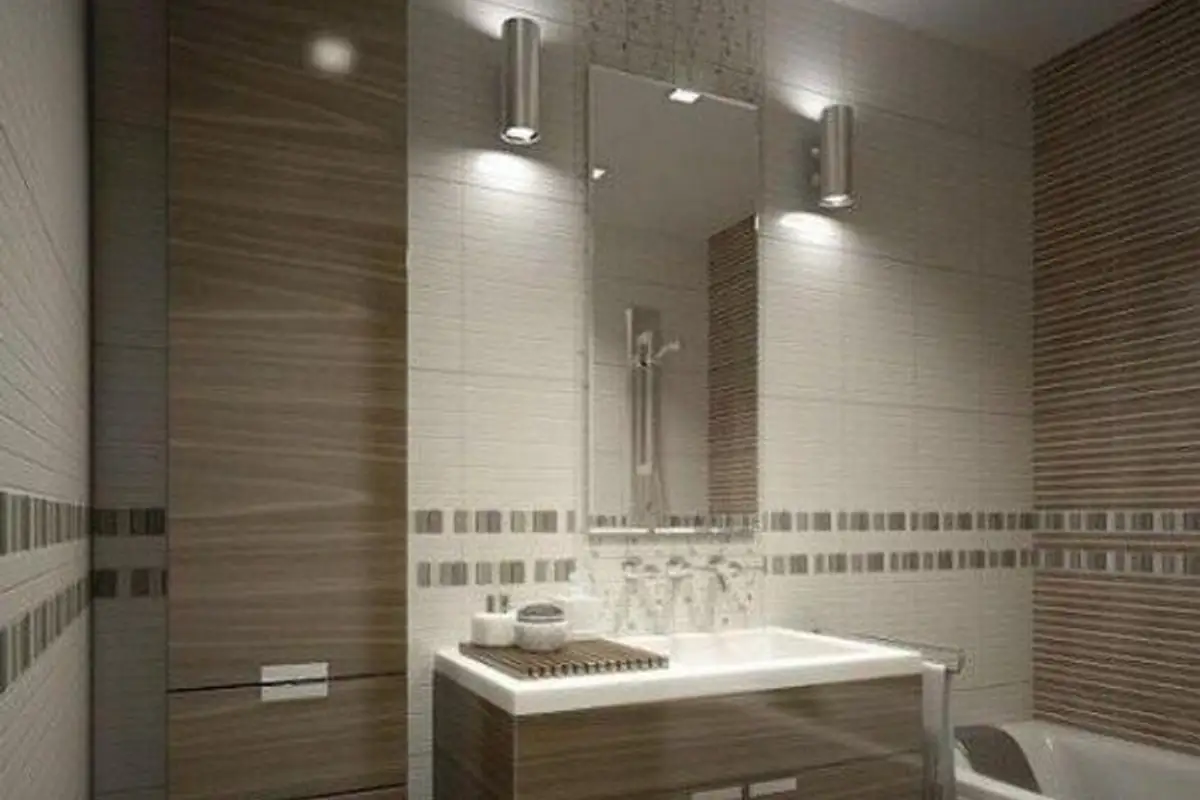
Specialists recommend mounting sconces at eye level to avoid shadows.