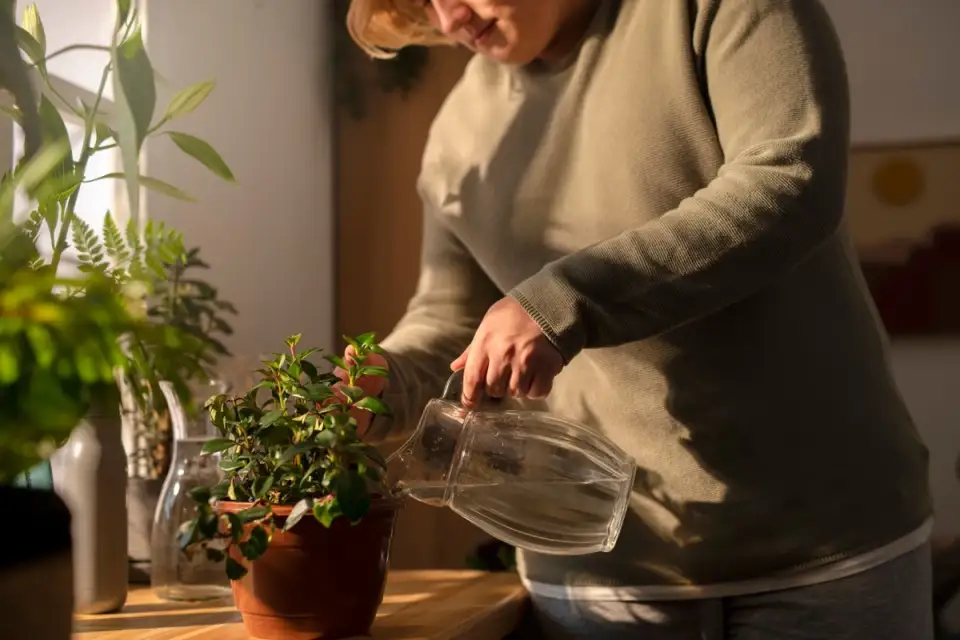
Hydrogen peroxide, also known as hydrogen peroxide, is a valuable aid for both indoor and outdoor plants. When used correctly, this solution contributes to the health and beauty of plants, stimulating more abundant flowering and intense fragrance, even in the cold season.
During winter, dry air in heated homes and reduced natural light slow down photosynthesis, affecting the vitality of indoor plants. Hydrogen peroxide, through its properties, effectively combats these drawbacks.
In fact, hydrogen peroxide is naturally found in small amounts in rainwater, explaining why plants thrive after a good rain – it oxygenates the soil and stimulates nutrient absorption much more efficiently than tap water or well water.
How to use hydrogen peroxide for plant care at home
Watering roots:
Preparation: Add 50 ml of hydrogen peroxide (3% concentration) to 1 liter of room temperature standing water.
Application: Water plants with this solution once a week.
Benefits: Prevents fungal and bacterial diseases, promotes healthy roots.
Leaf spraying:
Use: The same solution (50 ml hydrogen peroxide to 1 L of water) can be sprayed on leaves.
Frequency: Daily, especially for plants that require high humidity.
Benefits: Removes dust and impurities, improving light absorption.
Revitalization treatments:
Indications: For wilted plants with yellowed or spotted leaves.
Action: Combats harmful bacteria in the soil, prevents and destroys molds, prevents root decay and stimulates their development.
Pest control (mites, fungus gnats, mealybugs):
Preparation: Mix 30 ml of hydrogen peroxide (3%), 250 ml of water and 40 drops of iodine.
Application: Spray on leaves and soil, covering the affected areas well. Repeat as needed.
Effectiveness: Removes pests after a few applications.
Other important benefits of hydrogen peroxide for plants