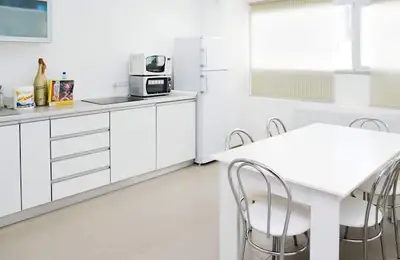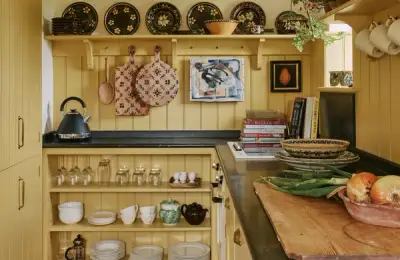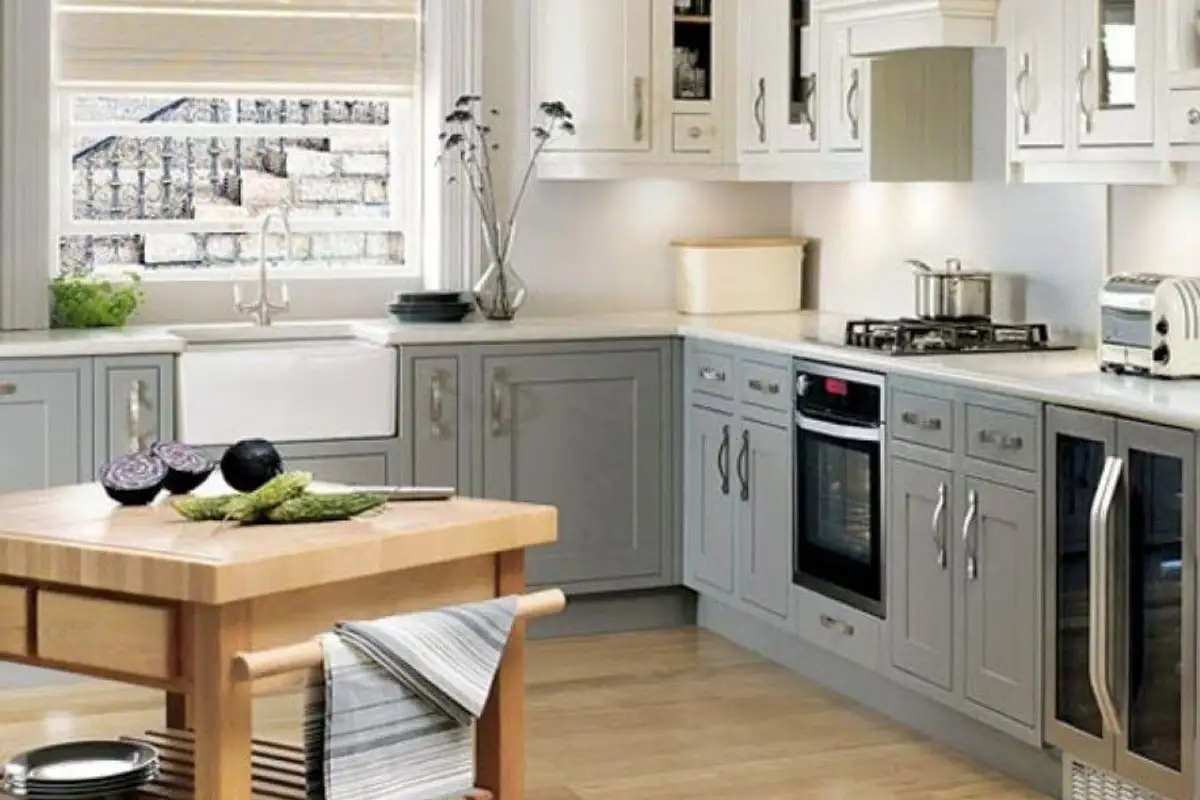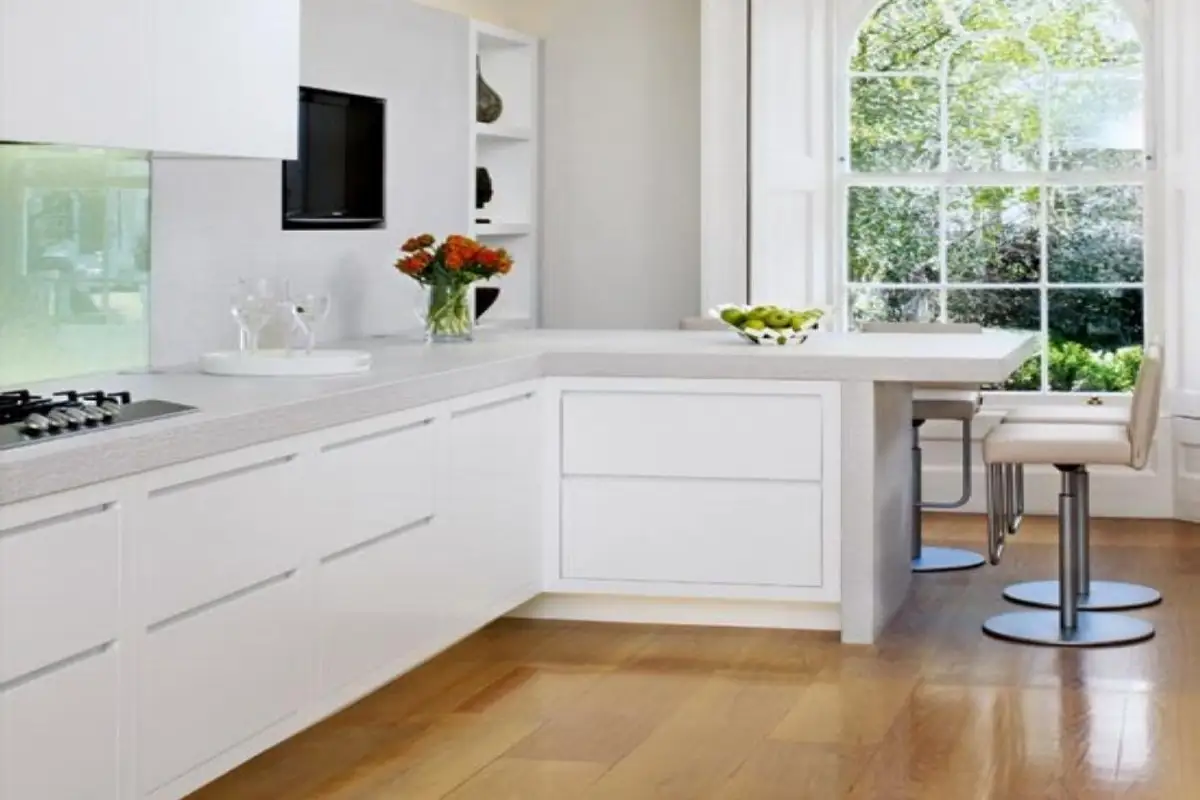
The kitchen layout is essential for its proper functioning (and your happiness). Choosing a type depends primarily on the existing plan of the room, the activities carried out here, and the needs and habits of the users.
Open the GalleryPlanning a kitchen always starts with the concept of the work triangle (the distances between the cooking area, the washing area, and the food storage zone).
The term "work triangle" is evolving today towards a concept of a work zone because traditional kitchens, which only serve for meal preparation, are beginning to disappear in favor of multifunctional kitchens that host more activities.
There are three main kitchen configurations: L-shaped, U-shaped, and linear kitchens, plus combinations of these. Open space kitchens are becoming increasingly popular, which can use one of these configurations or variations of them.
When planning your kitchen, establish from the beginning that you will not compromise on functionality.
L-Shaped Kitchen
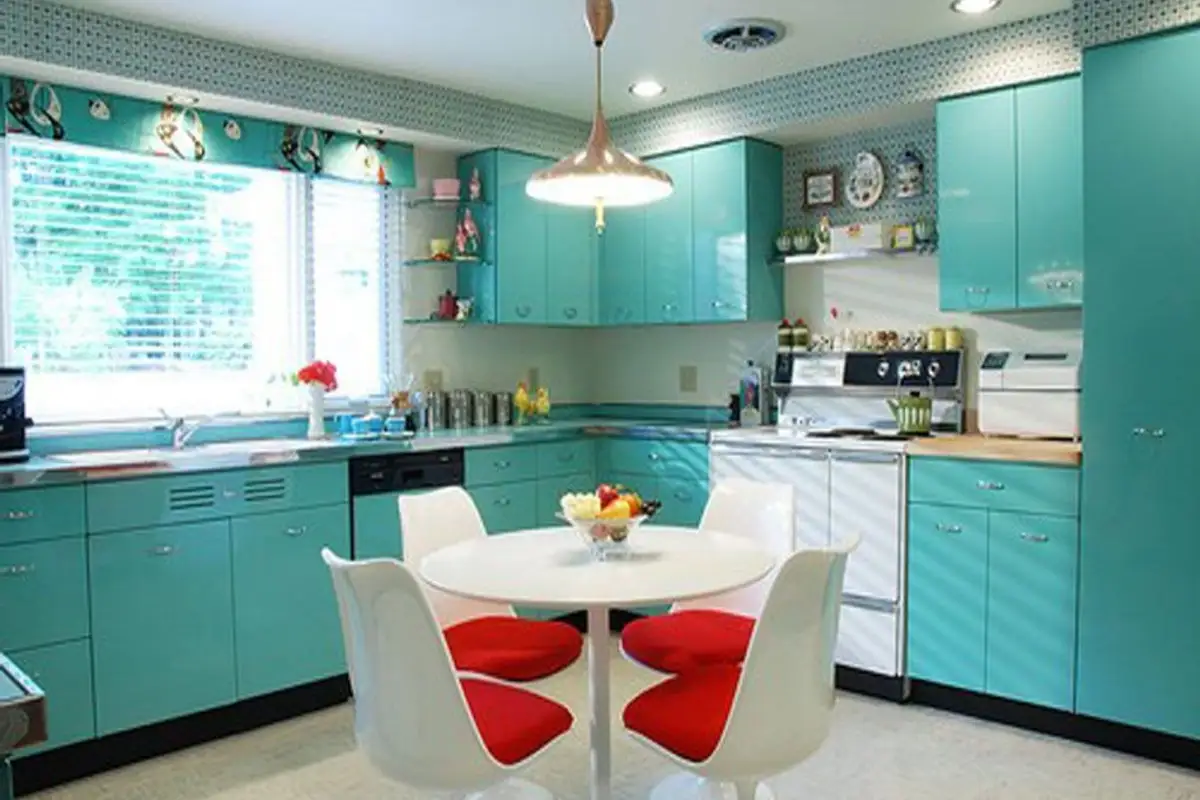
It is the most common configuration. It requires less space and offers flexibility in work points. One of the benefits of this type of kitchen is the possibility of placing a table in the central space. In this way, you can bring the family closer to the area where the meal is prepared when one of the family members is cooking.
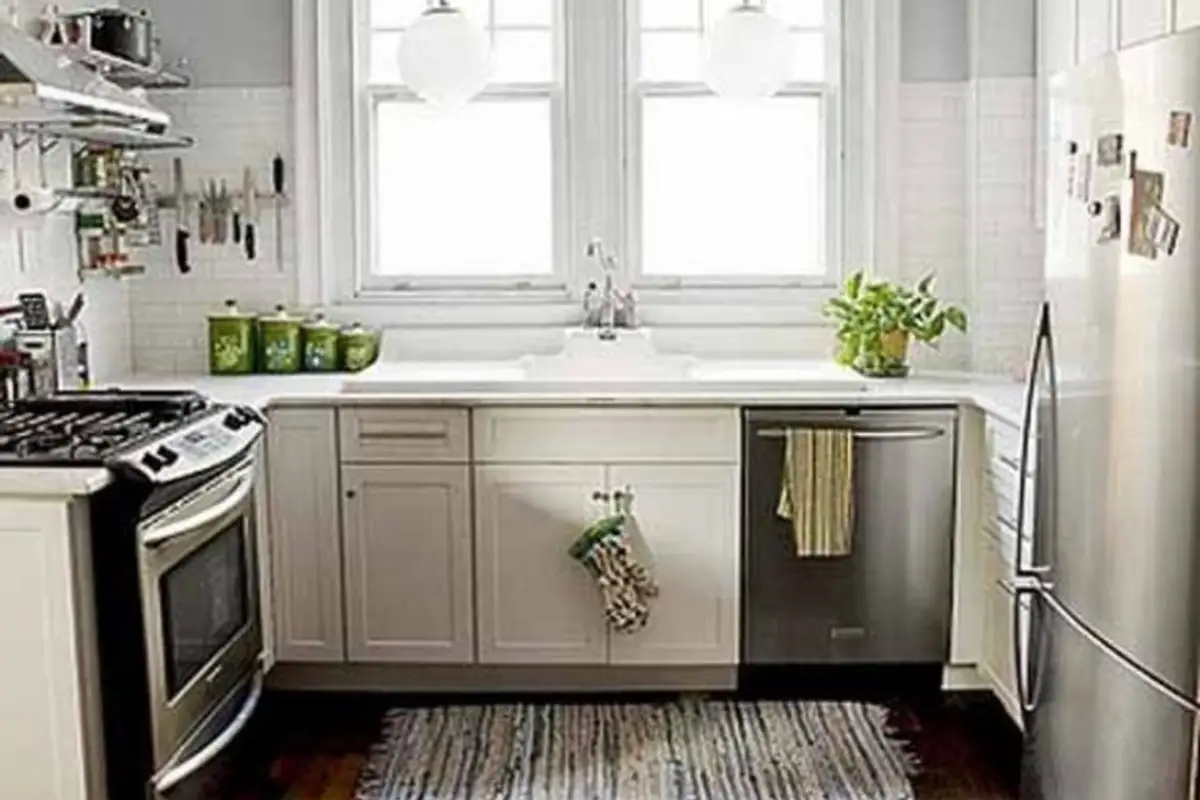
The L-shaped kitchen solves the problem of maximizing corner spaces and is suitable for small and medium-sized spaces. It is a versatile configuration that allows for the fluidization of activities and the elimination of unnecessary traffic (movement takes place in the triangle formed by the two sides of the countertop).
U-Shaped Kitchen
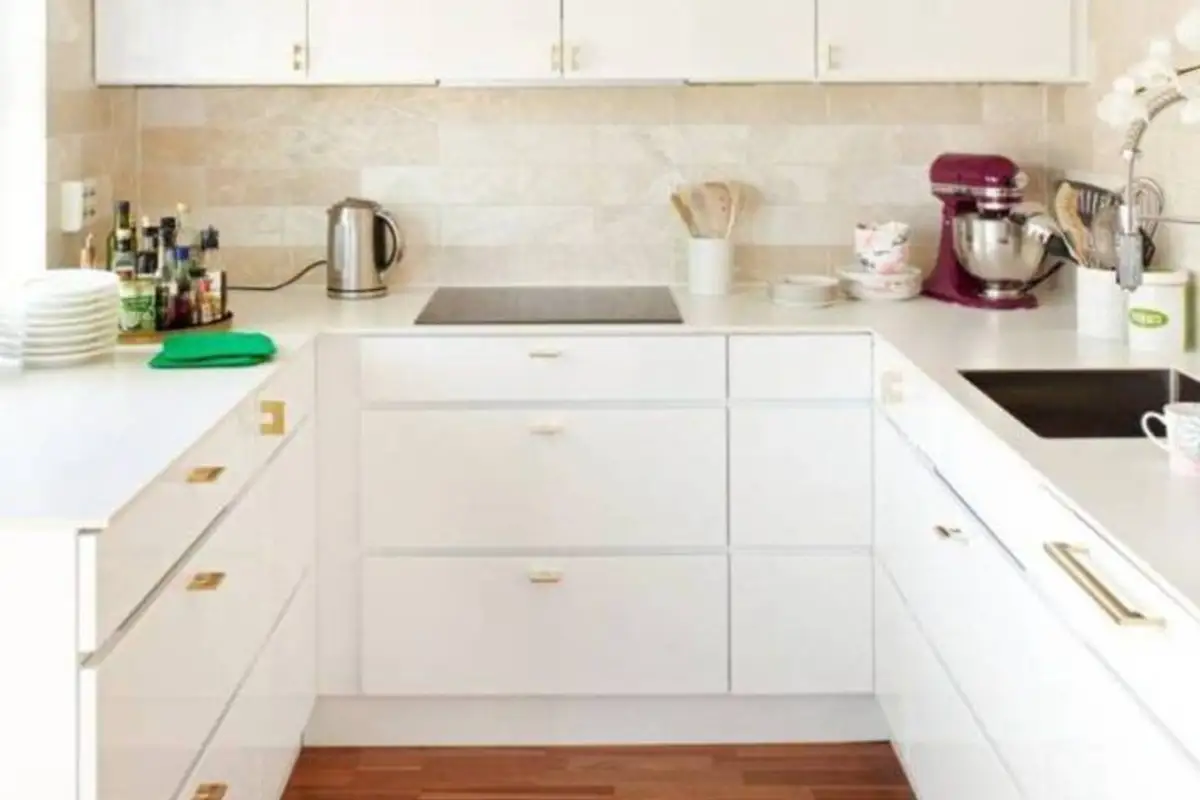
It is a design that has three walls of cabinets and units. The third wall can also be represented by a kitchen island when space allows.
Using this configuration represents an efficient space compartmentalization because it allows for the fluidization of movements and work around the island can be carried out by several people. When three walls are used, it should be considered that the sides of the work triangle are not too small, as activity will get stuck in a corner.
This type of configuration is suitable for serious cooks because it offers them plenty of space to carry out their activities and plenty of room for storing food and all dishes and utensils.
Linear Kitchen
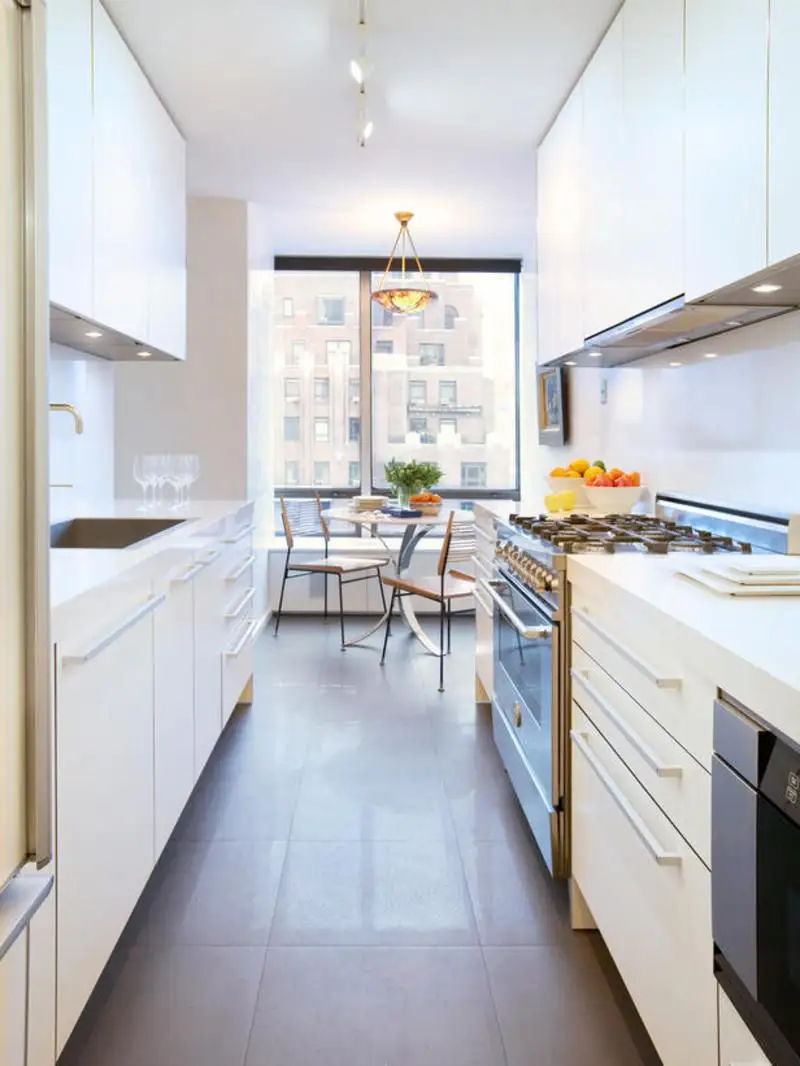
It is generally intended for a single cook, and the furniture layout must be as functional as possible. This can be achieved by positioning the units on two parallel walls if space allows. This configuration must use the existing space efficiently and is suitable for narrow spaces.
The finishes used should be light in color to visually amplify the kitchen.