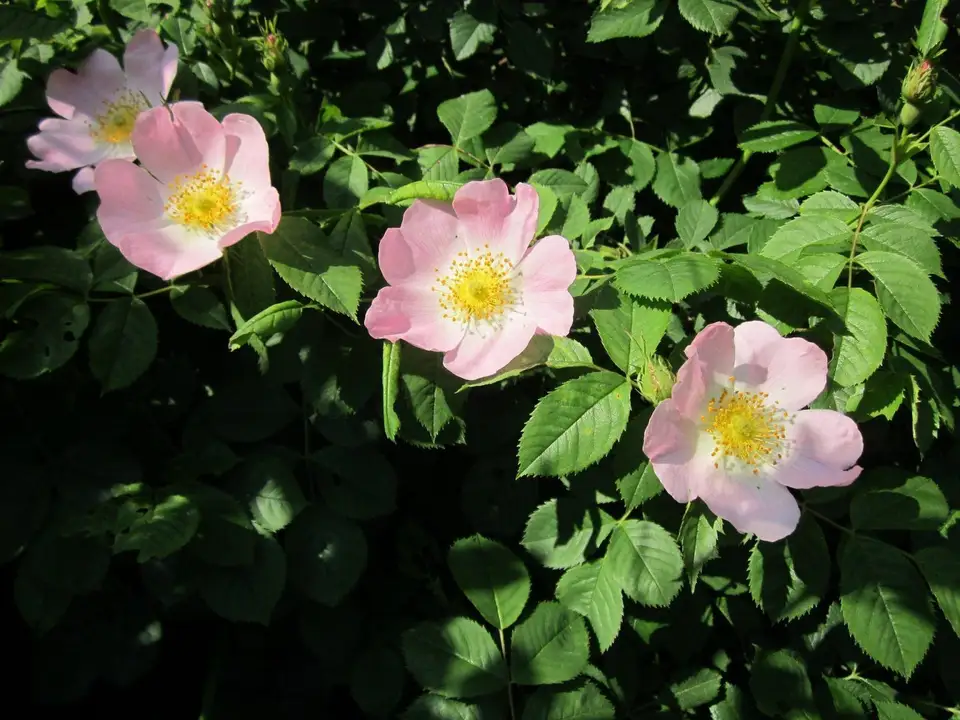
The Rosehip (Rosa canina) is a wild plant from the Rosaceae family that can reach a height of two to three meters and has both ornamental and medicinal qualities. The wild rose, as it is also known, has numerous stems full of curved, small, sharp thorns that help the plant climb.
The leaves are pinnate, with 5-7 leaflets with serrated edges, the flowers have 5 pink petals, sometimes darker, sometimes lighter.
The fruits of this plant are rich in vitamin C and if consumed they have beneficial effects on the entire organism, strengthening it and preparing it to face winter viruses. These fruits are spherical in shape, orange-colored at the beginning of the ripening period and reddish-orange when fully ripe.
Tea from rosehip leaves can replace green tea and even coffee, and an infusion of these leaves is considered a natural energizer. Also, jam or syrup can be made from the petals.
Read also How to plant a lemon from seeds – in 6 steps
The wild rose can also be used as an ornamental plant. If you live in a house with a yard and want to plant a rosehip bush, you should know that this species is not very demanding in terms of soil, the rosehip growing even on rocky soils or steep slopes.
Rosehip propagation can be done by seeds or by rooted branches obtained by dividing existing shrubs in the wild flora. To obtain seeds to sow, the rosehips will be harvested only when they are yellowish-orange, at the beginning of ripening.
The harvested rosehips are spread out in the sun in a thin layer to dry. After drying, they are sown in the ground at a depth of about five to six centimeters, and the best time to plant them is autumn.
The wild rose can also be used as a hedge. It does not require special maintenance, grows very quickly, but after it reaches maturity you will be free from the worry of maintaining the hedge. Such a hedge can be considered an ecological solution for fencing land, as it can also serve as a shelter for various species of birds and animals.