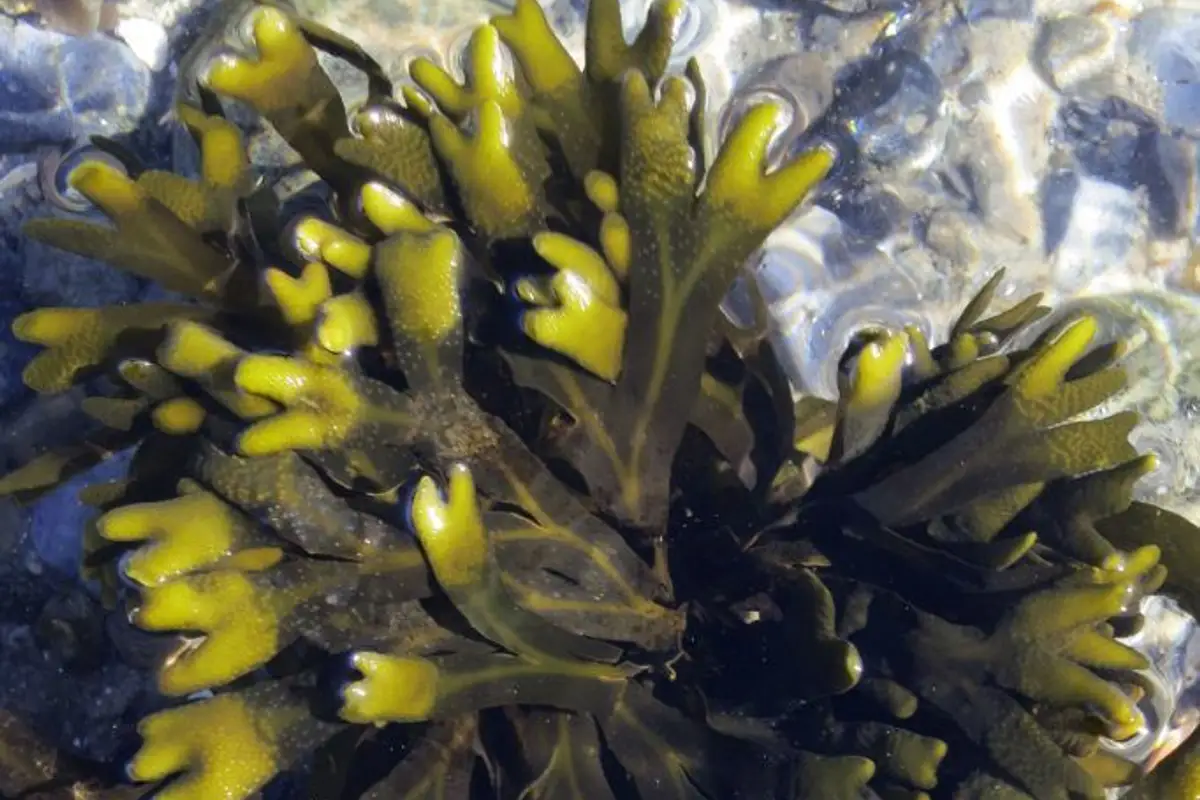
Algae are marine organisms that develop up to 60 m in length and have countless uses in the food, cosmetics, and natural fertilizer industries.
At the beginning of this year, designers Jonas Edvard and Nikolaj Steenfatt, graduates of the Royal Danish Academy of Fine Arts, found a use for them in furniture production.
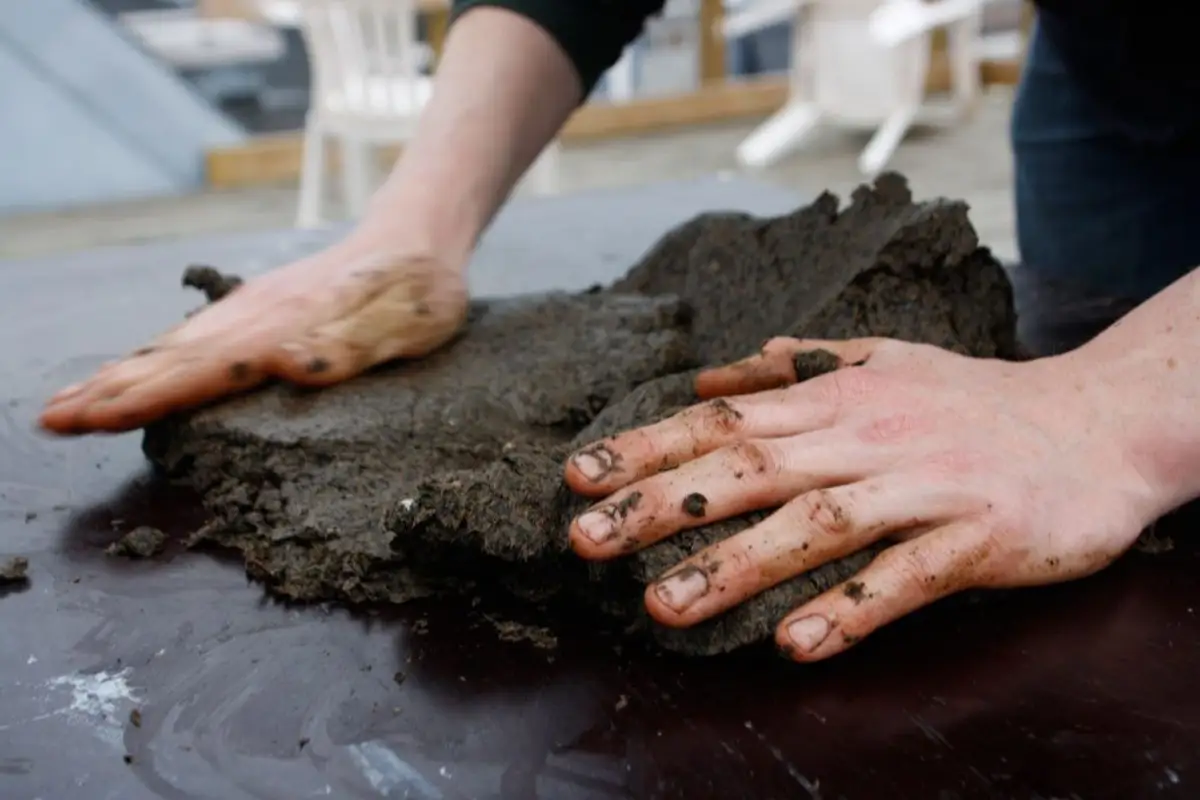
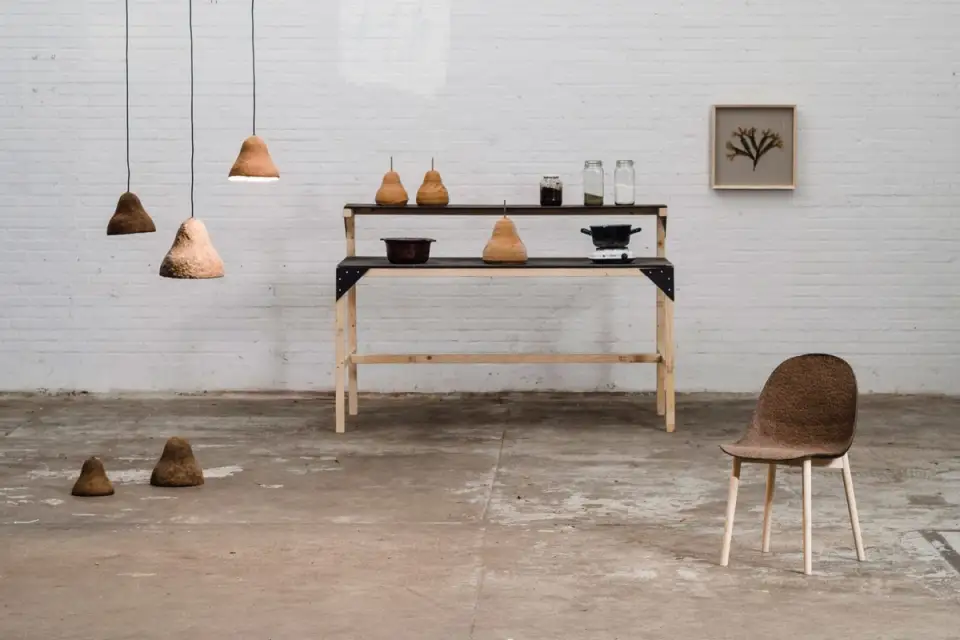
Seaweed harvested from the coasts of the North Sea was dried, ground into a powder, and transformed into a paste using the viscous and adhesive properties of alginate (the natural polymer contained in brown algae).
The project of the two designers is called Terroir, an allusion to the cultural relationships between products and the place where they are manufactured. Their research highlights the diverse resources of the earth and the possibility of using a unique and sustainable natural material. The project initially started as a study on locally sourced materials that were rarely used.
During walks on the beach, they observed the huge deposits of dried seaweed on the shore, which become hard and brittle. The coasts of Denmark total approximately 8000 km of algae zones, among the largest in the world in relation to the country's total area.
Combining ground algae with recycled paper, Jonas Edvard and Nikolaj Steenfatt created a durable and strong material. The high amounts of salt contained in the algae are retained in the final product, having a fire-retardant effect, and the resulting material is 100% recyclable and can be disassembled to create another object. In addition, it decomposes easily, becoming a natural fertilizer.
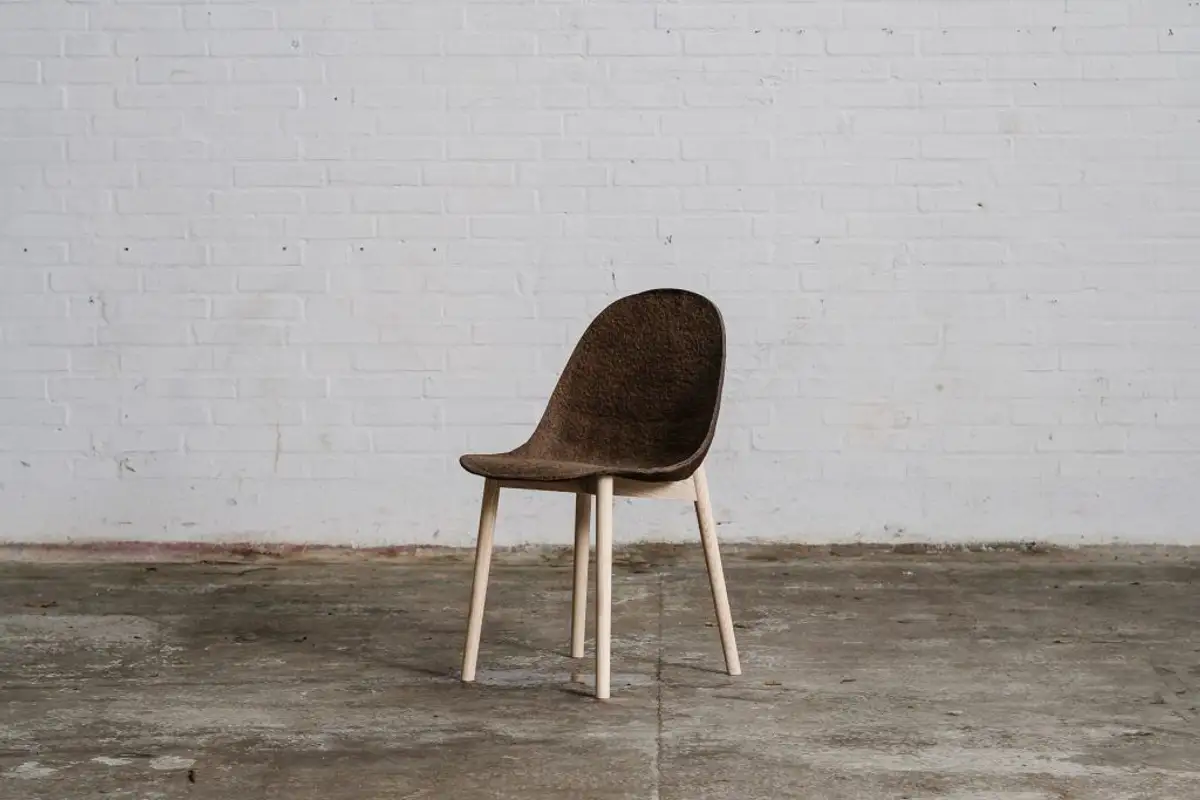
The material has a warm surface that is pleasant to the touch, its texture being similar to that of cork. The color of the obtained material is determined by the different species of algae used, ranging from dark brown to light green.
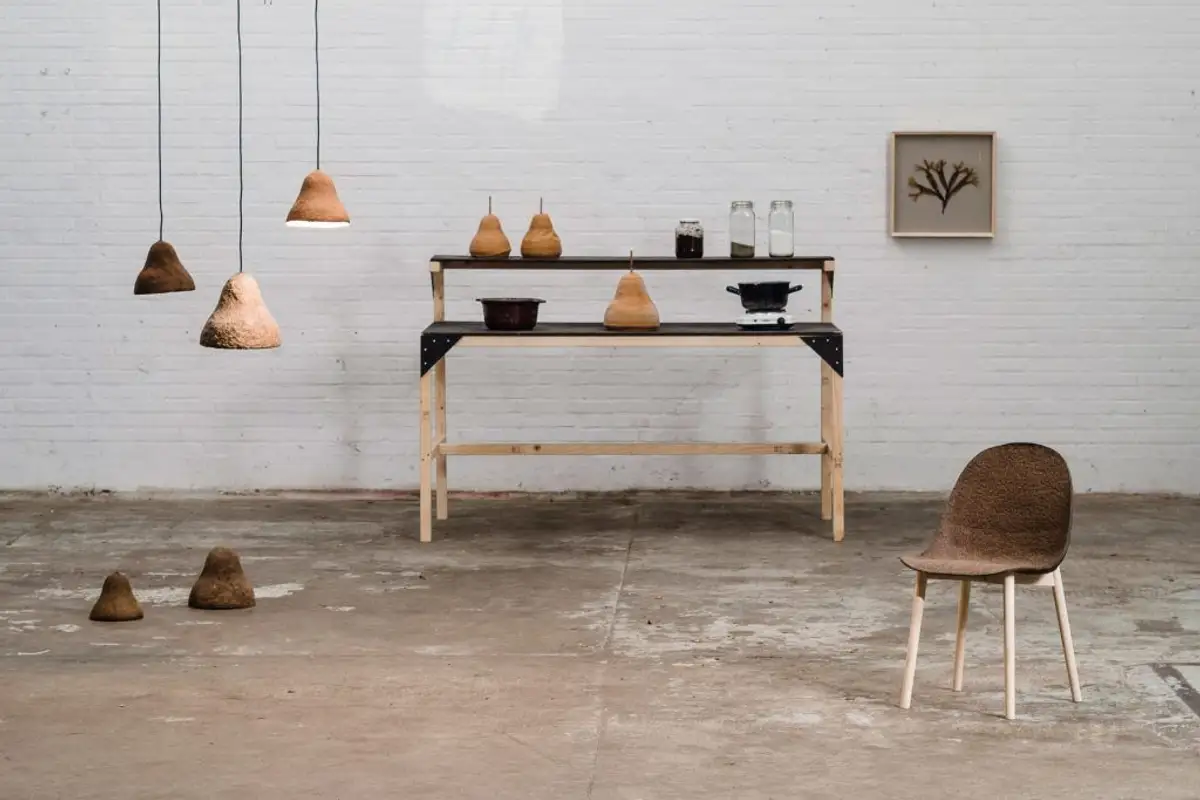
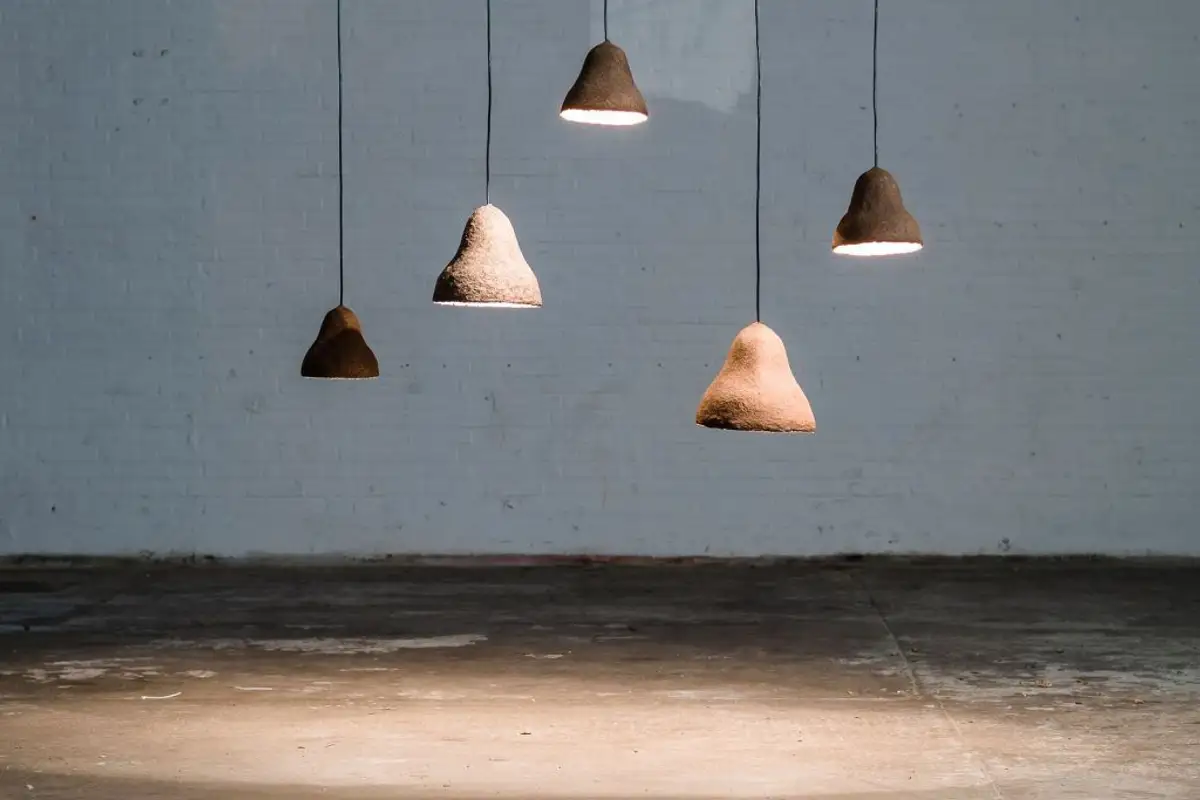
The chairs and lamps in the Terroir collection are made from brown algae. The chair has legs made of ash wood, while the lamps have a diameter varying between 18 and 25 centimeters. For these products, the designers opted for essential forms so that the emphasis would fall on the innovative material and its nuances.
Moreover, the creators wanted to show the modeling qualities of the material, choosing curved, fluid shapes with minimal weight.
The products in the collection integrate perfectly into Scandinavian-inspired interiors but also into decor with more vibrant hues, to temper them and create a space of tranquility.
Jonas Edvard and Nikolaj Steenfatt continue to experiment with these materials. Also in Denmark, seaweed was recently used by a team of architects who built a house using bales made from algae.
source photo: http://jonasedvard.dk