Polished cement was one of the most used materials in the 20th century, both in industrial spaces and apartments, but gradually much more efficient finishing solutions have been imposed in interior design.
Microcement is a material that is much easier to apply and allows for many more uses, for durable results and an impeccable look, compatible with many design styles.
If you want to renovate without major effort and without your house being filled with craftsmen, microcement is a solution that you can easily play with to cover floors, walls and furniture with a uniform and fine cladding.
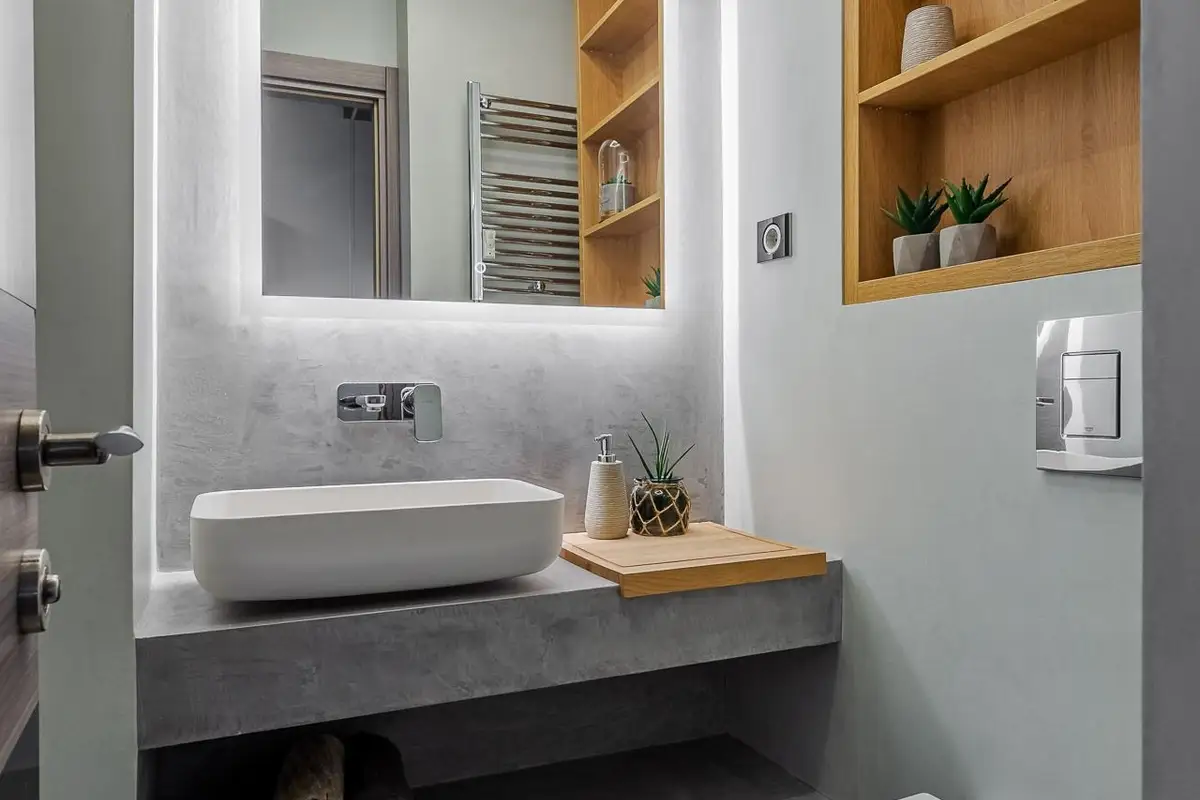
Design: Interiology Design Studio, Photo: Vlad Creteanu Whether in a new house or when renovating an older one, many ideas come to mind and it's not easy to settle on a style without having doubts that it is or isn't the best option. Once the work has started and investments have been made in materials, there is no turning back until you can afford a new change.
However, you should know that microcement is a material suitable for many styles, including the classic style, the contemporary style, the industrial style, the Nordic style and the minimalist style. With just a few inspired applications, you can create a unique look in the kitchen, bathroom, living room or bedroom.
What is microcement?

Microcement is a material obtained by mixing the basic ingredients of cement with a series of other components that ensure wear resistance, easy maintenance, water and dirt impermeability and stable color over time.
The complex technological process of producing microcement involves the introduction of pigments and resins, calcium, aluminum, iron, silicon, aluminum, iron and other natural raw materials.
The result is a chameleon-like coating that adapts to various conditions, adheres to any surface and allows you to achieve a unique aesthetic in every corner of the interior, regardless of the design style you choose.
Where can you use microcement in interior design?
It is a material that allows you to experiment with minimal effort and affordable costs, colors, textures and give new life to used objects, covering imperfections and creating furniture that is completely new in appearance and resistance.
Microcement comes in a variety of forms, the different types of microcement determining multiple usage possibilities. Before buying microcement for your projects, make sure you get the right product for the purpose you have in mind.
Consult a specialist if needed, and strictly follow the instructions on the packaging to check if the product is suitable for your needs.
There are many tutorials on how to apply microcement, a process for which you need certain tools such as a trowel, roller, sandpaper and spatula. It's not difficult, but it can be time-consuming and problems may arise related to the hardening of the microcement before finishing the work, adding water, diluting the color with a new amount of water, differences in the thickness of the applied layer.