Paulownia, also known as the “Empress Tree,” is said to be the fastest-growing tree in the world, and rightfully so.
Open Gallery SUMMARY:
Paulownia – what are the advantages of planting this tree?
How to plant Paulownia?
How and when to perform pruning on Paulownia?
What to do if you want to get rid of Paulownia?
Conclusions
Resources about “Paulownia – how to plant it and what care it needs”
Paulownia – what are the advantages of planting this tree?
In addition, in spring, it offers a superb display of large, beautiful lavender-colored flowers with a sweet scent that lasts for a long time. The leaves are very large and have an intense green color throughout the summer. Its wood is quite hard and is actually a hardwood used in some countries for lumber and fine furniture.
Since this tree grows so fast, it can help you save money that you would otherwise spend on energy bills during the summer when you use the air conditioner. In fact, it is estimated that a mature tree can reduce heating and cooling bills by up to 25%.
However, the most incredible benefit that comes with planting the Paulownia tree is related to the environment. Its huge leaves filter pollutants and toxins from the air at a rapid pace. Again, it is estimated that a single Paulownia tree can absorb up to 48 kg of carbon dioxide per day and replace it with clean, pure oxygen.
It also cleans the air of greenhouse gases, which are so harmful. The tree's roots quickly feed on excess fertilizers in crop fields or near livestock farms.
Therefore, if you intend to plant a tree, then plant one that brings you more benefits and takes care of the Earth as well. The Empress Tree offers more benefits than any other tree growing on Earth.
There is even fossil evidence that this tree grew abundantly in very ancient times, especially in North America, according to YouTube.
How to plant Paulownia?
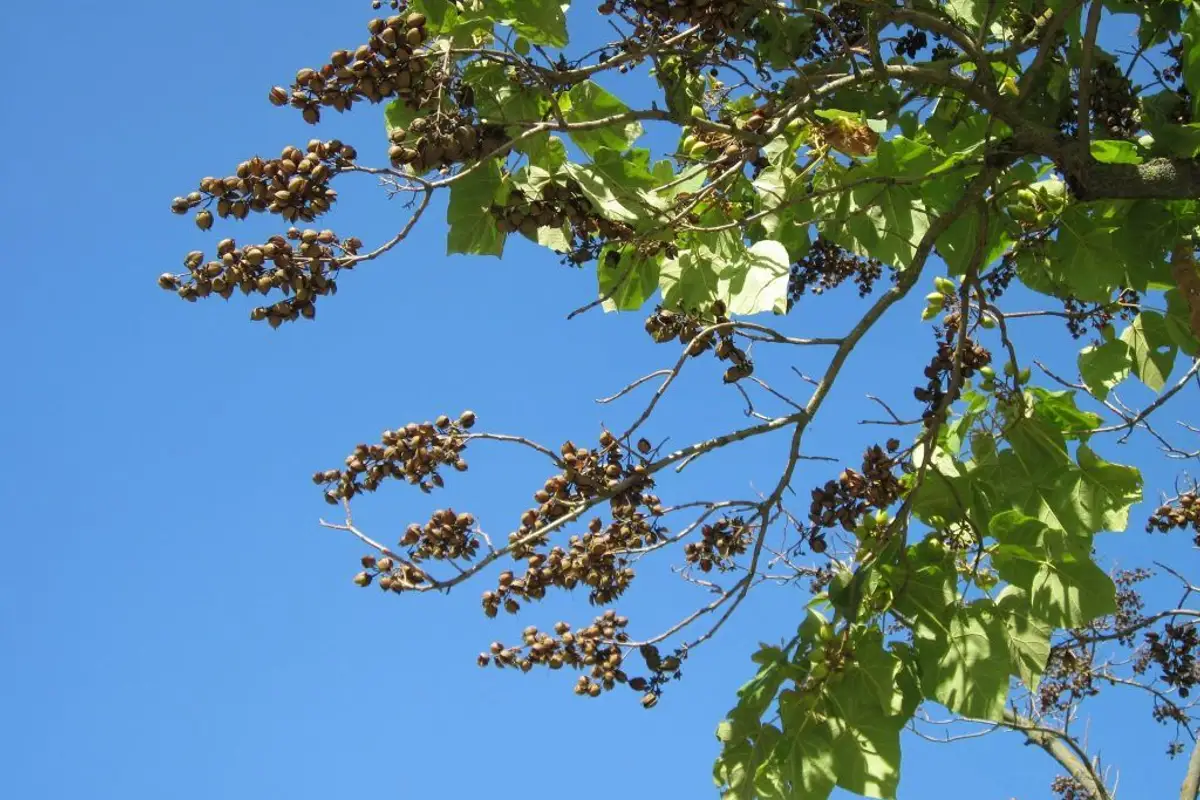
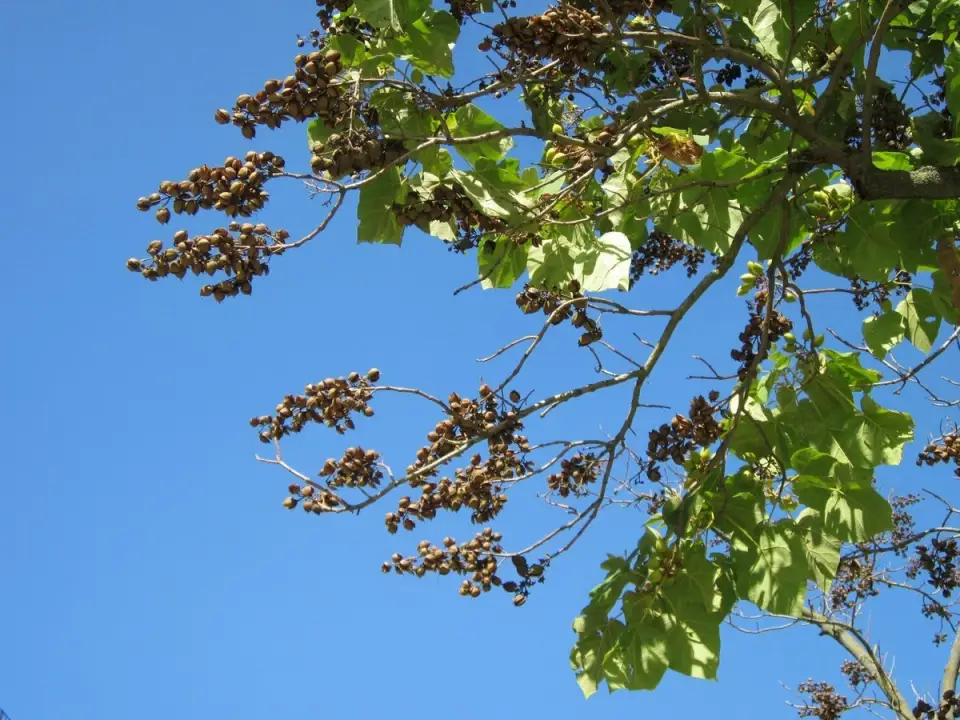
After the spring flower display, the huge leaves appear. These are also beautiful, delicate and have a unique softness. The leaves are followed by a green fruit that matures into a brown capsule. The tree was introduced to the US sometime in the 1800s, and within a few decades, it naturalized in the eastern part of the country through seed propagation.
The fruit of the tree is a four-compartment capsule containing thousands of tiny seeds. A mature tree produces approximately 20 million seeds each year. Because the Empress Tree self-seeds easily, it is considered invasive in some places.
In the wild, the seeds of the Empress Tree represent the natural method of propagation. As a result, seed germination is quite easy to achieve in most parts of the country. Paulownia seeds are very small, so you need to make an extra effort to sow them in a thin layer and prevent overcrowded seedlings.