Bucharest has a unique way of conquering you if you give it the chance. Every corner you turn hides a story of a city ready to surprise you with an interwar building hidden under green ivy or a lost garden behind tall blocks.
When people cherish the space they inhabit, beautiful things are born. In the spirit of this city so eclectic in its appearance, today we're talking about the interior design of Architect Alexandru Bucur She envisioned it for an apartment in a 1940s interwar building, a heritage structure with a wonderful view of Cismigiu Park.
Considering the building's architecture and proximity to the park, the aim was for the interior design to reflect the unique character of the location and feature only Romanian products. True to their word, Alexandru's mission was a complex one as the apartment required a complete renovation, with outdated finishes.
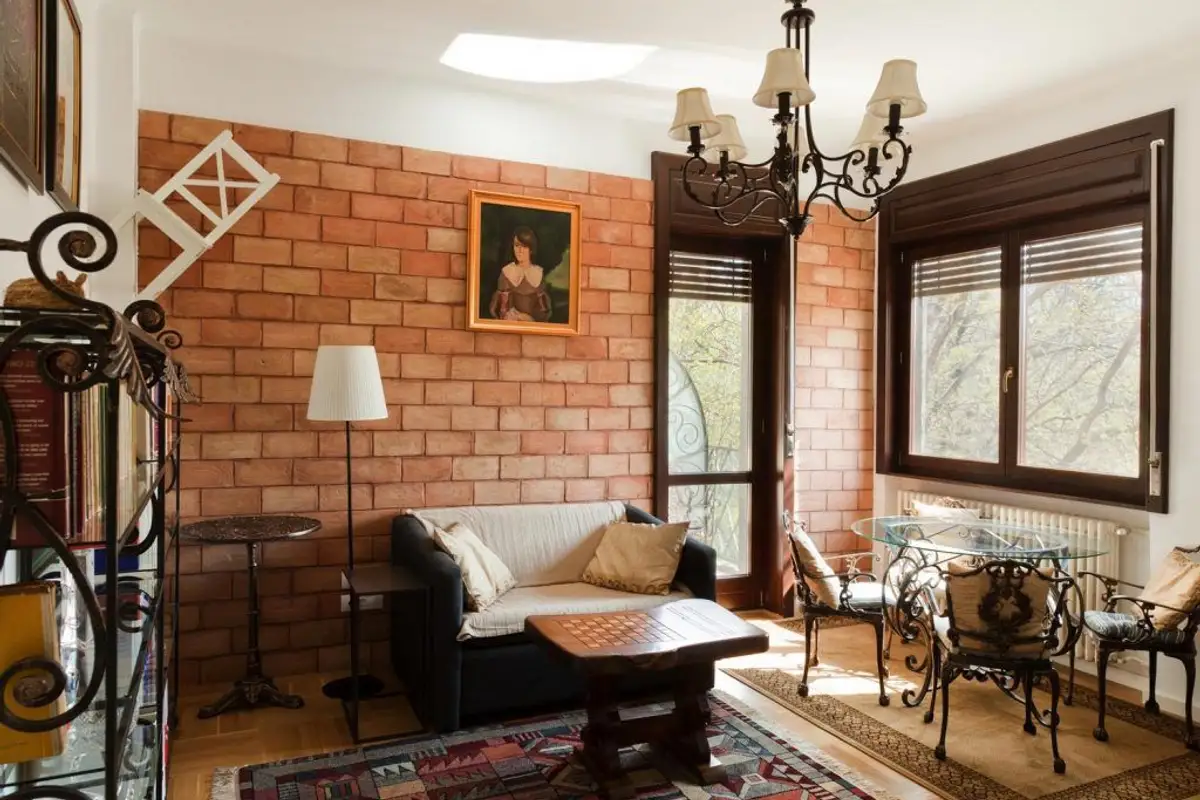
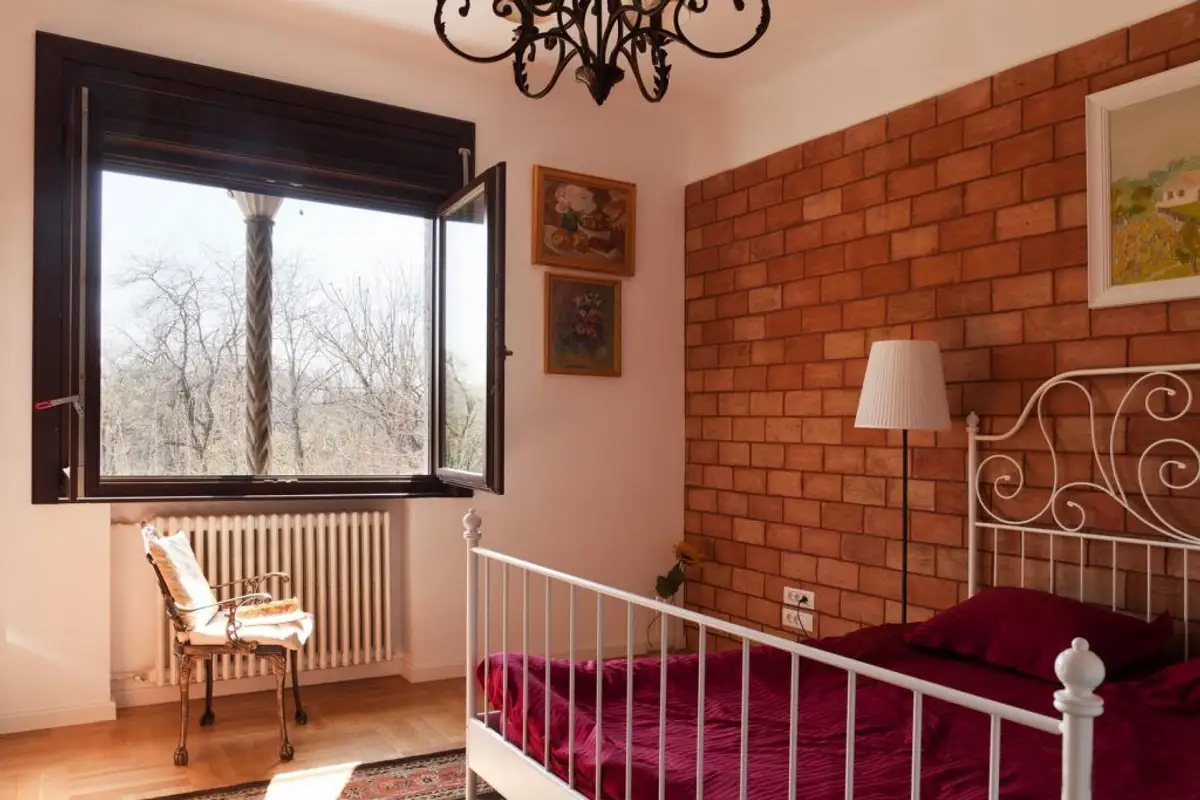
For example, the window joinery was replaced with wooden joinery and blinds, taking into account the facade architecture, and the walls of the small balcony in front of the living room were repainted to bring them as close as possible to the building's original appearance.
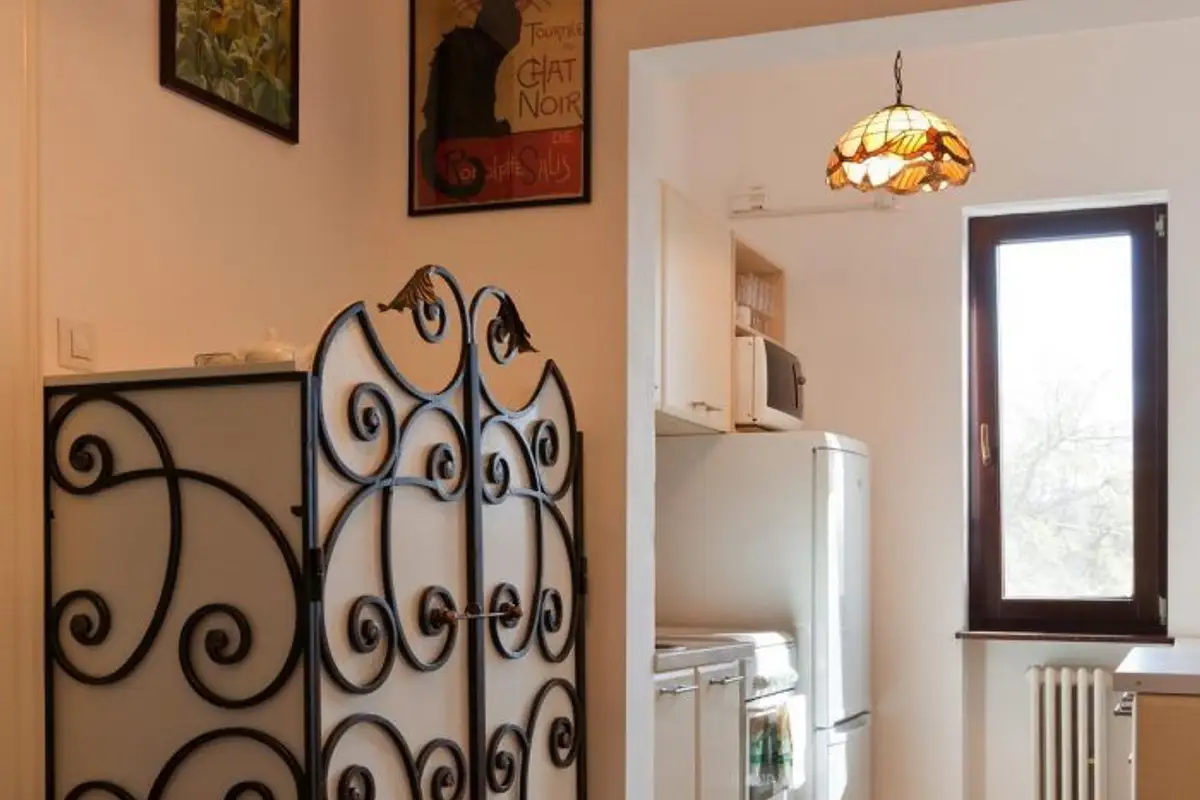
The original mosaic was preserved, and the dividing panel was redone using glass and a wrought iron design, all in keeping with the style of the overall design.
The 2-bedroom apartment has an area of 50 square meters. The entrance hall was combined with the kitchen (by removing the door) to enlarge the space and bring in more natural light. The bathroom was redesigned so that access is from the house hallway.
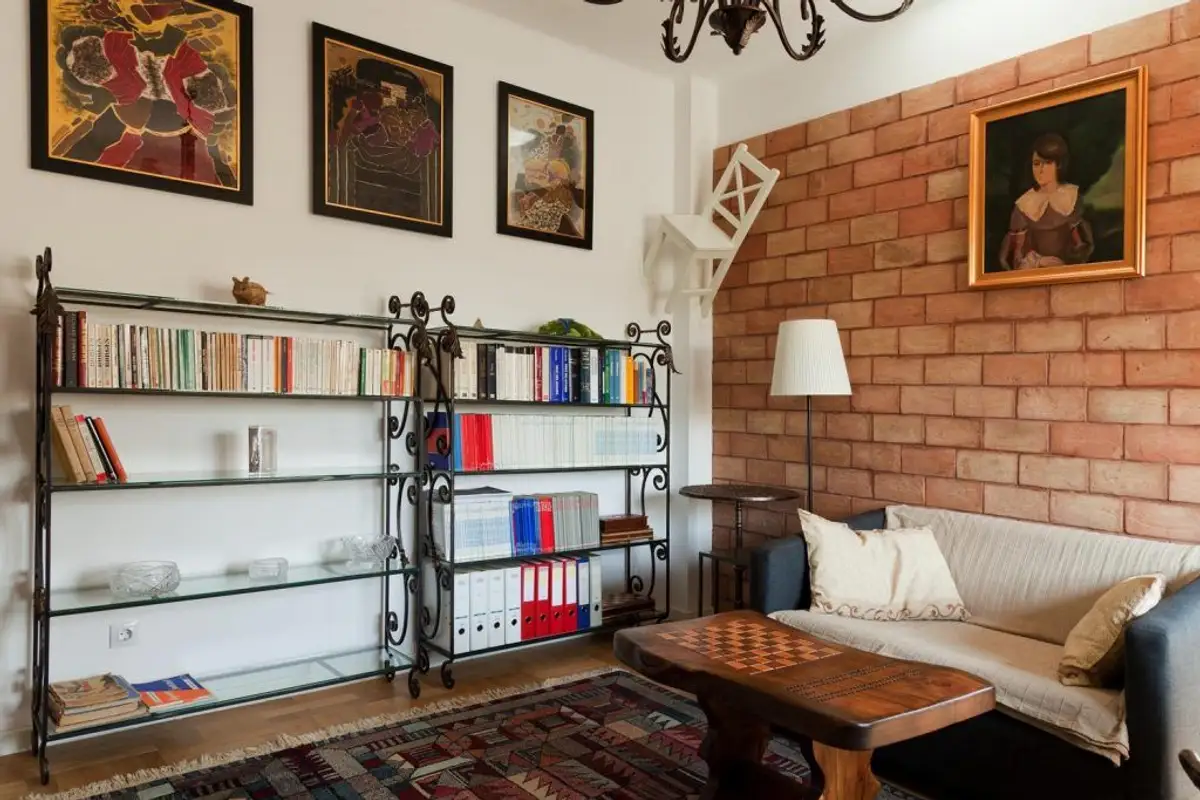
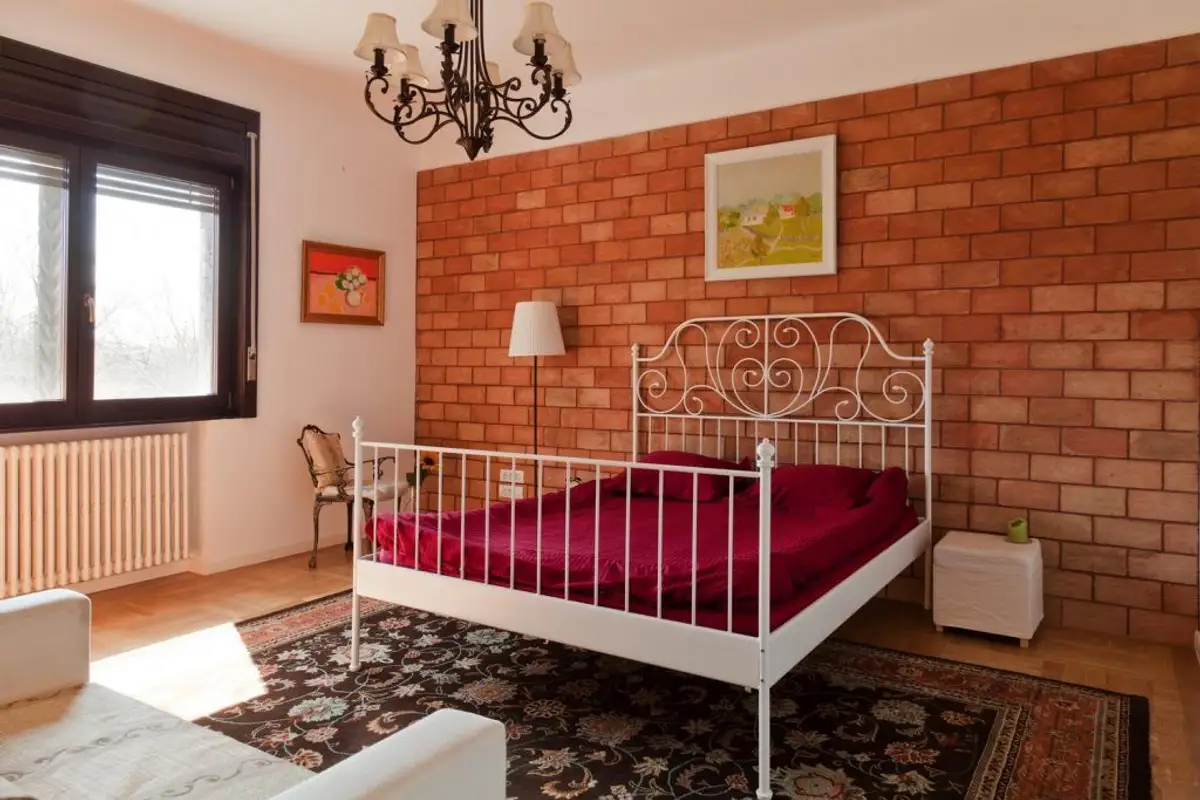
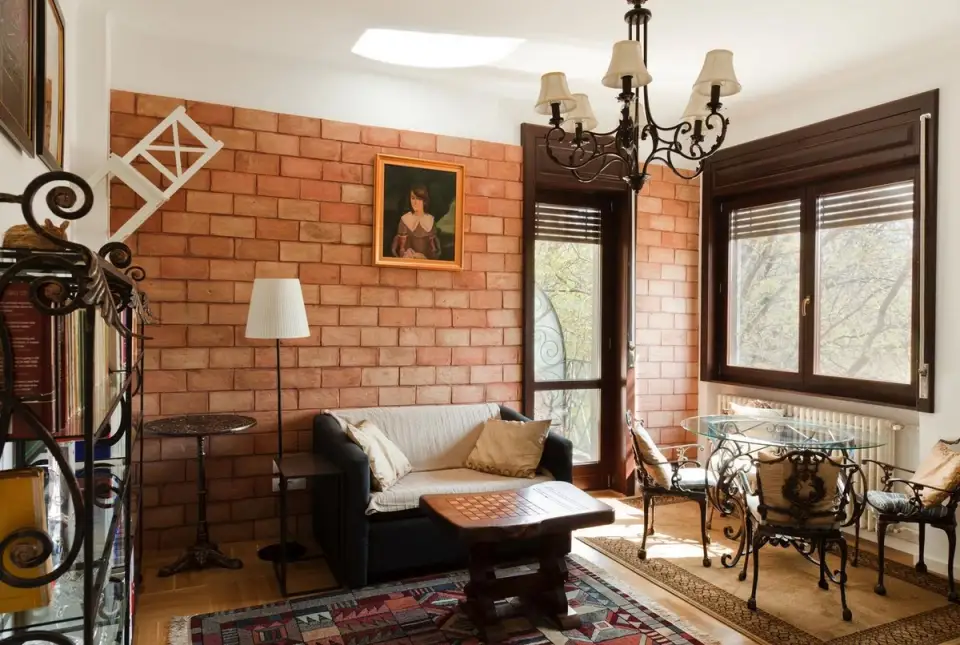
In the spirit of art nouveau, the design takes a leap through time. From glass and wrought iron with specific ornaments (custom-made), we arrive at exposed brick (handmade in Sighisoara) which helps to define accent areas both in the living room and the bedroom.
The remaining finishes and decorations bear the Romanian signature: solid oak parquet laid in a checkerboard pattern from Parchet pe Viata, lighting fixtures from Klausen, a manufacturer based in Cluj, rugs from Cisnadie, or paintings by Romanian artists Constantin Piliuta and Vasile Grigore.
An extra touch of character comes from the "absurd element" in the living room: the white armchair that appears to emerge from the wall. It's a way to welcome guests into the living room and, at the same time, a statement piece that repositions the contemporary within the design.
The bathroom features ceramic tiles inspired by the style of artist Hundertwasser. The bathtub is also Romanian-made and personalized to match the other colors in the bathroom and follow the design line seen in the other rooms.
On your next walk through Cismigiu, look for the building with a facade marked by columns with capitals and remember this arrangement!