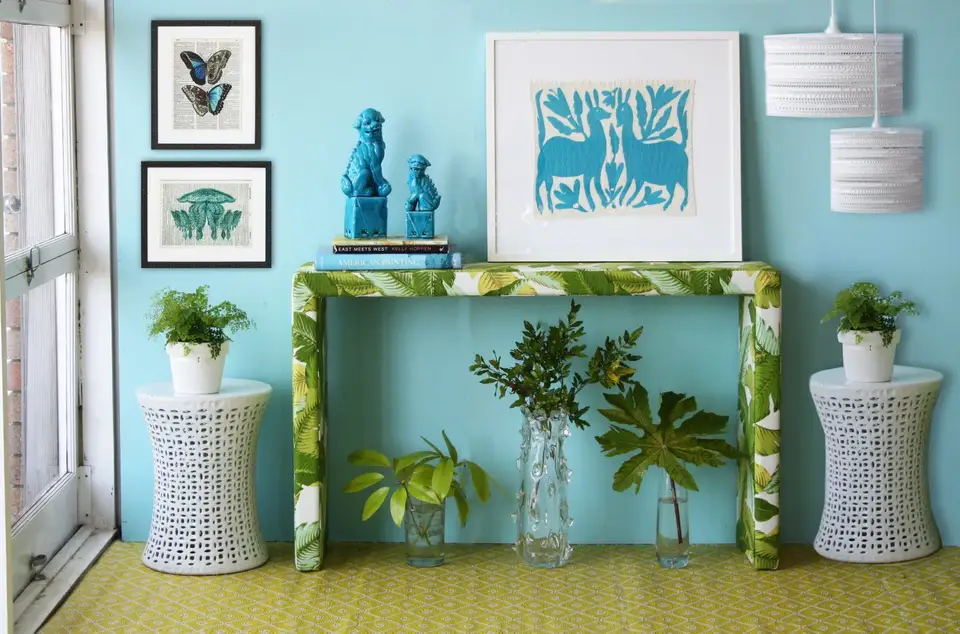
You have recently moved into your new home. Everything is in its place. The sofa is in the living room and awaits you to relax while watching television. The colorful chairs around the dining table are eager to support you at your first dinner in your new home. In the bedroom, the bed is full of small, comfortable pillows. Everything is lovely and looks exactly as you desired.
But something seems to be missing. You forgot about paintings, posters, photographs, stickers, and the walls are bare. And the architect has already left and you don't want to call him for such a thing. Don't pick up the phone because it's true, there is something you can do yourself with the help of a few tips.
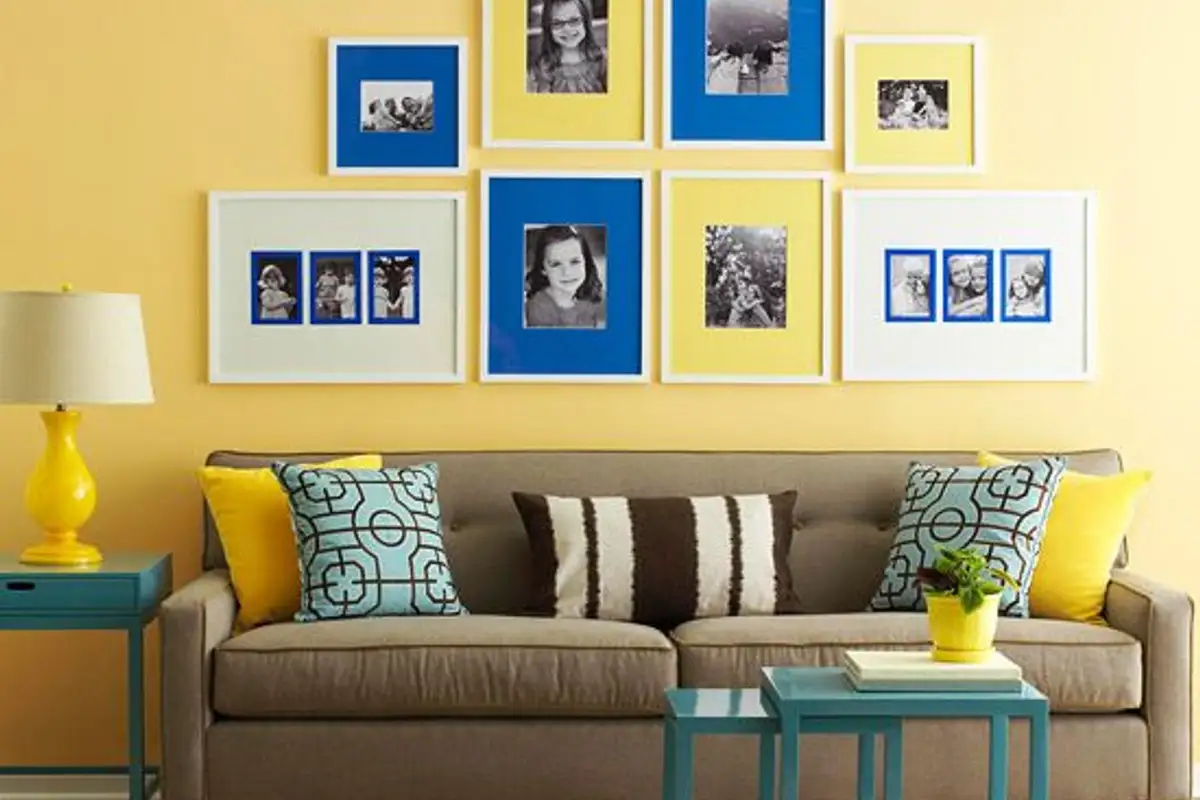
If you place paintings, photographs, or wall stickers above a piece of furniture, make sure they are not wider than the furniture they are placed above. Also, the painting or group of photographs should be placed at a distance of 20-25 centimeters from the top edge of the furniture.
The height at which you hang paintings or photographs or create a wall painting varies from room to room. Some experts say that you should hang paintings 8-10 cm lower than you would expect them to be. In addition, in a dining room, where people will be sitting most of the time, paintings should be hung 12-14 cm above the top edge of the chair backs.
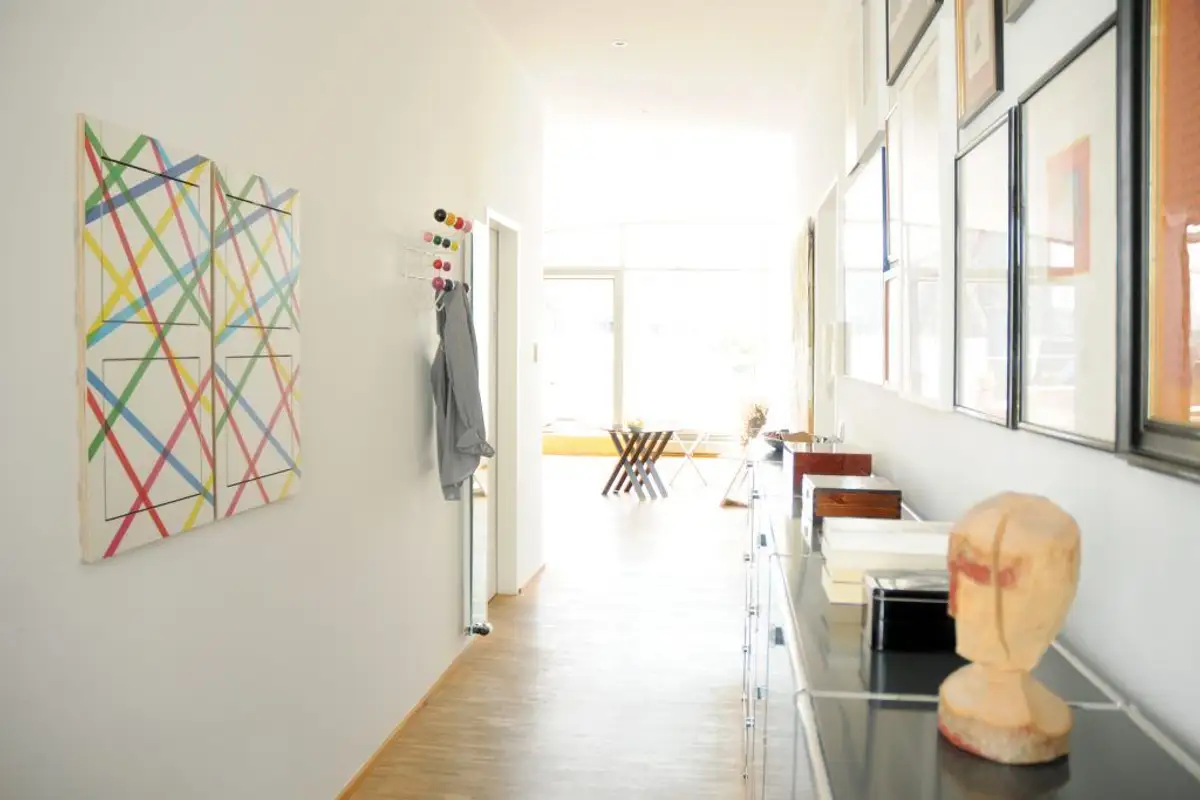
In the hallway, people stand up, so following the rule that everything should be at eye level, paintings should be placed at a height of 160-165 cm.
Group photographs or small paintings to create an installation. Groups with an odd number of objects serve as focal points in the decor, while installations with an even number of objects balance an uneven decor. Be careful not to mount the objects too close together because they will lose their individuality, and if they are too far apart, they will lack unity.
When creating a group of paintings, photographs, or posters, you will need to decide on the arrangement of the installation. You can opt for a horizontal alignment where the reference point is the top edge of the paintings or one where it is the bottom edge.
For example, if you have a group of eight objects, you can choose an alternating alignment: four of them will be aligned at the top edge and the other four at the bottom edge.
You can also opt for a mosaic-type installation, but these are more complex and you need to consider the shape of the frames of the photographs or paintings, the colors used inside them, and the final shape you want on the wall. It is even good in a mosaic arrangement to choose a central axis, diagonal, vertical, or horizontal.
Be careful when choosing to arrange along a diagonal axis, not to exceed the widths of the furniture pieces.
There is also another form of arrangement, the gallery type, but for this you need paintings of equal size that you can arrange on all the walls of the room in parallel positions and at the same height.