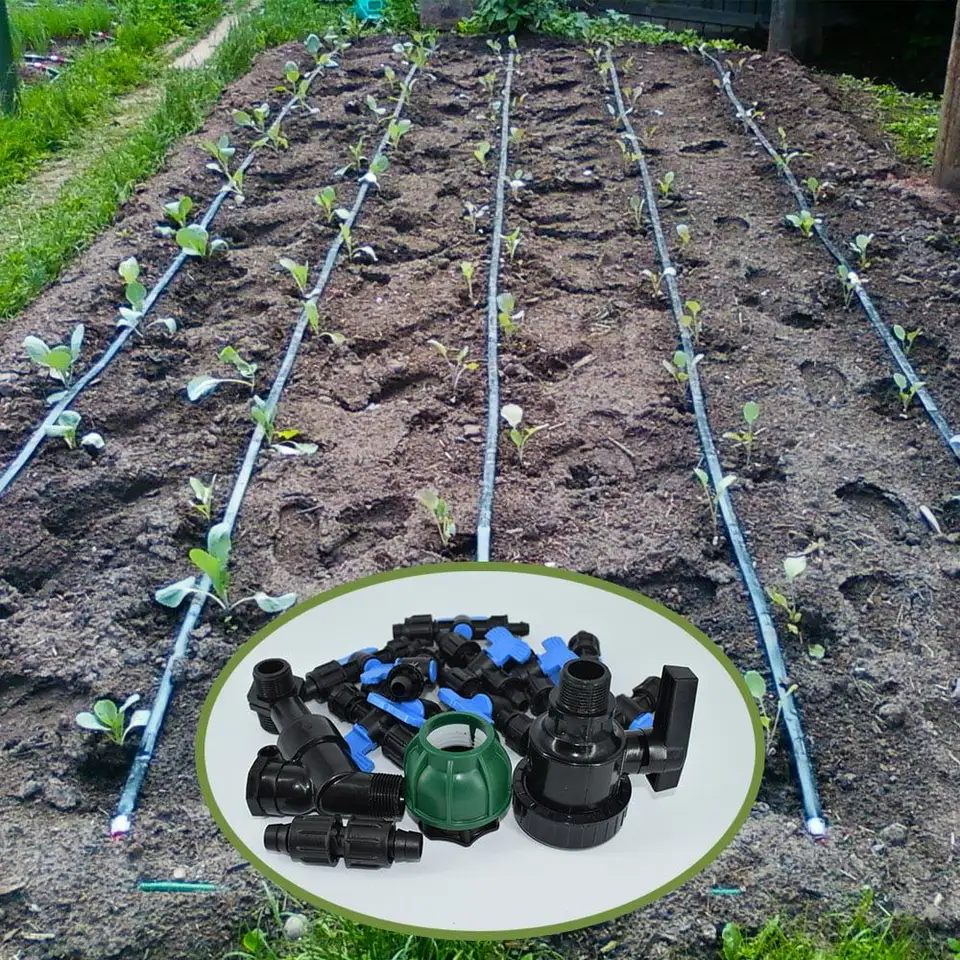
A drip irrigation system saves water and time. Plants receive constant moisture at the root, without waste. Installation takes a few hours and doesn't require special tools.
Planning
Measure the area you want to irrigate. Note where the plants are and their distance from each other. Draw a sketch and mark the route of the main hose, then the branches towards the plants.
Check the water pressure at the tap. If it exceeds 2 bar, buy a pressure regulator. Add a filter at the inlet to prevent drippers from clogging with impurities.
Materials needed
You will need a 16 mm main hose, 4-6 mm secondary hoses, adjustable drippers, T or L connectors, end caps and clamps for fixing. If you want automation, get a battery-powered timer that mounts directly on the tap.
Calculate the length of the hose according to the sketch and add a 10% reserve. For drippers, count the plants and take one for each, or two for larger plants.
Assembly
Install the filter on the tap, then the pressure regulator and timer. Connect the main hose and lay it along the route. Secure it with clamps in the ground.