Arranging a pathway can be a simple way to give your courtyards or gardens a new look. Pathways play a rather important role in the appearance of a courtyard, they delimit certain areas and make it easier for us to access layers of flowers or vegetables. Pathways can add personality to any garden.
The materials they are made from matter a lot, travertine and natural stone slabs are among the most used.
Mariana Bradescu is Business Development Manager at Rock Star Construct(Piatra Online.ro), this company being the main importer of natural stone from Romania. Mariana agreed to share some tips with us to help those who want to beautify their yard with a stone pathway.
What are the steps for arranging a pathway?
Besides laying tiles or slabs on sand, a procedure that can generate both the displacement of tiles and the (unwanted) presence of sand on footwear, if we are talking about plates that will be mounted with adhesive, it starts with a layer of gravel with crushed stone (approximately 4 cm thick), to which a filter textile or geotextile layer can be added, in case the ground is not drained.
If the ground is not dried very well, mold or fungi may appear under the slab. This layer of material must be compacted with a compactor for best results and only then does the installation team begin applying the paving. Semi-wet mortar is desirable in this case - a combination of sand with cement that will fix the stone slabs.
Adhesive can also be used, and in this case, we make sure of the plate's resistance and stability. The rest depends a lot on the space being worked on and its characteristics.
What are the most requested types of pathways?
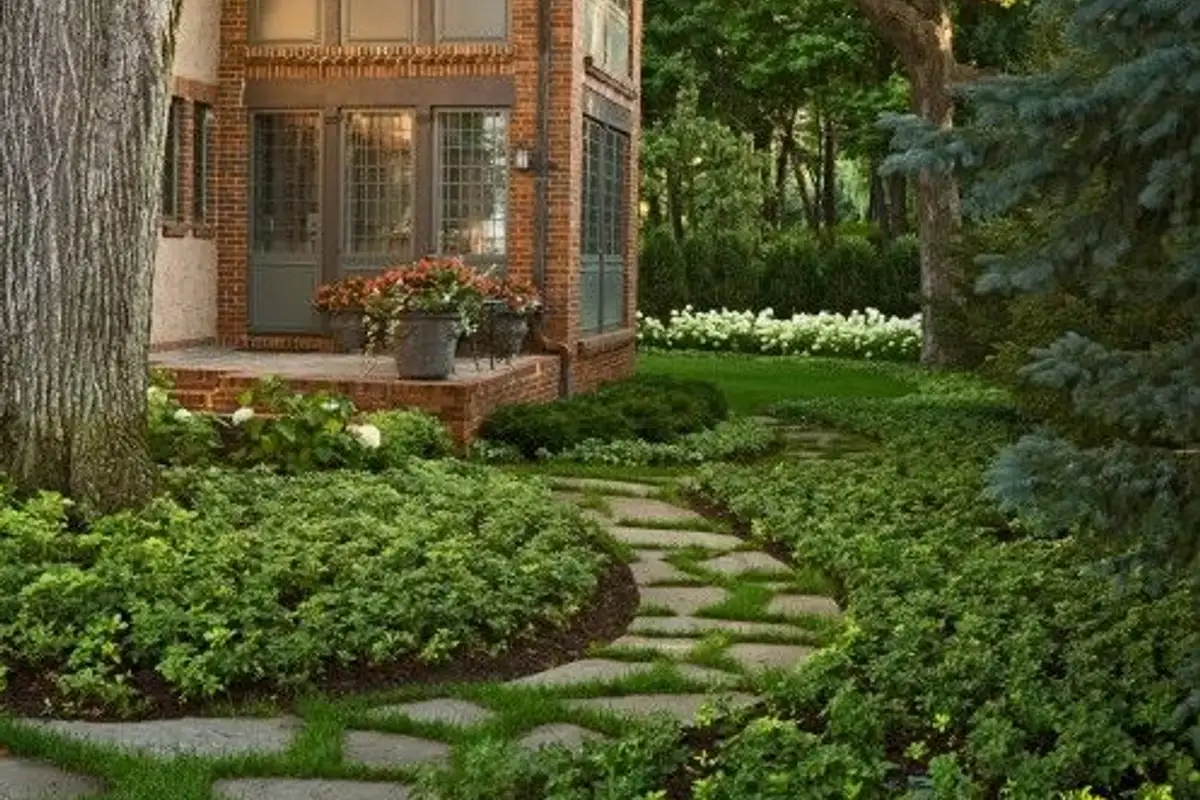
The most popular materials for courtyard or garden pathways are: travertine (smaller slabs) and natural stone slabs (Rhodos, Kavala and Homa).
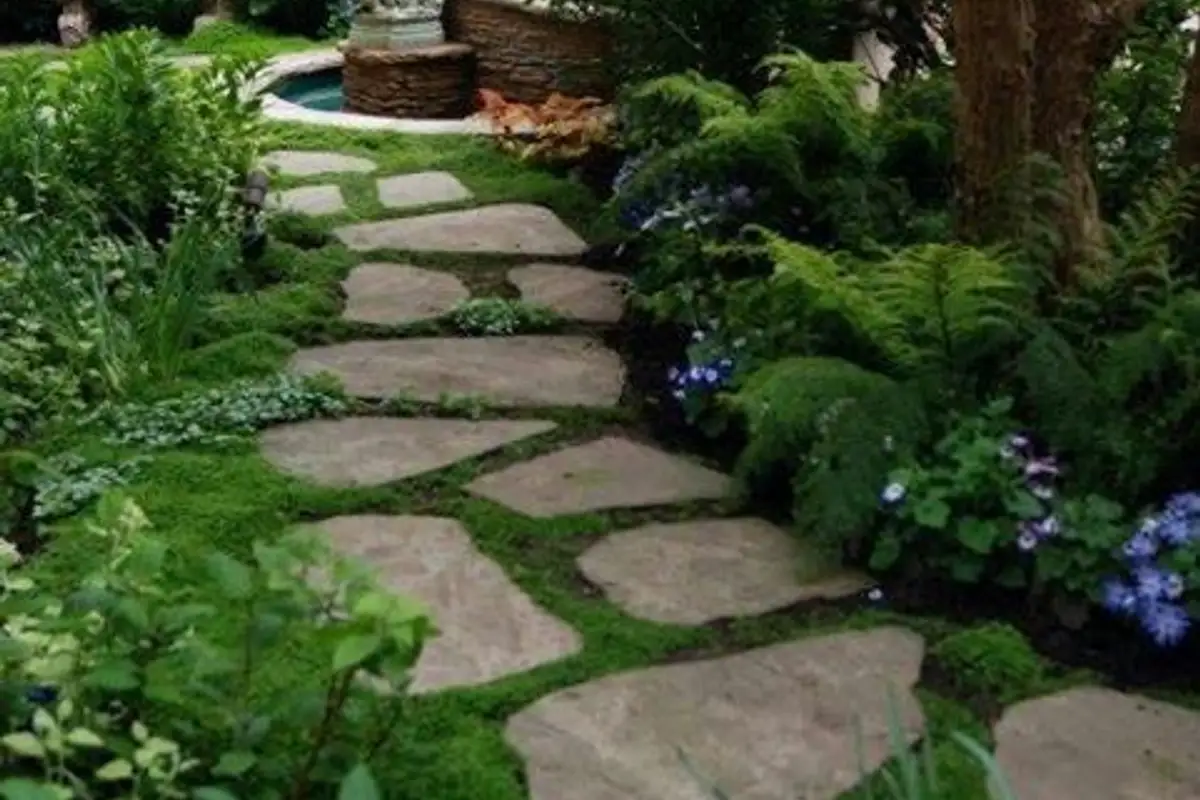
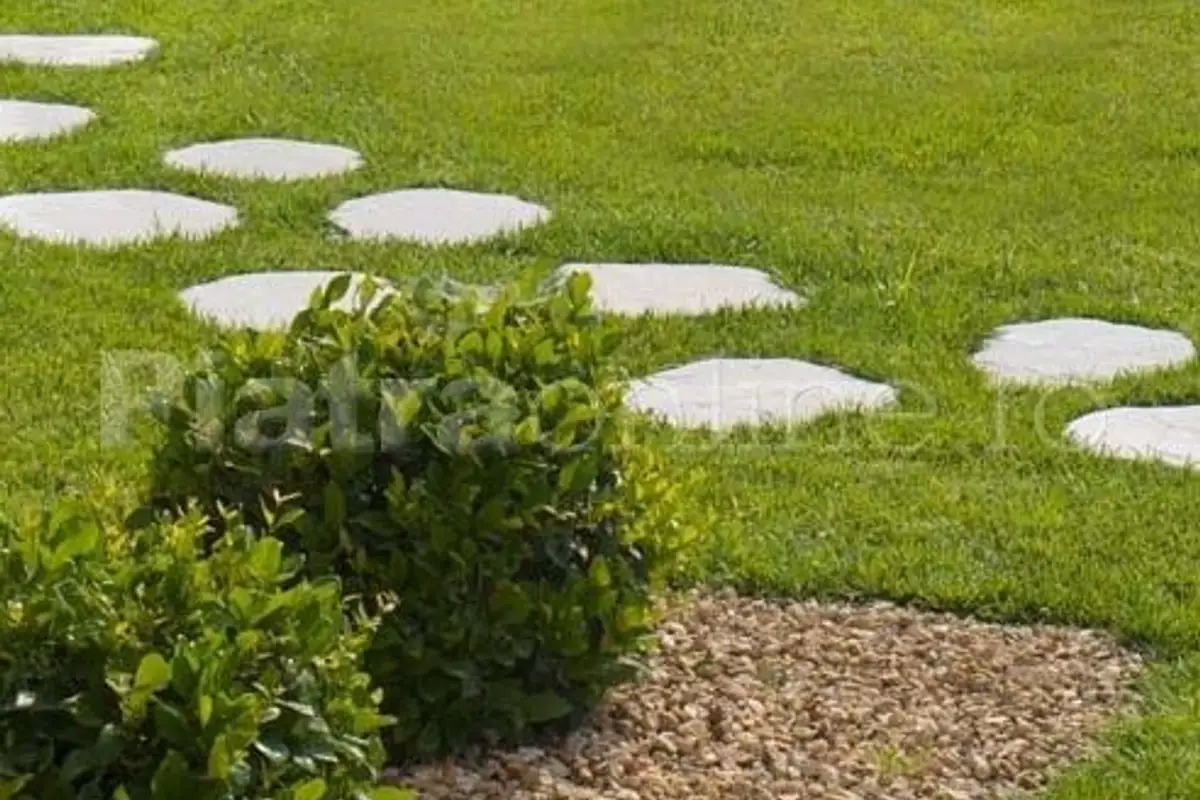
From the slab category, the most popular are the Rhodos ones (which impress with their color), but also the Kavala type (known for the hardness of this stone), while the Homa slabs are chosen both because of their color (close to the warmth of the Rhodos shades) and their increased resistance. Japanese steps are again sought after during this period, as they have simple shapes.
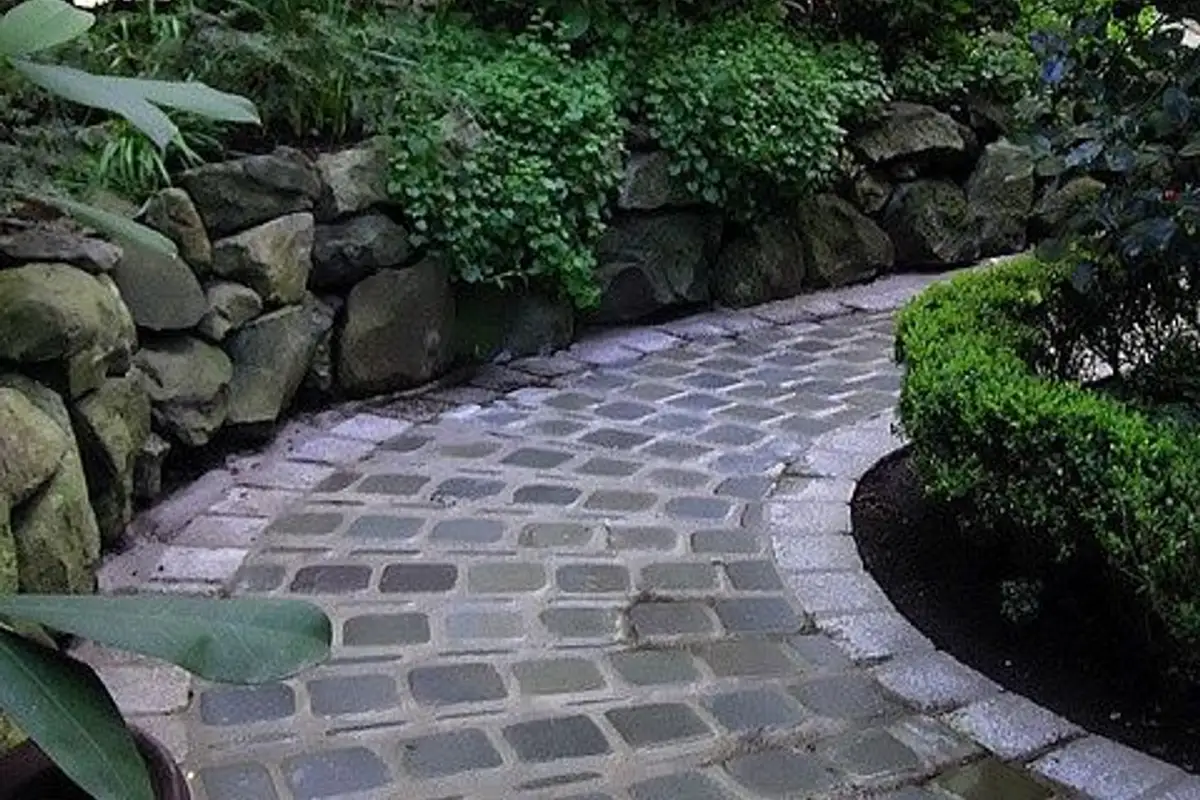
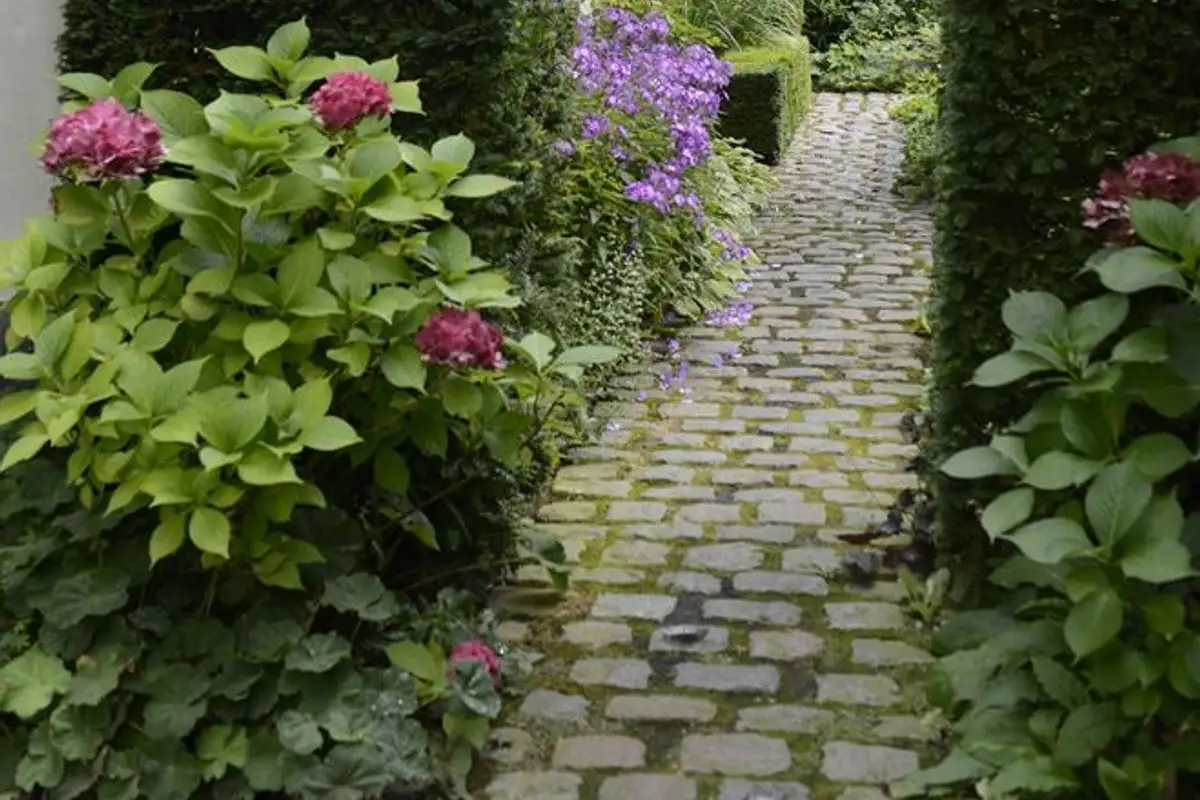
For a pathway or driveway, cubic stone can also be used.
Which material best suits grass?
Here the answers are subjective: each client has a certain preference and it is important to consider the overall perspective of the project. If you prefer a more yellowish hue of the Rhodos slabs, you will probably create a richer, more colorful garden. For a more minimalist look, Japanese steps, Kavala slabs or cubic stone keep the color palette at a simple level.