Textures play an essential role in creating a pleasant and functional atmosphere in the kitchen. They can add depth, contrast, and personality to the space, transforming it from a simple utilitarian room into a place where you enjoy spending time.
Why are textures important in the kitchen?
Create Atmosphere: Textures can make a kitchen feel warmer, cooler, more rustic, or more modern.
Add Depth and Visual Interest: A combination of different textures can make a kitchen look more interesting and dynamic.
Improve Functionality: Certain textures are easier to clean or offer better grip, which is important in a kitchen.
The Most Suitable Textures for the Kitchen
Natural Textures:
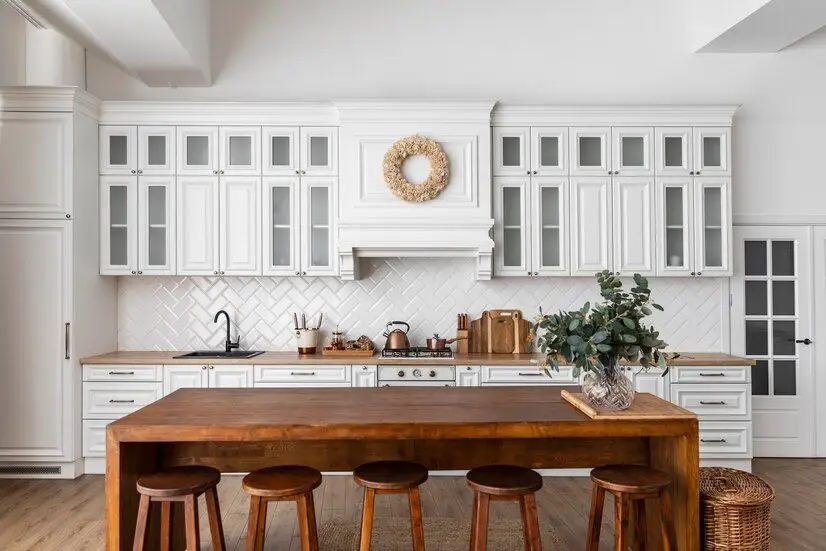
Wood: Whether it's solid wood, veneer, or plywood, wood brings warmth and naturalness to any kitchen.
Stone: Marble, granite, or natural stone add a luxurious and durable look.
Rattan or Bamboo: These natural materials bring an exotic feel and are perfect for a bohemian or rustic style.
Fabrics: Linen, cotton, or flax are ideal for curtains, napkins, or tablecloths.
Artificial Textures:
Metal: Stainless steel, aluminum, or copper add a modern and industrial look.
Plastic: It's easy to clean and comes in a variety of colors and textures.
Ceramic: Ceramic cladding for walls or floors can mimic the appearance of other materials, such as stone or wood.
How to Combine Textures in the Kitchen