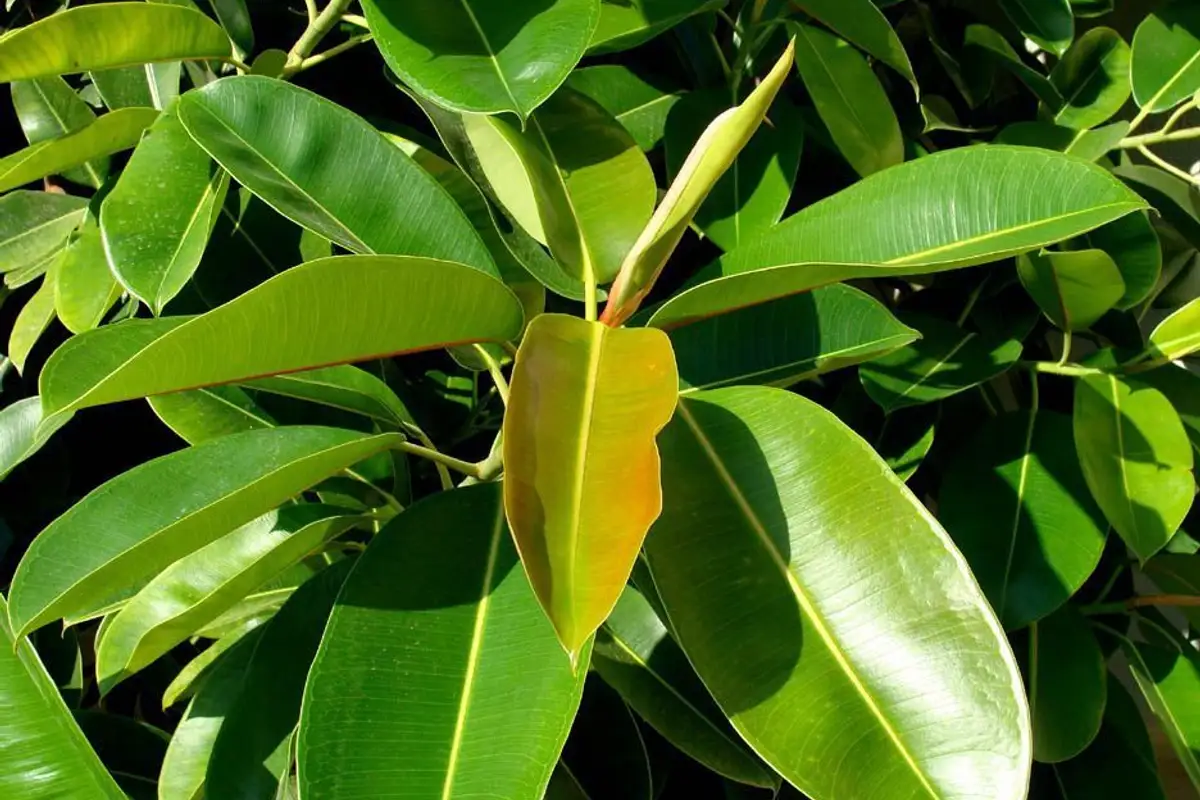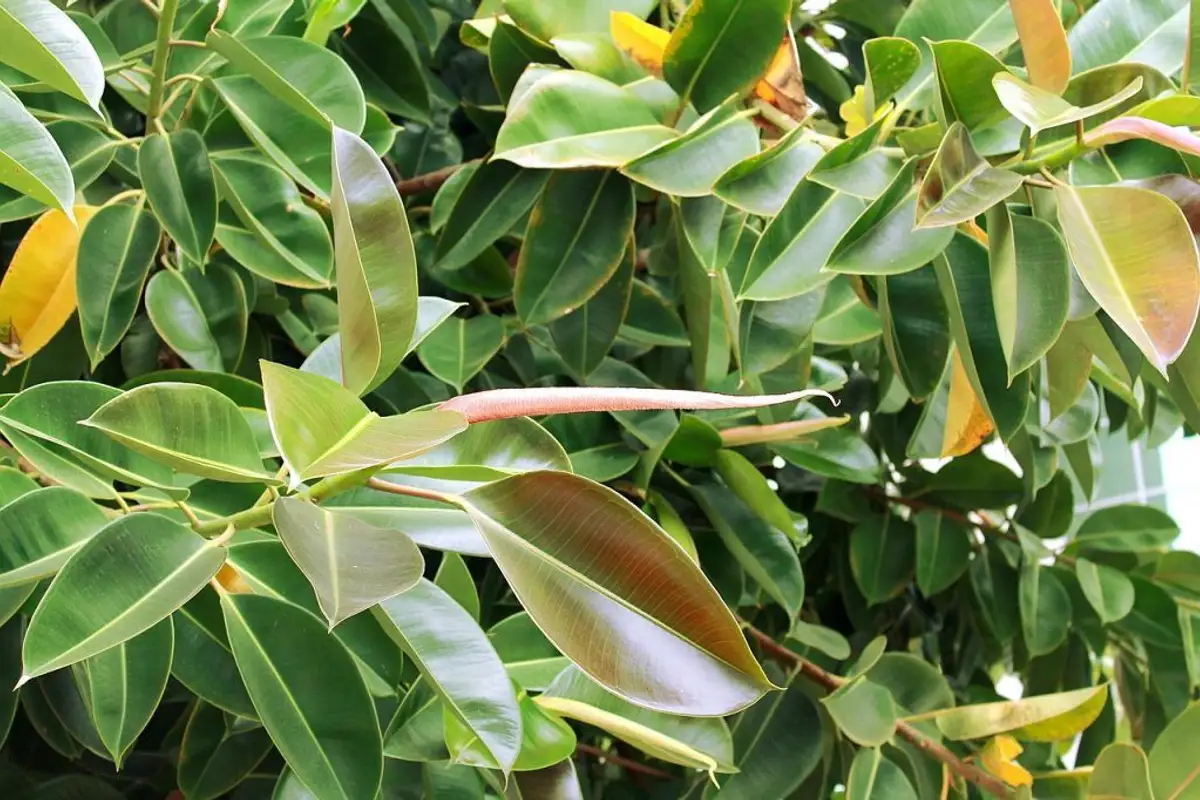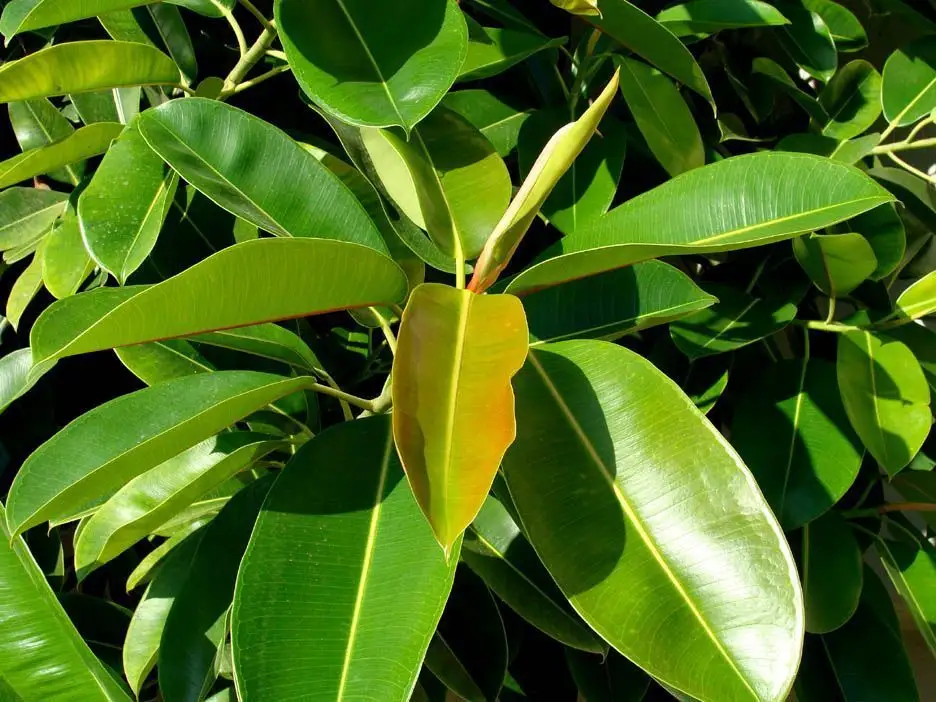
The Ficus Elastica, or simply ficus, is perhaps the most well-known and widespread species of ficus, widely used as a houseplant. In nature, it grows as a tree that can reach heights of 25-30 meters and originates from the tropical forests of Asia.
When cultivated in pots as a houseplant, due to conditions, the ficus adapts and does not exceed two to three meters in height. The Ficus Elastica generally has a single straight trunk with large, rounded leaves 30 centimeters long and a glossy green color on the upper side and reddish-brown on the lower side.
Terminal shoots are wrapped in a pink-tinged bract. There are several varieties of Ficus Elastica: Ficus Elastica Decora, Rubra, Schrijverieana or Tricolor. The Ficus Elastica is a relatively easy plant to grow and is very often found as a houseplant.
Ficus Care
During warm periods, the pot can be moved outdoors, but it must be protected from very strong sunlight. When deciding to move the plant to the balcony or garden, it is recommended to do so gradually, waiting for the difference in temperature between day and night to no longer be significant.
The best time to move the plant outdoors is late spring, early summer.
Also, from April to September, the Ficus Elastica should be watered regularly, the soil needing to be well dried out. Watering should be done with room temperature water, preferably in the morning. Be careful when watering it, because if it is excessive you will only harm the plant, which will lose its leaves. As autumn arrives, watering should be less frequent.
The Ficus Elastica does not like dry climates and therefore it is recommended that the leaves be sprayed as often as possible with demineralized water to avoid the formation of spots. As for the soil in the pot, in this case a substrate rich in organic matter and very well-drained should be used.
Repotting the plant is best done in spring, every two years, until the plant becomes quite large, after which this operation should be avoided as much as possible. For this reason, it is recommended to use pots as large as possible. Height correction and branching stimulation are done through pruning carried out in March.
Every two to three weeks you will need to practice leaf grooming, an operation that consists of removing dust from the leaves with a damp cloth. An operation that you do with pleasure because the beautiful and shiny green of the leaf is its calling card. With this operation, dry or yellowed leaves will also be removed from the stem.
If you notice that the leaves of your ficus are turning yellow, then you should know that it is a sign that the plant is suffering from a lack of nitrogen, phosphorus or potassium. To remedy this, these mineral fertilizers will be administered to the plant by dissolving them in watering water, a treatment which we will apply every two to three weeks.
Diseases that may occur in our ficus will be treated with a series of fungicides such as: Dithane, Curzate or Bravo and pests will be removed with insecticides: Calypso, Mospilan or Reldan, which are also available on the common and European agricultural market.