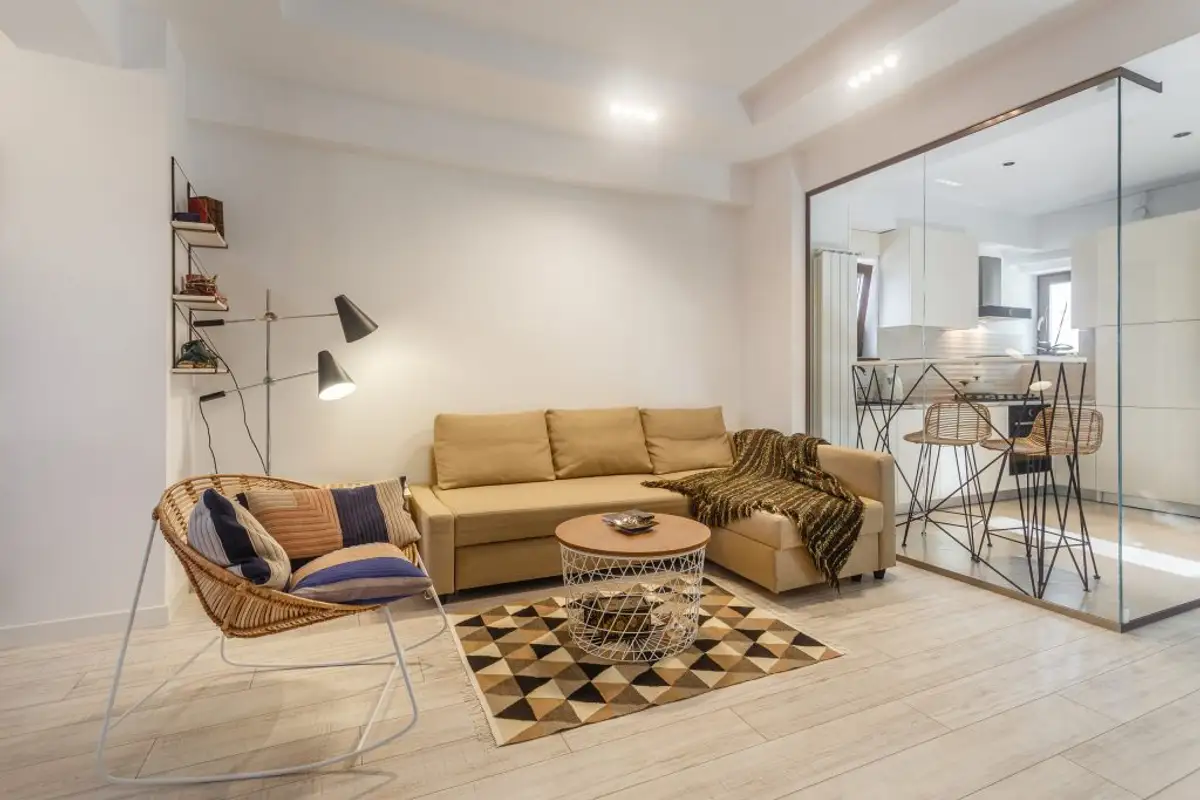
Choosing an open space layout combining the kitchen and living room can be challenging when you want a visible separation between the two areas.
This time we're talking about a practical transformation first and foremost, with Scandinavian bases in terms of style and a functional role in facilitating all activities that will utilize the available surface area.
The architects who handled the design, Alexandru Bucur and Roxana Dobos from Interiology, were tasked with addressing the challenge of achieving both functionality for the space and a homogeneous aesthetic.
Homeowners often choose to add personal touches to identify with their living space. In this case, two passions stand out: medicine and travel.
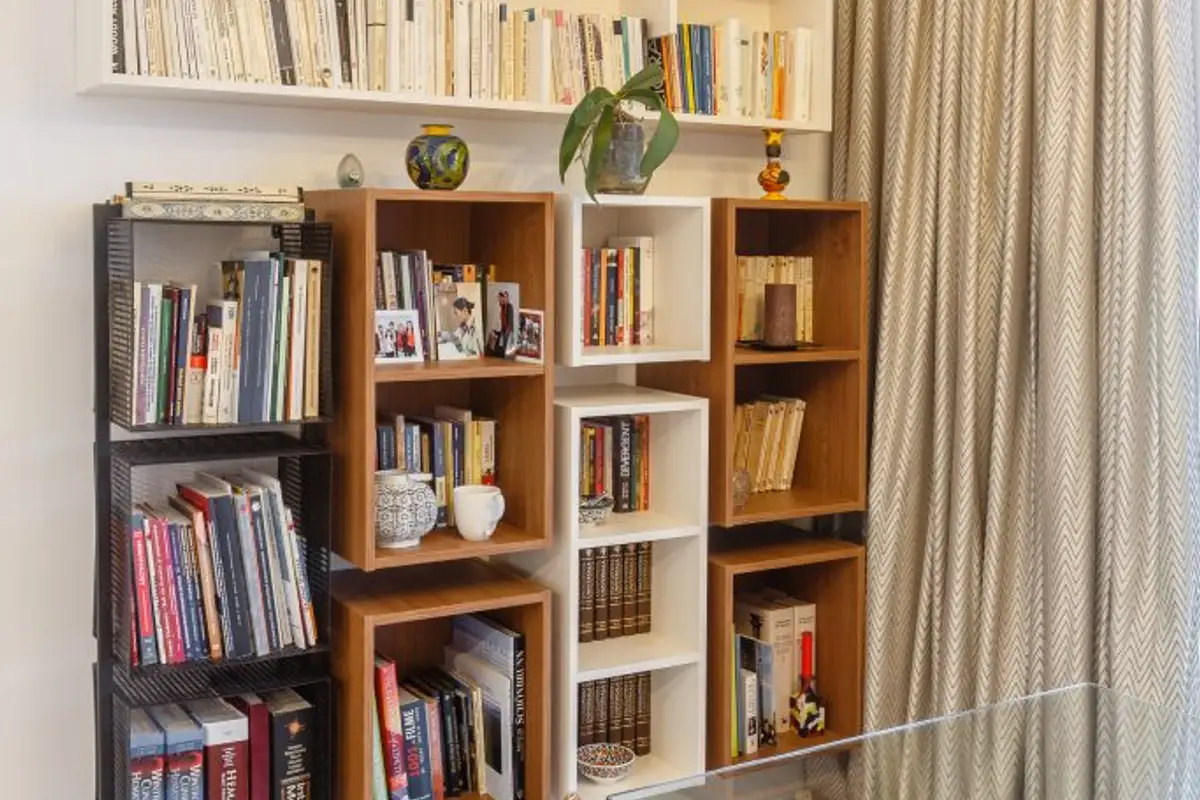
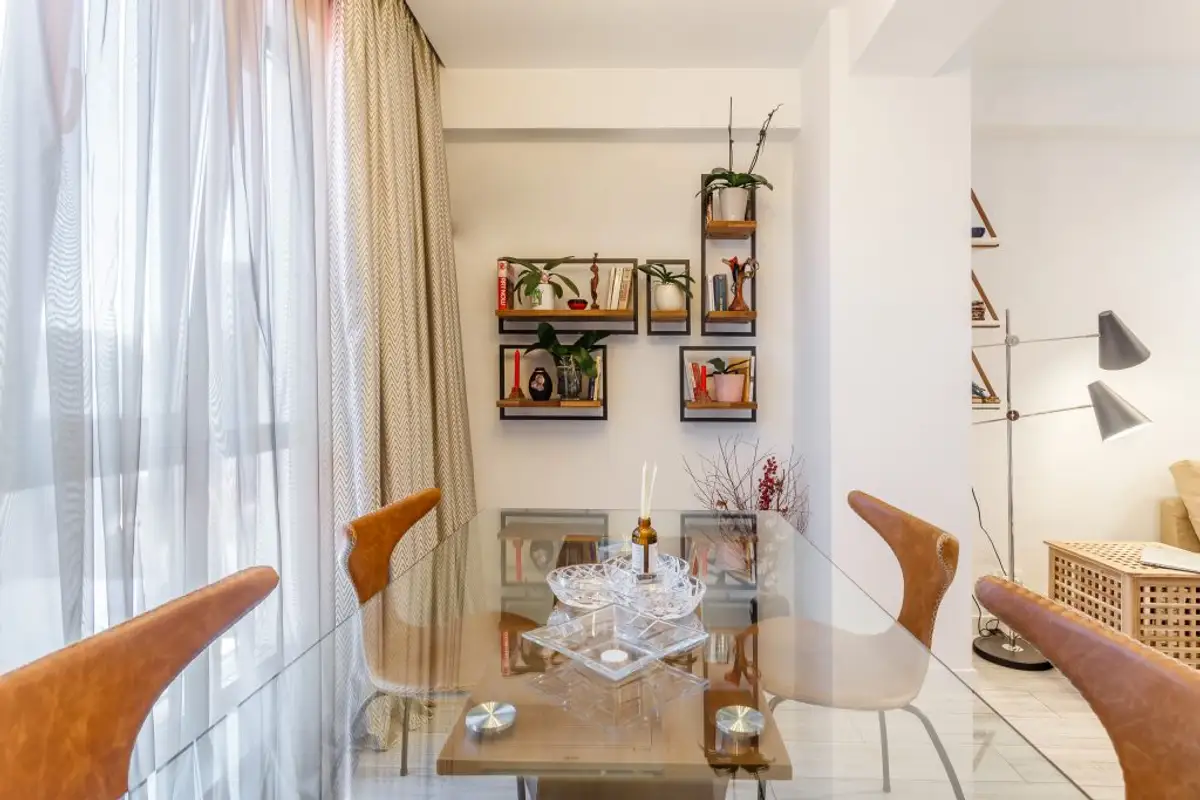
The ability to display souvenirs acquired or books and other written materials in an aesthetically pleasing manner is one of the main themes influencing the entire design. To achieve this, the space needs airiness and brightness without being overloaded with too much furniture.
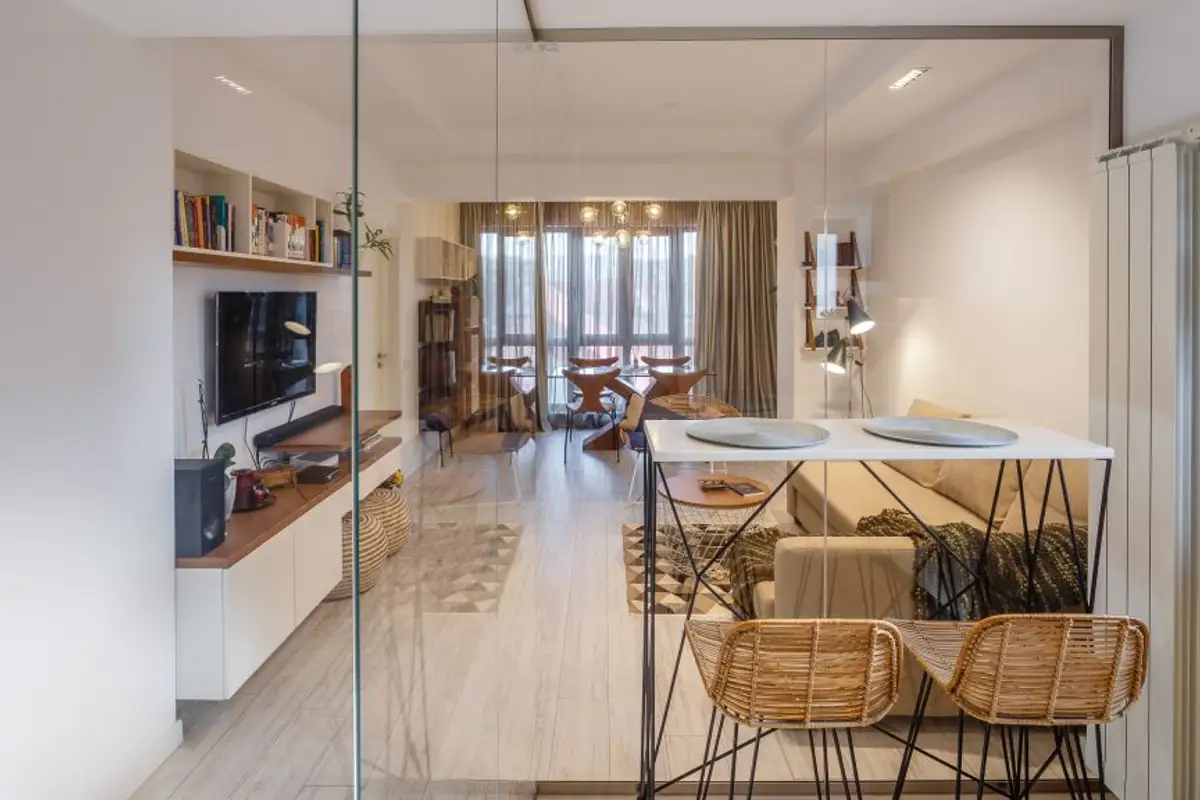
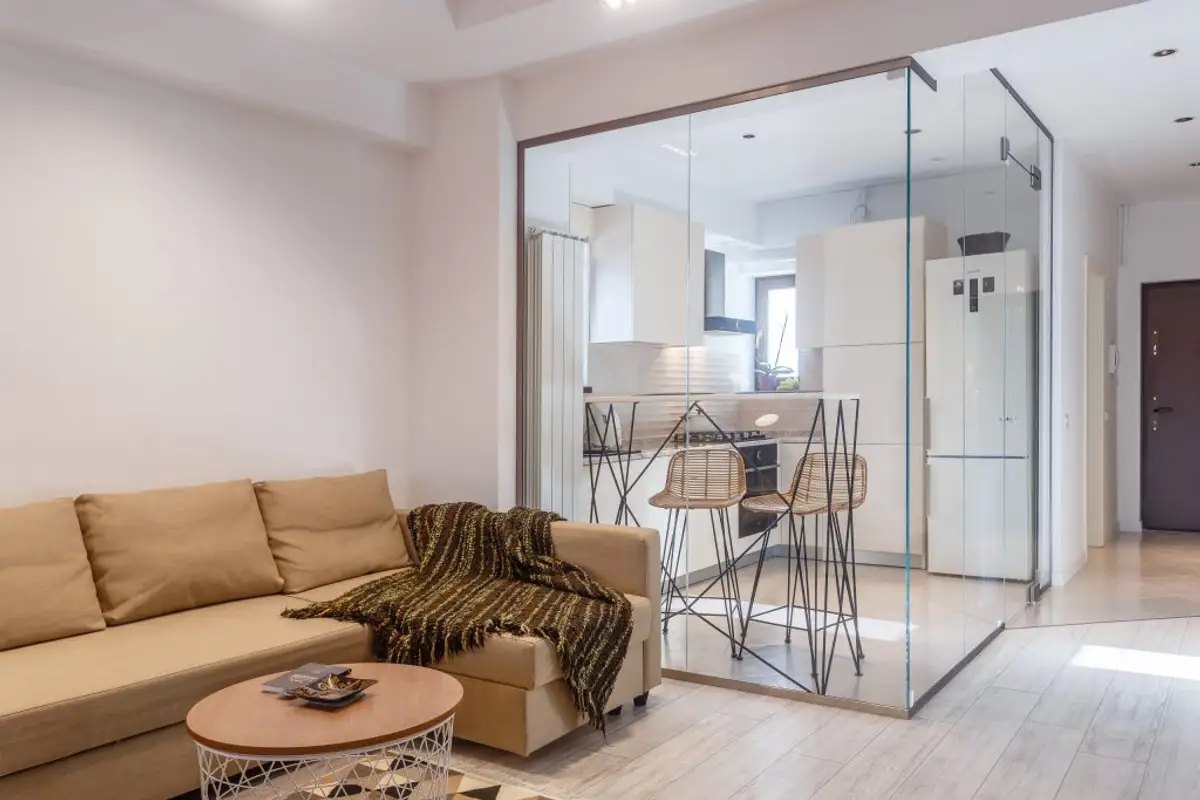
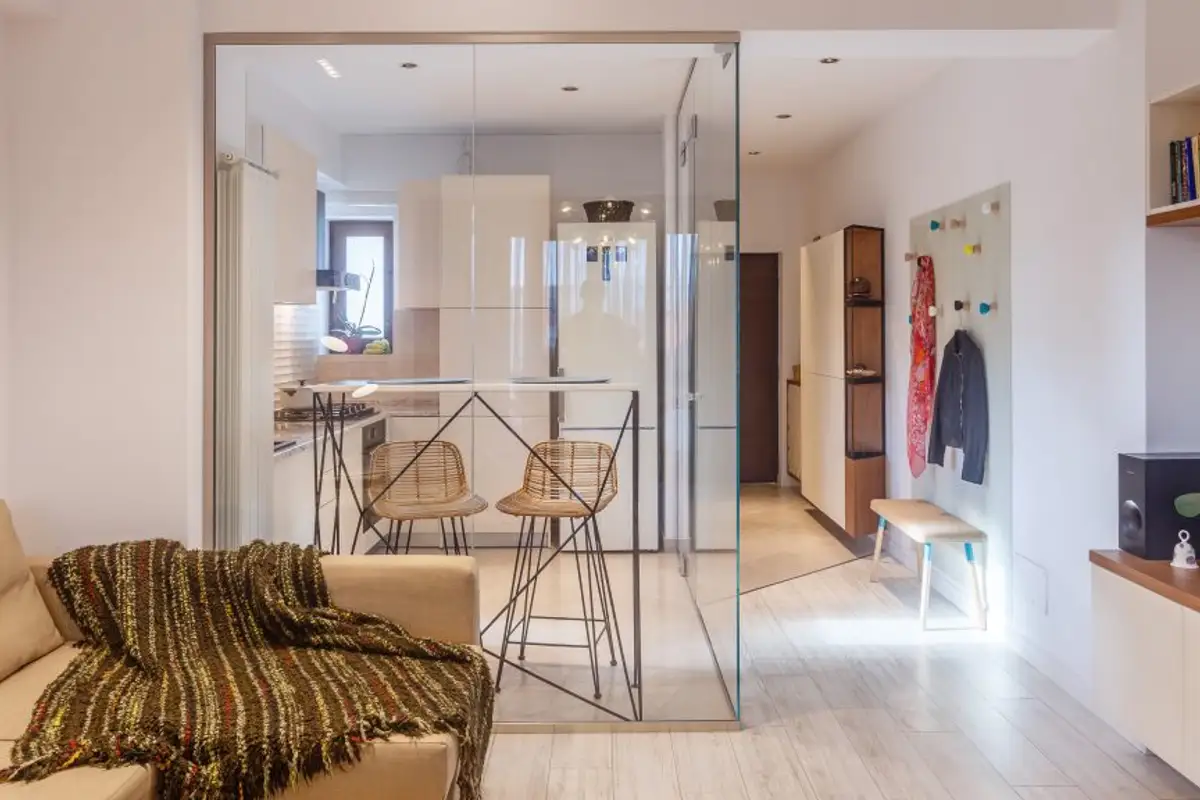
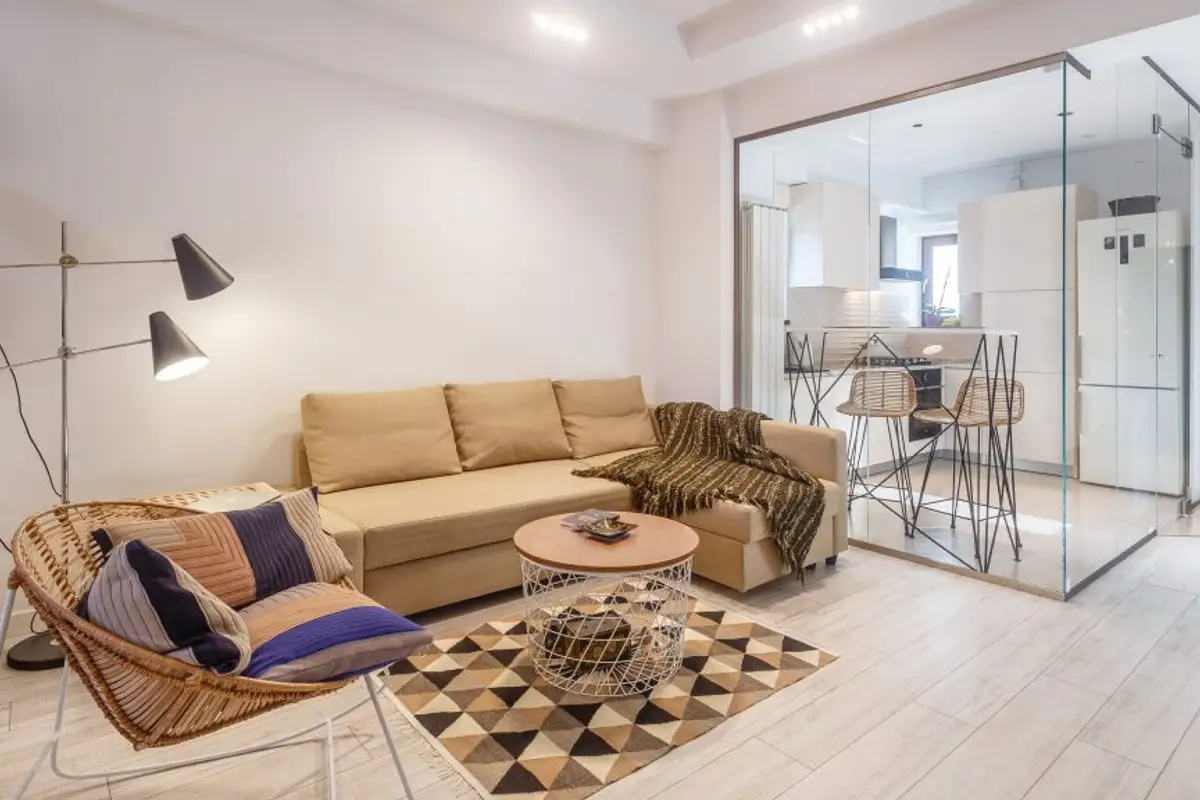
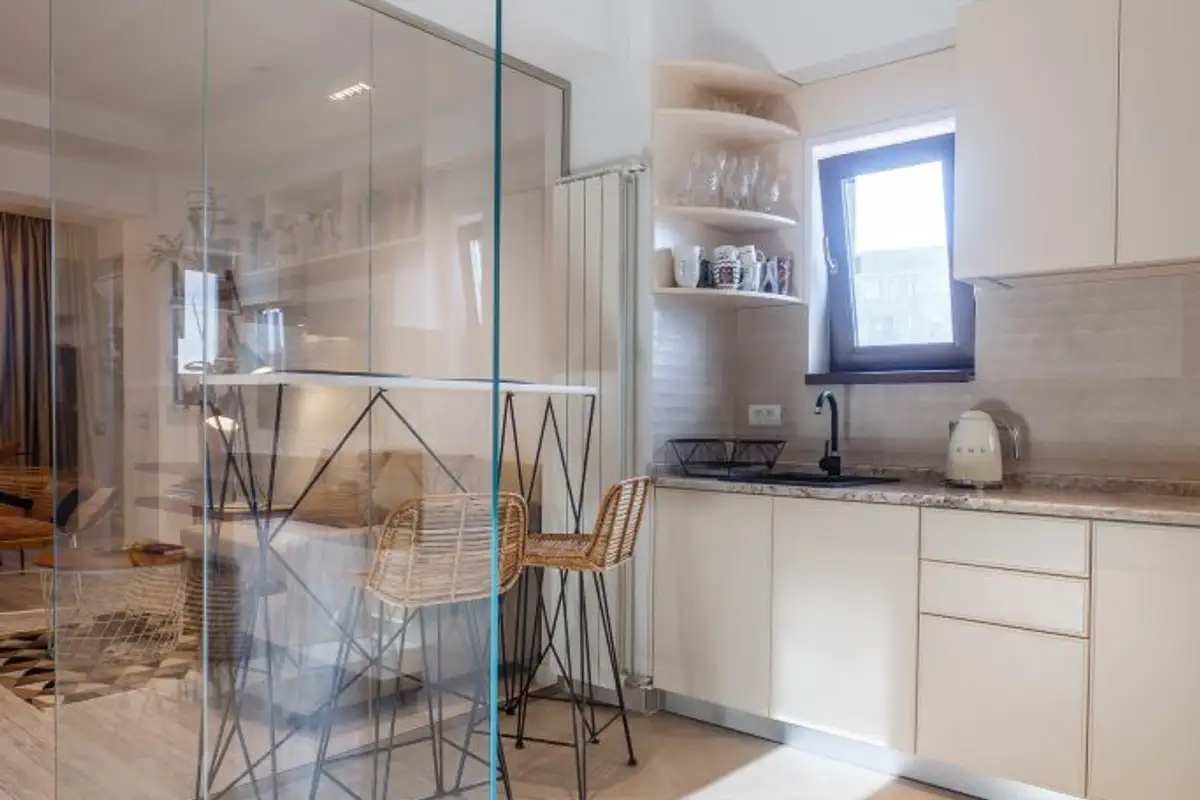
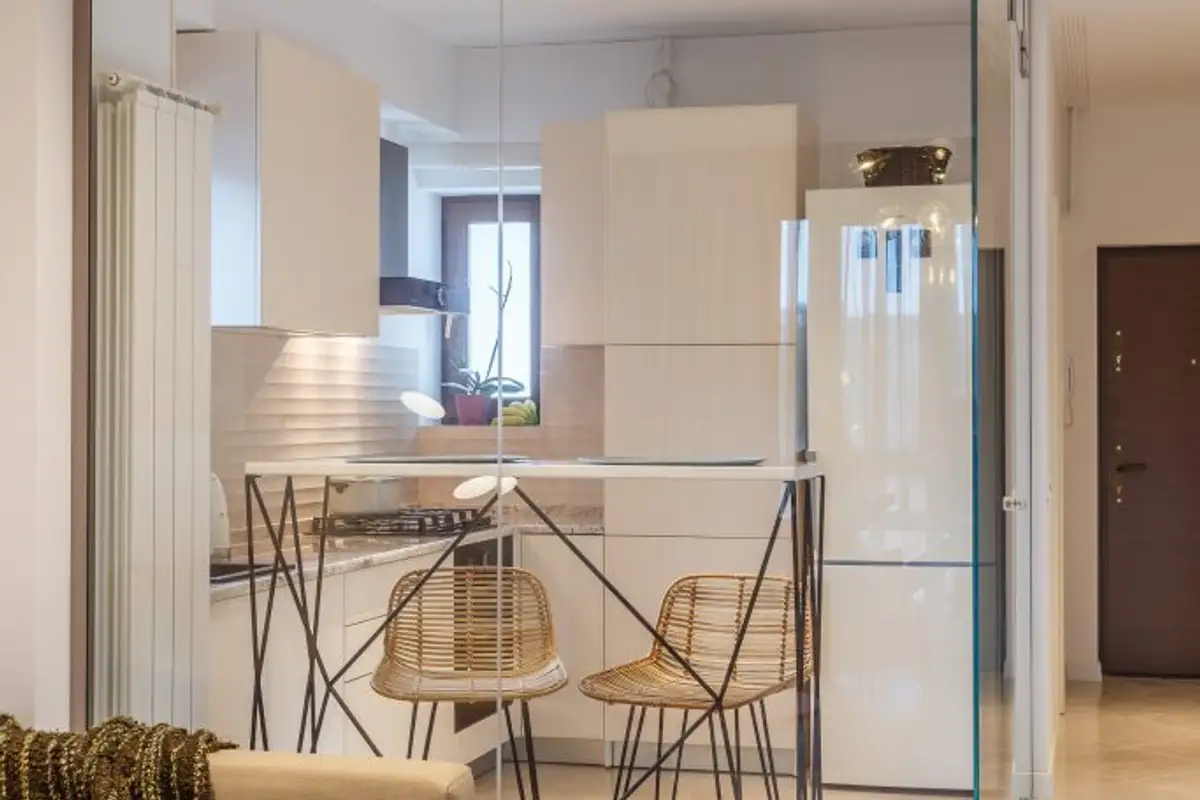
The delineation of the roles of the two rooms is done in a non-conformist way. The food preparation and serving area finds its unity and uniqueness to the same extent, separating itself with the help of glass: a modern option to maintain the connection between the two rooms while also providing acoustic and olfactory insulation.
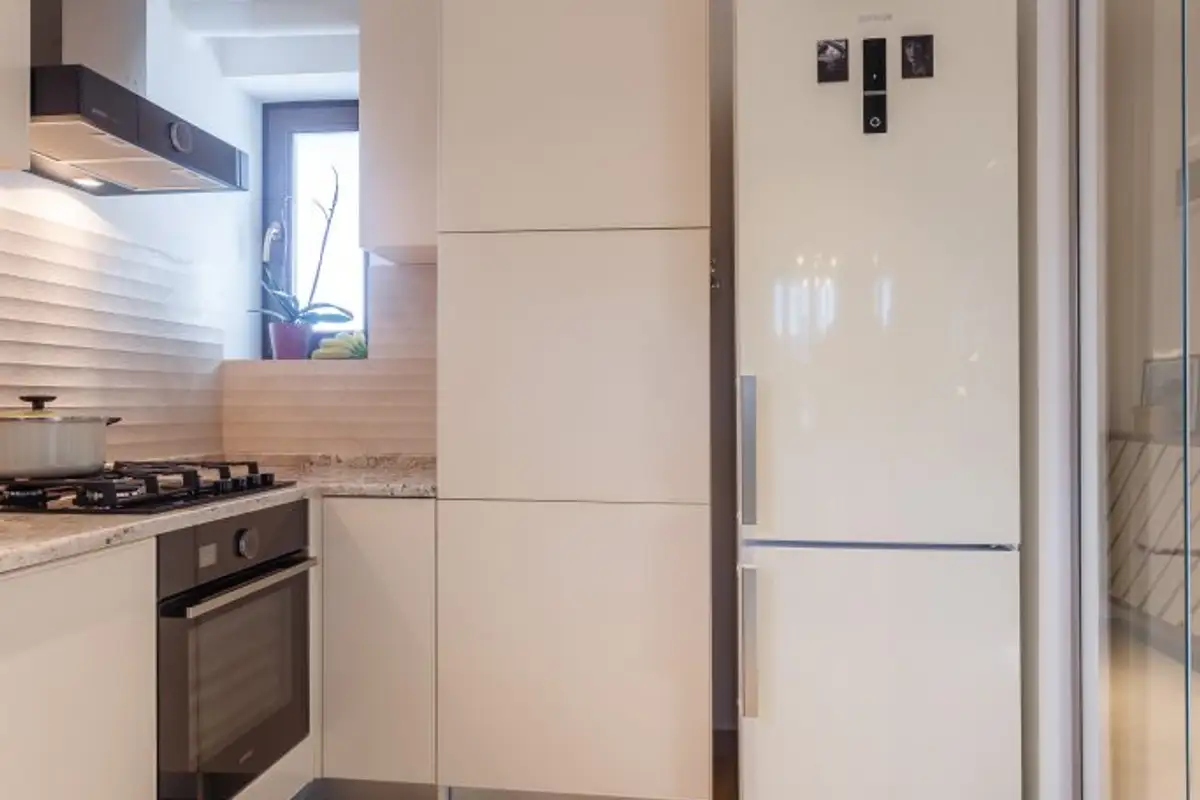
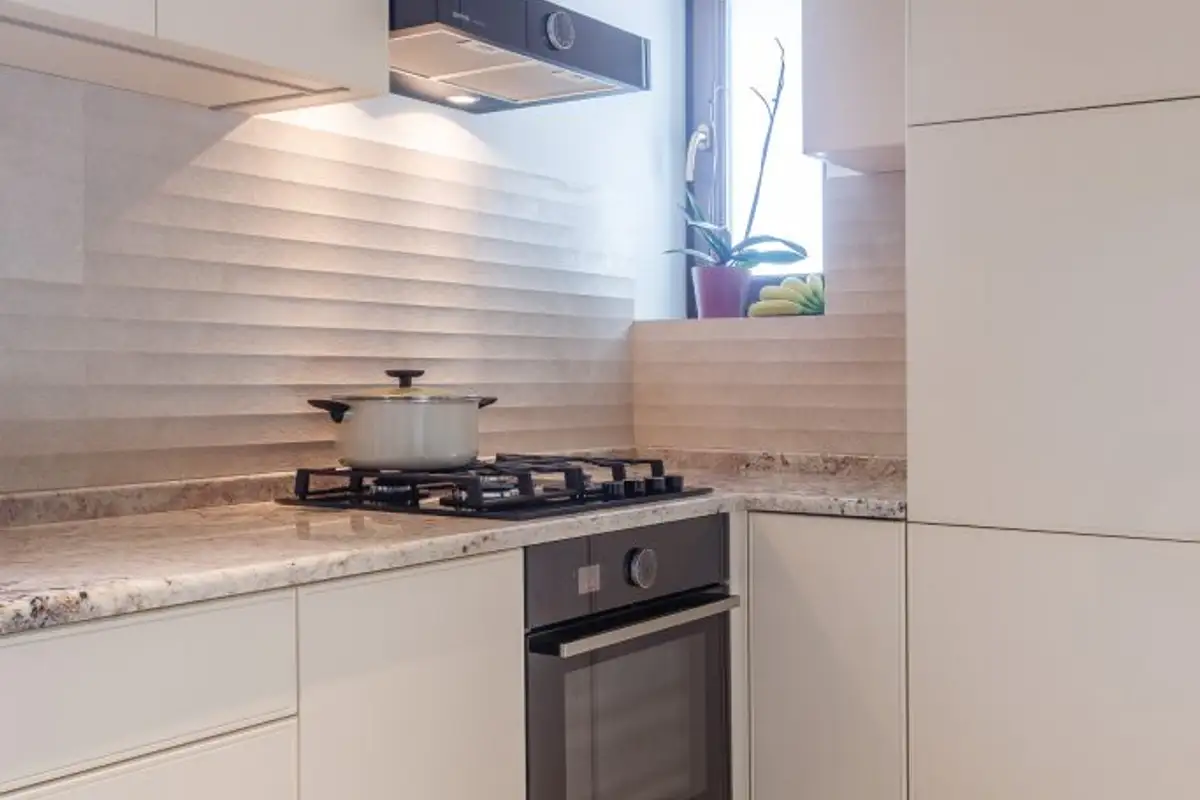
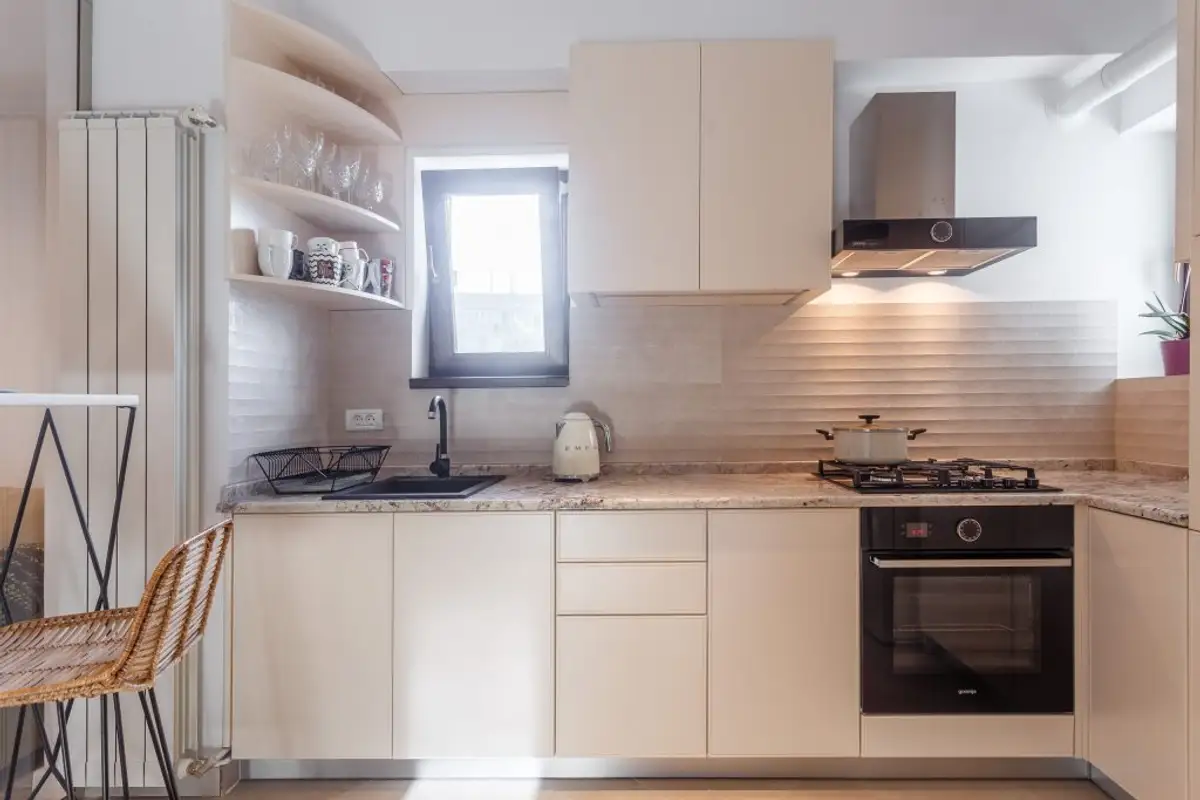
The furniture is minimalist, compact, in shades of glossy white, and together with the bar table and chairs with a modern design, places the kitchen in a contemporary time frame.
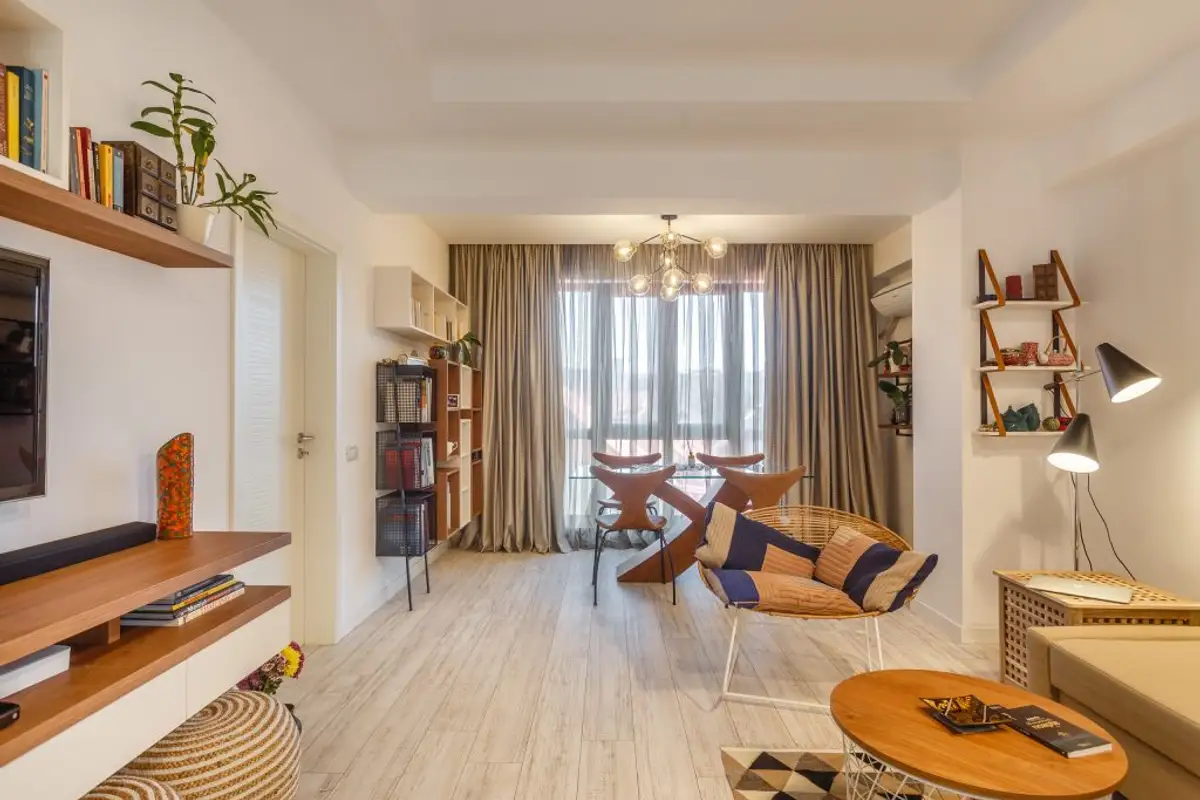
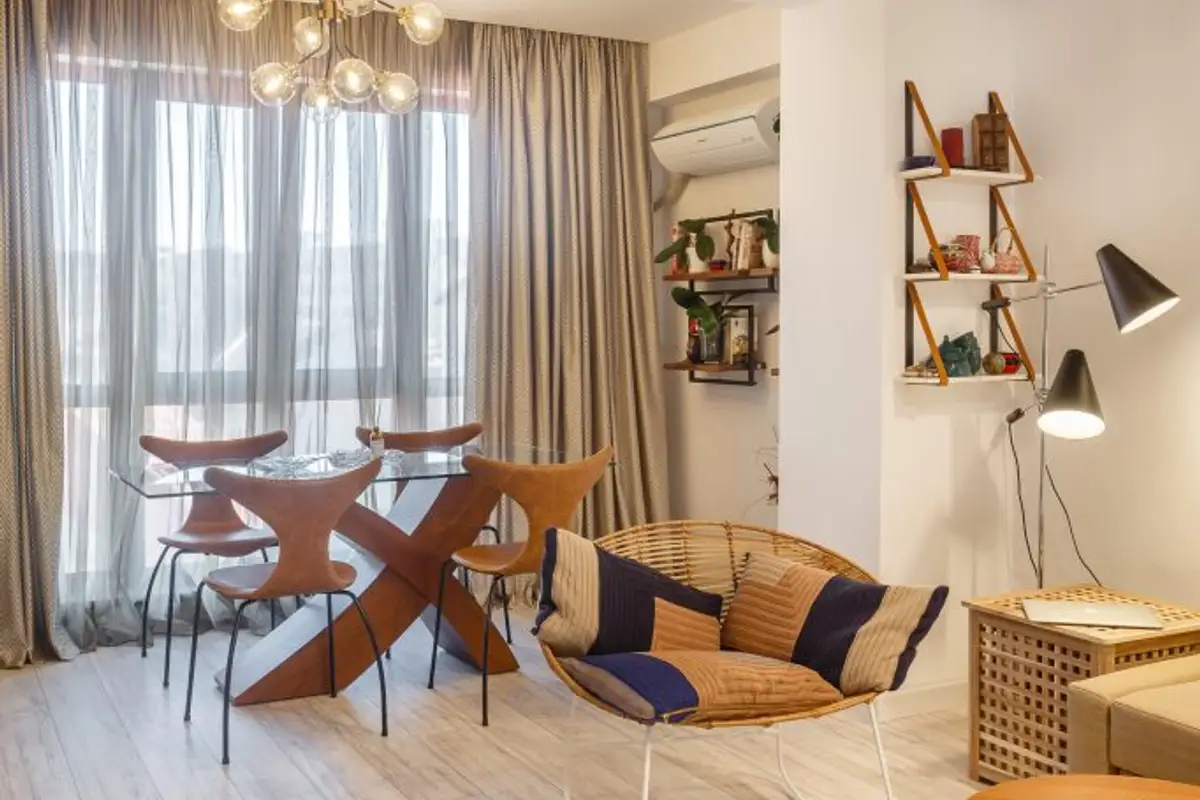
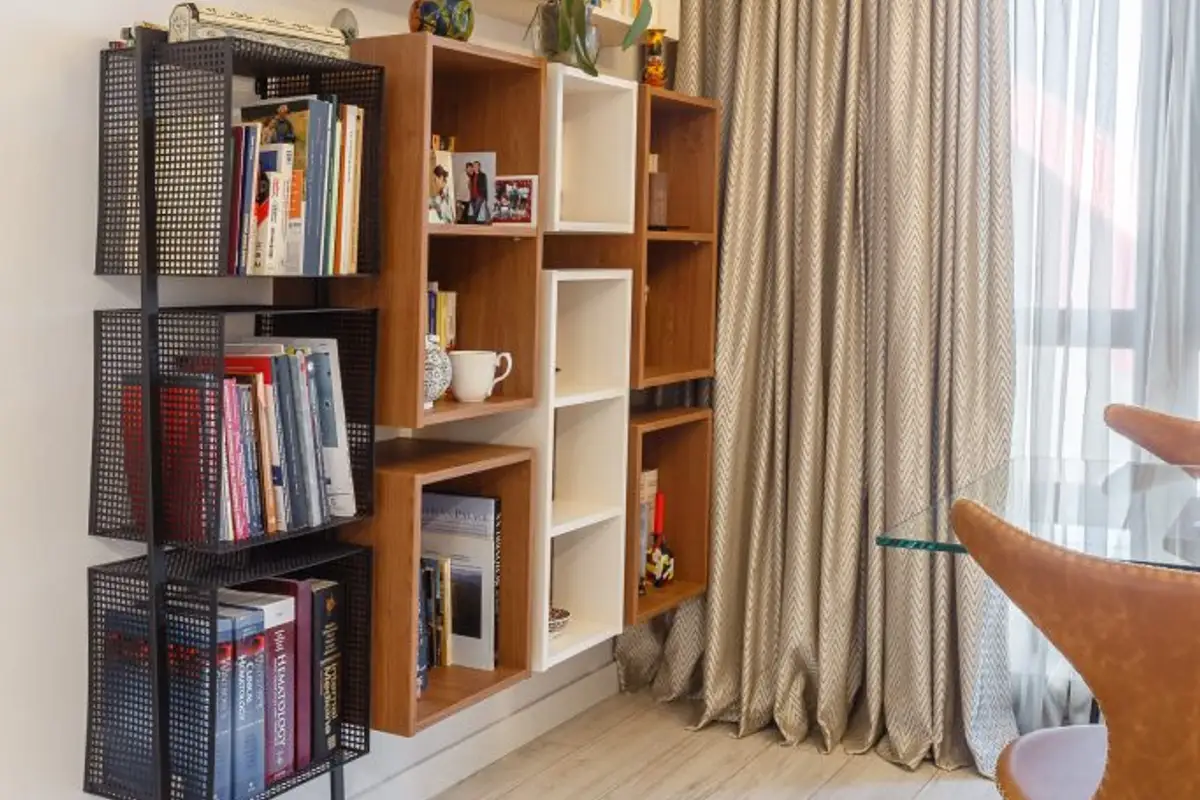
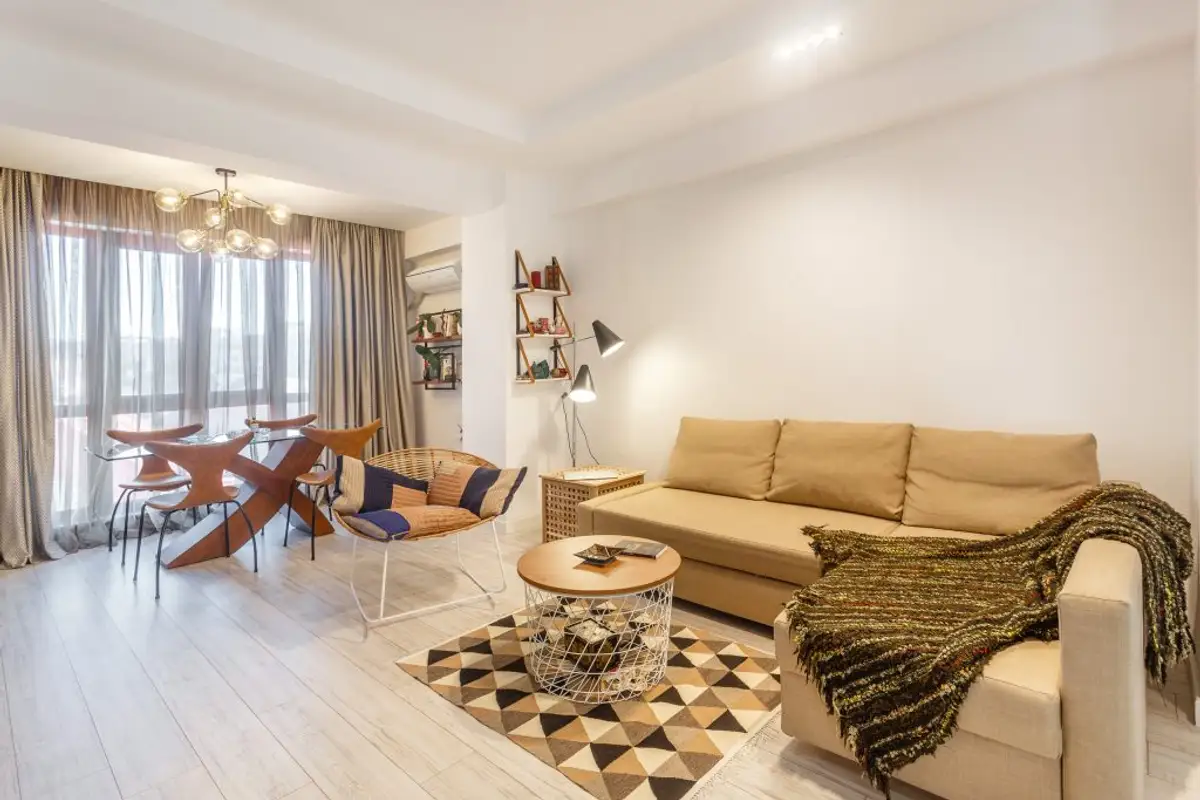
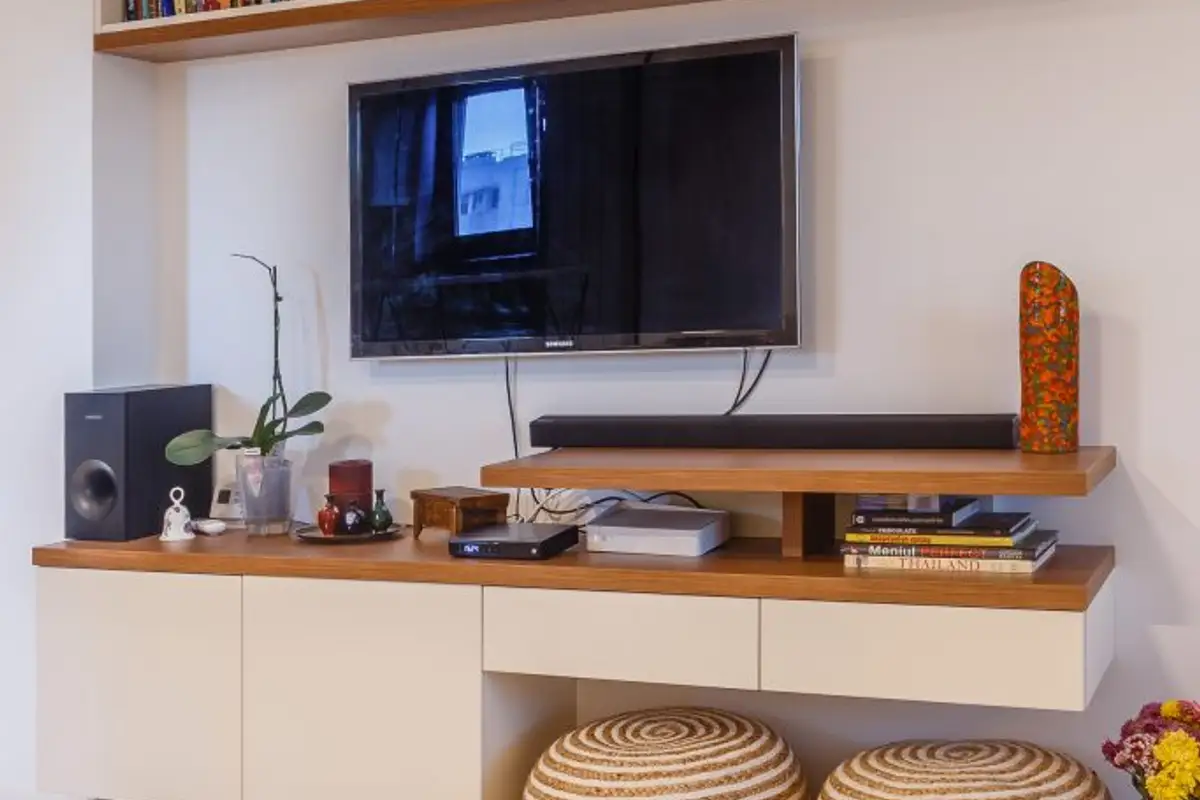
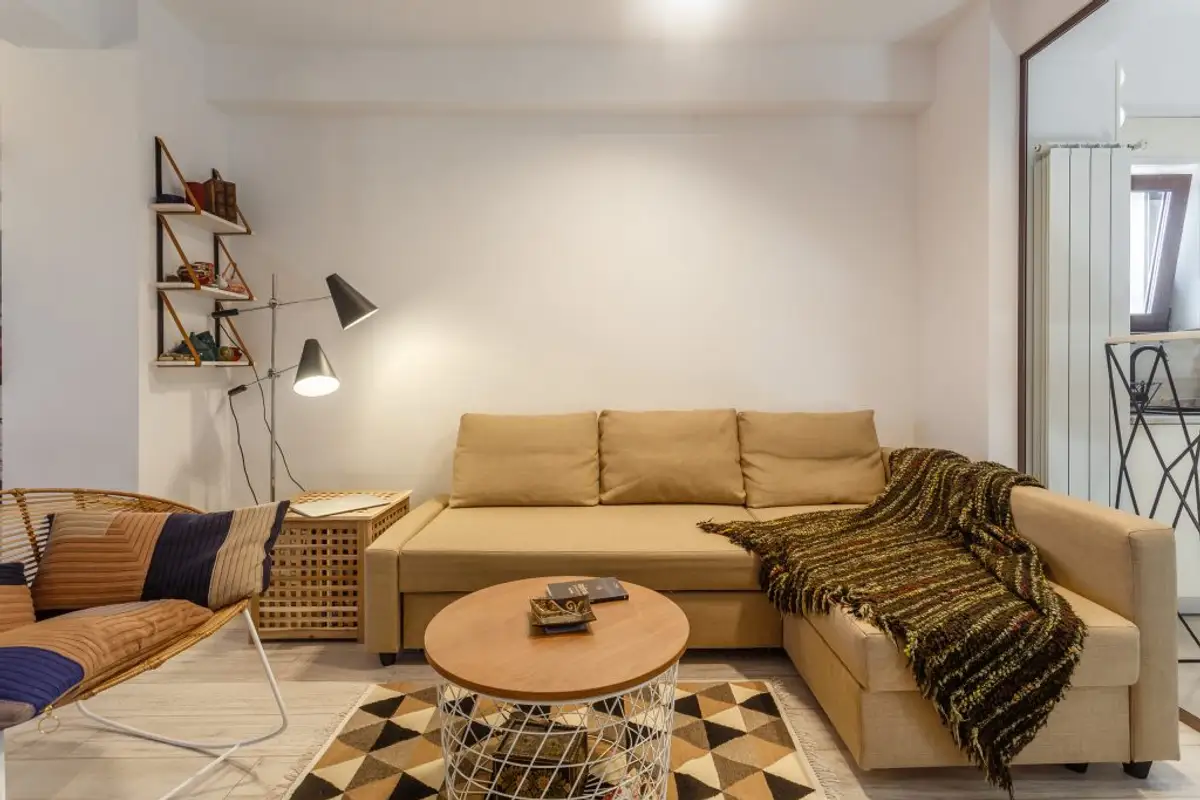
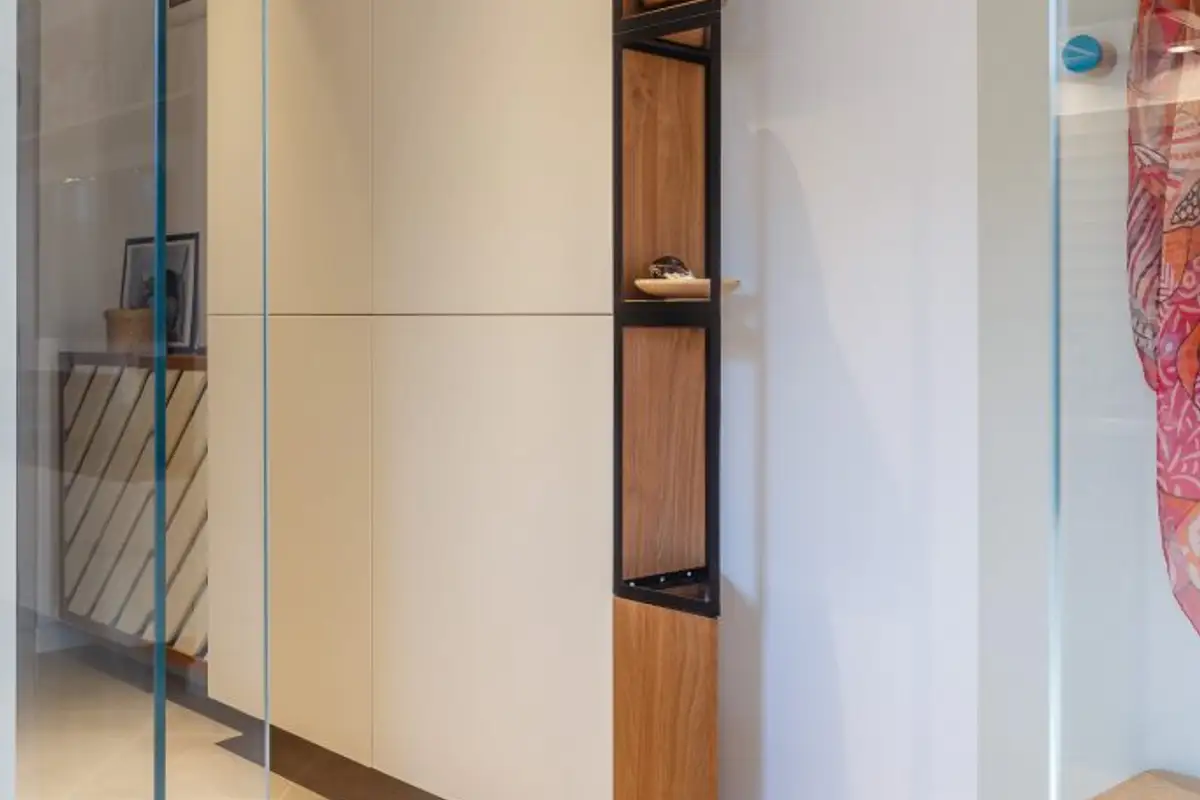
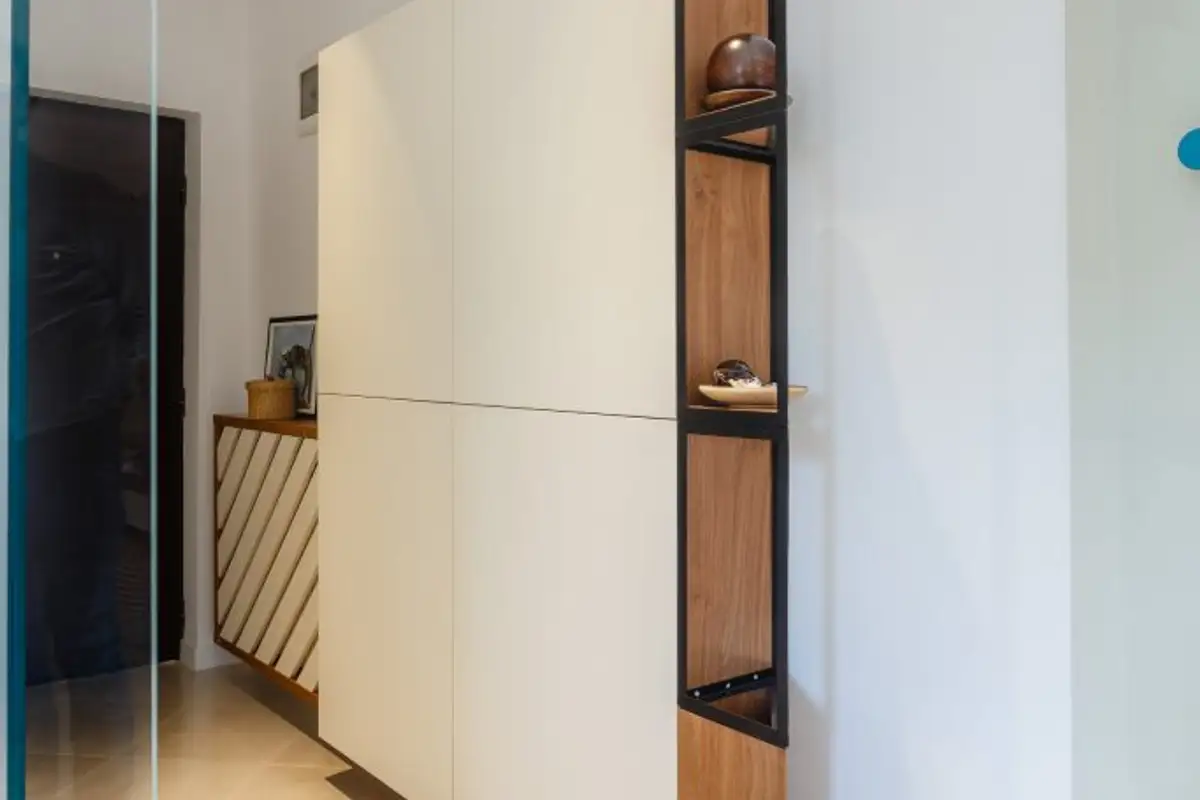
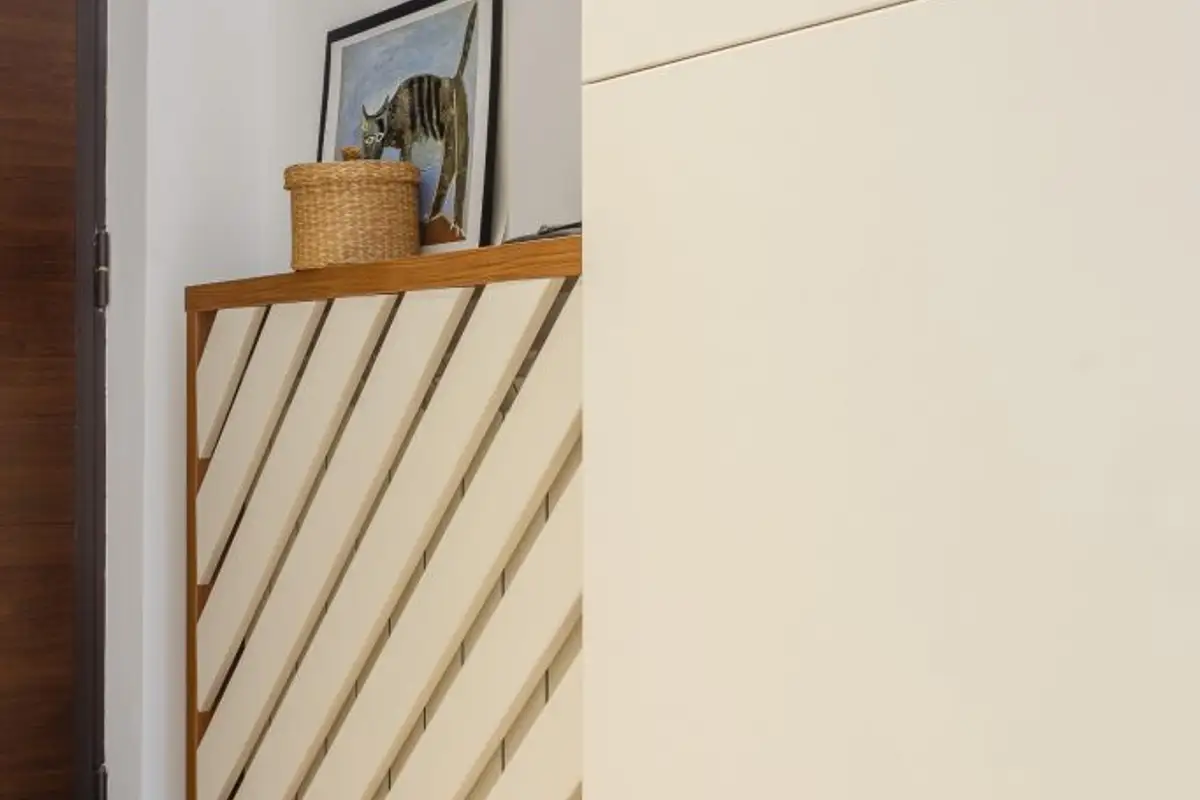
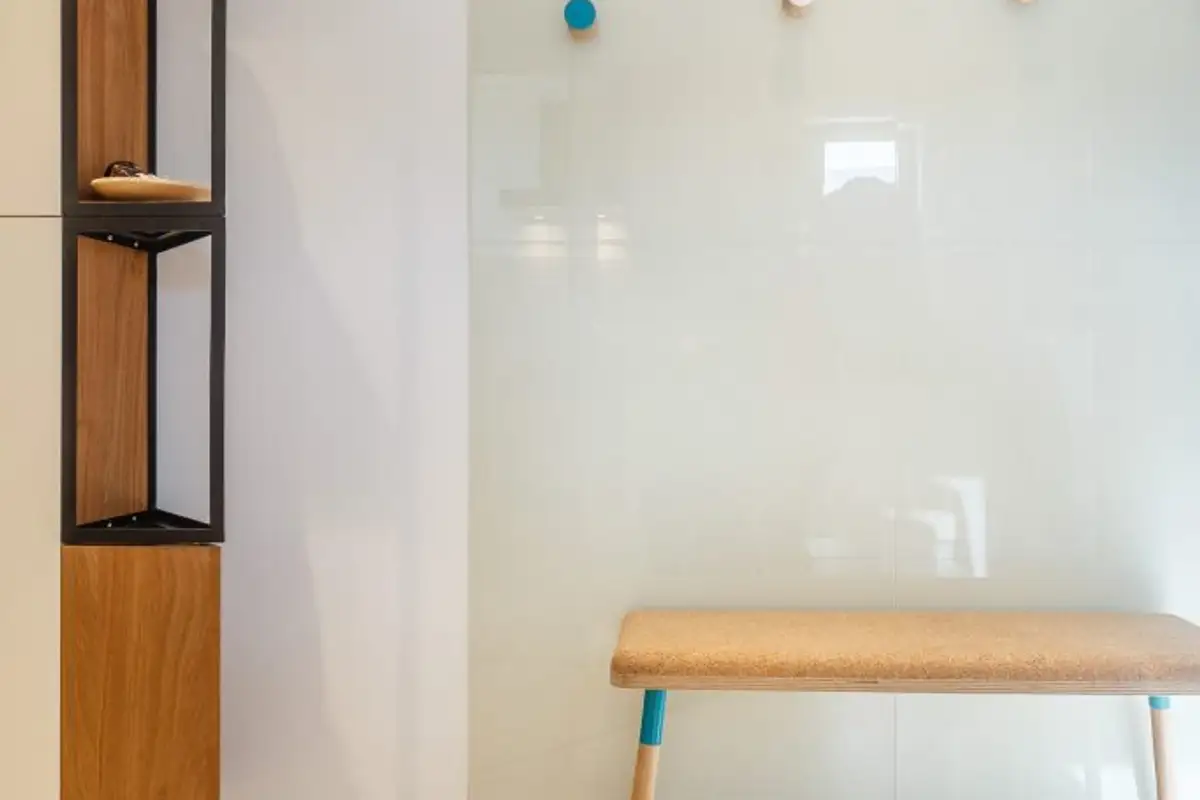
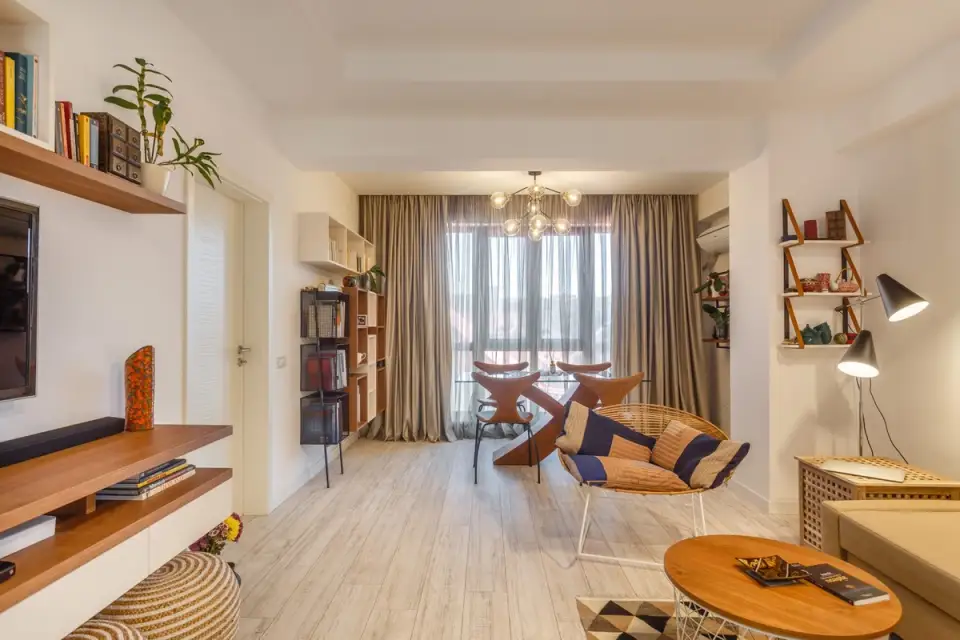
The relaxation area is extremely bright, and the use of beige, white, and natural wood in elm and walnut tones brings warmth and naturalness. To create a sense of floating harmony among all elements, the furniture pieces are suspended on the wall, as can be seen in the case of the bookcase or shoe cabinet.
To ensure as much storage space as possible for materials related to medicine, the bookcase becomes generous in terms of providing the necessary space.
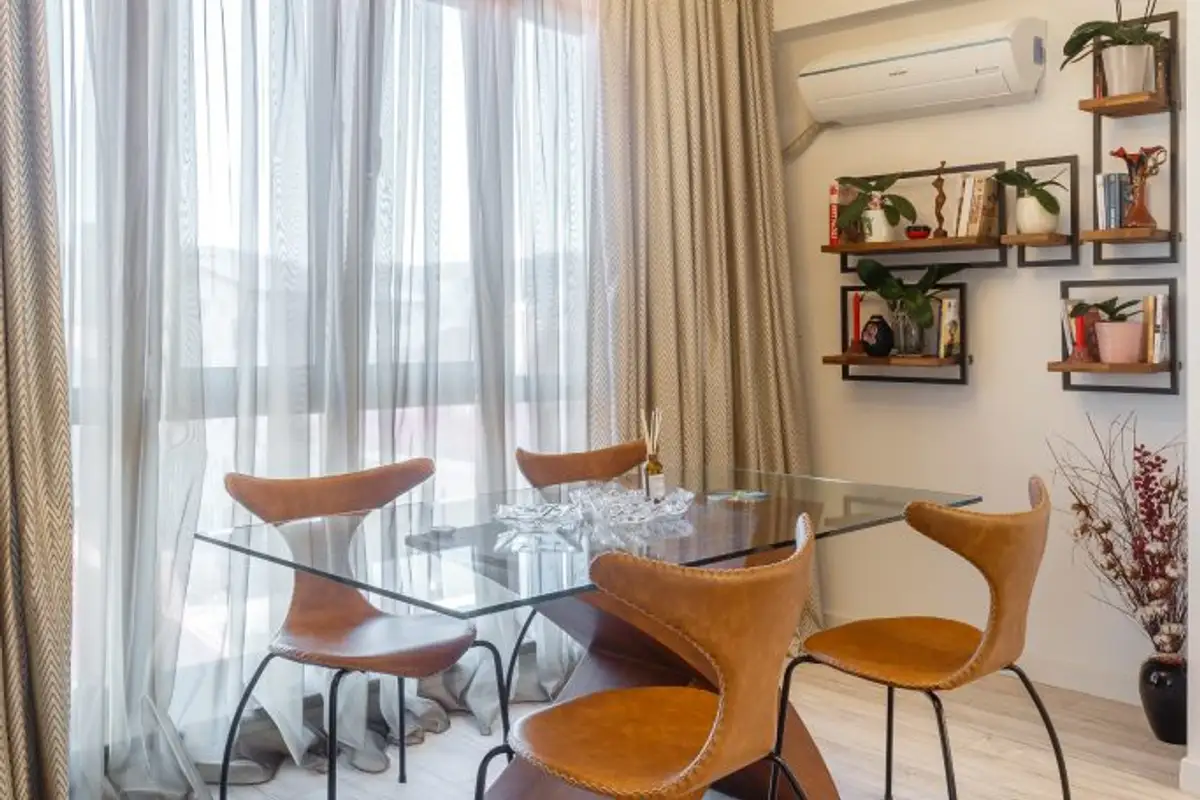
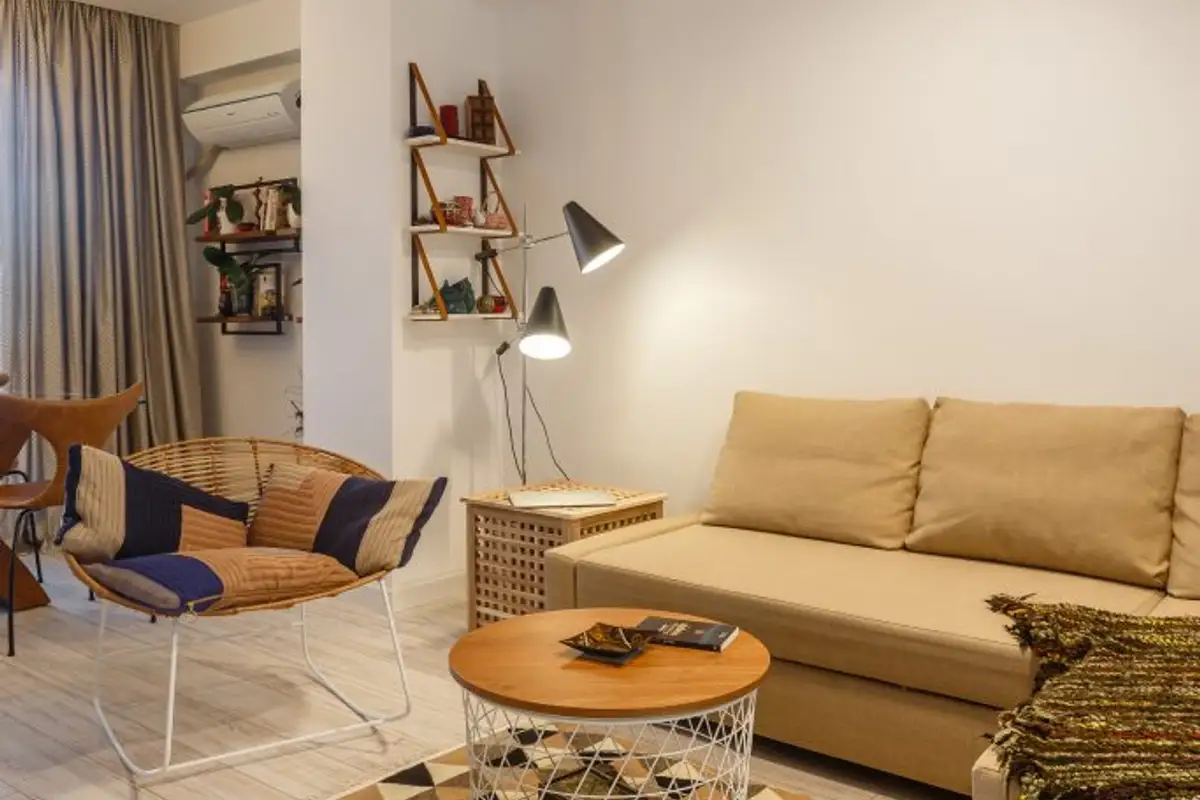
Relaxing in style and socializing with quality can only be done in a modern way. This is presented to us by the introduction of a glass table in the foreground around which a set of chairs with an abstract design are placed. The modern pattern is maintained in the case of the armchair, sofa, and coffee table.
We cannot help but notice that the textures of certain furniture elements present in the living room area are also found in the food preparation and serving area.
Although natural light has access in a significant amount, artificial lighting components are positioned to ensure correct and practical illumination at the same time, as does the floor lamp near the sofa.
Because they were dealing with a long surface, the architects' solution was to shift the focus to the diagonal motif. Thus, oblique geometric patterns can be found in both textile components and furniture or on the floor.