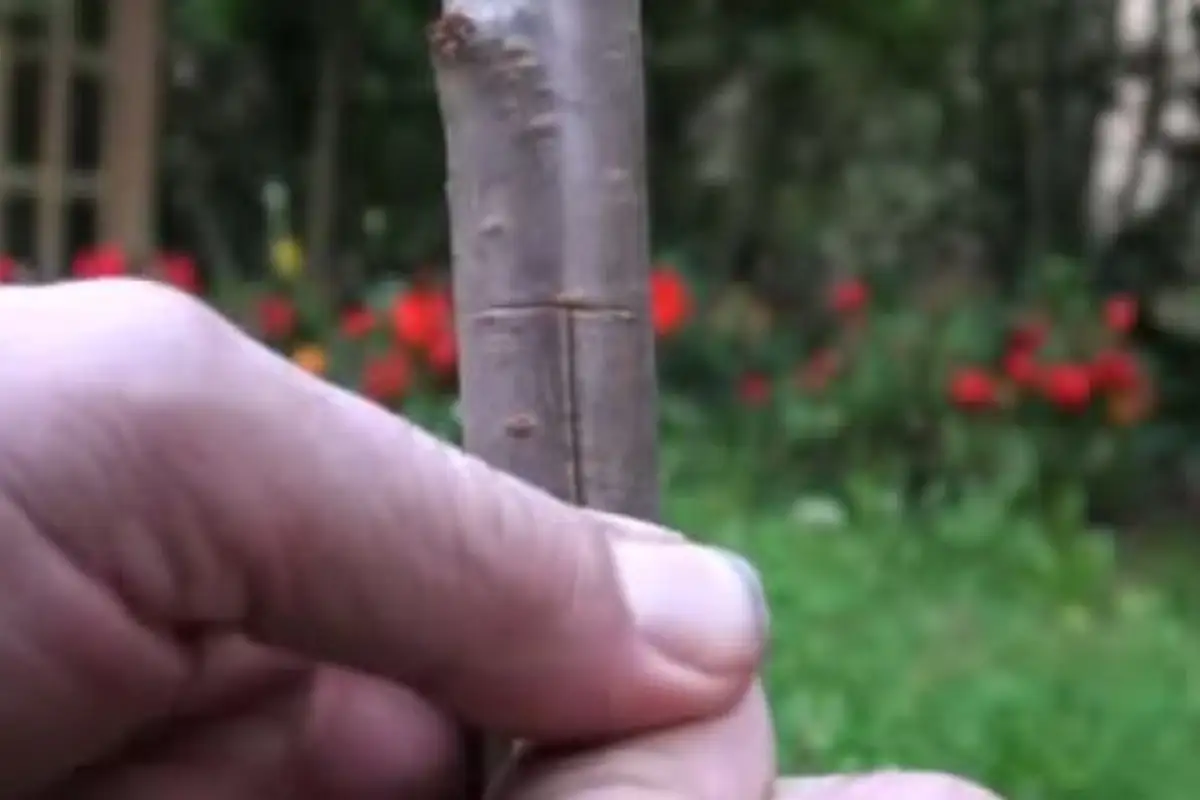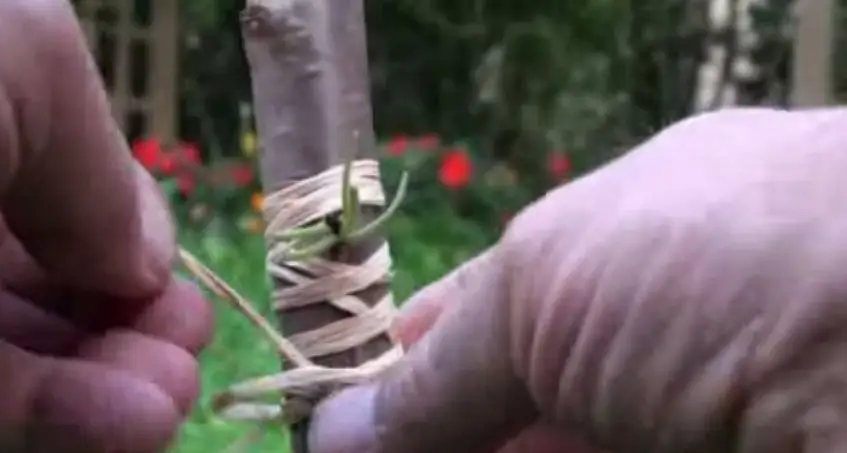
This grafting method is also called "T" and differs from the "split" method in that the graft is reduced to a single bud. The result will be a clone of the variety from which the graft originates.
Grafting trees by the "sleeping eye" method can be done both in spring and autumn, and for successful grafting, the method requires well-formed grafts with dormant buds, and the rootstock to be in an active growth state.
Here are the steps you need to take to graft a fruit tree using the "sleeping eye" method:
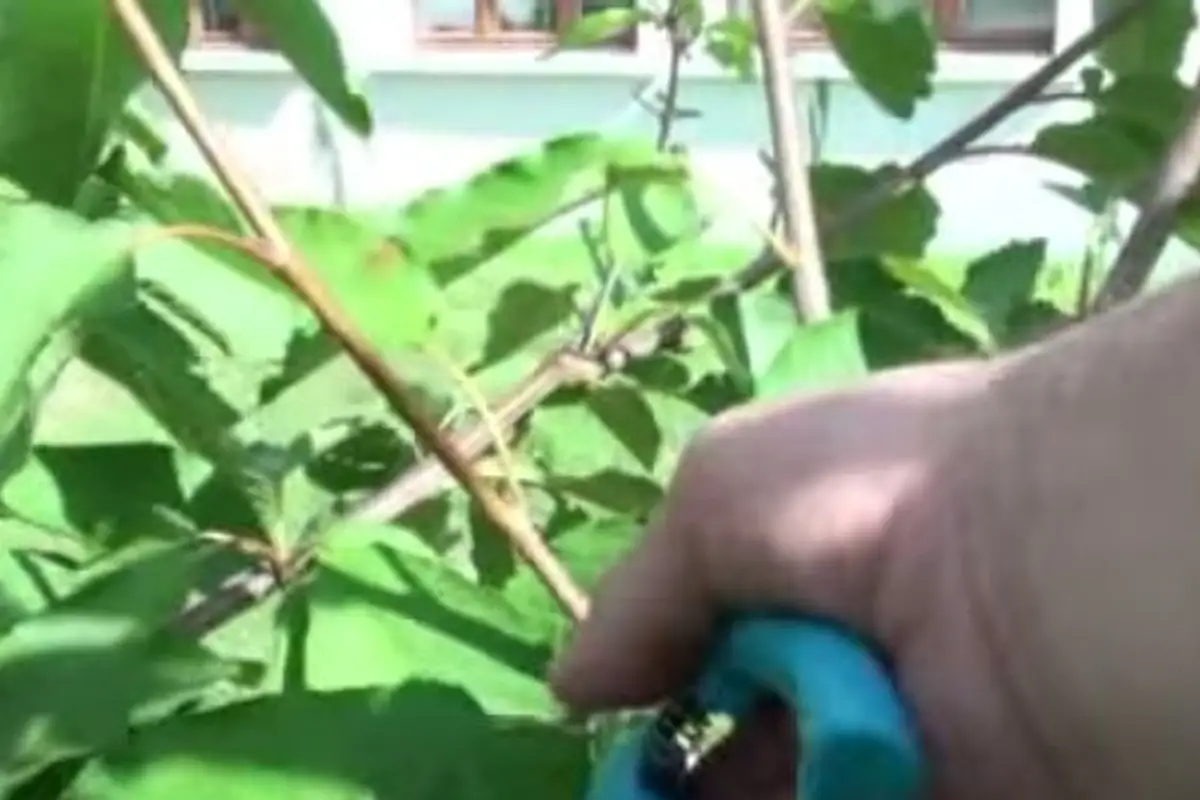
1. First, choose and cut a branch from the tree you want to graft.
2. Carefully cut the bud from the branch with which you want to graft and make sure that the bud retains a woody part.
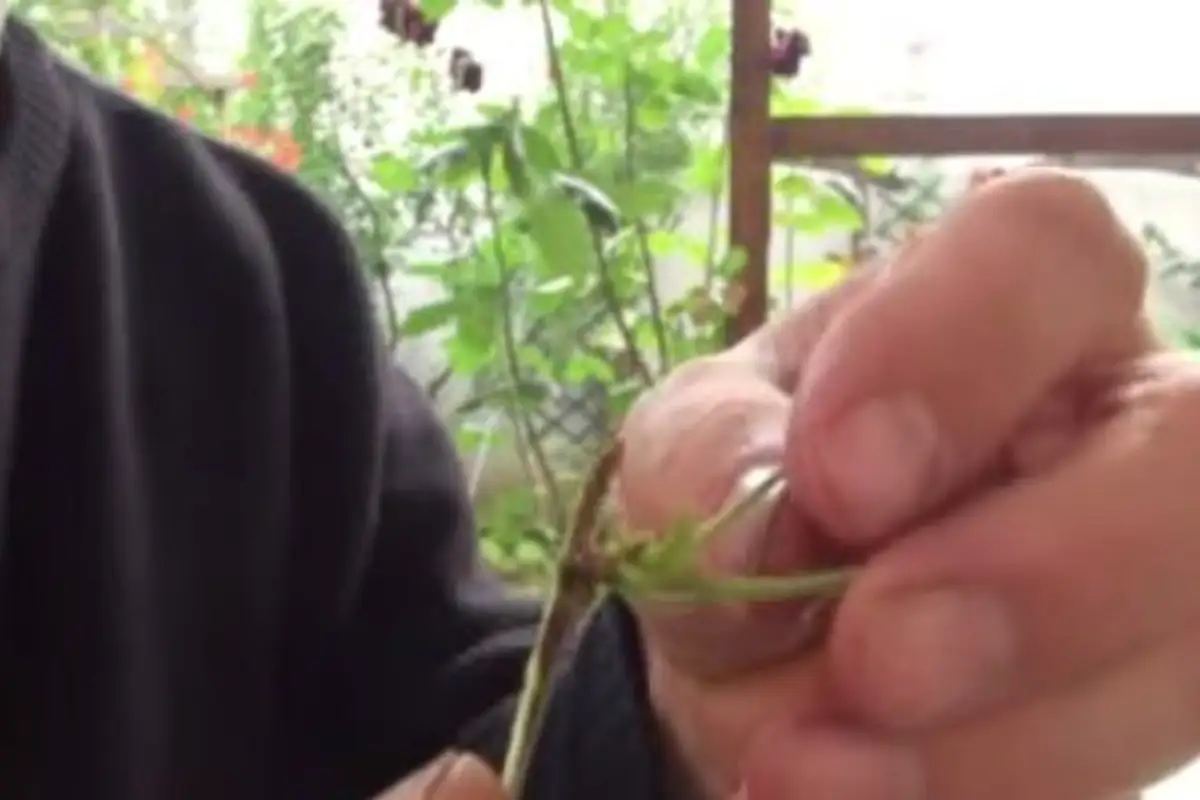
3. Cut off the leaves of the bud and keep the stem.
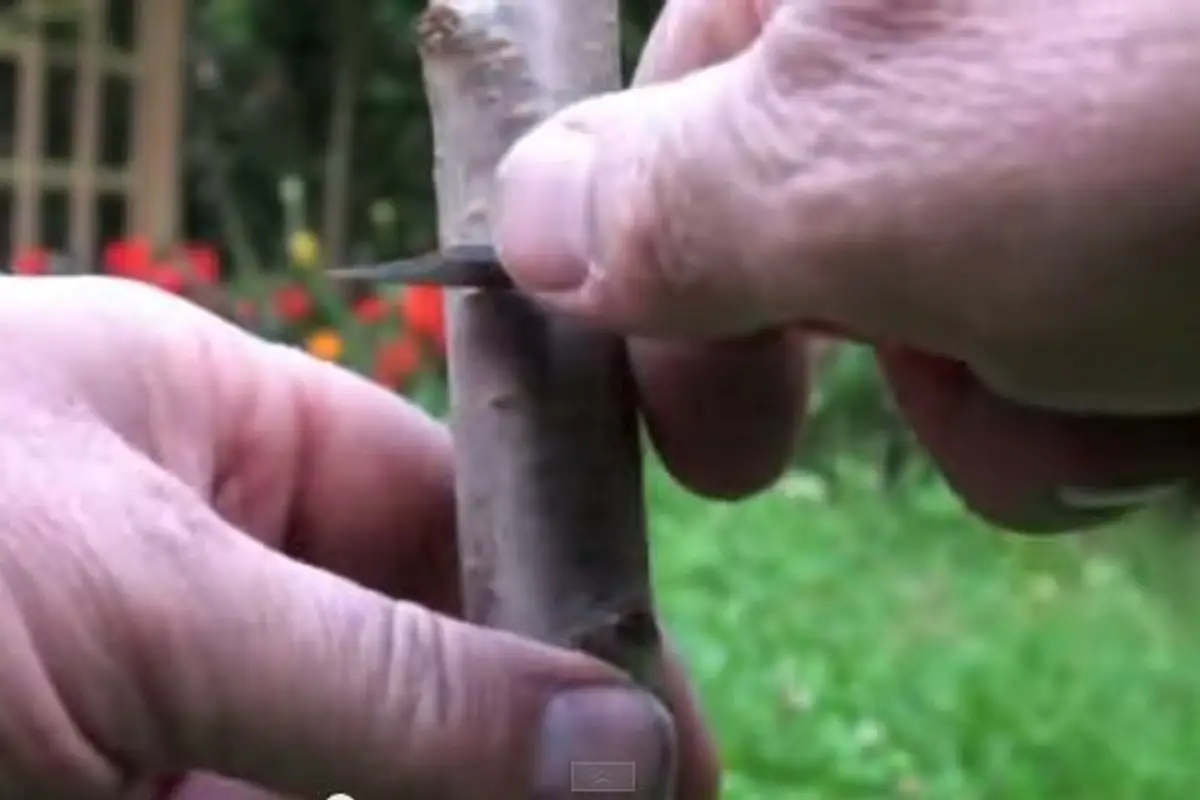
4. Make an incision on the side of the shoot on which you want to attach the graft, called the rootstock, in the shape of the letter T and make sure that in this small incision the bark will detach from the trunk to allow the graft to enter.
5. Fix the bud into the formed T and try to place it as well as possible so that it is as airtight as possible.
6. After placing the bud, wrap the entire area with a strip of raffia, but not too tightly, so as not to strangle the grafting point, and to allow the rootstock to develop. After two to three weeks, the bandage can be removed.
For successful grafting, scion and rootstock species from the same species or genus must be used. Each tree species corresponds to a certain type of graft. For example, for grafting an apple seedling grown from seed, you will choose a scion from another apple variety, and so on for each species.
Read also How to graft fruit trees in spring? (VIDEO)