Your child's room is more than just a bedroom. It's their play space, the place where they explore the world, do their homework, and invite friends.
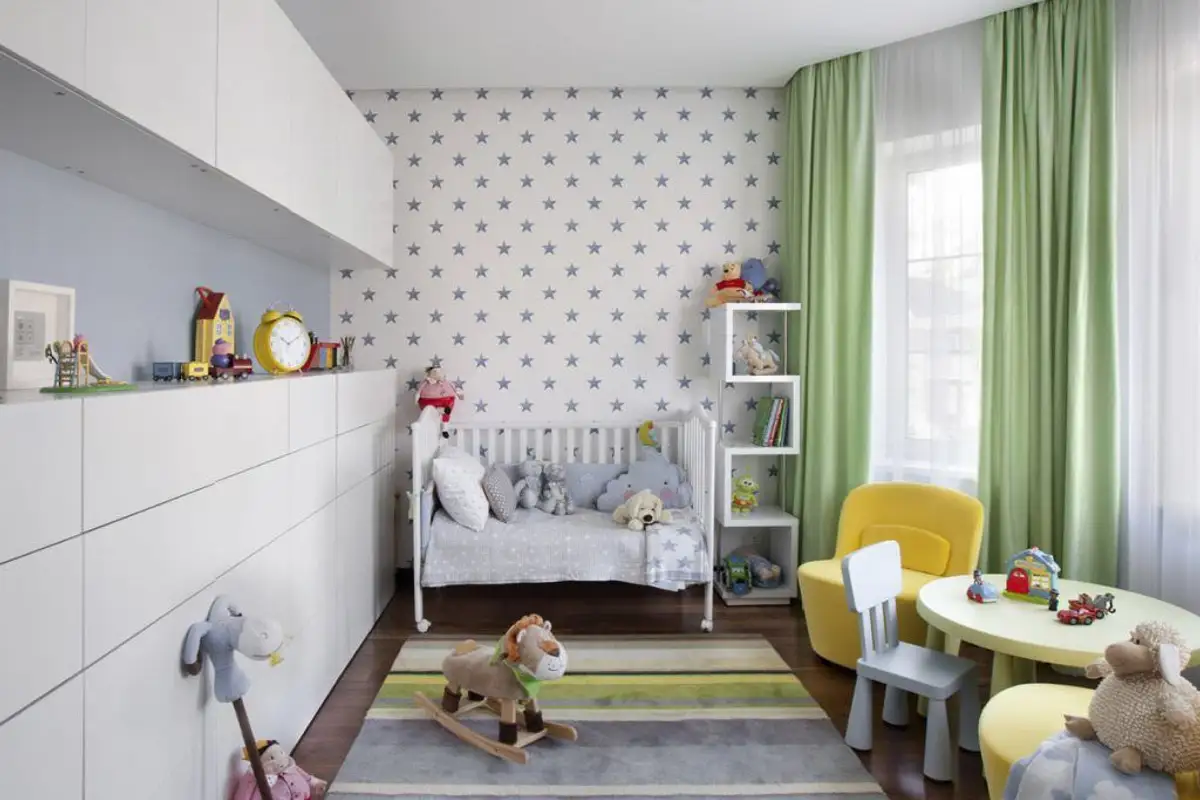
Considering the child's age, the room will undergo transformations specific to that stage. Babies are entirely dependent on their parents, so such a room must remain practical with minimal decor. Essential items should not be missing, including a suitable crib, dresser or changing table, and a small wardrobe for clothes.
As your child grows, they will have different needs and their room will need to adapt accordingly. To make the most of the space, consider multifunctional pieces that support the overall décor: shelves, floating shelves, storage boxes.
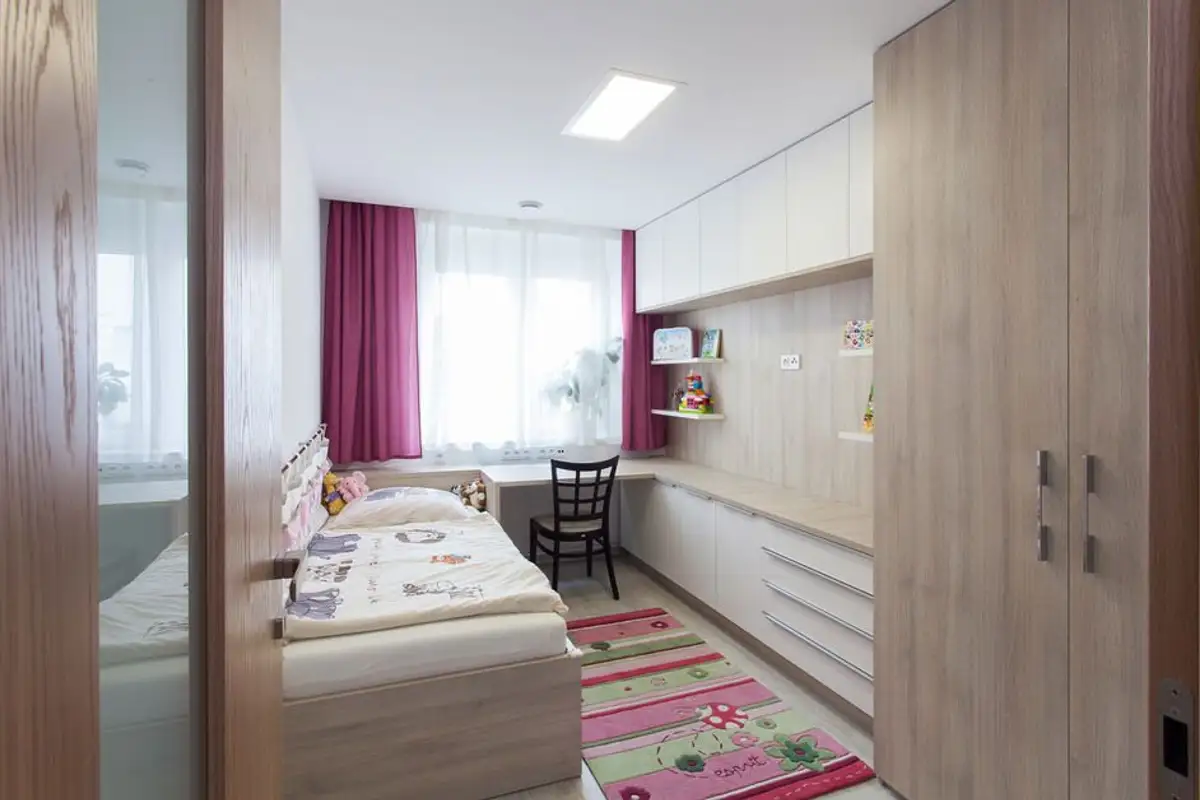
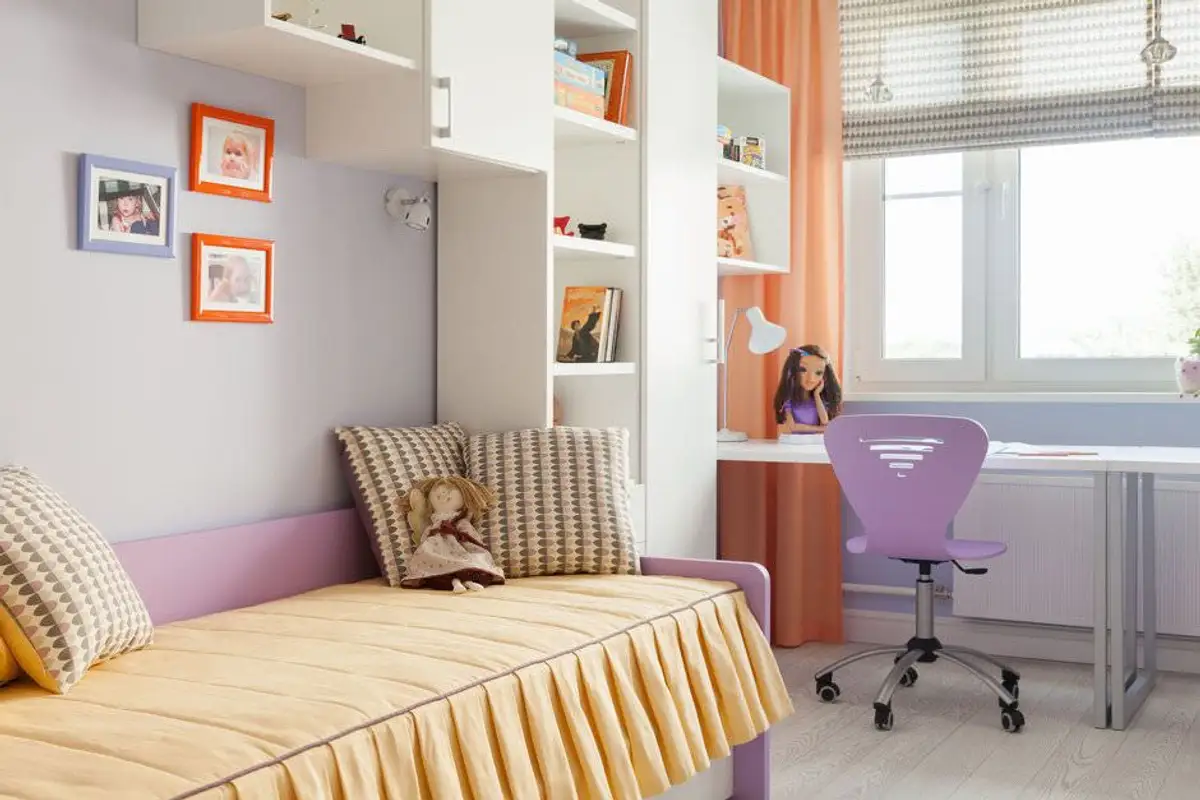
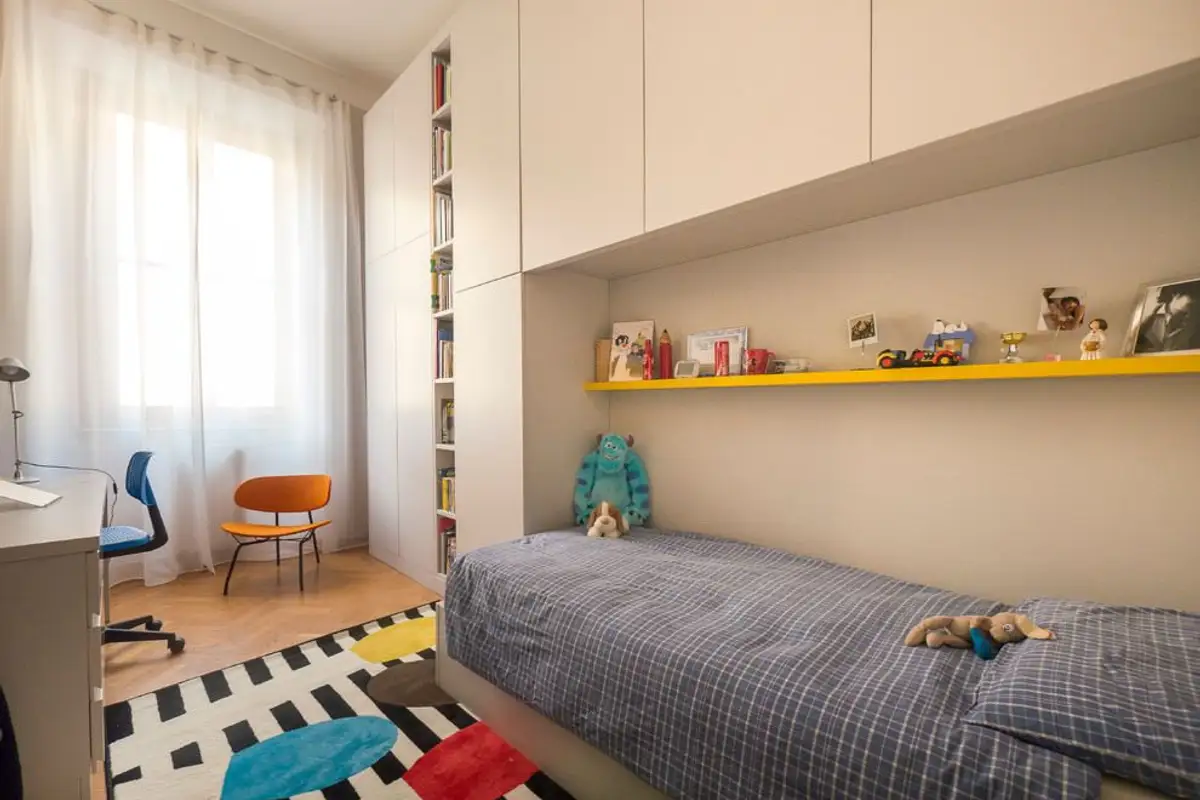
In general, children's rooms are small, so efficient organization and furnishing will help you achieve a result that pleases everyone. Modular beds with integrated wardrobes and drawers can be the optimal solution. Position furniture against the walls as much as possible to leave as much free space as possible in the center of the room.
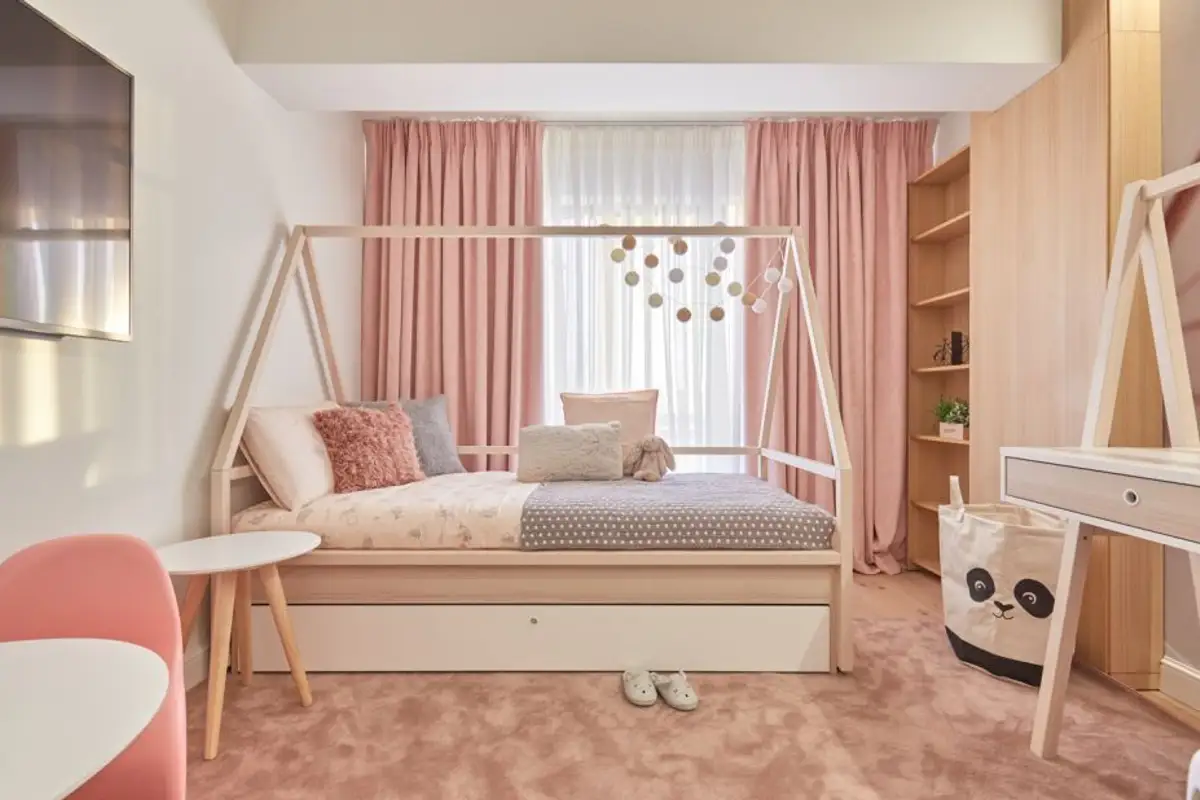
The child's room can also be designed based on three zones: recreation, play, and work. The recreation or sleep zone is intended for the bed. The colors around it should be pleasant and relaxing, accompanied by a night light or a lamp that can be used for reading.
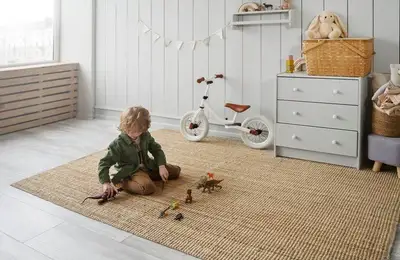
The play area could be set up anywhere in the room, in the center on a rug or near the window for maximum natural light. You can add a child-sized armchair or a pouf. For the work area, choose a desk that doesn't take up too much space in the room but is sufficient for their activities.
It needs to have space for a computer, but also room for writing or reading.
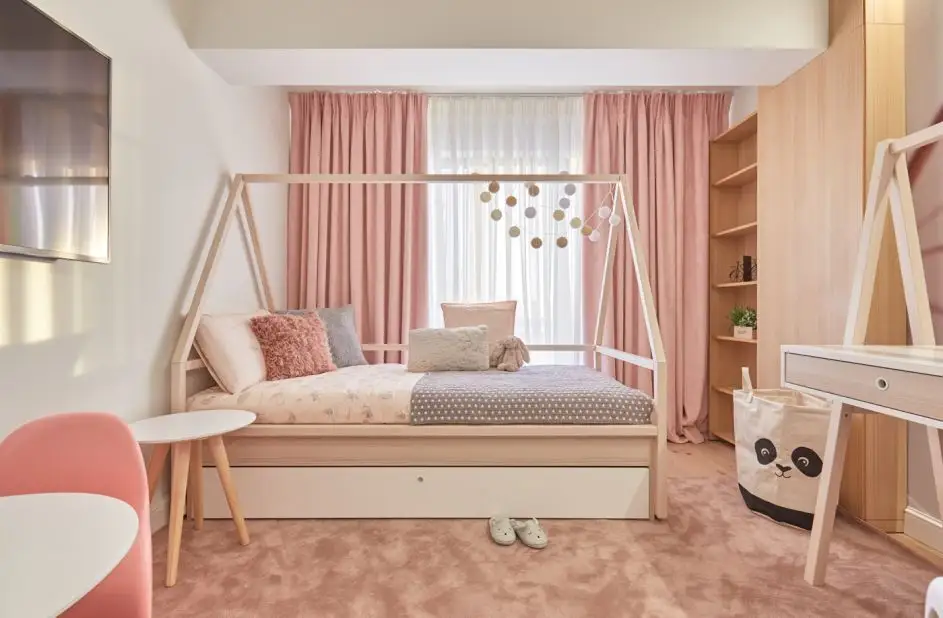
Add color! Choose a color palette together with your child and bring the room to life as much as possible. Pastels, but also accents of more intense colors, wallpaper with prints inspired by stories or cartoons are some of the options you can choose from.
Remember this detail: use a maximum of 3 colors for the room's decor; until the age of 7, you can use bolder shades, and after 9 years old, you can transition to softer, more muted colors. Furniture should be chosen in light shades, such as white, cream, ivory or beige.