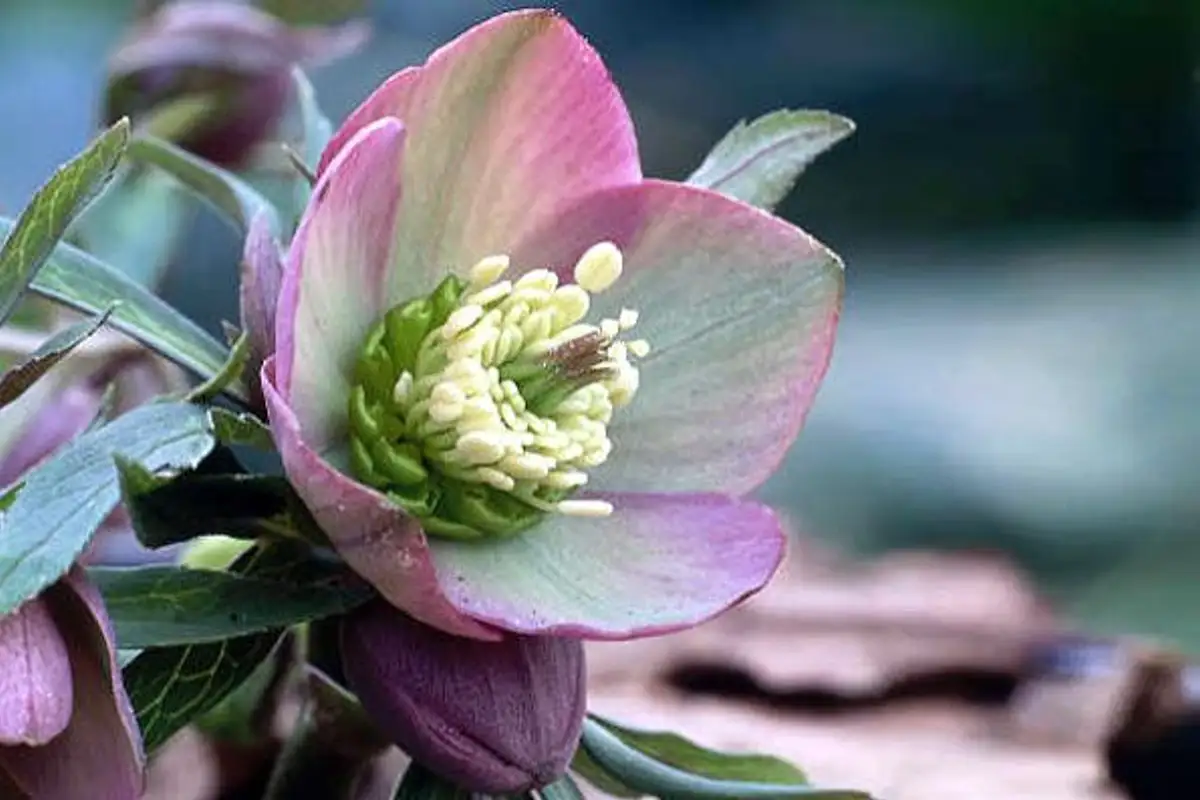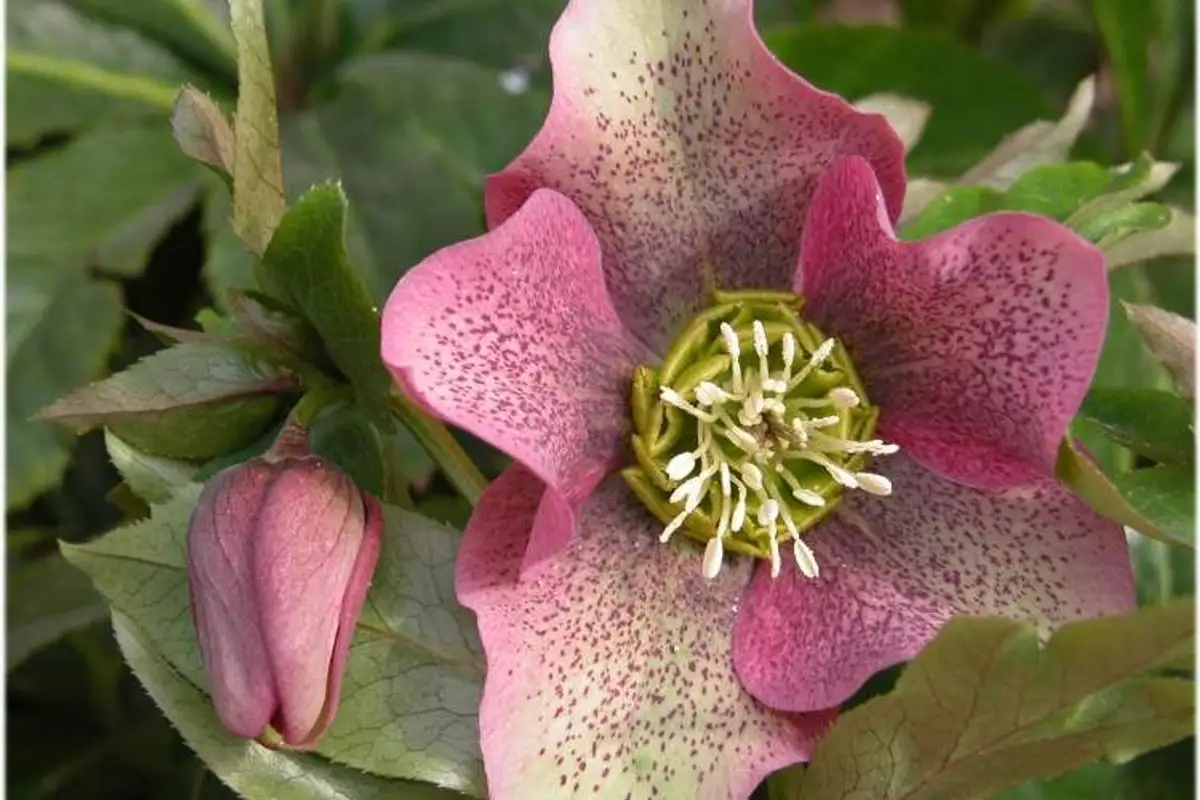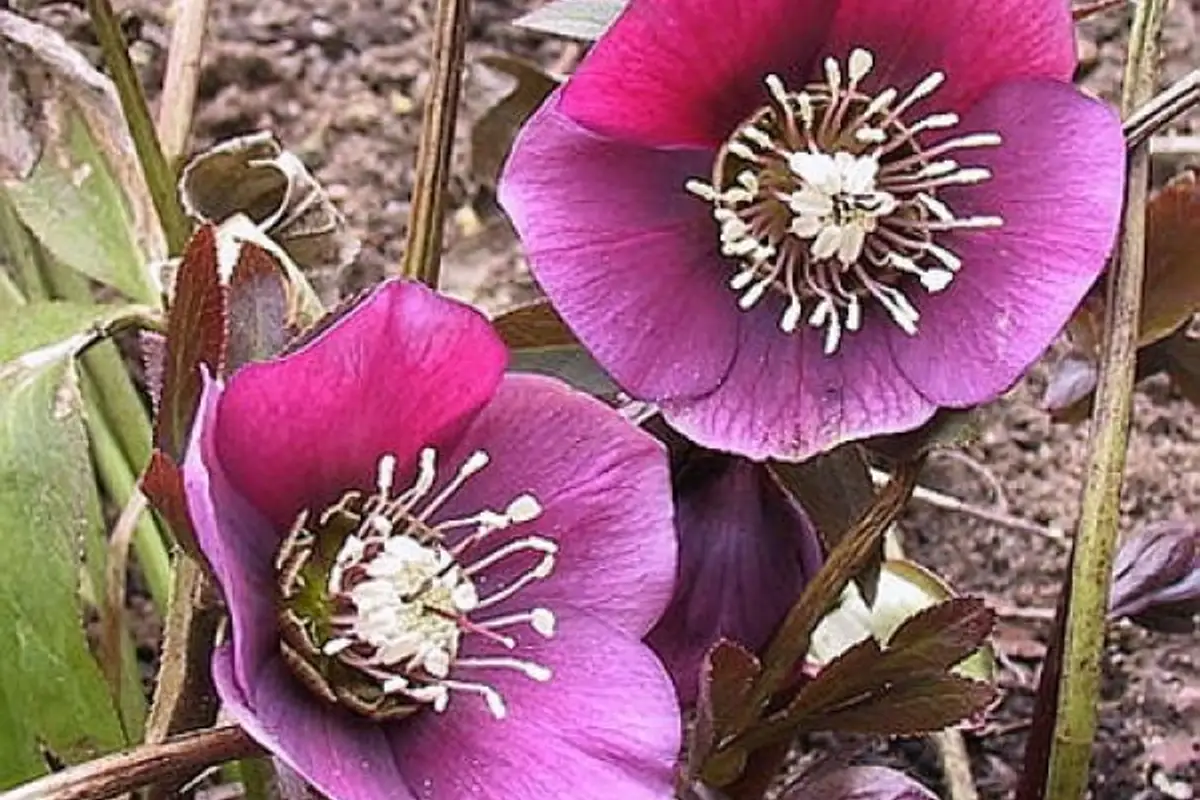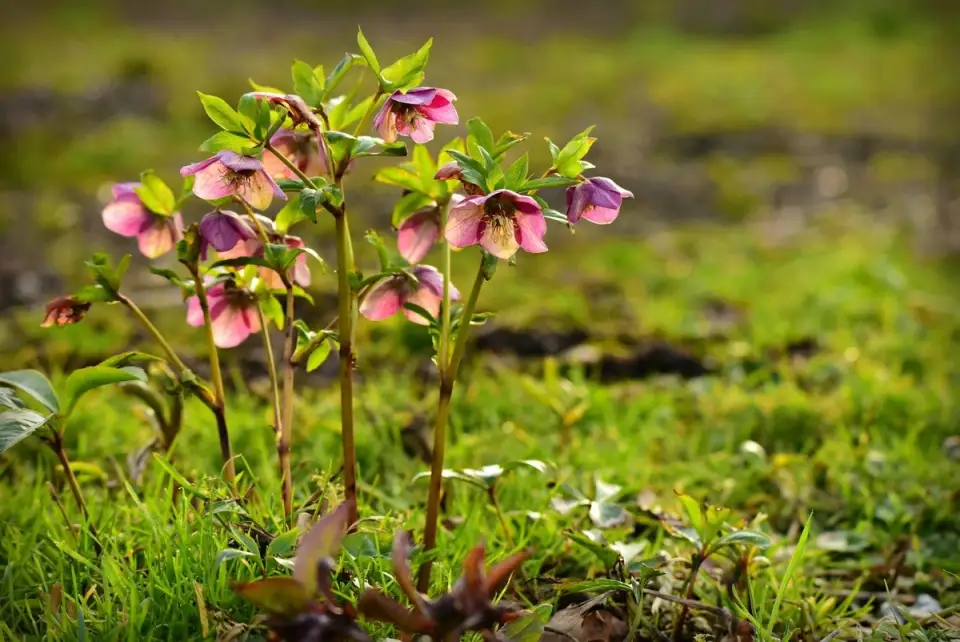
The leaves of the hellebore are very attractive in winter. The distinctive flowers appear in the middle of winter. The numerous species of hellebore are among the first fragrant flowers of the cold season. Brought indoors they spread a pleasant scent, but placed in a vase as cut flowers they do not last long.
In Antiquity, the hellebore stood out, through the unique beauty of its flowers, but also through its toxic properties. Its healing properties were discovered by the Greeks and have been applied since then. The scientific name, Helleborus, means dangerous, poisonous; helle means to kill, and borus food.
In recent times, the flowers are used as natural decorations, in wreaths and other floral arrangements, prepared before Christmas.
The hellebore prefers semi-shaded places, sheltered from the wind and calcareous soils with a high humus content. Humus is also added at planting. The lack of flowers is most often due to the low calcium content in the soil.
In spring it is watered abundantly, but in summer it tolerates dry periods. It can be multiplied by dividing the bush, but only after flowering. In the first few years, the plant is allowed to develop and strengthen.
If we buy potted specimens at Christmas, after flowering they are placed in a bright and cool place. Water moderately and plant in the field in February. It will bloom the following year after planting outdoors.
Article published in the book 12 luni in gradina, Editura Casa