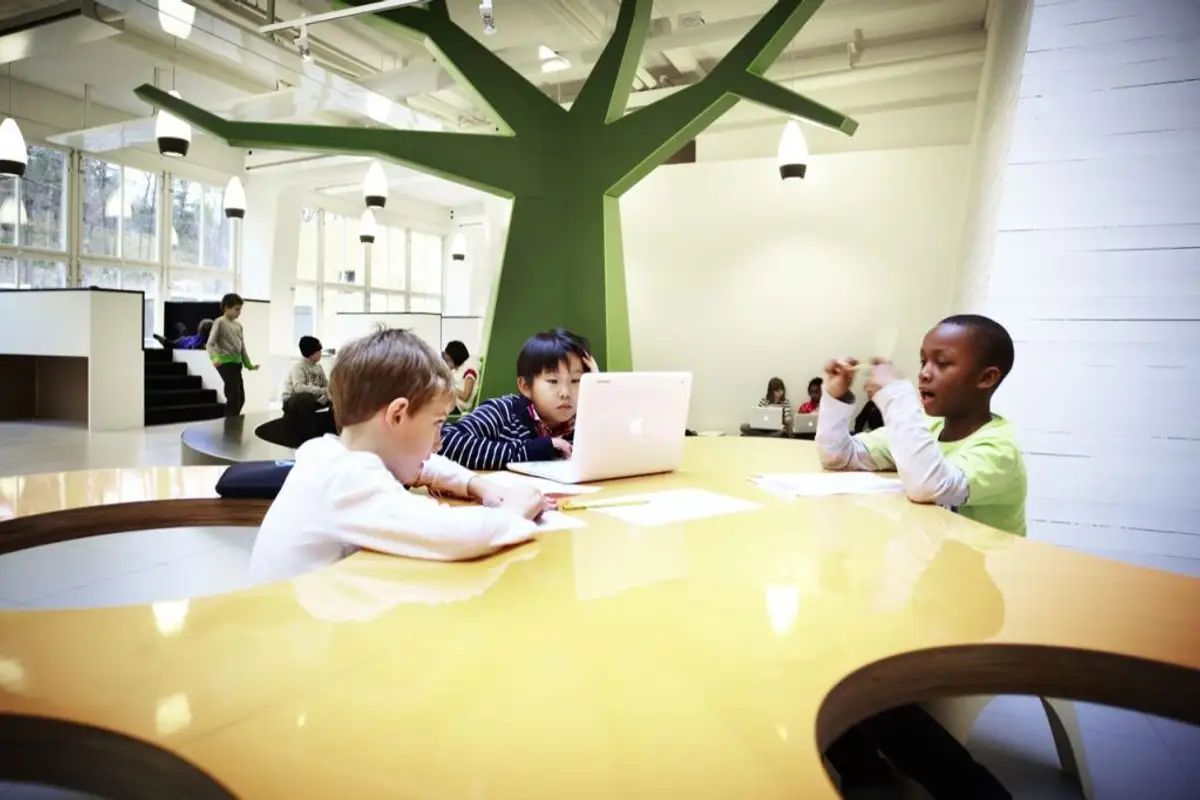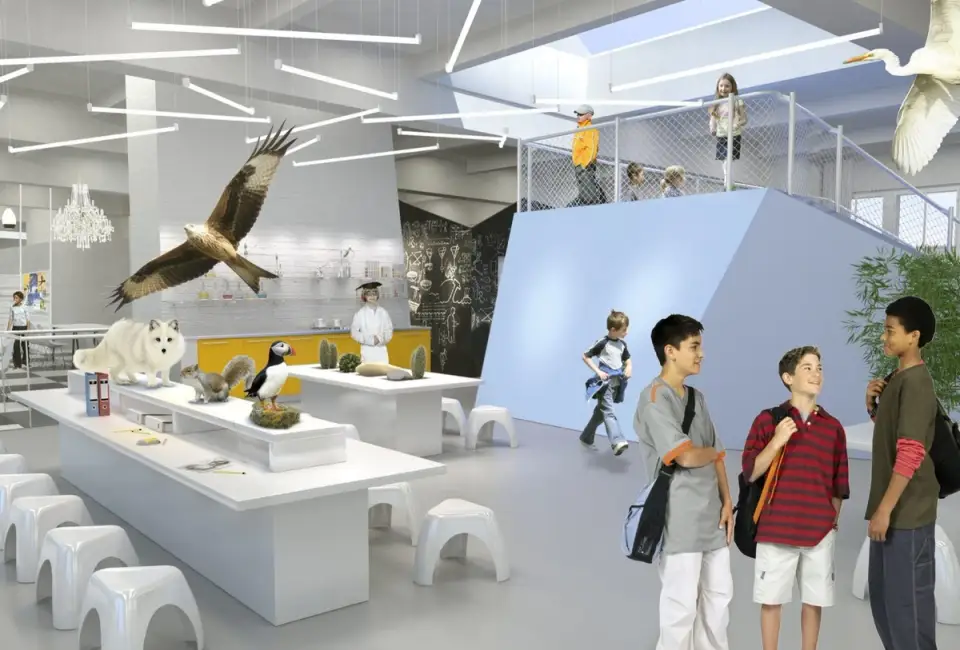
Vittra Education is a Swedish company that aims to integrate new technologies into 30 private schools. Instead of classrooms, the school features spacious, open, bright multifunctional spaces where students can work together or individually.
Instead of classes, children are organized into groups based on their ability and understanding level. Each child has a personalized schedule, works on their own laptop, and most curiously, does not receive grades.
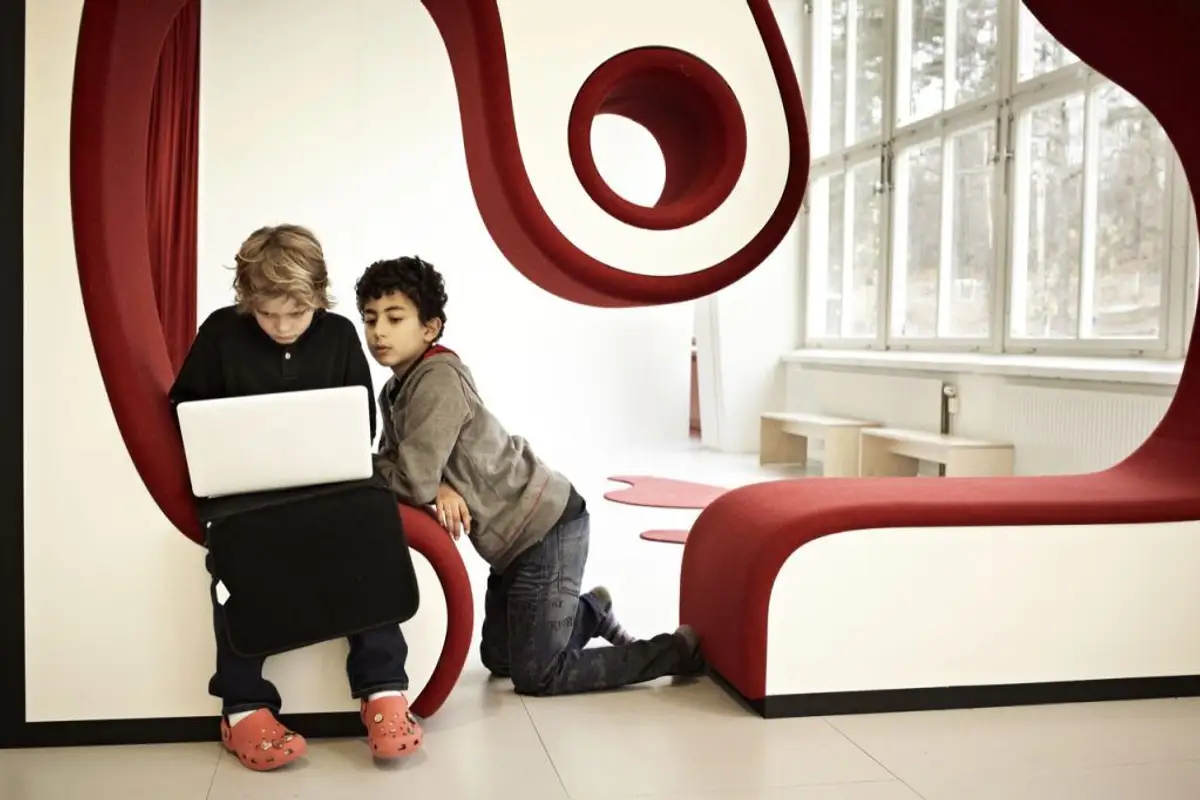
Instead of conventional desks and chairs, each child receives a laptop and is encouraged to sit however they like while working: at a table, standing up, in the hallway, outside, lying down, or even barefoot.
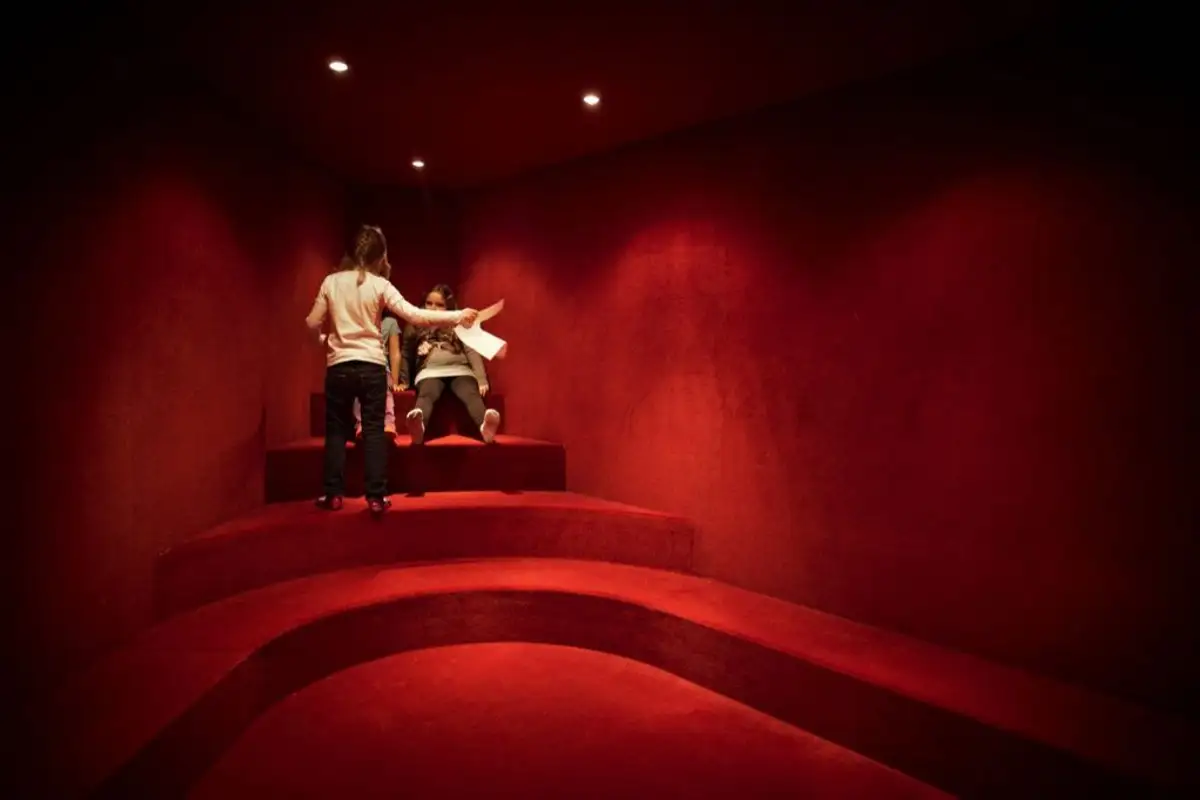
Furniture and interior elements are designed to encourage free discussions between children while they work on projects. Colorful caves, a library that opens like treasure, a giant iceberg with a cinema, a platform and a relaxation and recreation room host many different types of learning.
Read also Building in the shape of a paper bag
In the middle of the zone, a large black box with red graphics creates an unconventional frame for the school library. It contains magazines, books, iPads, laptops, and work materials, attracting passersby with its colors and integrated lights in the shelves.
We're not exaggerating when we say that the designers at Rosan Bosch have transformed the common areas of Vittra school into inspiring learning environments that blur the line between education and relaxation.
Vittra's approach represents a fascinating case study of innovation in both education and design. Vittra uses technology for two purposes: to prepare its students for life in modern society, as well as to leverage new technologies to extend the learning process.
In other words, with proper integration and use of various technologies, schools will become what they are meant to be!
Read also Ged Couser: Architecture that "heals
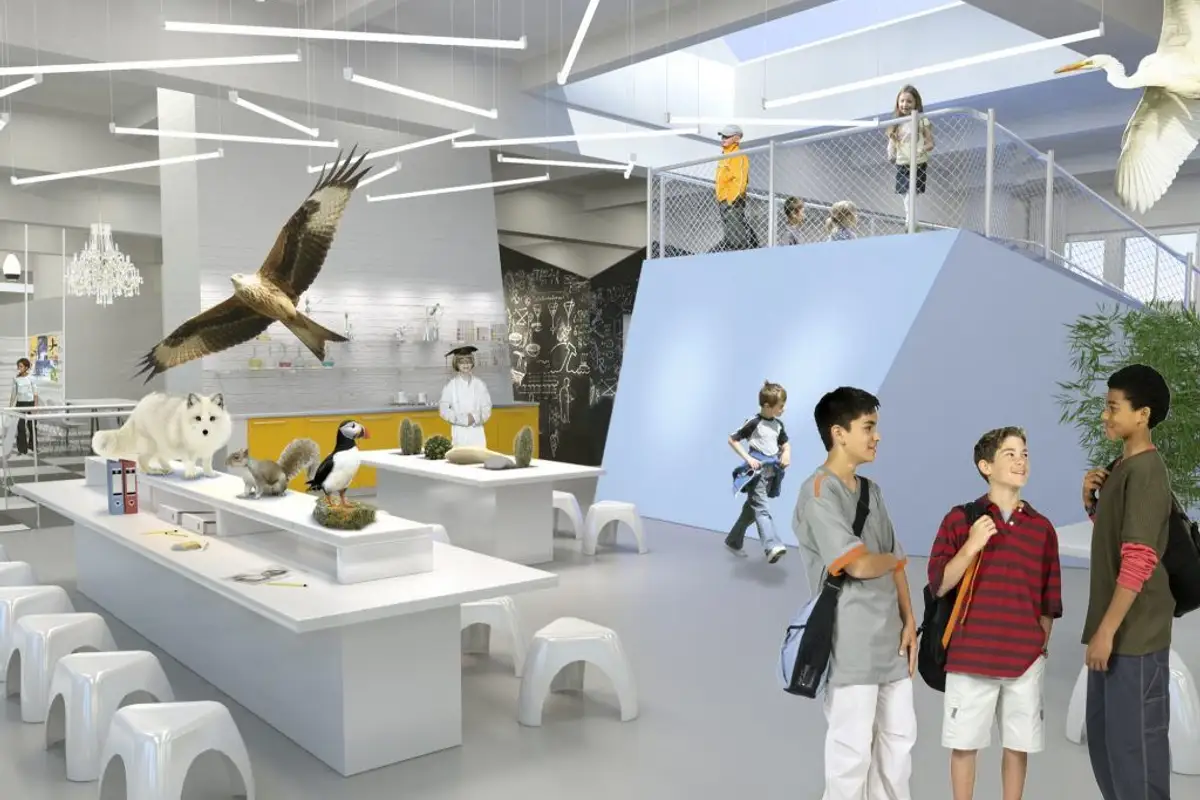
An example of a school every child dreams of.
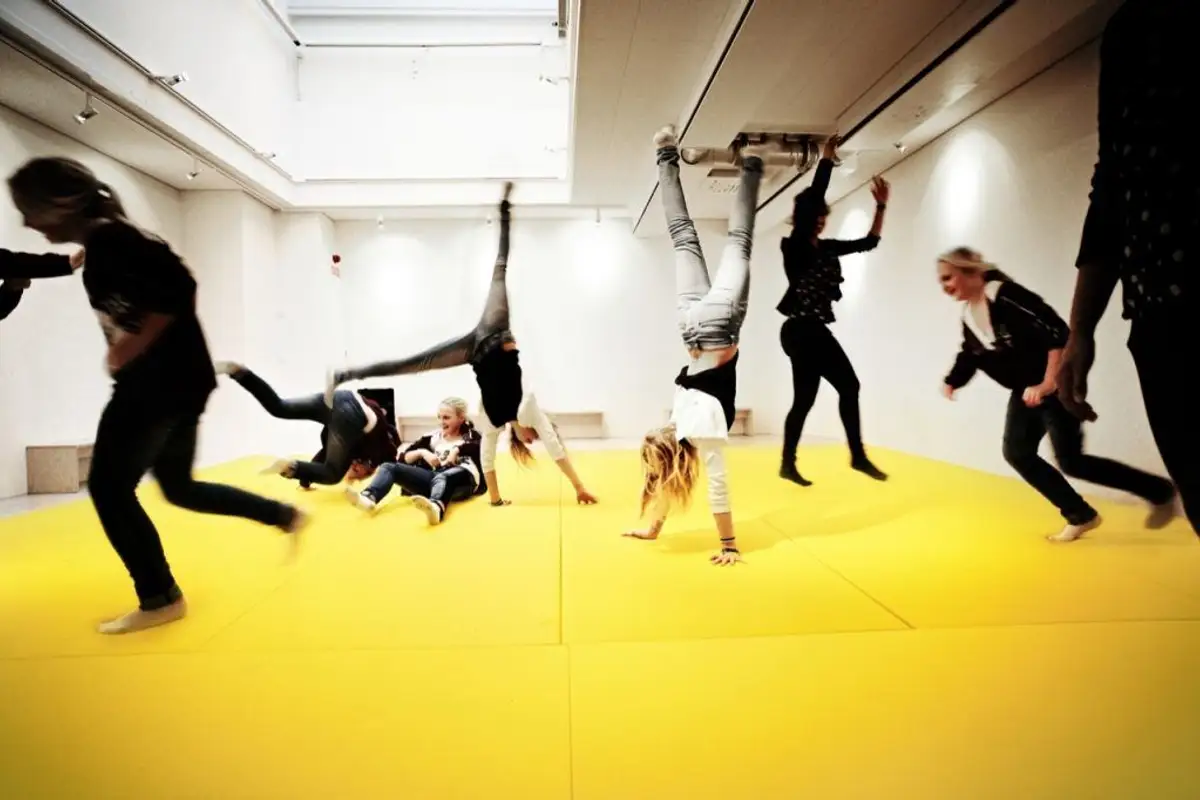
An example of a school every child dreams of