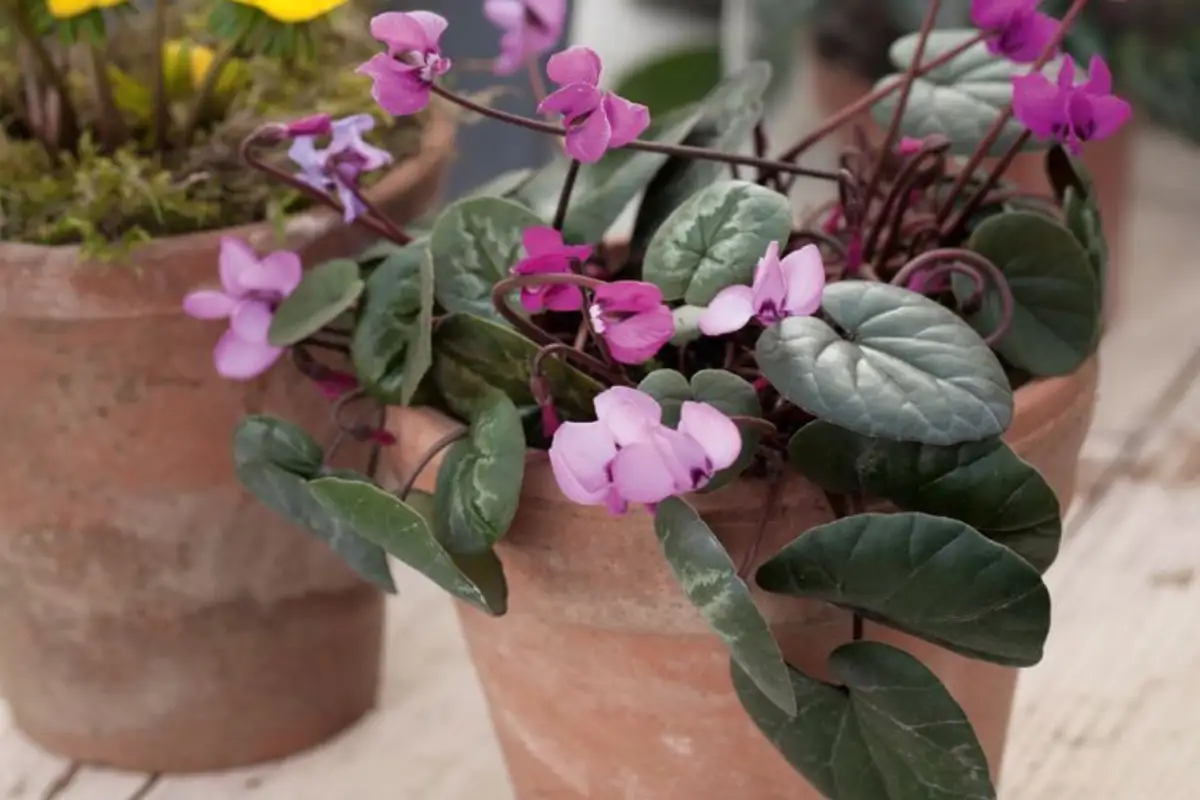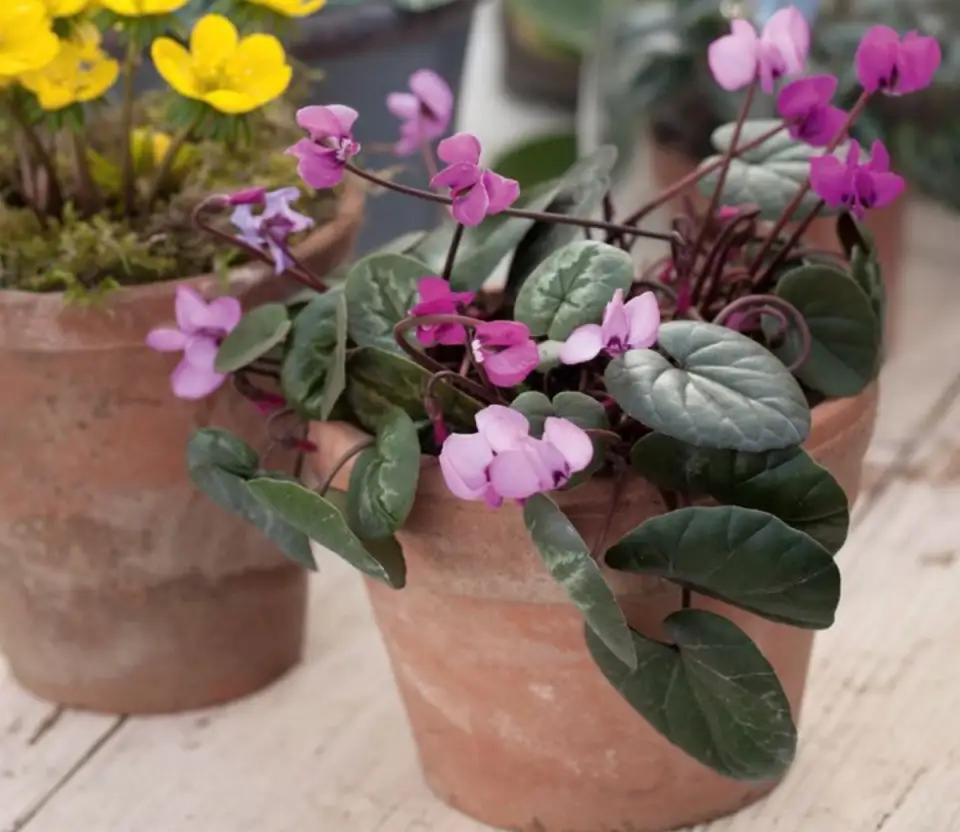
During the dreariest months of the year, we cherish flowers that bring color, and cyclamens are among the most reliable. Year after year, they produce waves of pink and white that brighten a lifeless garden. The name comes from ancient Greek for “circle” (kýklos), because the tubers are rounded, like small turnips.
Romanians believed that cyclamens brought good luck, as with truffles, and cultivated them for protection, well-being, and prosperity.
The easiest to grow and most common outdoor varieties are Cyclamen hederifolium, which blooms in autumn, and Cyclamen coum, which blooms in winter. For an extra dose of cheer from late summer to early spring, these two species are sufficient, but they are not the only cyclamens available.
There are 24 species, most originating from the Mediterranean basin; they include woodland and alpine plants, some are fragrant and bloom at different times, so it is possible to have cyclamens in bloom in your garden all year round.
For delicate fragrance and intense color indoors, the Persian cyclamen (C. persicum) is an excellent houseplant, blooming in winter or, in areas with a mild climate, can be grown in pots near the front door.
Are cyclamens perennial plants?
Are cyclamens good for wildlife?
Do cyclamens spread?
The Best Cyclamens for Outdoors
C. coum subsp. coum f. albissimum has white flowers
‘Porcelain’ has ivory flowers with purple veins
The Pewter group has spectacular silvery leaves
They can be planted in autumn. C. coum needs more moisture in summer than C. hederifolium, although it also grows well in gravel. It is relatively tolerant of wet and clay soils.