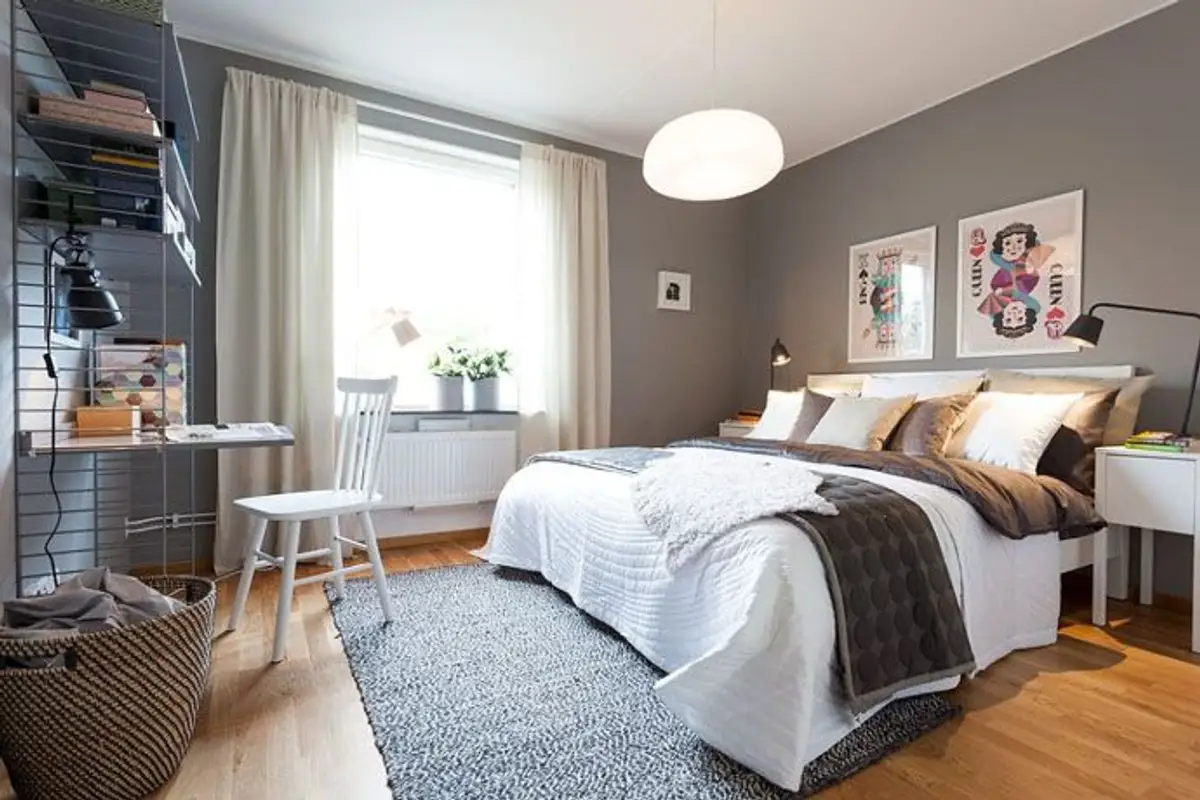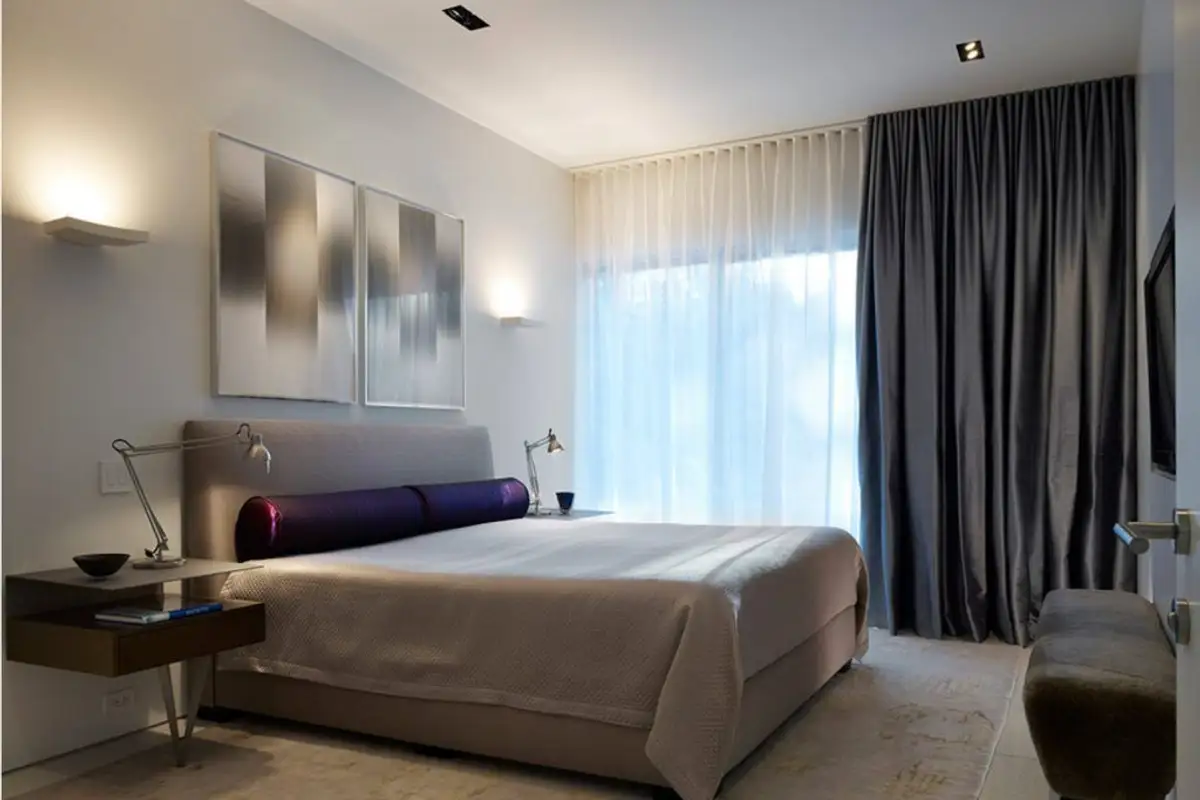
Sleep quality influences your state throughout the day. For this, you need a harmonious and functional bedroom arrangement. A relaxing and balanced ambiance is created with the help of suitable furniture pieces, the correct distribution of light, and carefully chosen decorative accessories.
Open Gallery Typically, a bedroom consists of a bed, nightstands, a dresser, a wardrobe or dressing room for clothes. Depending on the size of the room, some pieces may be missing, such as nightstands or a dresser. Sometimes you can add a vanity table, a mirror, possibly a fireplace (usually fake or electric) or even a small desk. However, among all these, the bed is the most important.
Choose the frame, slatted base, and mattress carefully. Invest in quality pieces because you need them to last a long time and provide the comfort you need night after night. As for size, the bed should be the length of those who use it plus at least another 20 cm. Normally, the bed occupies the central area of the bedroom. The frame should be solid and stable.
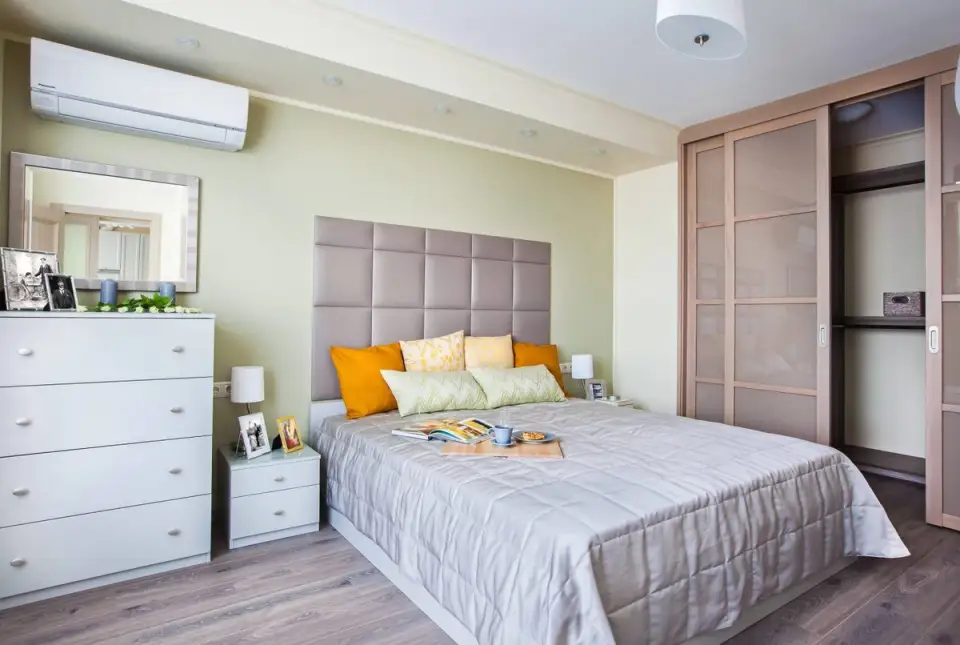
The width of a double bed can vary between 140 cm – generally for smaller bedrooms, 160 cm or 180 cm are in the comfortable range, with 180 cm being ideal for a bed. There should be approximately 70 cm of free space on both sides. And don't forget: a bed with an upholstered headboard will be more comfortable.
If you want extra storage space, you can opt for a bed model with built-in drawers.
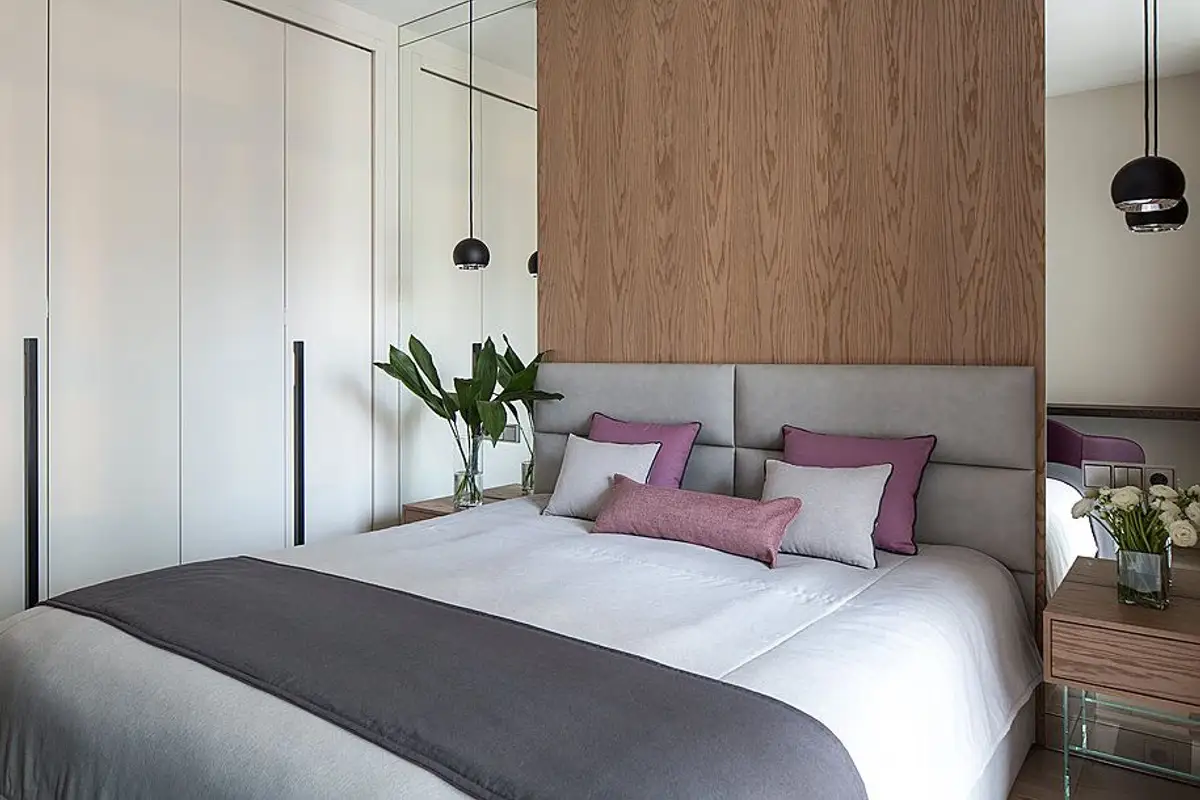
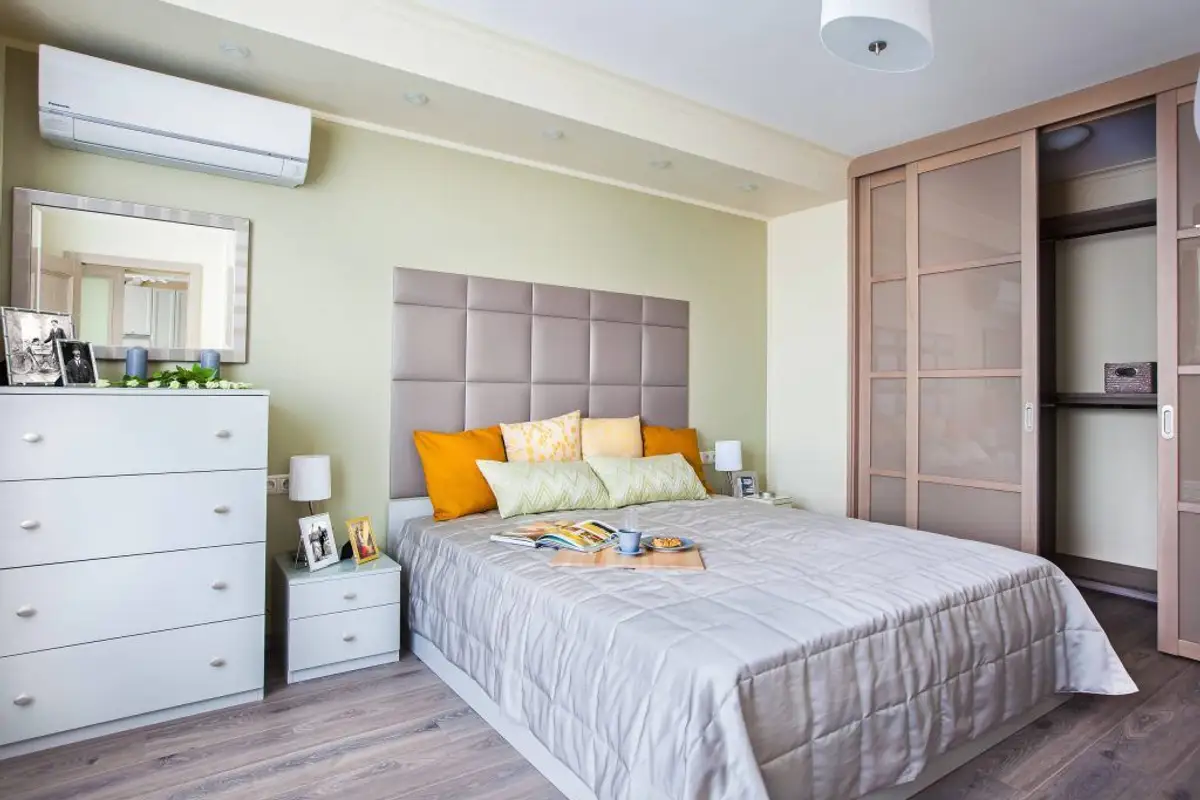
Most of the time, the wardrobe for clothes is located in the bedroom. A viable solution is to frame the bed with furniture, especially in smaller bedrooms. For freestanding wardrobes, we recommend choosing sliding doors; they are more practical in a bedroom of reduced size. We have detailed the subject of wardrobes and dressing rooms here.
Before making any purchase, allocate time to search for different sources, ask representatives from specialty stores, and most importantly, test the mattress and wardrobes to make sure what you choose will suit you.
Choose a palette of warm, relaxing colors. Neutrals are an excellent option for the bedroom: white, cream, beige, gray, warm grays in light tones, here are a few options to choose from. Limit yourself to a narrow color spectrum of a maximum of 3, which you can then highlight with complementary accents.
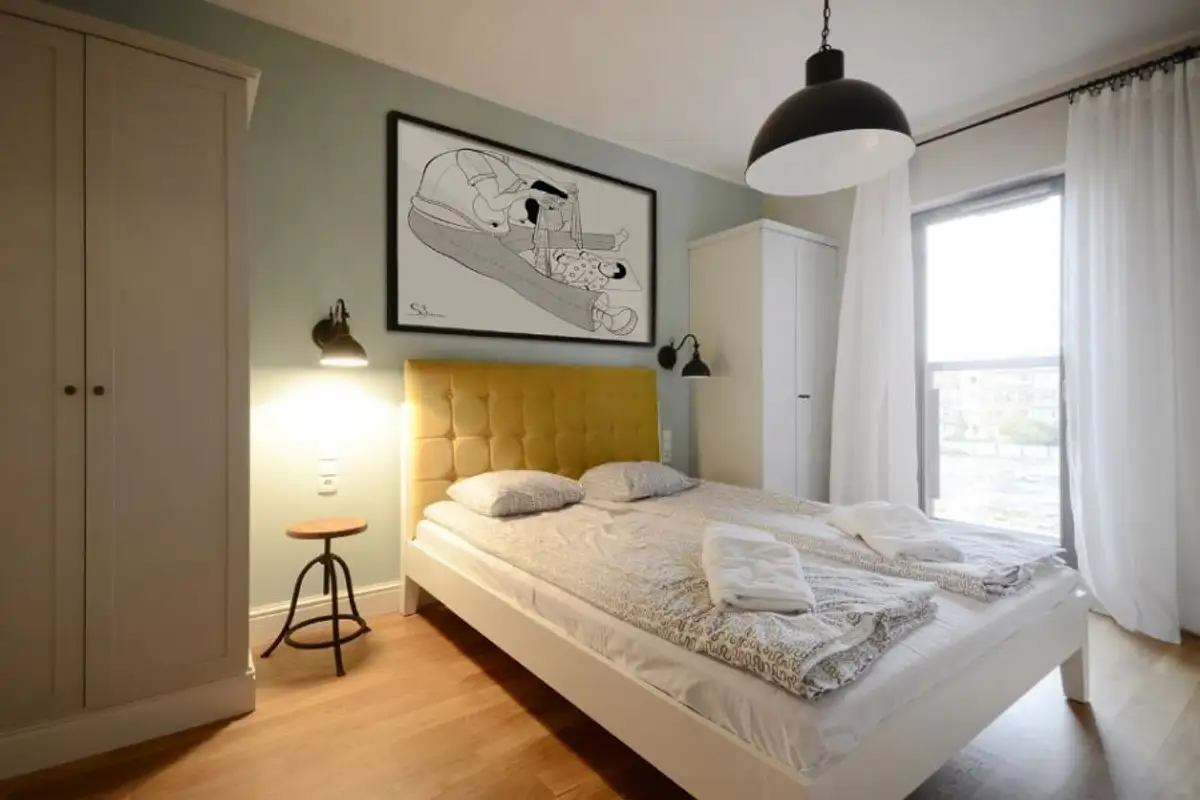
If you want more expressiveness, outline an accent wall, usually the one next to the bed. You can use a more intense color, apply wallpaper or a stencil with a subtle print that suits the atmosphere of the bedroom.
If space allows, you can insert a comfortable armchair or armchair near the window. Add a floor lamp with an artistic shade or a bedside lamp and transform this small corner into your favorite reading spot.