Whenever we talk about design and architecture, our first thought goes to house projects, interior designs with more or less opulence, heritage buildings, or some futuristic residential complex.
Open GaleriaArhitectura and design plays a particularly important role in the development of cities and in arranging the urban space as pleasantly as possible.
Just as there are trends in terms of colors when it comes to finishing a house or in terms of indoor and outdoor furniture, there are also currents and trends regarding urban furniture and, obviously, designers specialized in this field.
A village in Austria was the beneficiary of an urban rehabilitation project involving seven renowned architecture firms under the name BUS: STOP project.
Yes, you guessed it, the seven magnificent ones created new bus stops for the locals. The team was formed by Japanese architect Sou Fujimoto, Chinese architects Wang Shu and Lu Wenyu, Smiljan Radic (Chile), Antón García-Abril and Débora Mesa (Spain), Architecten de Vylder Vinck Taillieu (Belgium), Rintala Eggertsson Architects Bureau (Norway) and Alexander Brodsky (Russia).
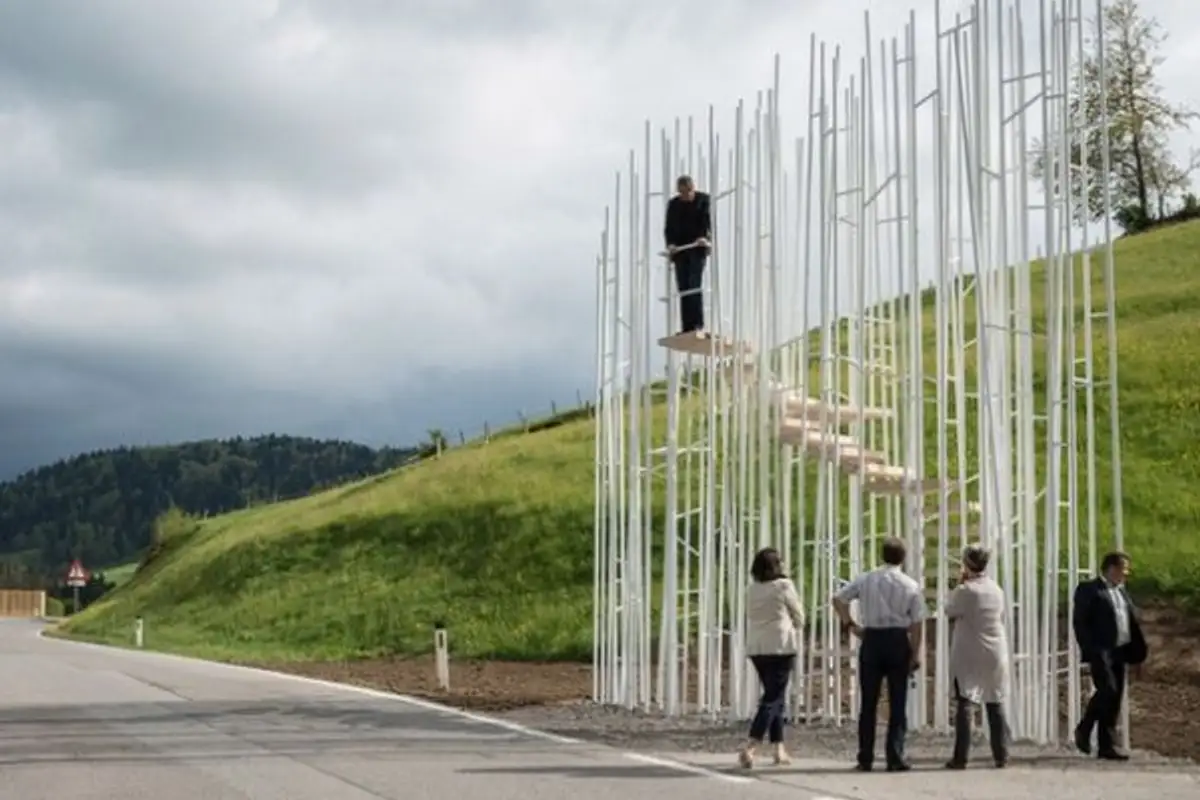
Perhaps the most interesting and surprising of all the pieces is the bus stop designed by Sou Fujimoto, an assembly of thin metal pillars that act as support for a set of wooden steps.
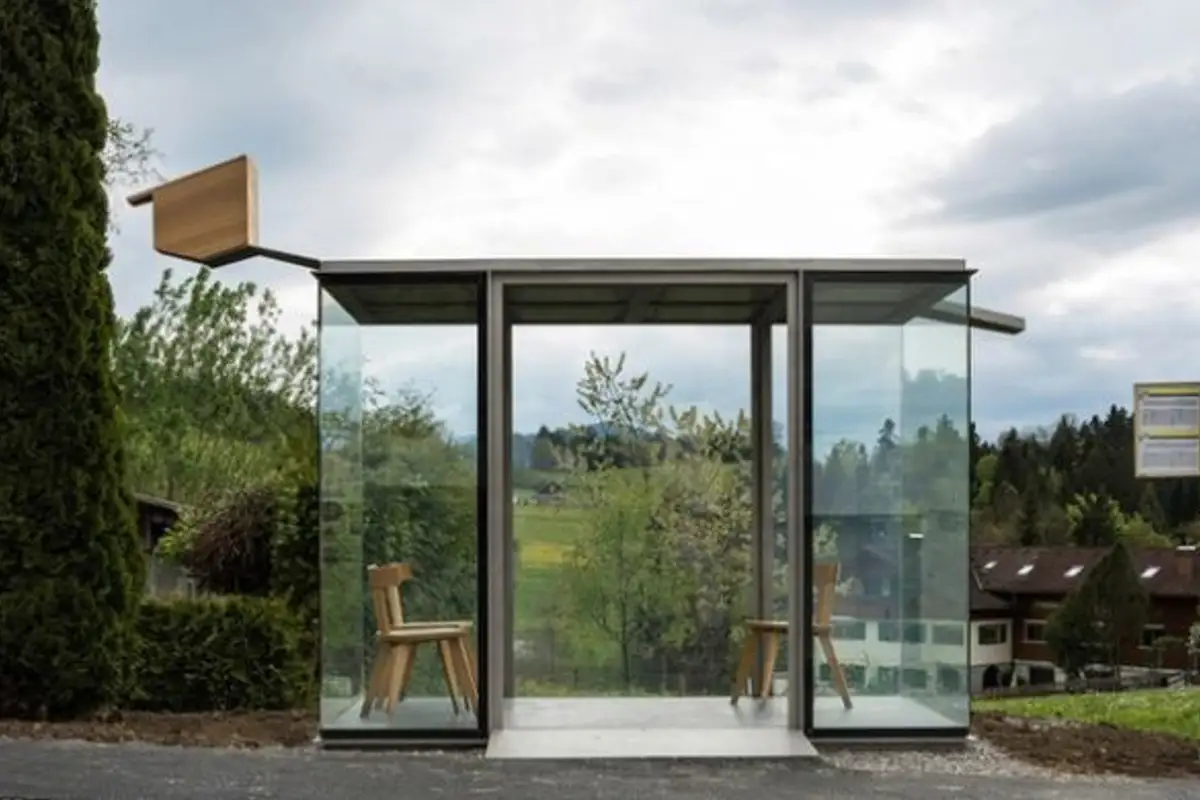
Chilean architect Smiljan Radic created a station reminiscent of an ordinary room, but with transparent walls. Inside he installed two wooden chairs instead of the traditional waiting bench.
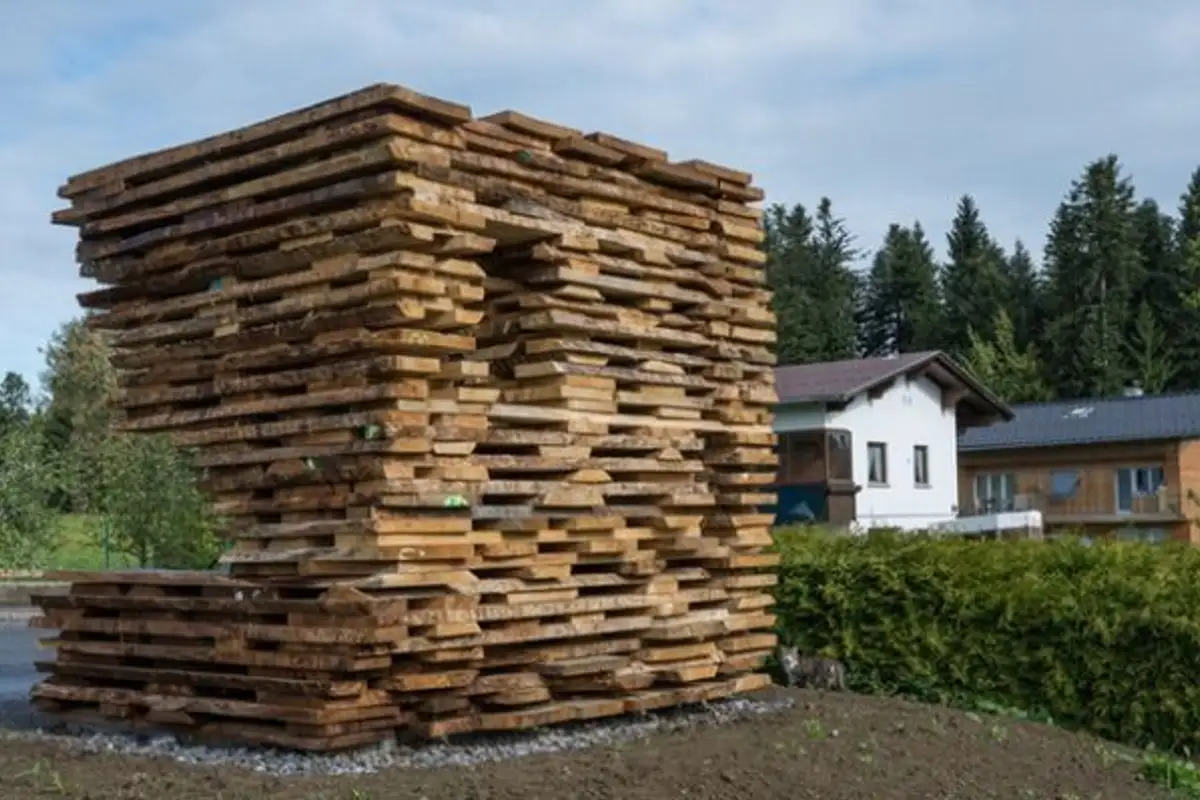
samble Studio took a more unfinished approach, creating a piece of urban furniture from wooden planks of different lengths, a piece closer to the specific character of the place, the village being a place where the wood industry plays a particularly important role.
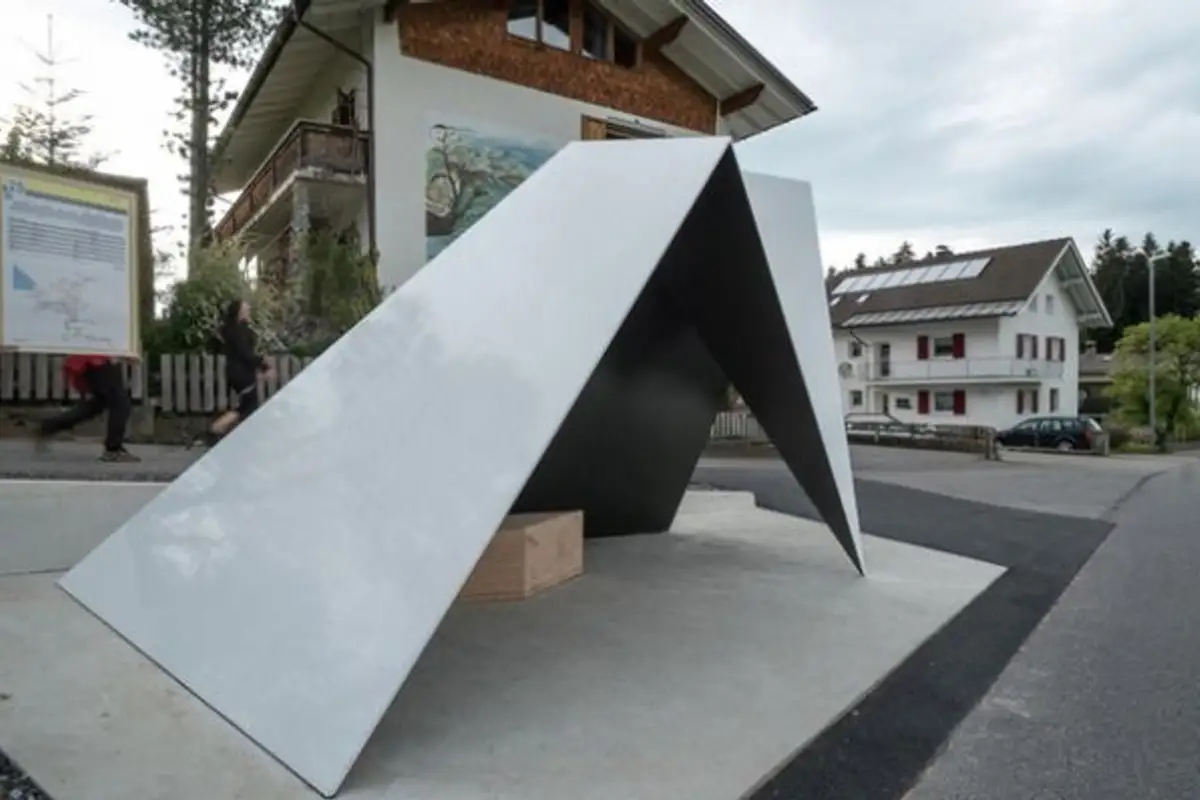
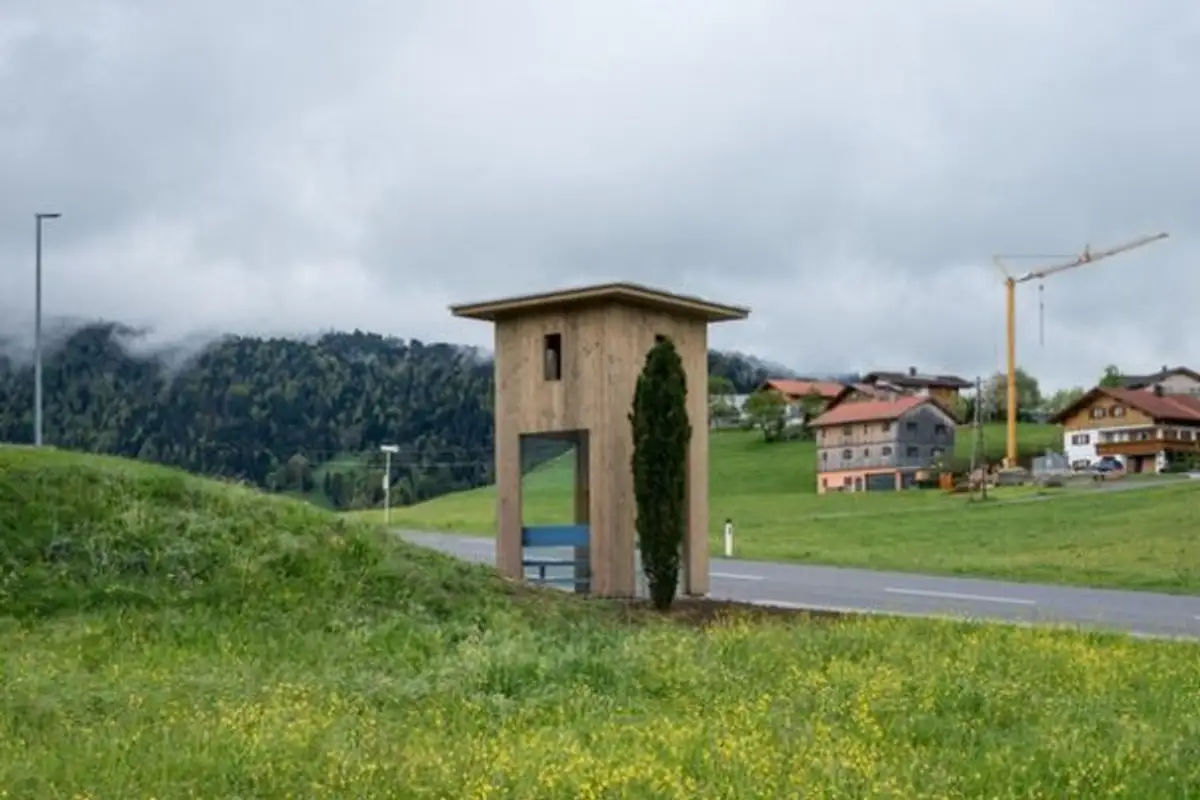
The most abstract approach belongs to the Belgians from Vylder Vinck Taillieu. A metallic structure minimally imitates the nearby mountainous area, protectively covering a small wooden bench for travelers. At the same time, Alexander Brodsky chose to build a tower of wood and glass, preserving architectural influences of the region in his work.