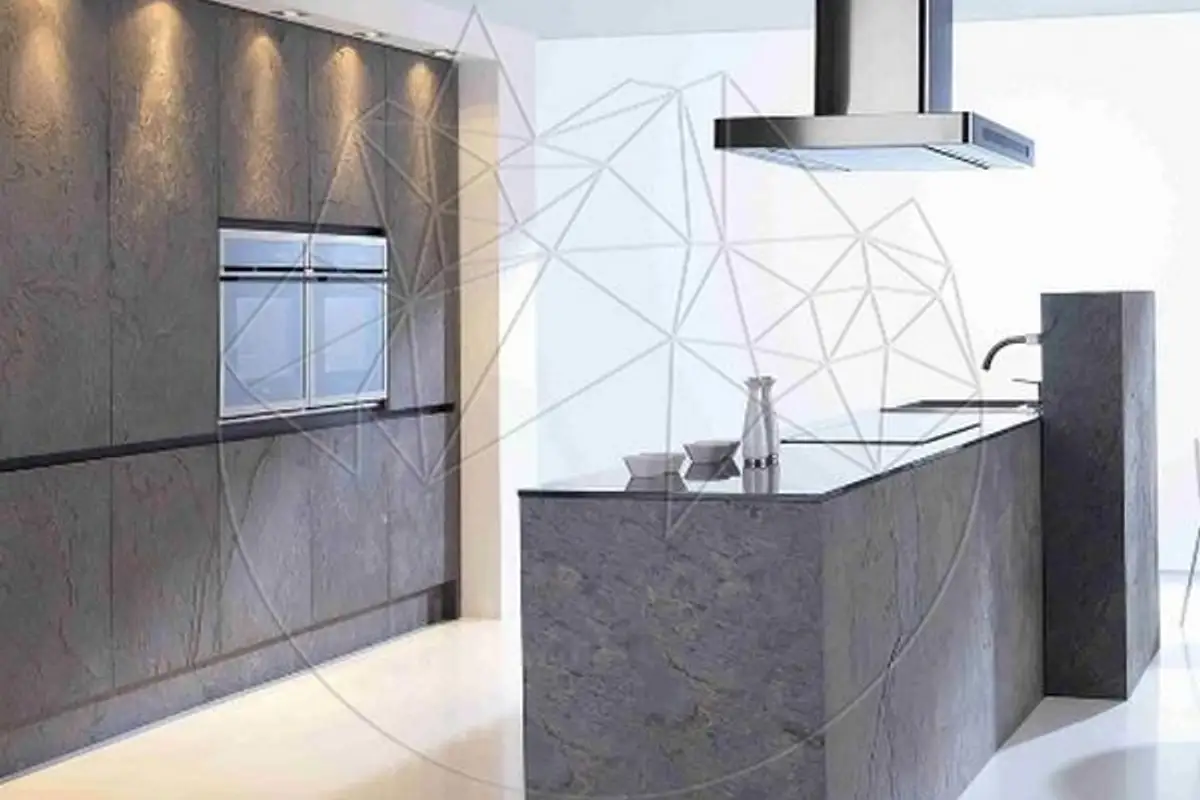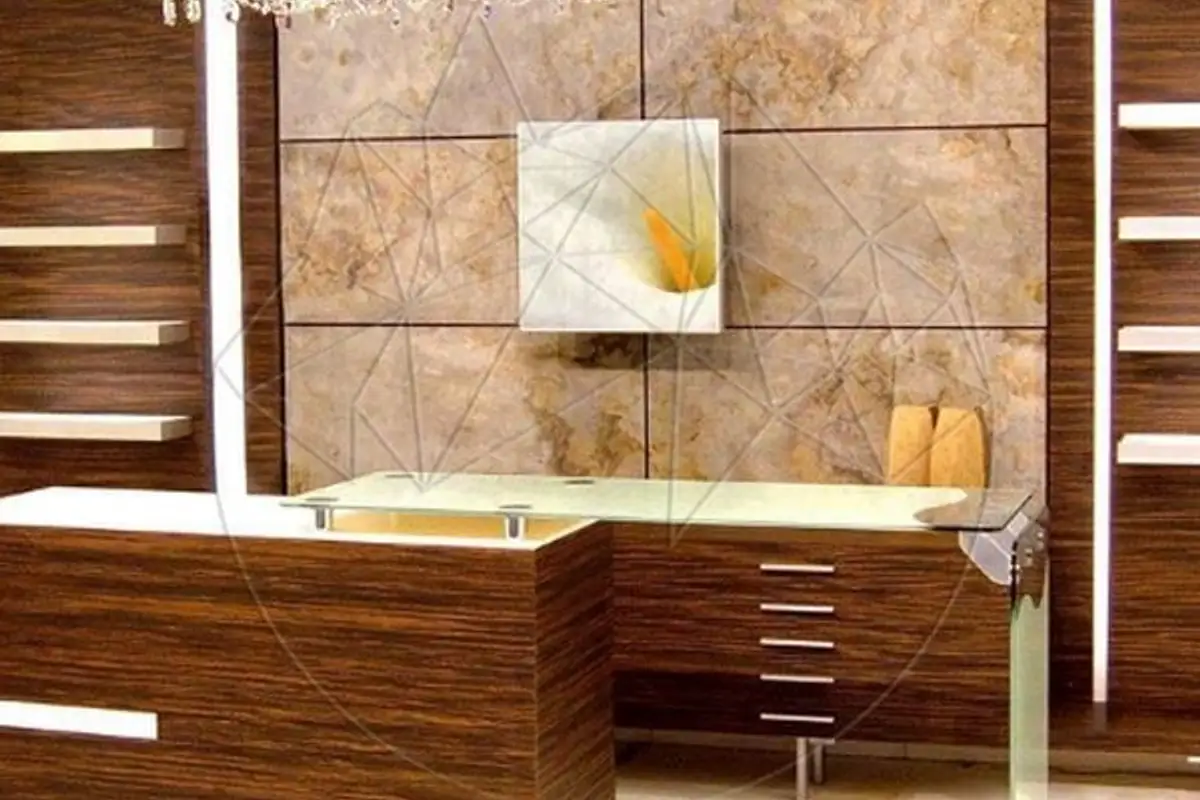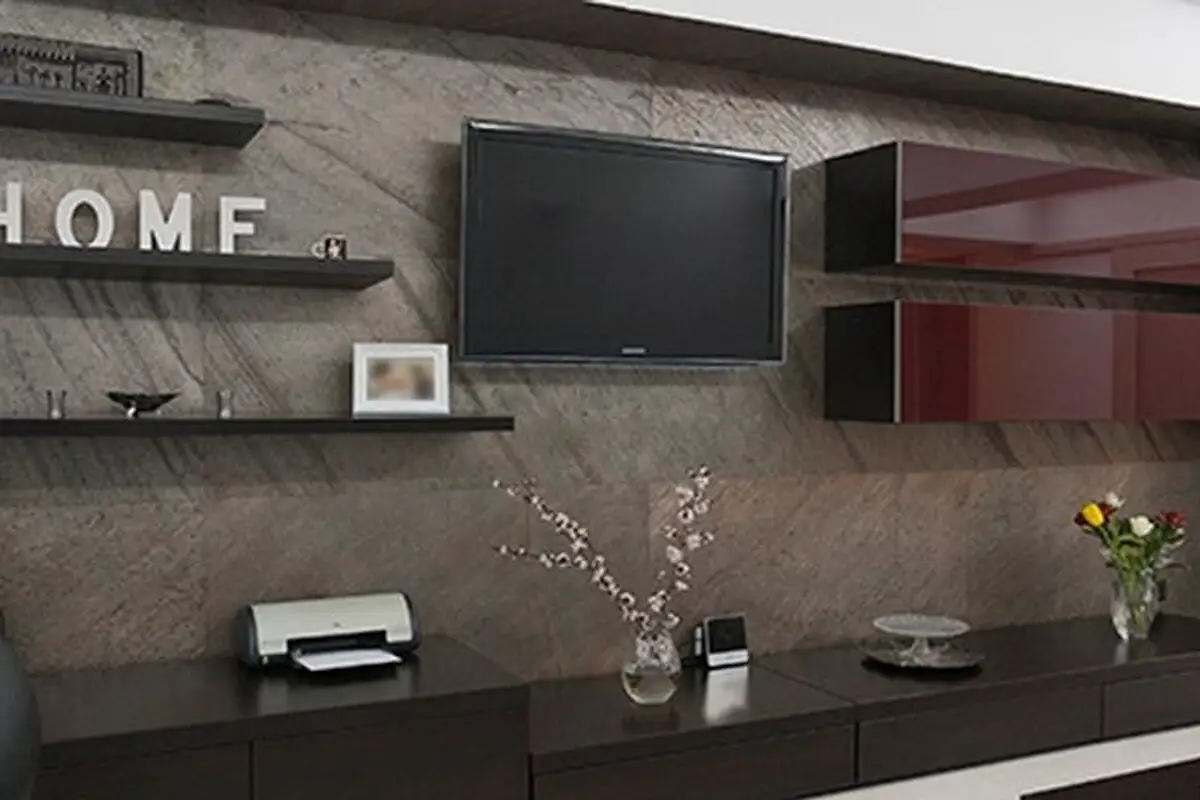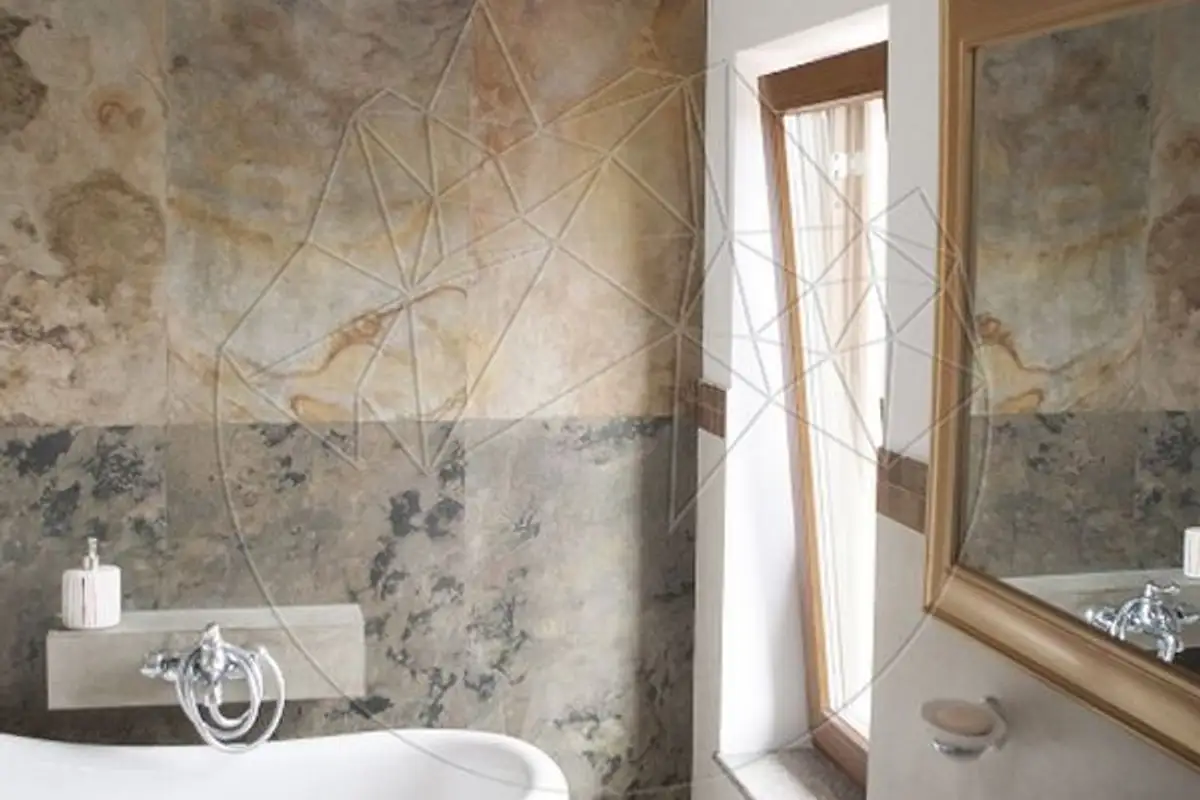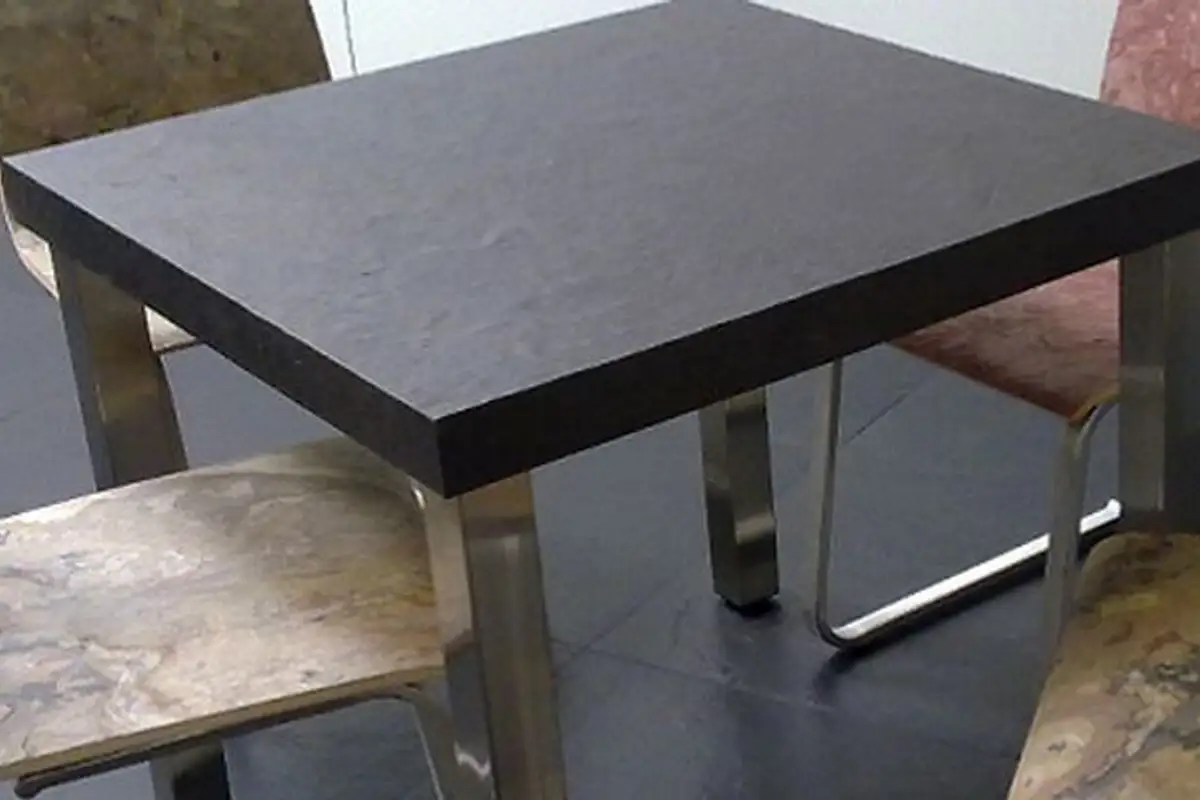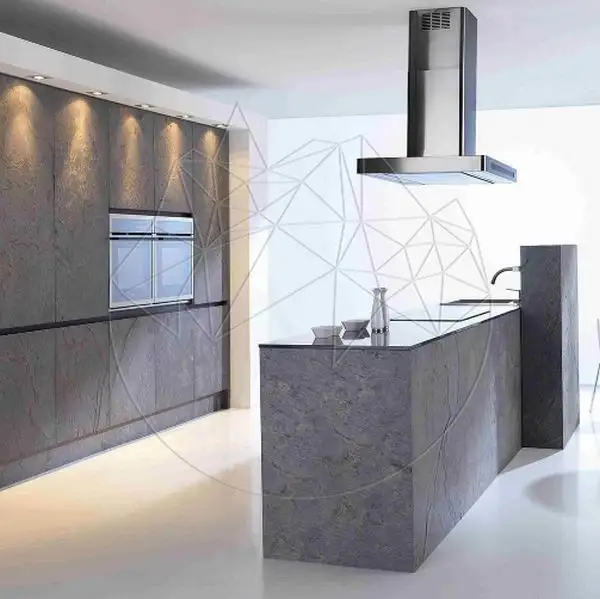
I recently discovered with the help of specialists from Online Stone a truly surprising material due to its characteristics: the resistance of a rock, but with a great capacity for flexibility. Flexible slate Skin is beginning to be used in contemporary decors thanks to an innovative technology that allows us to use it in spectacular ways in interior design.
Roca ardezia is a clay-rich rock with finer (clay) and coarser (sand) materials, characterized by an advanced degree of compaction. It is a hard rock belonging to the metamorphic category, resulting from the transformation of clay and fine sand deposits under conditions of relatively high pressure and temperature.
The primary characteristic of slate is its advanced schistosity, which refers to its ability to split into thin sheets when subjected to certain pressures.
Ardezia is valued not only for its resistance and appearance but also because it absorbs very little water (under 0.4%), meaning it degrades very slowly in freeze-thaw cycles and does not stain. The high density (2.7-2.85 g/cm³) allows the material to provide good sound insulation, both for impact noise and airborne noise.
How Flexible Slate is Made
From the quarry, the best slate slabs are selected (after a quality inspection) and then transported to the factory where they are processed and cut into thin sheets. This is followed by bonding to fiberglass layers and the backing surface.
Where can it be used?
Not recommended for kitchen countertops due to slight unevenness. Successfully used in bathrooms; being a natural stone, it is suitable for use in wet areas or outdoors.
For spectacular decorations, flexible slate Skin is also available in a translucent version so that the light from LED strips can create surprising effects in interior design.