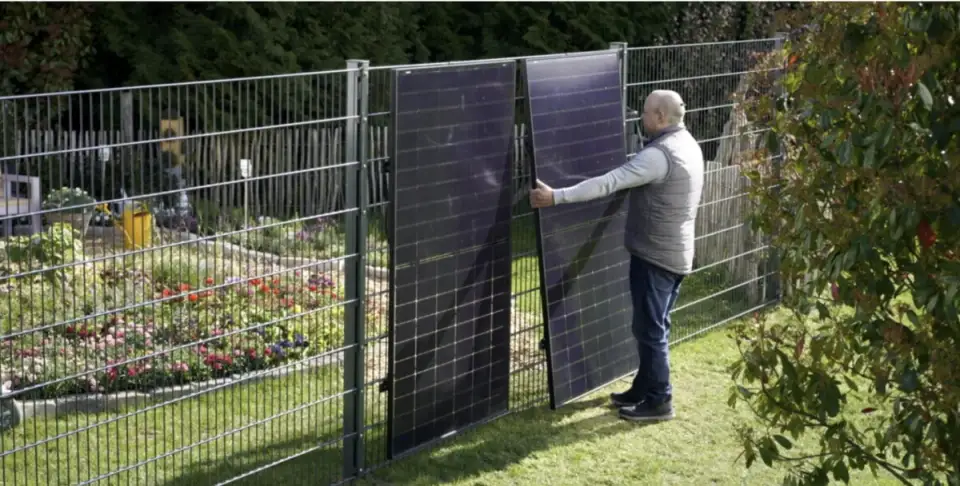
Solar panel fences have become a common sight in the Netherlands and Germany, driven by a global production surplus generated by the boom in the Chinese industry, according to Financial Times.
Although such panels capture less sunlight than those mounted on rooftops, they offer significant economic advantages, reducing labor costs and equipment needed for installation, analysts and users who have adopted them argue.
“Solar panels have become so accessible that we see them everywhere,” says Jenny Chase, lead solar energy analyst at Bloomberg NEF. Martin Brough, head of climate research at BNP Paribas Exane, adds: “If panels are so cheap, why build a regular fence when you can install a solar system, even if it’s not perfectly oriented towards the sun?”
Production Surplus from China and Market Challenges
At the same time, installation costs have risen, mainly due to rising labor costs, and delays in connecting panels to electrical grids have become a major problem for the industry and consumers. Infrastructure issues affect power grids in many countries, and addressing them requires significant time and investment.
Impact on European Manufacturers
In Europe, the solar panel sector is facing bankruptcies, layoffs, and factory closures. The European Commission has announced that it will analyze potential dumping practices and facilitate access to EU funds for European producers, but these measures may prove insufficient to save the industry.
Alessandro Barin, CEO of Italian company Futura Sun, which manufactures panels in China for the European market, said many of its products remained unsold in ports and warehouses, even after extending the factory closure for the New Year holiday.