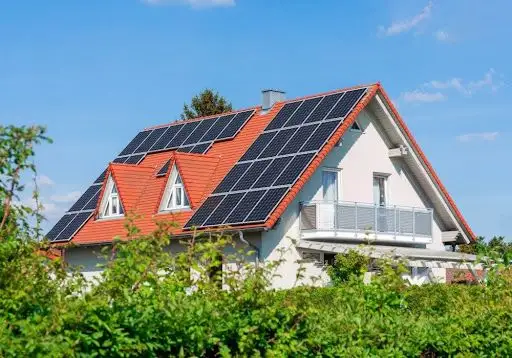
More and more homeowners in Romania are considering installing photovoltaic panels. The reasons are clear: electricity bills have risen, the technology has become considerably more accessible than a few years ago, and the installation process is simpler than it seems at first glance. But where do you start concretely? What does the process involve, how long does it take, and what mistakes should you avoid?
This guide covers everything you need to know before making a decision, from the initial assessment of your home to the moment the panels produce energy and your bill decreases noticeably.
Why photovoltaic panels are worth it for your home
The first argument is the simplest: savings on bills. A correctly sized photovoltaic system can reduce your electricity bill by 60-80%, and in the summer months it can cover the entire consumption of the dwelling. The surplus energy you produce and don't consume can be injected into the grid, and you receive compensation.
The second argument concerns the value of the property. A house equipped with photovoltaic panels sells faster and at a better price. Market estimates indicate an increase of 5-10%in the value of the property. For buyers, a system already installed means lower bills from day one.
The third argument is sustainability. Photovoltaic panels have a performance warranty of 25-30 years, and modern inverters function without problems for 10-15 years. Once installed, the system operates with minimal maintenance for two to three decades: washing the panels twice a year and periodic checks are all that is required.
What the installation involves: the concrete steps of the process
If you haven't been through this before, the process may seem complicated. In reality, it boils down to five clear steps.
Step 1: Consumption assessment.
The first thing you do is look at your bills from the last 12 months. How much do you consume monthly? How much do you pay? These figures determine the size of the system you need. A house with an average consumption of 300-400 kWh per month needs a system of approximately 5-8 kW.
Step 2: Roof assessment.
Not every roof is ideal, but most are good enough. The orientation (south is ideal, southeast and southwest work excellently) is checked, as well as the slope (optimal 30-35 degrees), shadows around it, and the condition of the structure. A specialist can do this assessment in less than an hour.
Step 3: System sizing.