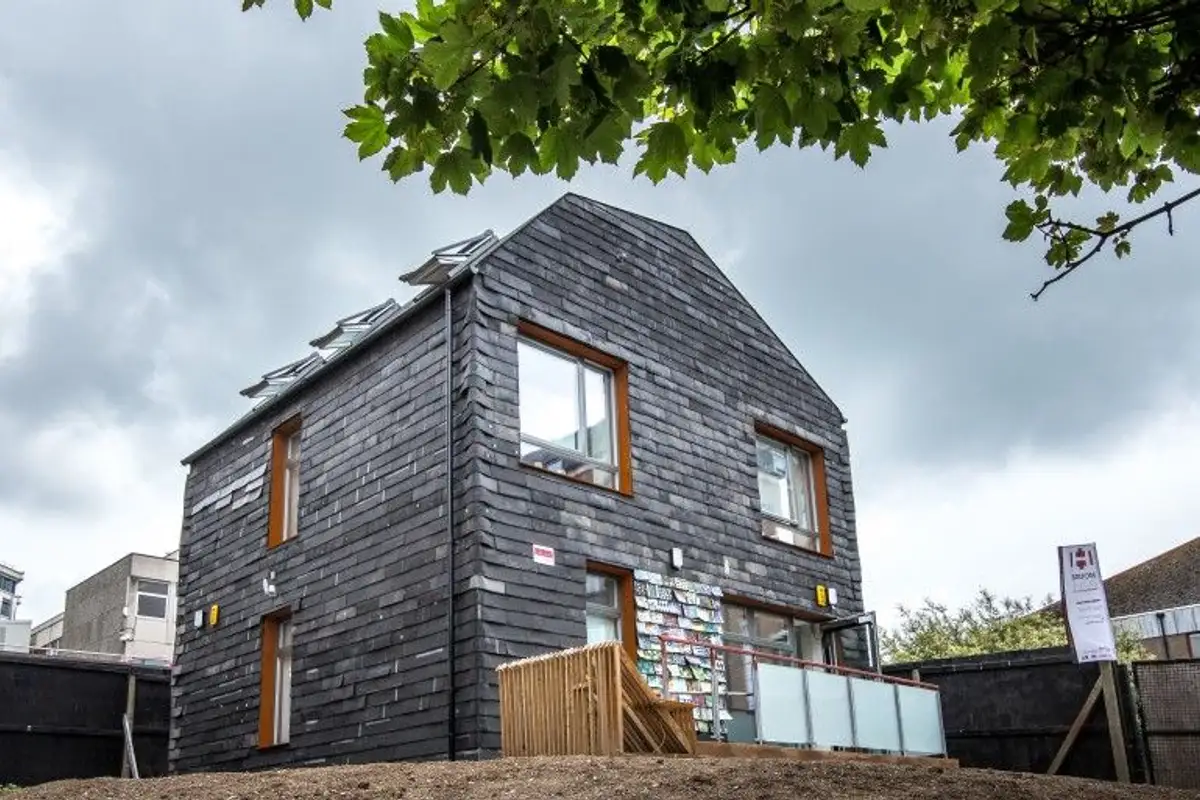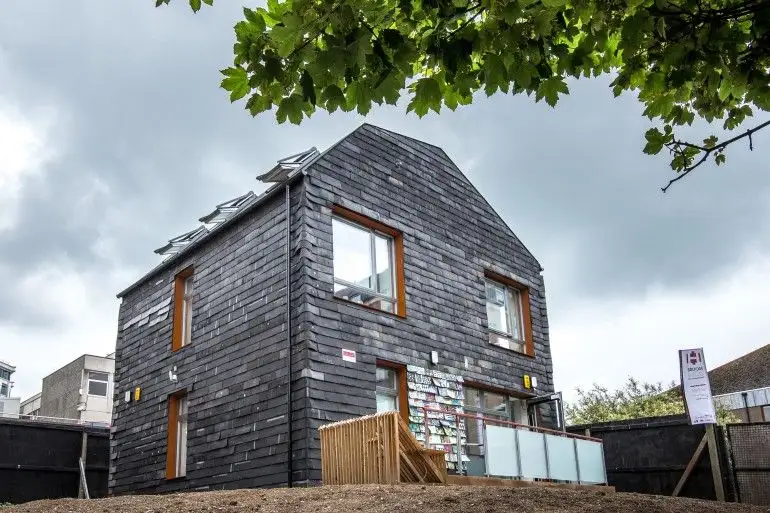
Can garbage be used as an eco-friendly material to build a house? This is the premise behind the Waste House project, considered by those involved to be the first permanent English construction made almost entirely from waste and recycled materials.
Built at the University of Brighton on the Grand Parade campus, this house is an ongoing experiment that tries to demonstrate that "there is no such thing as waste, only things in the wrong place," in the words of the organizer.
A team of 253 students led by Director of Architecture B BM, Professor Duncan Baker-Brown spent three months designing and another 12 months building the house which was completed in April of this year. Approximately 90% of the materials used in the construction of the structure are waste from various construction sites and household items.
This includes 20,000 toothbrushes once used by business class and first-class passengers on airplanes, two tons of jeans, 4,000 DVD cases, 2,000 floppy disks and 2,000 used rugs, which were integrated into the façade of the house.
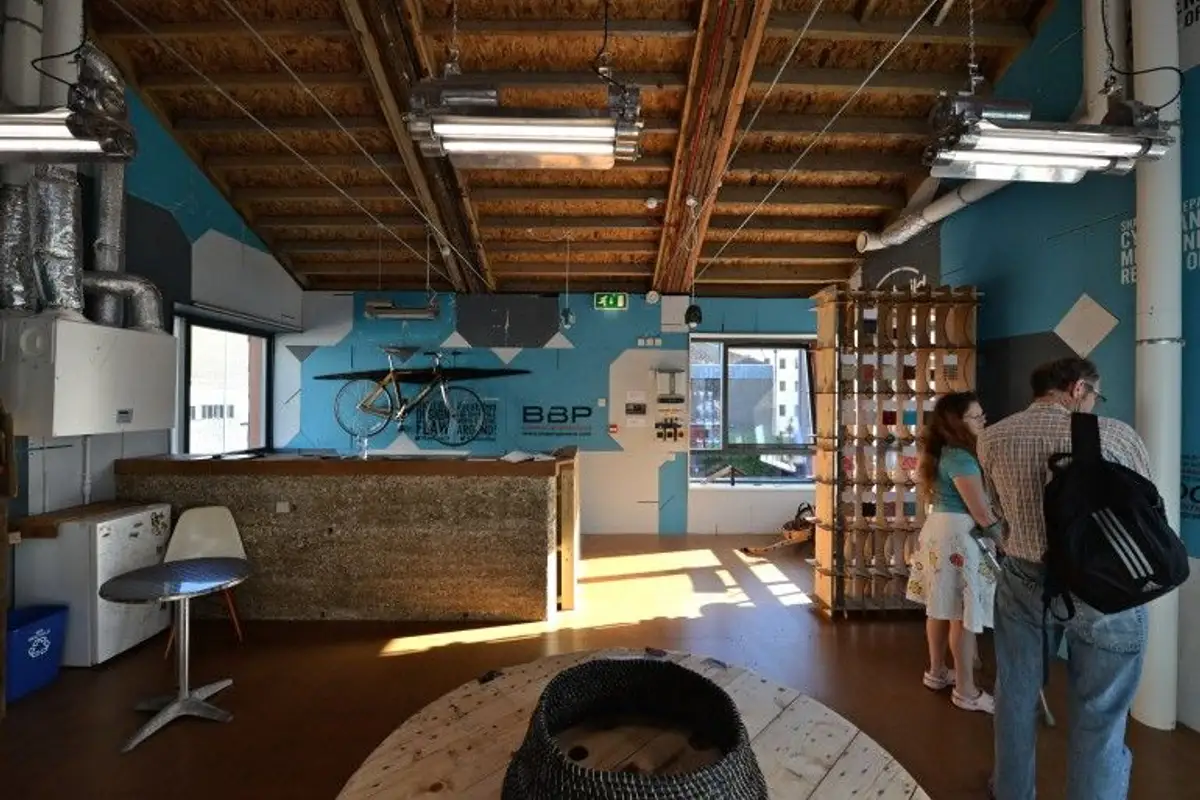
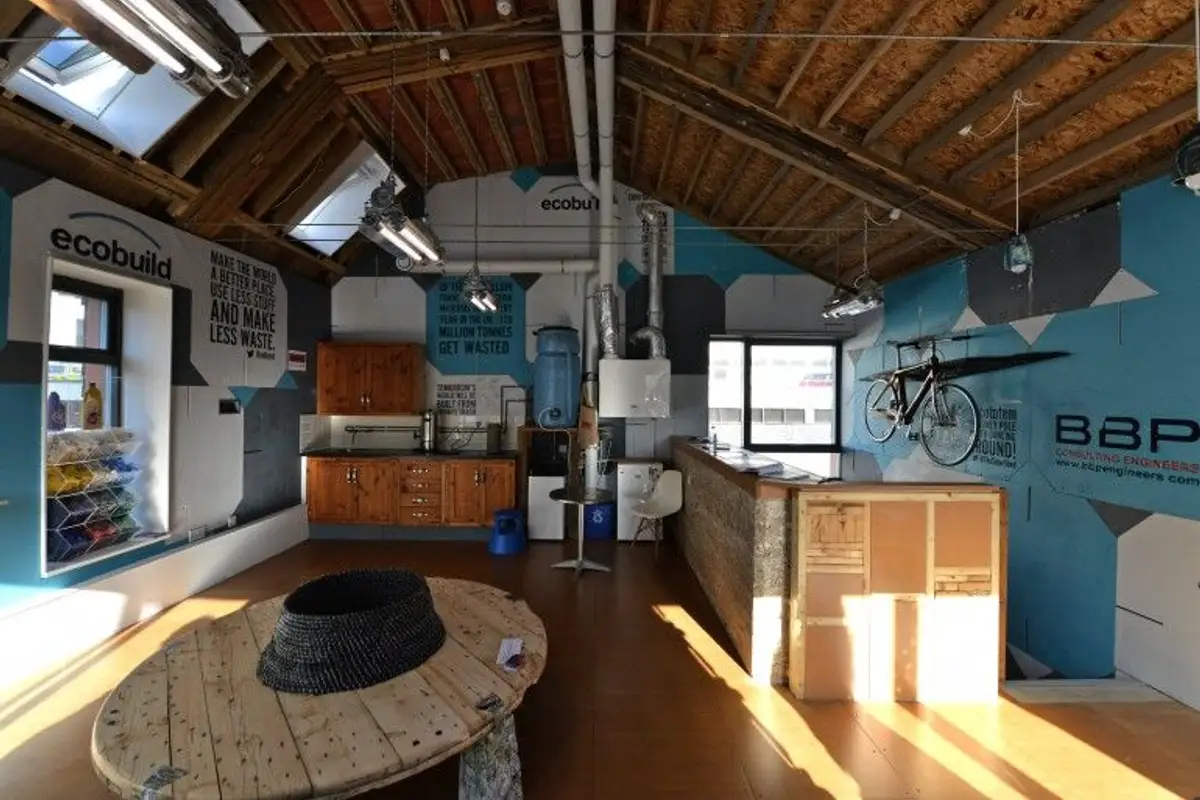
The skeleton and floors of the house are made from recycled wood, and it also has a rammed earth wall built from chalk and compacted clay. It contains 10 tons of chalk waste and 10% clay and helps with the thermal efficiency of the building due to its thickness of 35 cm.
4,000 VHS cassettes were used for wall insulation and 100 sheets of plywood used for floors, beams, columns and other structural purposes, while 500 bicycle chambers are used as window trims and for sound insulation.
Among the few new materials that helped in the construction of the house are triple-glazed windows, a breathable façade membrane and high-performance skylights. There are also new electrical wiring and plumbing to meet modern safety and health standards.
Those who worked on the project hope that what they learned from building Waste House could be the foundation for a new type of sustainable architecture. A series of sensors in the exterior walls of the house will monitor the insulation properties and measure how efficient these different materials will be.
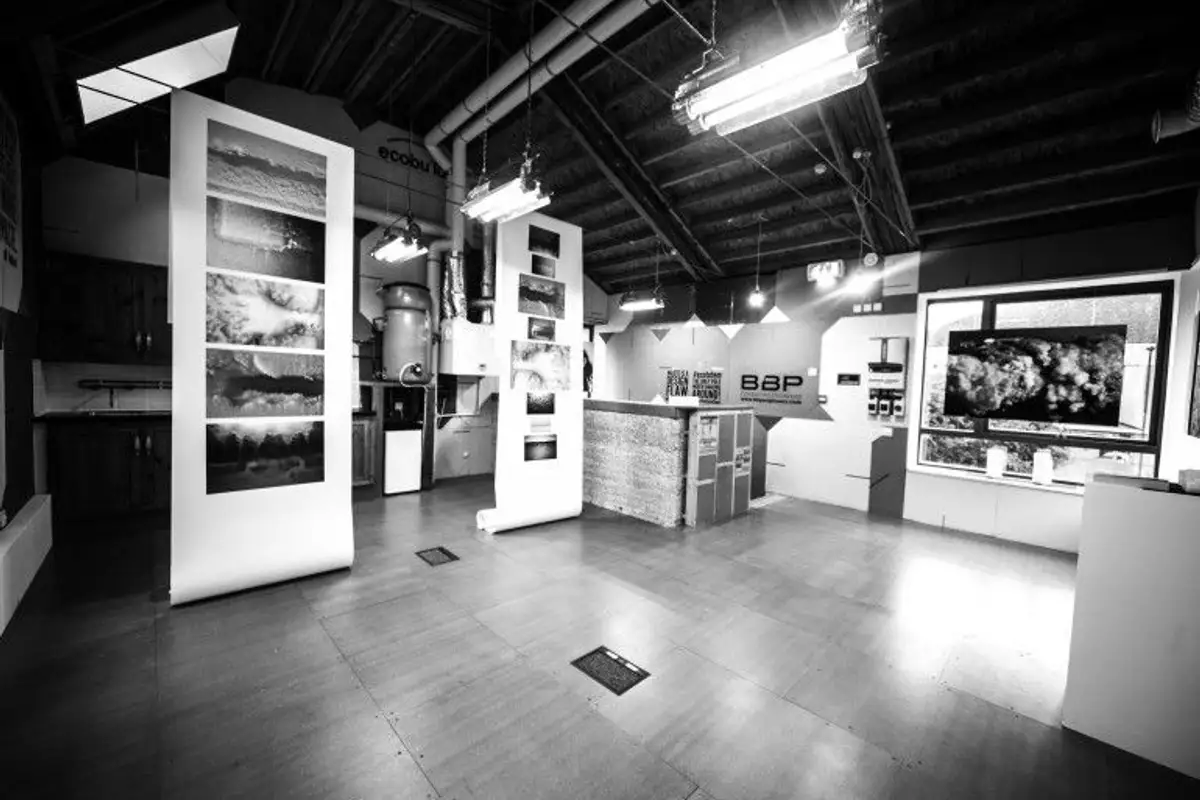
Meanwhile, the house will be used as an exhibition space and design studio and is open to schools, universities and community groups who want to organize eco-events and workshops.
Photo source: gizmag.com