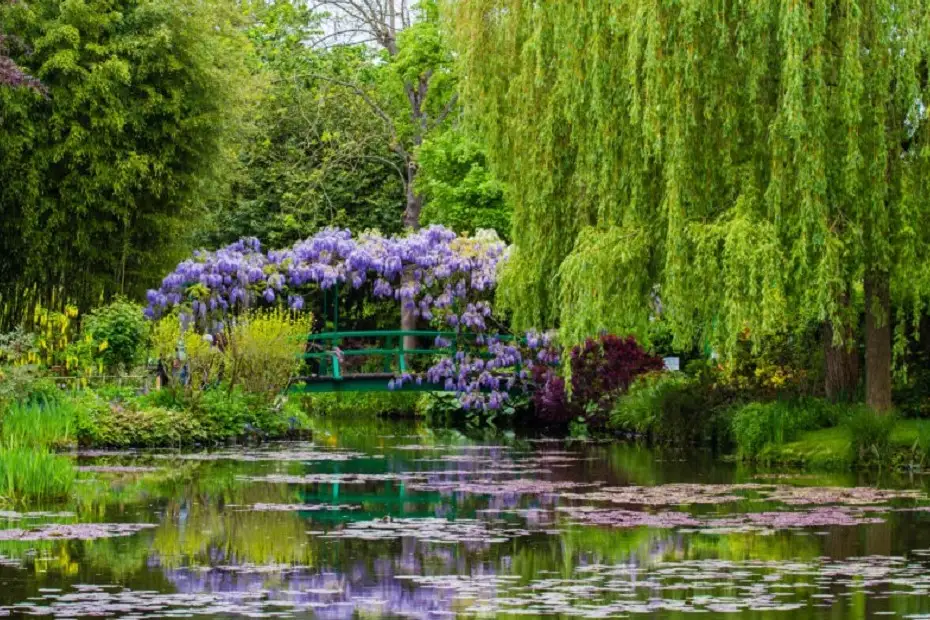
Claude Monet's Garden in Giverny, France, is a living masterpiece, a symphony of colors and forms that reflects the artistic vision of one of the most renowned Impressionist painters. Carefully landscaped over four decades, the garden served as a source of inspiration for his numerous works of art, becoming an astonishing work of art itself.
Photo Source: https://culturaladuba.ro/ Garden History:
In 1883, Monet moved to Giverny, where he bought a house and land with a garden. He quickly transformed the space into a personal oasis, dedicating much of his time and energy to its landscaping. He dug a pond, built bridges, planted a variety of flowers, and created diverse paths and picturesque corners.
Key elements of the garden:
Clos Normand: This area in front of the house is a vibrant flower garden, with a variety of species arranged in layers and colorful borders.
Water Garden: The pond with water lilies, with its green bridge covered in wisteria, is probably the most well-known area of the garden, immortalized in numerous paintings by Monet.
Weeping Willow Walk: A winding path lined with weeping willows that gracefully droop over the water, creating a romantic and melancholic atmosphere.