Mulching involves covering the ground between plants with the aim of stopping weed growth and maintaining soil moisture. The layer formed from compost, leaves, straw, plant residues can also be a good source of food for worms and other beneficial organisms.
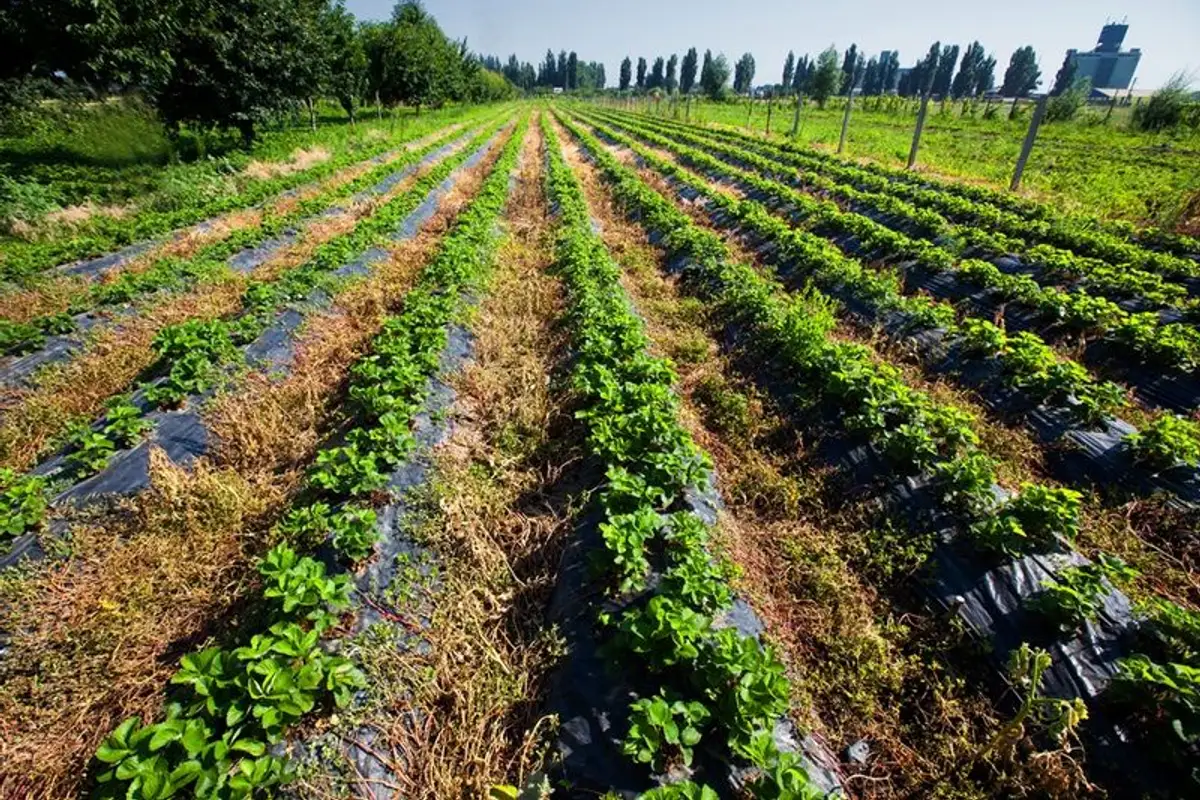
The mulch layer protects vegetable crops from pollution and pests; think how useful mulching with dry straw can be in a strawberry crop.
Mulch keeps the soil surface warm in winter and cool in summer. Underneath it, the activity of soil microorganisms accelerates, making the soil more crumbly and loose.
What to mulch with? Use finely chopped plant residues: mowed grass, straw, leaves, cut weeds (provided they don't have seeds) or plant and leaf debris from vegetable and flower beds.
This material is spread in a thin layer between rows of vegetables. If the mulch is mature, we can spread it more easily. Mowed grass residues should be left to dry for a day before using them as mulch, otherwise they will become a sticky mass.
Another mulching method is with matured compost which is scattered over the surface and then covered with finely chopped grass or other plant debris. A third possibility is to grow green manure, which can be used to make excellent mulch. Mustard or any other fast-growing crop cultivated as green manure covers the ground, forming a real living carpet.
Later, the entire surface is mowed and the green parts are left on the ground.