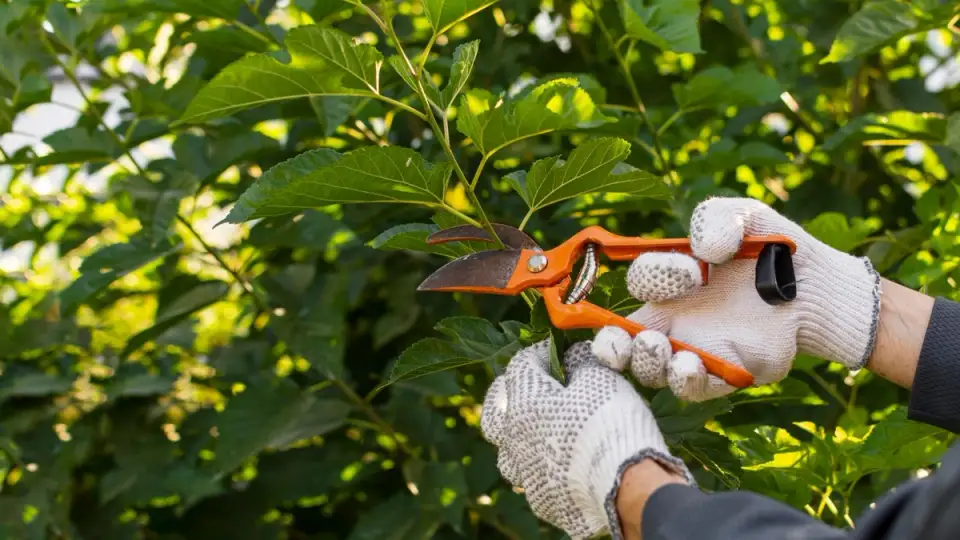
Garden maintenance goes beyond simply watering or planting flowers and vegetables. One of the most effective ways to preserve the health and beauty of plants is regular pruning. Removing dead branches, diseased leaves, or branches that grow chaotically not only improves the appearance of the garden but also prevents the spread of diseases and pests.
Dead branches are more than just an aesthetic problem. They can become attraction points for insects or fungi that affect healthy plants. By removing them, plants receive more air and light, essential factors for photosynthesis and harmonious development.
In addition, regular pruning stimulates the growth of young and vigorous branches, which contributes to a more harmonious shape and a balanced foliage density.
Diseased plants represent a major risk for the entire garden. Whether it's leaves with spots, mold, or weak stems, if left untreated, these elements can transmit disease to other nearby plants. Removing them quickly significantly reduces the risk of infestation and maintains the garden's health in the long term.
It is recommended that after pruning, you discard diseased plant debris and clean your tools to prevent contamination.
Regular pruning is not only preventive but also aesthetic. It allows you to shape plants into desired forms, whether it's decorative shrubs, hedges, or fruit trees. Through careful pruning, you can control the size and direction of growth, avoiding overcrowding and competition for light between branches.