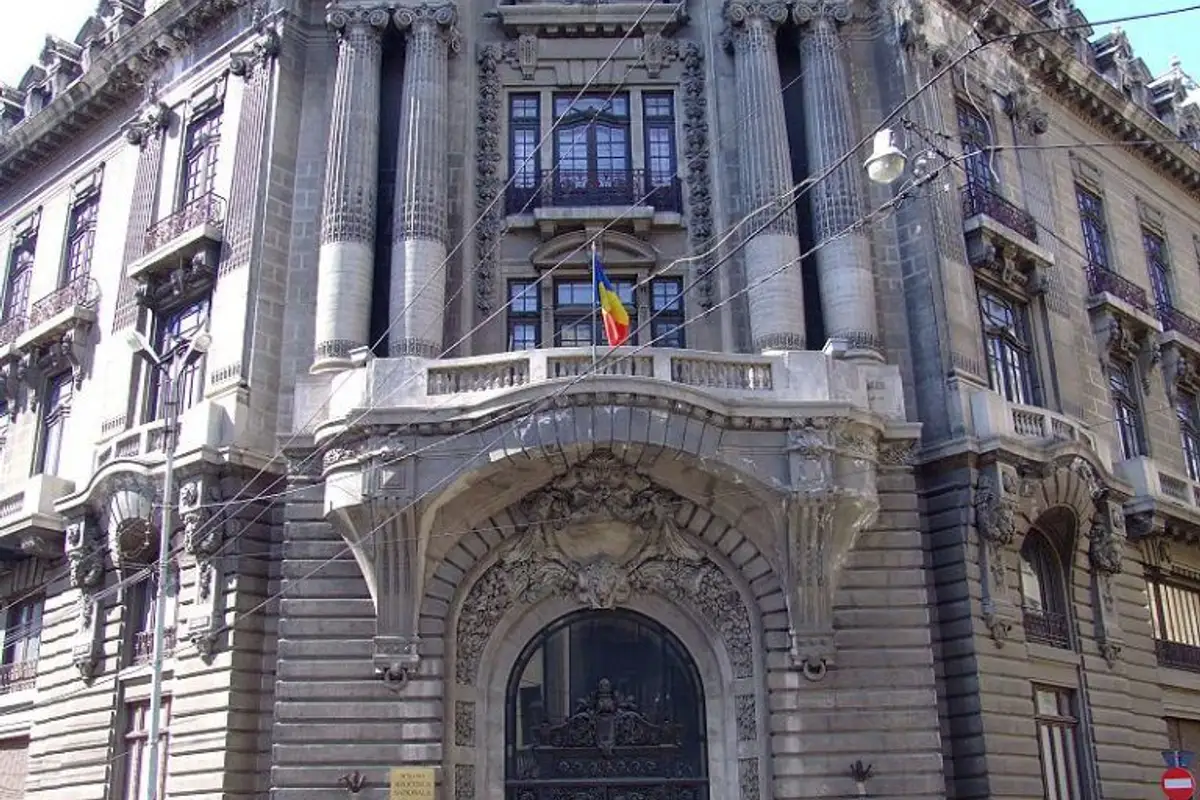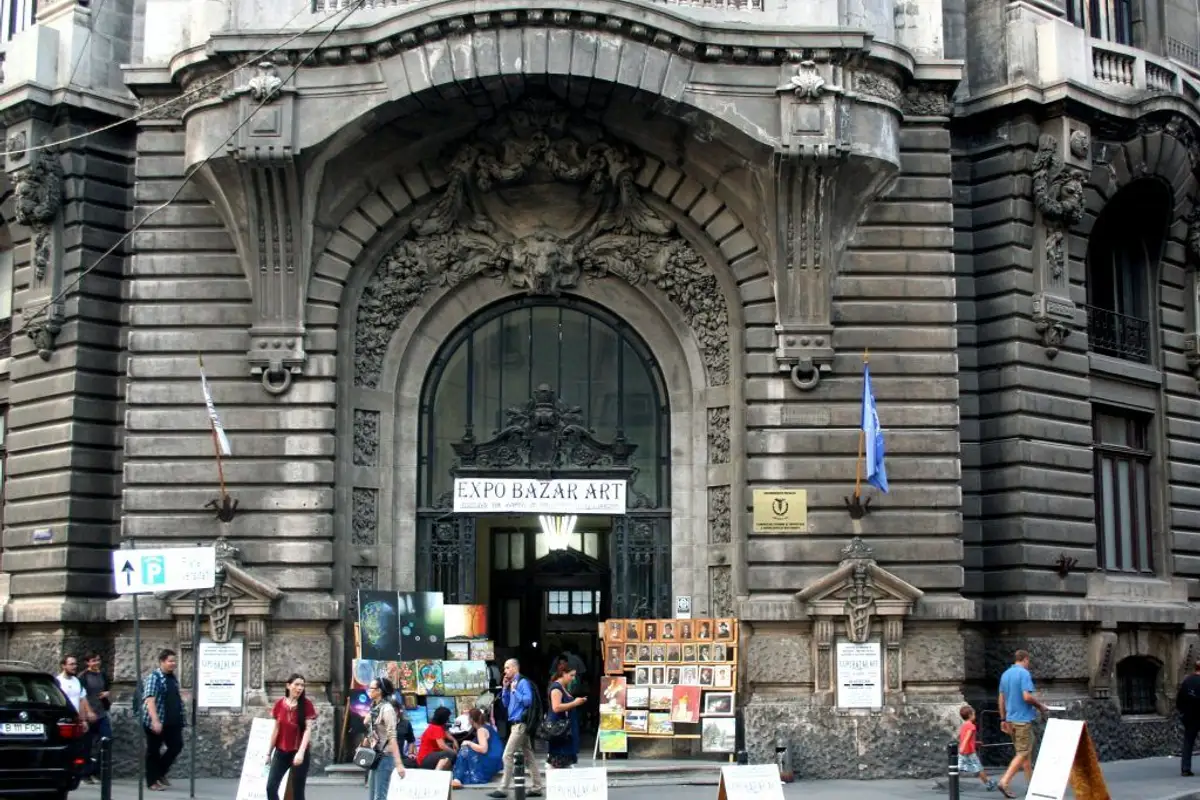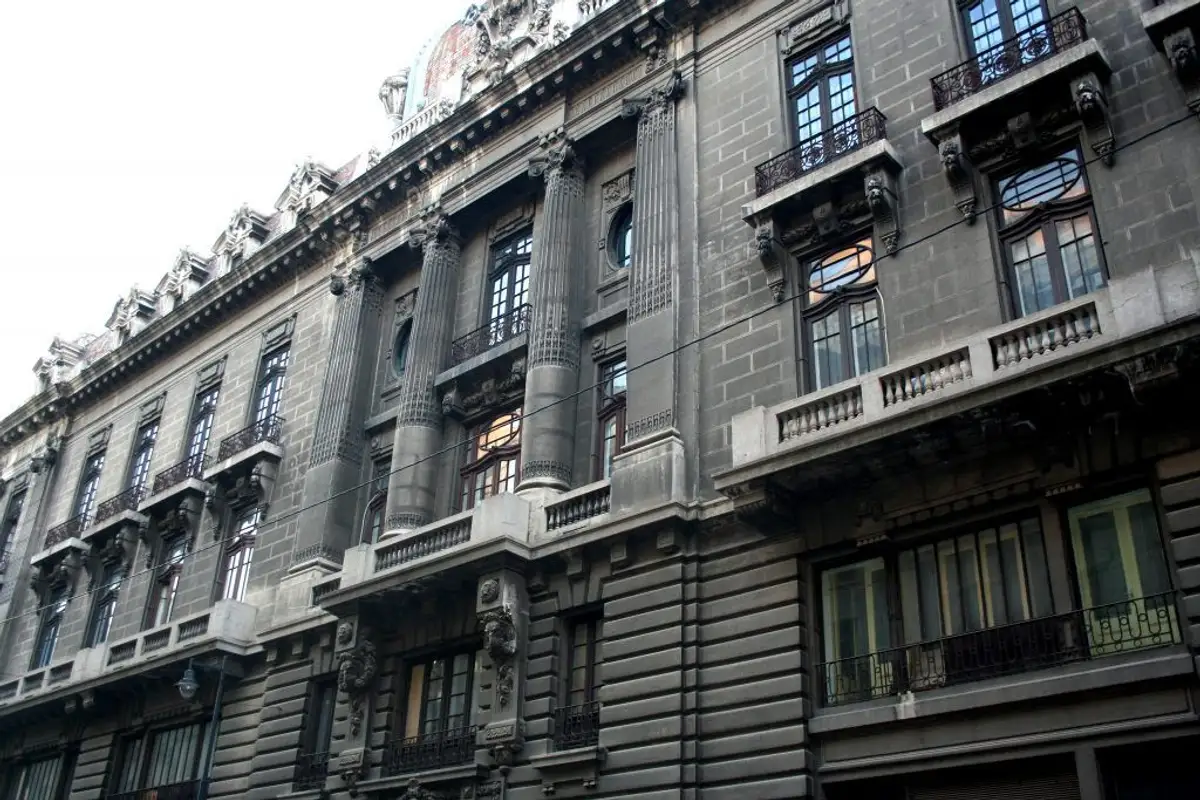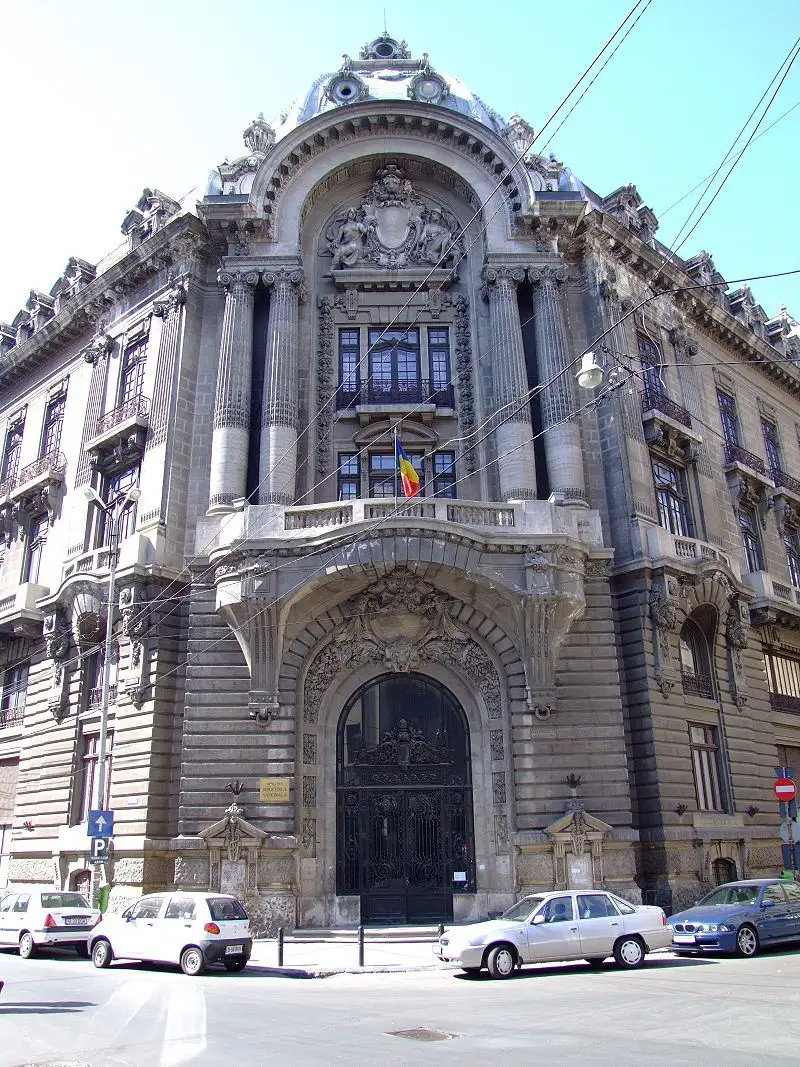
One of the most representative buildings in pre-war Bucharest and from the era of King Carol I is the Palace of the Stock Exchange, located today at the intersection of Doamnei Street with Ion Ghica Street. Built between 1907 and 1911, the Palace of the Stock Exchange served as a location for several state institutions throughout its existence, including the Chamber of Commerce and the National Library of Romania.
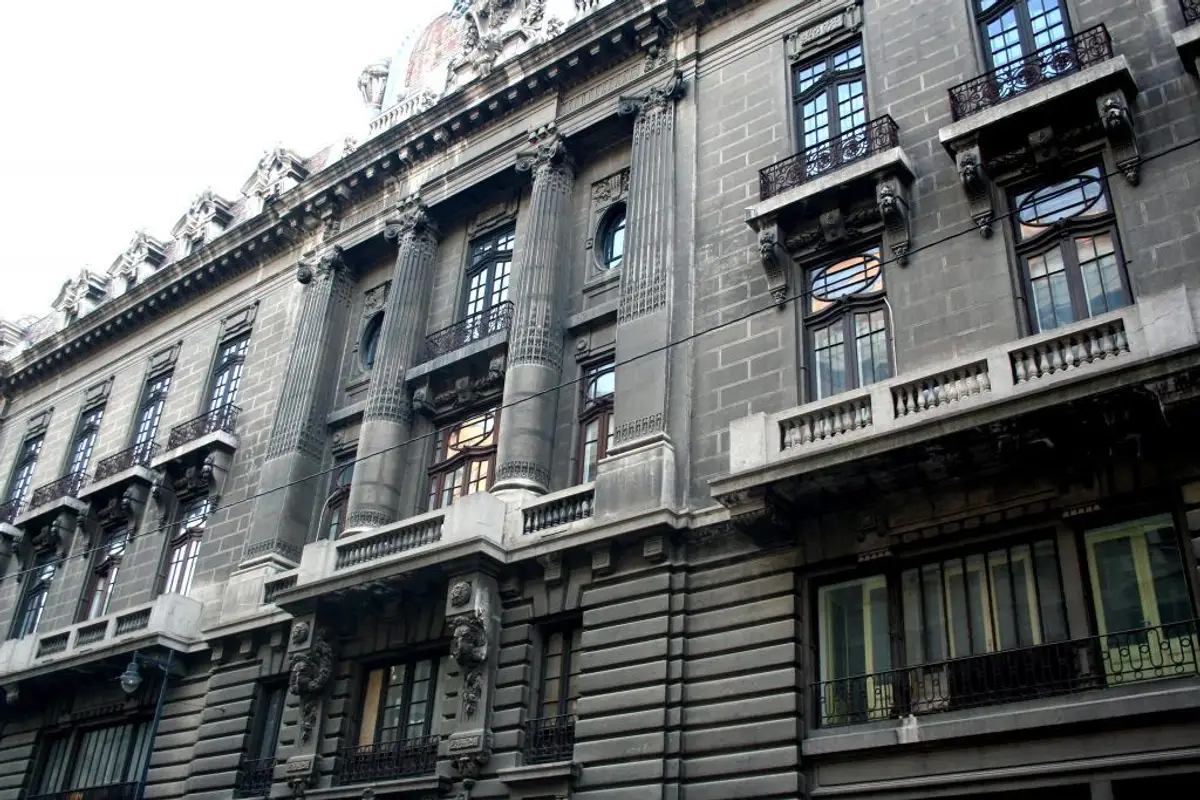
Opening GalleryThe style in which the building was realized is an eclectic one, with neoclassical influences, it impressing through its massiveness and imposing stature, even if it is relatively hidden, and sometimes escapes the eye of passers-by, especially those in a hurry. The details of the building are impressive, being executed with great mastery.
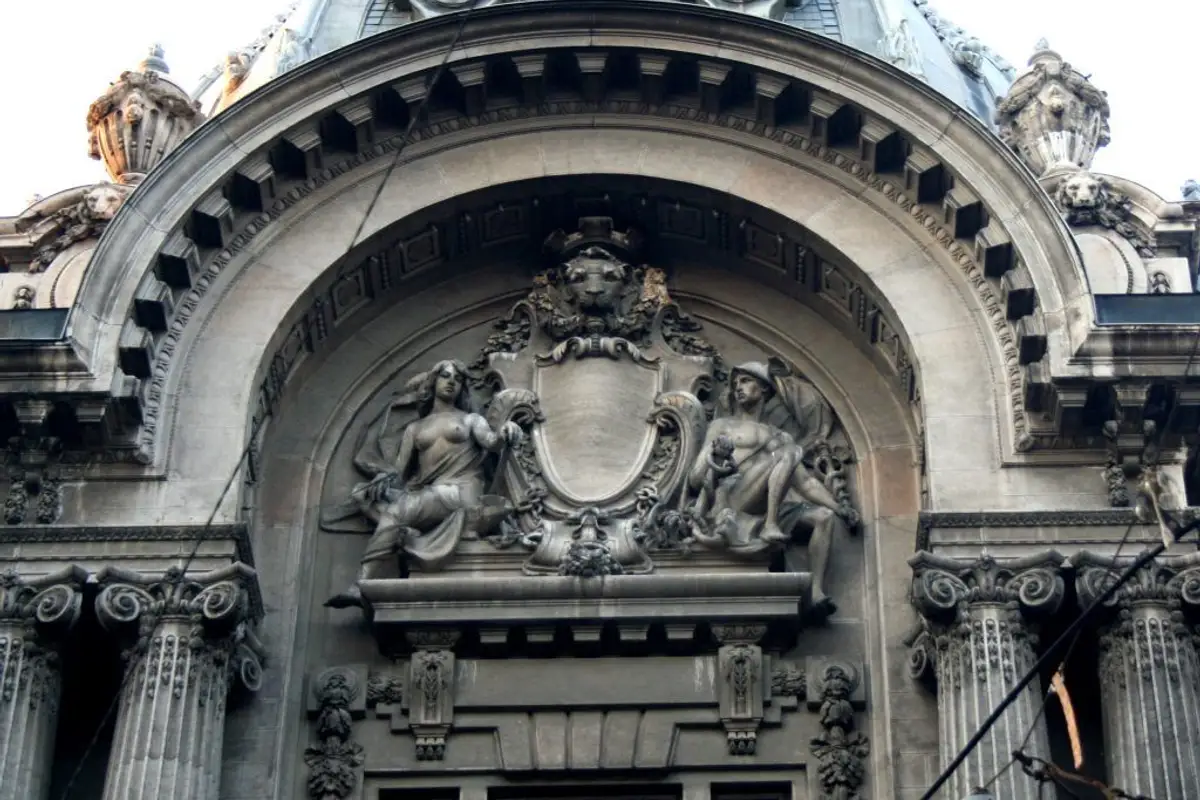
However, what impresses the most, and is also the most interesting detail of the construction, is the pediment, along with its sculptural group, representing industry with the hammer in hand on the left, and the god Mercury on the right, holding the caduceus in one hand and an anchor in the other.
Plans for the building date back to the early years of the 20th century, and the land on which it is now located was donated by Ioan Lahovary, the Minister of Industry at the time. In the same place, a certain steward Barcanescu had previously owned a property.
In 1907, a competition was announced in the Annals of Architecture for the plans for the future Palace of the Stock Exchange to be drawn up. The commission included George Asan (son of the famous Romanian industrialist George Asan, known as the founder of Asan's mill) and Mauriciu Blank, a renowned banker and co-founder of Marmorosch-Blank Bank.
The two decided that Stefan Burcus' project was the most suitable for the new building.
A year later, construction began, with King Carol I himself laying the foundation stone, the building being completed three years later.
Various state institutions functioned in the Palace of the Stock Exchange, such as the Chamber of Commerce and Industry, the Romanian-Belgian Chamber of Commerce, Banca Poporului, Banca Franco-Romana, the Ministry of Justice, the Ministry of Cooperation, Banca Ardeleana and Casa de Economii, Banca Centrala Cooperativa, Societatea Romana de Asigurari Generale, Institutul de Stiinte Comunale, Banca Comerciala Italiana Romana (ROMCOMIT – owner of the stadium where today's Faculty of Law of the University of Bucharest is located, demolished in 1935 by King Carol II for the construction of the University Citadel).