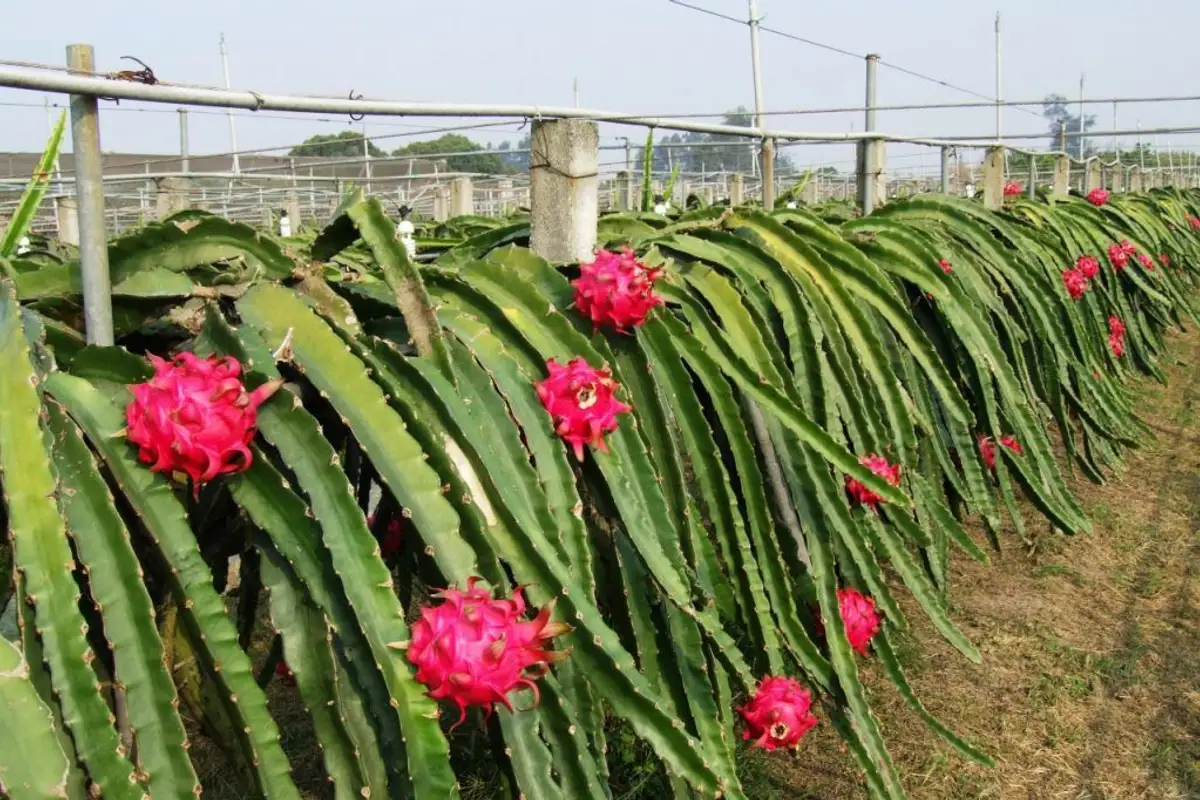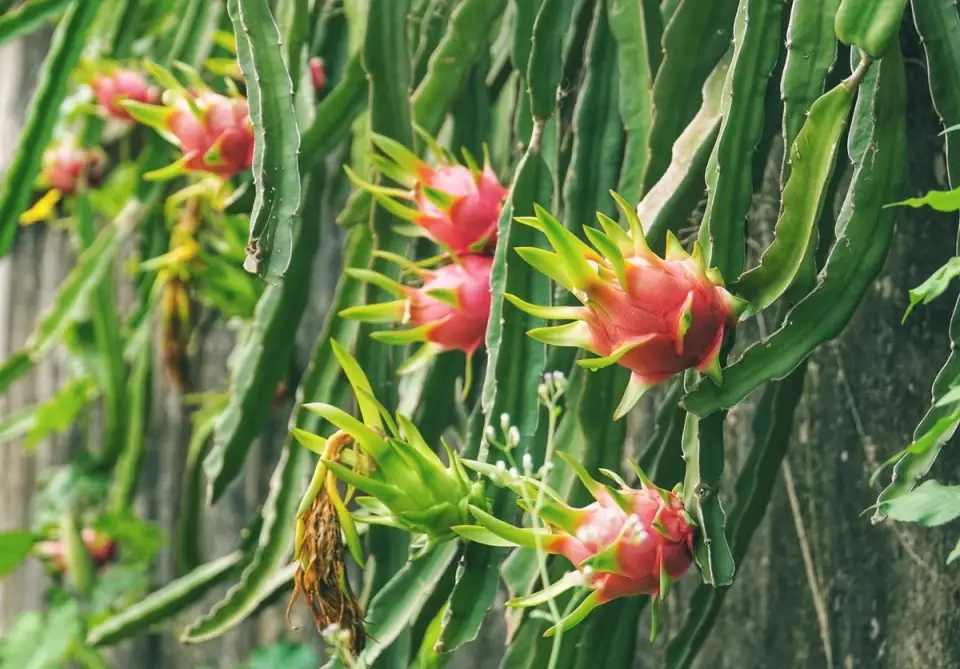
If you want to transform your garden into an exotic space or simply enjoy the special aroma of a truly unique fruit, you can grow dragon fruit. Also known as Pitaya, dragon fruit originates from South America and is a sweet tropical fruit.
As Aztec literature indicates, dragon fruit was discovered around the 13th century. The plant from which dragon fruit comes is a type of cactus from the Hylocereus family, also known as "queen of the night" because dragon fruit only blooms at night.
You can also find this fruit under the names "pitaya" or "pitahaya", and its taste is usually described as a combination between kiwi and pear.
Dragon fruit has a distinct appearance, it's sweet, crunchy and at first glance may seem like a rather unusual fruit. However, it can be easily grown in your own garden. Initially, it was very common in Latin America and Southeast Asia, but today it has become popular all over the world.
Besides the splash of color it brings to your garden, this fruit can be enjoyed in many ways, being renowned for its rich content of fiber and antioxidants. If we've caught your attention, continue reading to find out how you can grow dragon fruit at home and what conditions are necessary to grow the plant that produces it.
Dragon fruit creates a tropical paradise in your own garden
If you enjoy growing your own fruit and caring for plants, you will certainly be successful in cultivating dragon fruit. With a size of 10-15 cm and a weight of 220-350 grams, dragon fruit stands out with its oval shape and has several varieties: pink skin and white flesh, pink skin and pink flesh, yellow skin and white flesh.
Many believe that the best variety of dragon fruit is the one with red skin and red flesh.
The plant that produces dragon fruit can be grown in the garden or in a pot. To grow beautifully, it needs a tropical or subtropical climate. Although it belongs to the cactus family, it does not require the same growing conditions as desert cacti. Dragon fruit develops in mild climatic conditions.
For those who live in areas with very low or very high temperatures, it is best to grow the plant indoors, in a pot. If you want to plant it in the garden, you can cover the plant with a resistant nylon during winter to protect it from frost.
The vibrant color of this fruit and its pleasant taste are not the only reasons why it has become loved all over the world. Dragon fruit has remarkable nutritional values: 100 grams contains only 60 kcal, 3 g of fiber, 1.2 g of protein and 0 g of fat.
In addition to its low calorie content, you may also be interested in the fact that this exotic fruit is rich in antioxidants, such as betalains found mainly in the red flesh of the fruit or flavonoids, which support brain health.
How should the plant that produces dragon fruit be cared for?
Below, we will present some tips regarding planting and caring for the dragon fruit plant: