7,000 tons of steel, 5,500 tons of cement, 20,000 tons of sand, 1,000 tons of basalt, 900,000 cubic meters of wood essences, 3,500 tons of crystal, 200,000 cubic meters of glass, 1,000,000 cubic meters of marble along with 2,800 chandeliers, 220,000 square meters of carpets, and 3,500 square meters of leather. All these took the form of the House of the People with the help of 200 architects and over 20,000 workers.
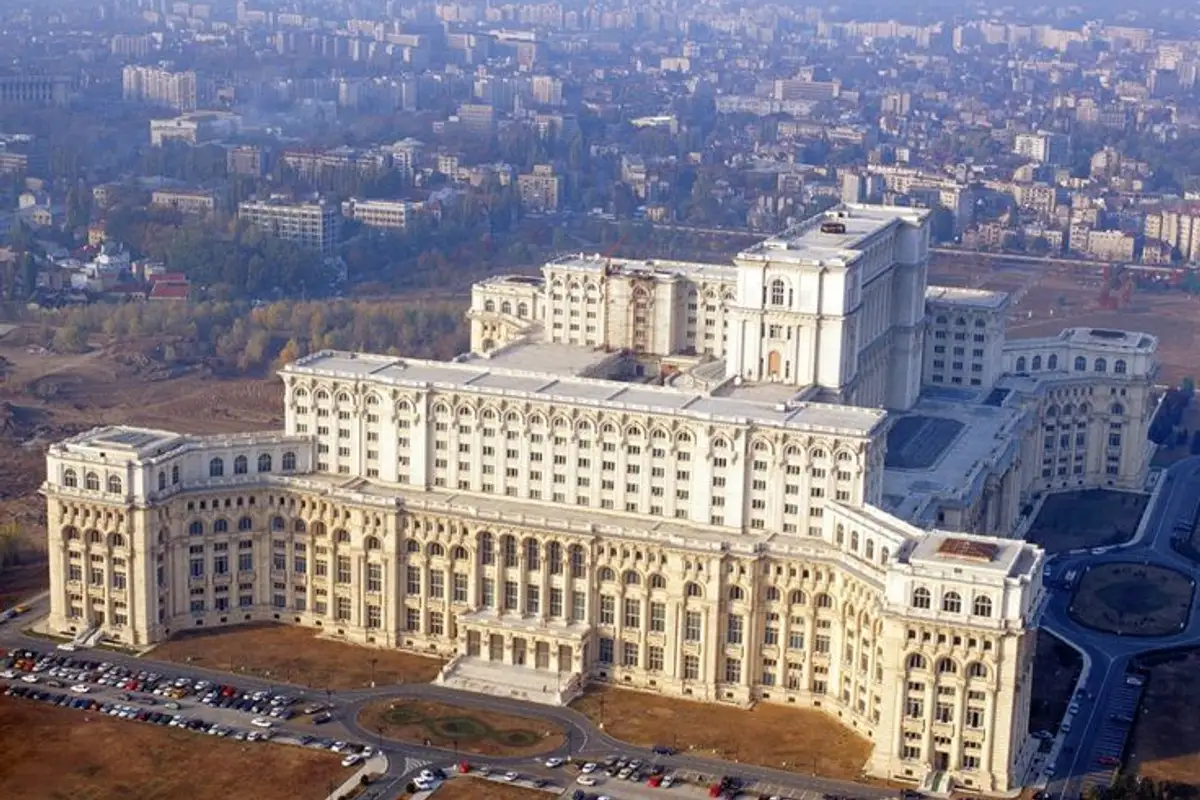
Before starting the project, buildings were demolished on an area of seven square kilometers in the area known as Dealul Arsenalului and 40,000 people were relocated to make room for the 270 m long, 245 m wide and 86 m high building.
What they achieved: second place in the world in the Guinness Book of World Records in the category of administrative buildings, after the Pentagon, and third place in the world in terms of volume (2,550,000 cubic meters), after the Quetzalcoatl pyramid and the assembly building at Cape Canaveral.
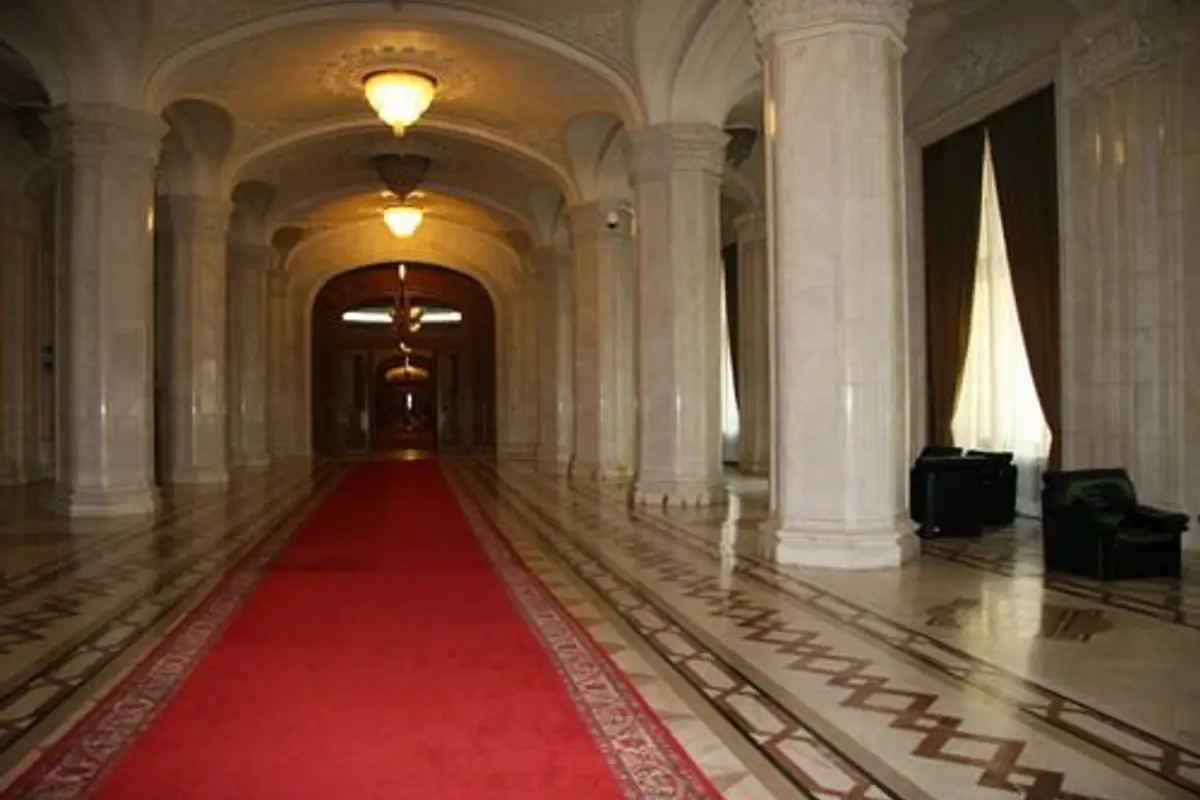
On the east side of the building there is the Hall of Honor of the House of the People, a gallery inspired by Brancovenesc style. This is a 150 m long corridor sectioned by sliding doors made of solid oak. The vault of the gallery is supported by 34 columns of white marble with decorative elements in pink marble. The gallery is lit by 67 crystal chandeliers.
The spectacular staircases in this wing of the Palace of Parliament, an area redone five times, have steps with a height of 14-16 cm, very low, built according to the instructions of the leader who did not want to get tired climbing them.
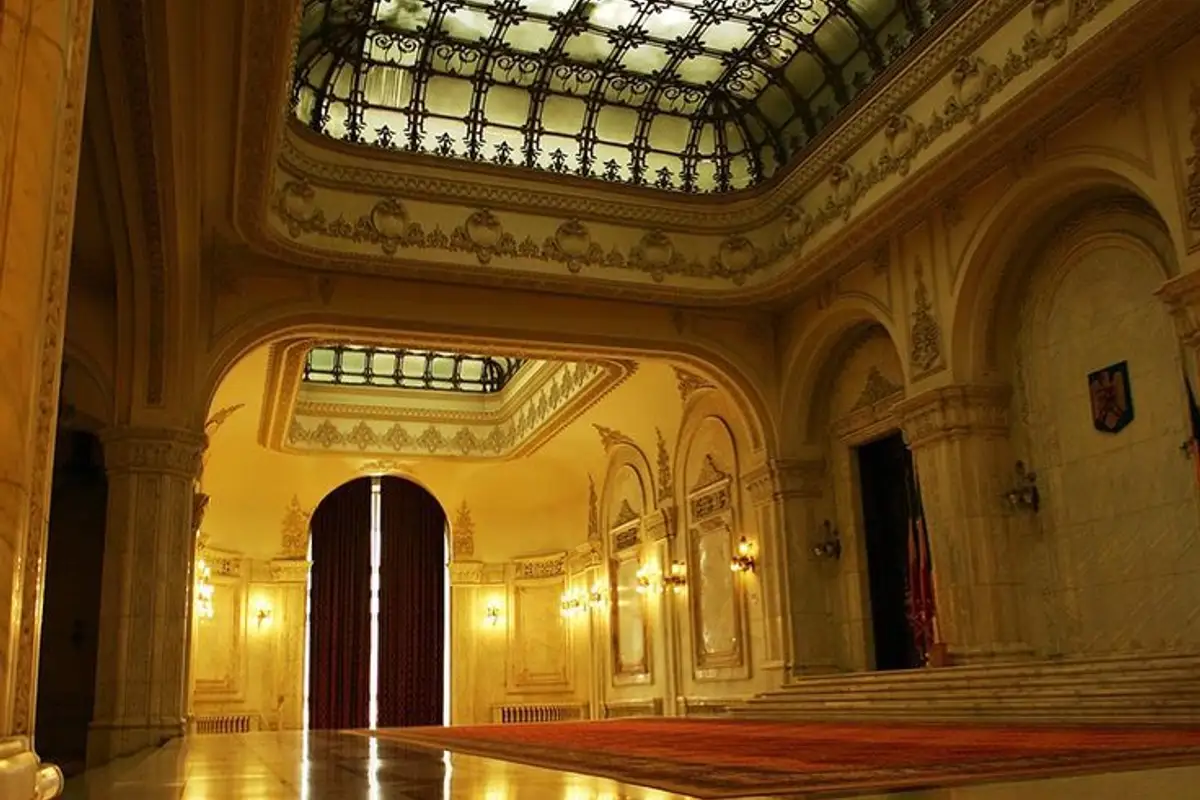
The hall with the highest ceiling in the House of the People is the Alexandru Ioan Cuza Hall. The ceiling is at 20 m, and the area of the room is over 2,000 square meters. The hall opens through a loggia towards Constitution Square. Influences of the Brancovenesc style are also preserved here. The massive doors are framed in marble frames, and the ceiling is made with the help of seven skylights.
On the ground floor there is also the I.C. Bratianu Hall, a room decorated eclectically, strongly reminiscent of the ancient Orient, the ceiling is covered with gold leaf and is lit by 12 crystal chandeliers. From this hall you enter the Union Hall through five massive doors. In the western wing you can visit the National Museum of Contemporary Art which was opened in 2004.
The House of the People: architecture of a silent history
The House of the People: architecture of a silent history