The number 3 holds symbolism in almost all fields we can think of. From literature to religious meanings, there is also a principle in decor that can support us in decorating our homes. This is called the rule of three and it can serve as a guide when we want a new decor in a room. What would be the role of such a concept and how does it work?
Both the information and the objects found in such a numerical structure are interesting, memorable and stand out more than other numerical combinations can.
The first aspect to consider is the functional one. Arranging pieces in a structure of three visually supports the arrangement in a room, such as for example, a sofa with two armchairs in a living room. It is a way to add extra interest or create a focal point in the respective room, giving it visual harmony.
Secondly, the rule of three supports the aesthetics of a space. When you want a decor upgrade, think about what elements you can bring together to break the monotony and attract attention in a discreet but pleasant and harmonious way.
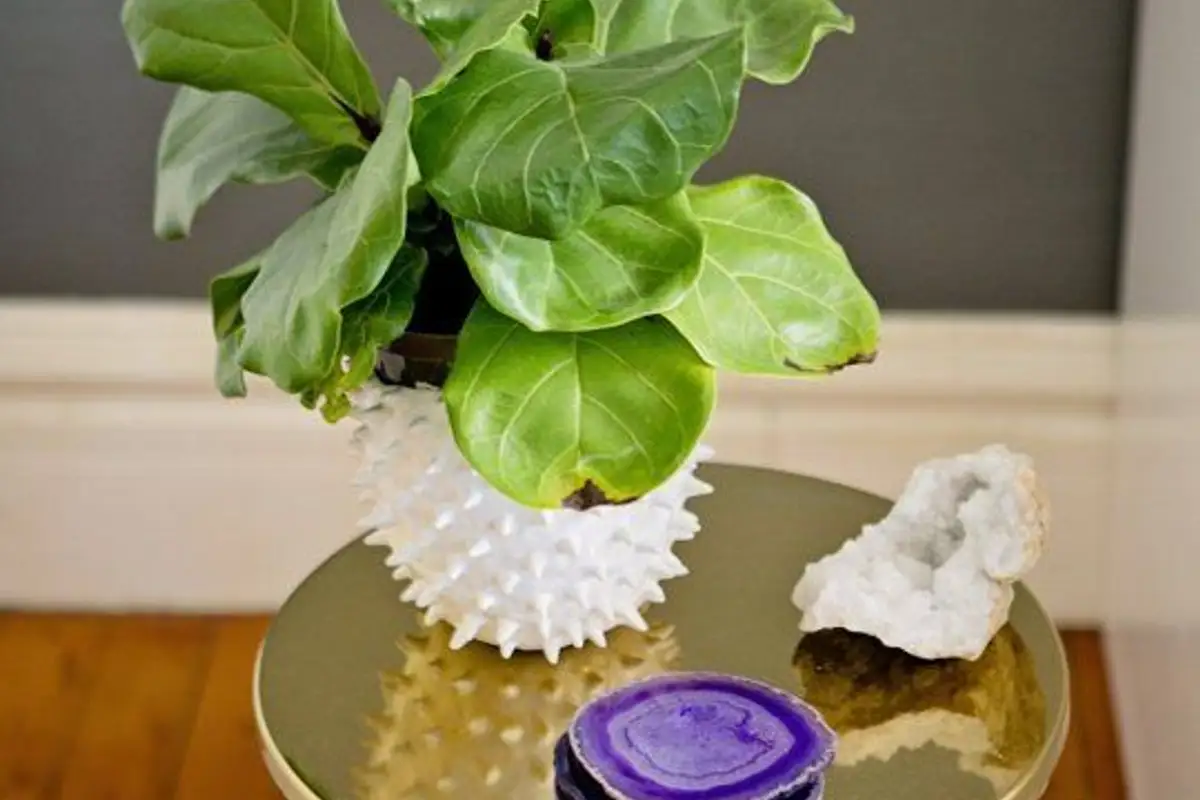
Start with the simplest ideas: three vases placed together or any other decorative objects that form a group of three will take any area of the house out of banality. However, the objects can be different in terms of shape and their role in the decor, even reaching furniture pieces.
Here are some possible arrangement options: in a group of three, art objects such as paintings can be displayed (three paintings placed symmetrically on a wall offer balance and interest to the respective area). Three decorative accessories of different heights can be arranged on a coffee table or nightstand - a lamp, a clock and a plant in a pot.
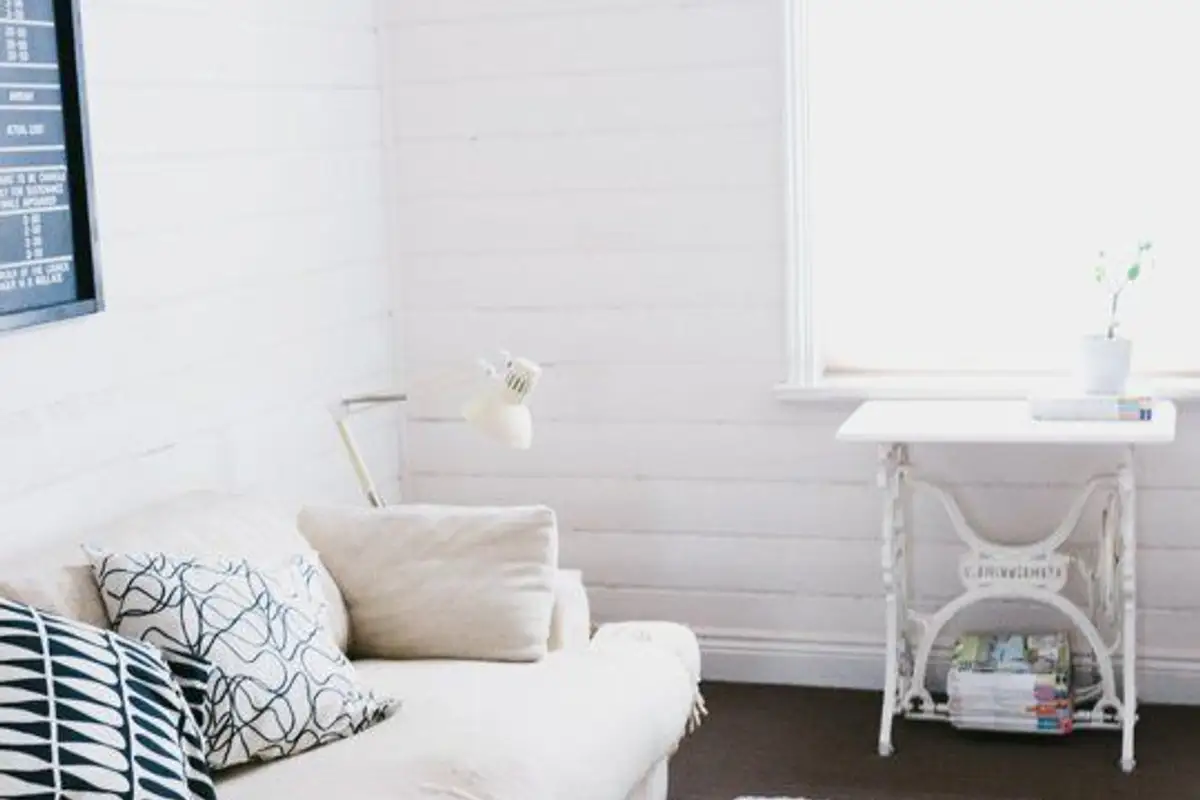
An armchair, a dresser and a painting, all with different heights, can successfully decorate a section of the living room or an armchair next to a side table and a painting on the wall - again, an example of a variant that can be explored in an arrangement.
The rule of three can also be applied in the case of colors. A single color is monotonous, but three offer complexity, with a combination of tones and shades being recommended. Even monochromaticity works in this case.
Although the rule of three may sound somewhat aggressive, this form of arrangement often comes naturally and instinctively. The important thing is not to overdo it, but only to use it to bring coherence and balance to the space we are decorating.
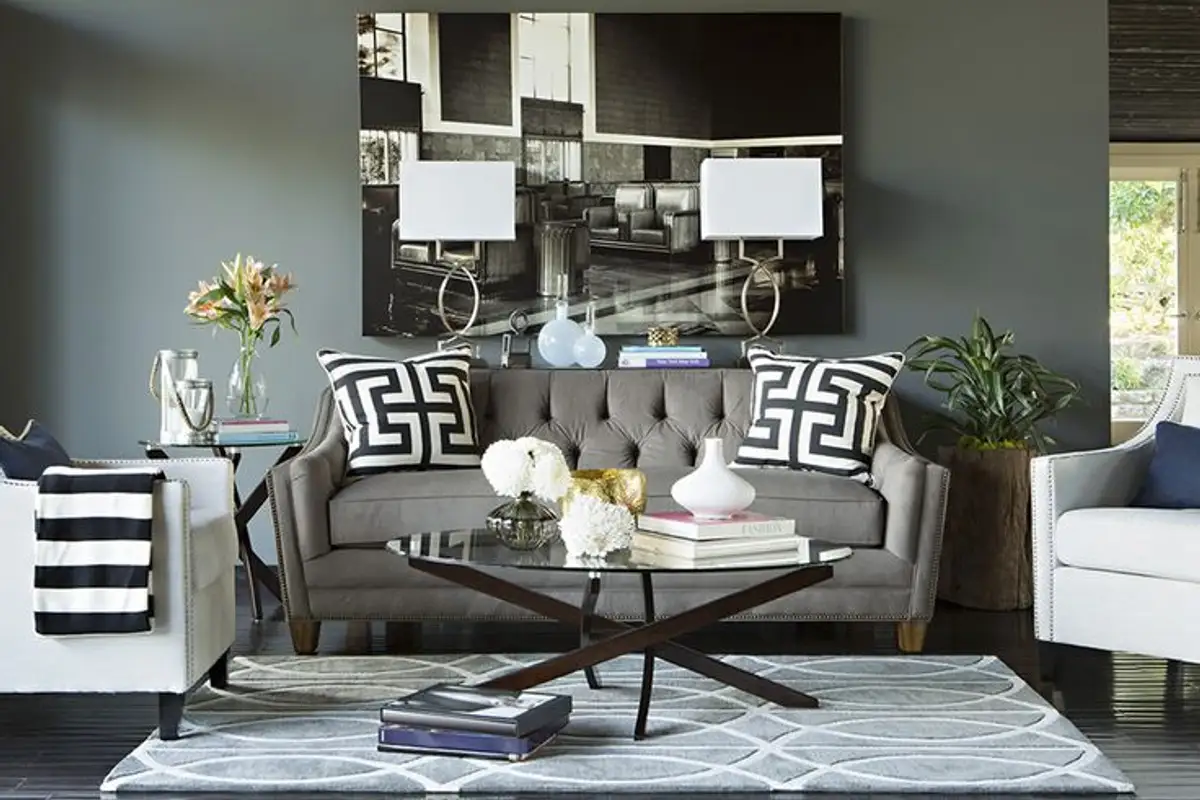
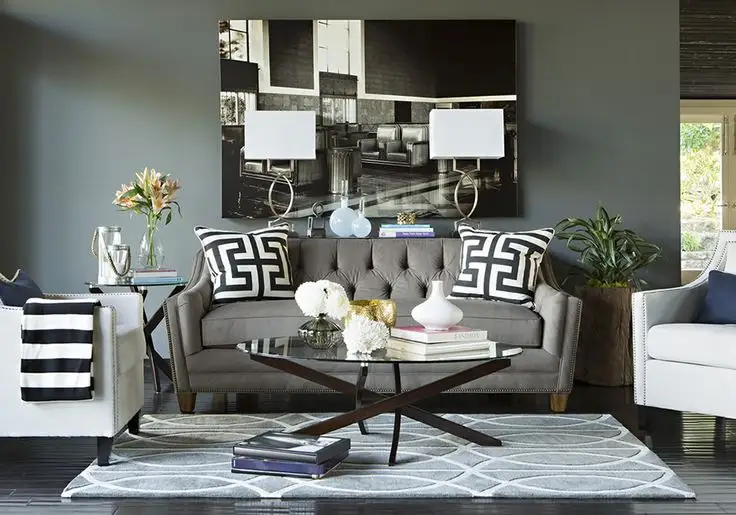
The rule of three at the level of textures and prints in the room: notice the decorative pillows, rug and blanket; different but coherent in terms of the arrangement