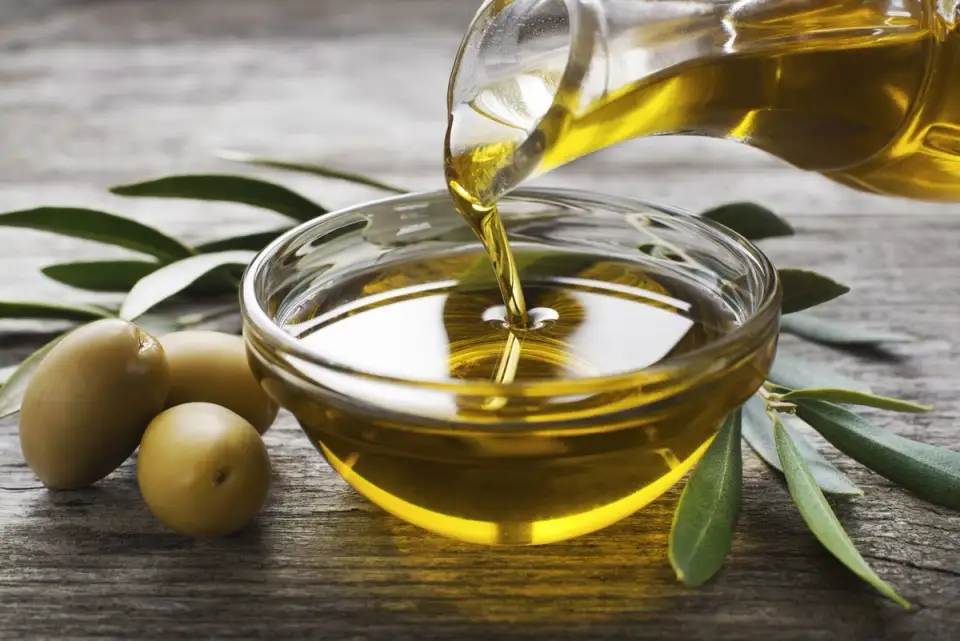
Oil, olive, and petroleum have a distant common origin in the Greek word elaion - olive oil.The word comes from a language in the Mediterranean substrate. From Greek, it was taken over by Latin, where oleum meant, as in Greek, olive oil. The Latin word was transmitted to the Romance languages but was also borrowed by the Slavs as olej.
As in other cases, the Latin word reached the Romanian language through Slavic. Just like vinegar - Sl. ocitu, from Lat. acetum. Lat. oleum was borrowed by the Slavs (olej) and from Slavic it reached Romanian (ulei). It is attested for the first time in 1582, in the Palia de la Orăștie.
Western Romance languages inherited two words from Latin: oleum and oliva. One for the product, the other for the fruit from which the product was extracted. Oleum gave rise to the French huile, which came to mean any liquid fatty product, regardless of what it was made from.
In medieval Latin, the word petroleum was formed, meaning oil (oleum) from stone (petra), from which resulted Fr. petrole, Sp. petroleo. The Romanian language borrowed it from French, appearing for the first time in a dictionary of difficult words by Stamati, 1851. In some dictionaries it appears as oil of stone, perhaps a translation of petroleum.