Vienna is a city that has successfully combined landscape with urbanism. This is partly due to the fact that the city has been planned and built over centuries, with particular attention paid to green spaces.
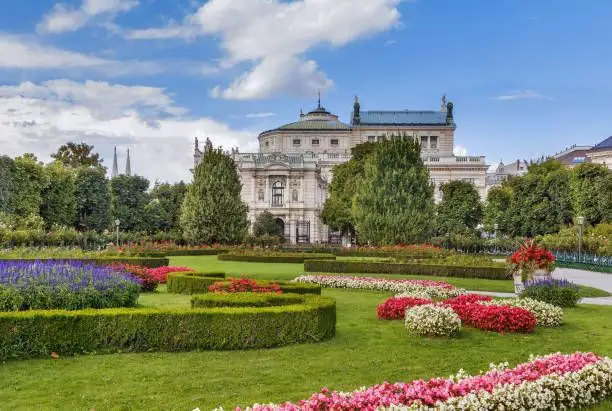
Photo source: Pixabay (Volksgarten) One of the most important examples of this combination is Prater Park, which covers an area of over 300 hectares. The park is a major recreation space for Vienna's residents and visitors, offering a variety of activities, including walking, cycling, ice skating and horseback riding.
Another example is Schönbrunn Park, one of the largest and most beautiful parks in Europe. The park was created in the 18th century by Empress Maria Theresa and is renowned for its unique gardens, lakes and historical buildings.
In addition to large parks, Vienna has an extensive network of smaller parks and gardens, which are evenly distributed throughout the city. These parks provide residents and visitors with an oasis of greenery in the middle of the city.
Furthermore, Vienna has a number of other important landscape features, such as the Danube River, the forests surrounding the city and the hills that enclose it. These contribute to the creation of a beautiful and relaxing natural setting.
Vienna's urban elements are also well integrated with the landscape. The city has a well-organized street system connected by a network of parks and gardens. This makes Vienna an easy city to explore and offers residents and visitors a variety of outdoor recreation spaces.
One of the most important examples of this type of urbanism is Ringstrasse, a circular road that encircles Vienna's historic center. Ringstrasse is flanked by historical buildings, such as Hofburg Palace, the Vienna State Opera and the Museum of Art History.