El Ninot Market in Barcelona is one of the oldest in the city, founded in 1893 as an open-air market. Its name means "wooden figure" in Catalan and comes from a figurine saved from a shipwreck and displayed in this market.
In May of this year, El Ninot reopened after five years of remodeling and renovation work that cost €20.6 million. The market in the Eixample district now has 4,000 square meters dedicated to sales points, with 48 food stalls and 33 for other types of products.
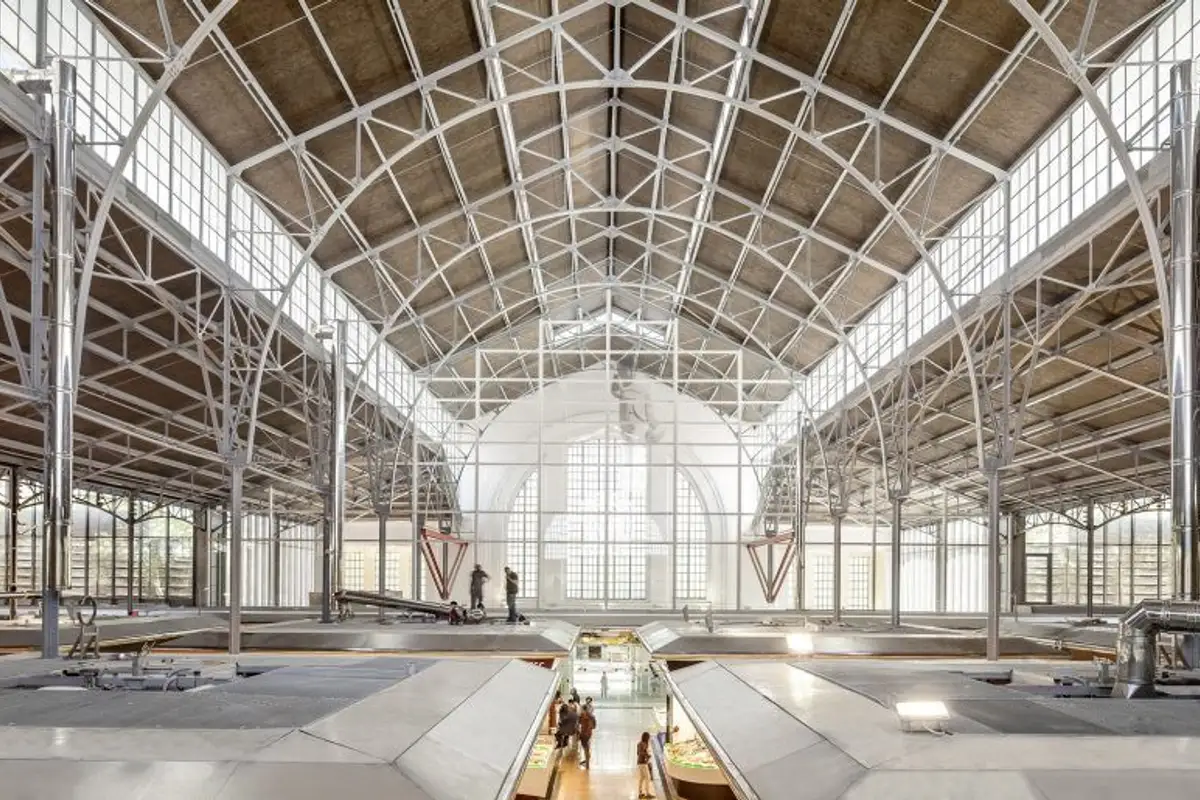
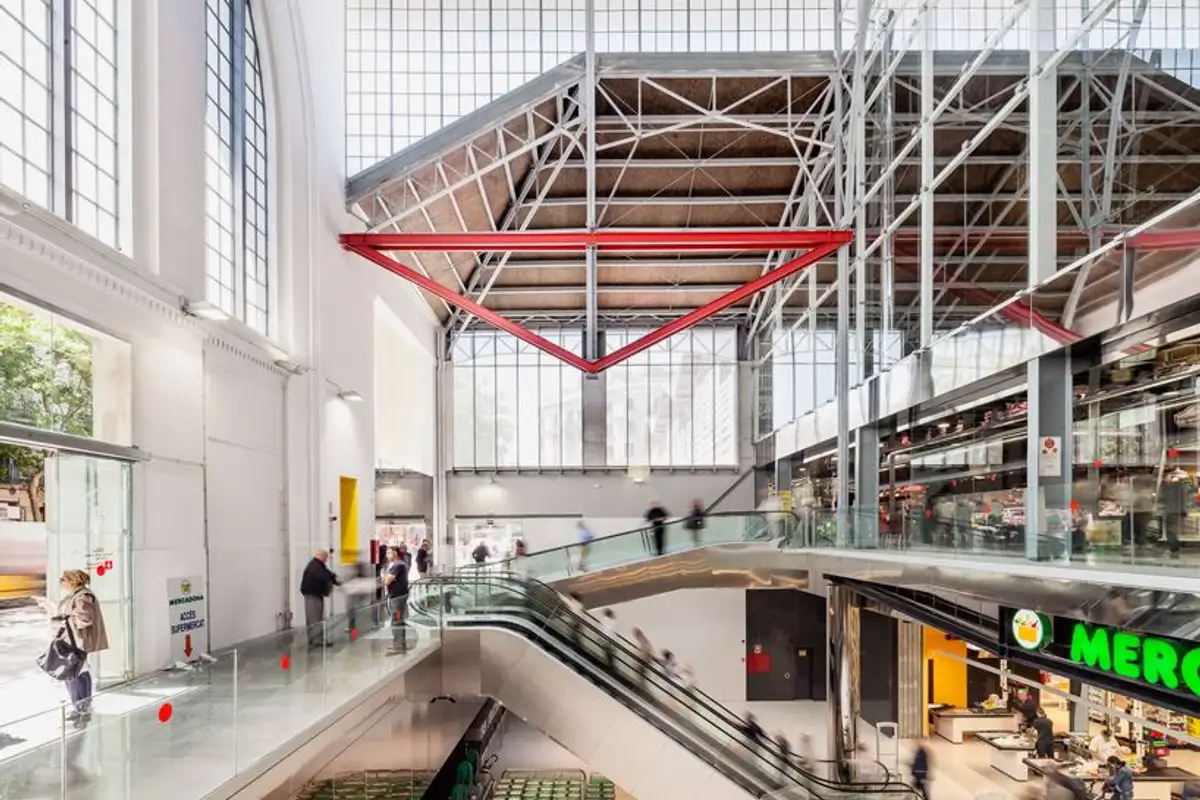
The team at Mateo Arquitectura, led by architect Josep Lluís Mateo, created a post-industrial look for the building. The renovation established a dialogue between the dominant metal structure of the interior and the sunny sky of Barcelona.
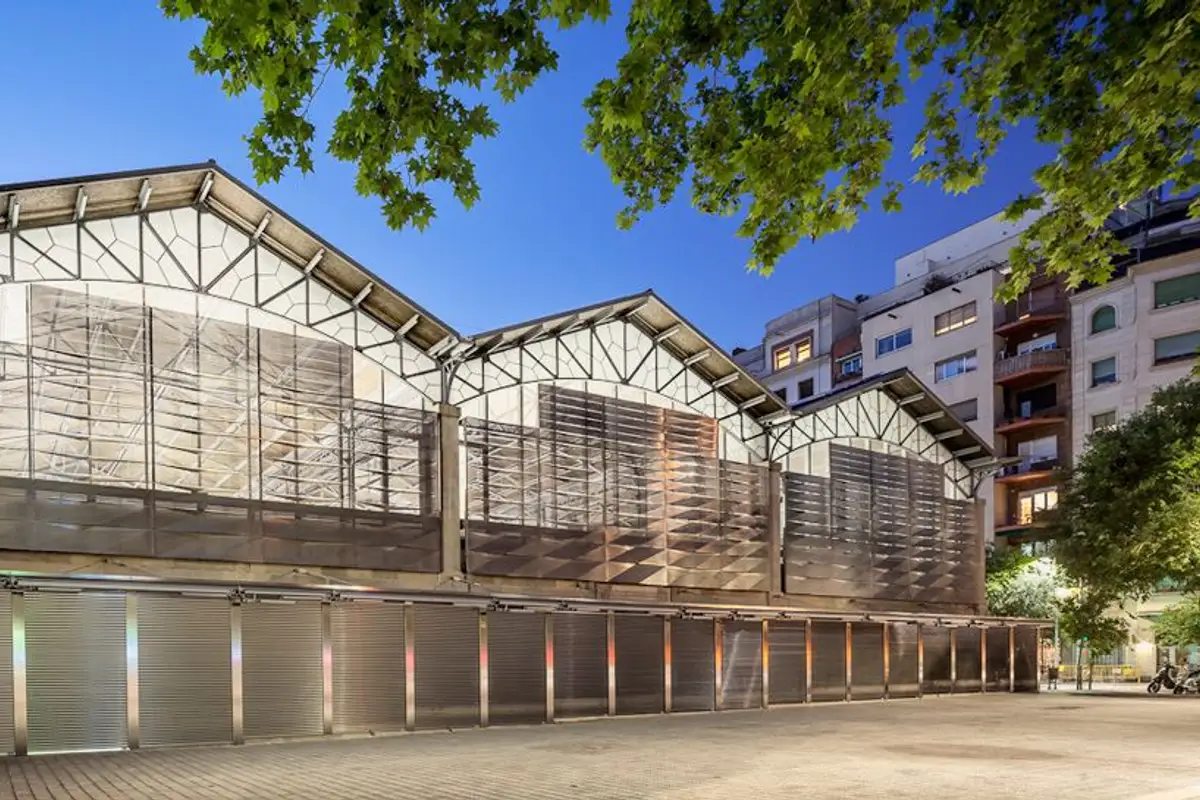
The architectural intervention focused on four main points: preserving the impressive existing structure, improving functionality, restoring the facades and roof, and exploiting the basement space.
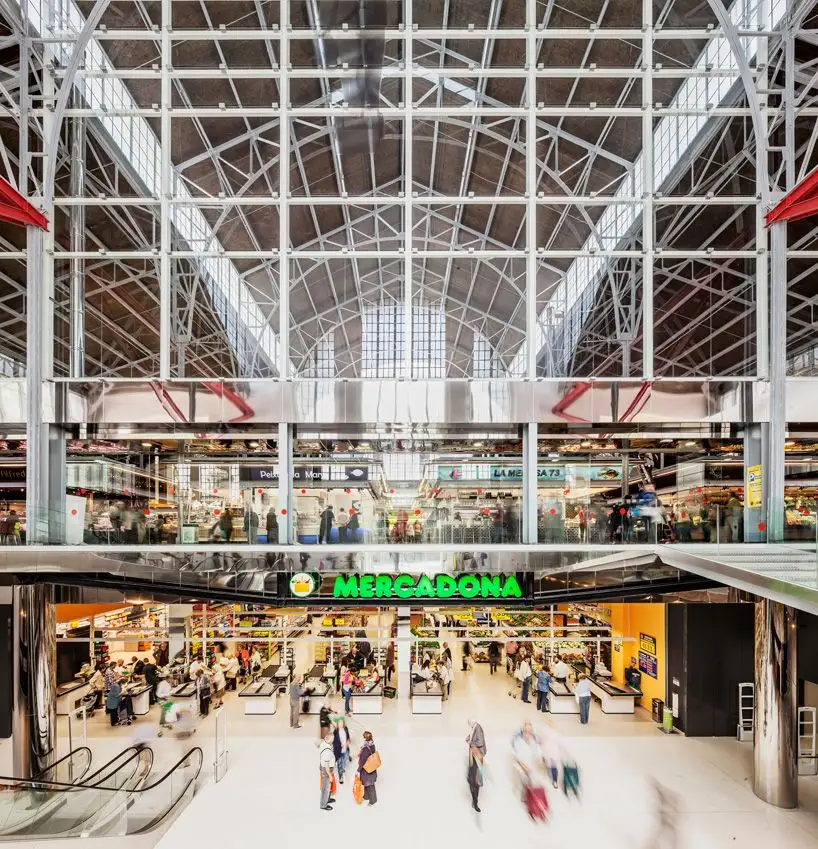
The existing metal structure of the market already compartmentalized the space into three distinct zones, the central zone being higher than the others. The architect opted to preserve this compartmentalization, both because of its charm and the good state of conservation of the metal skeleton.
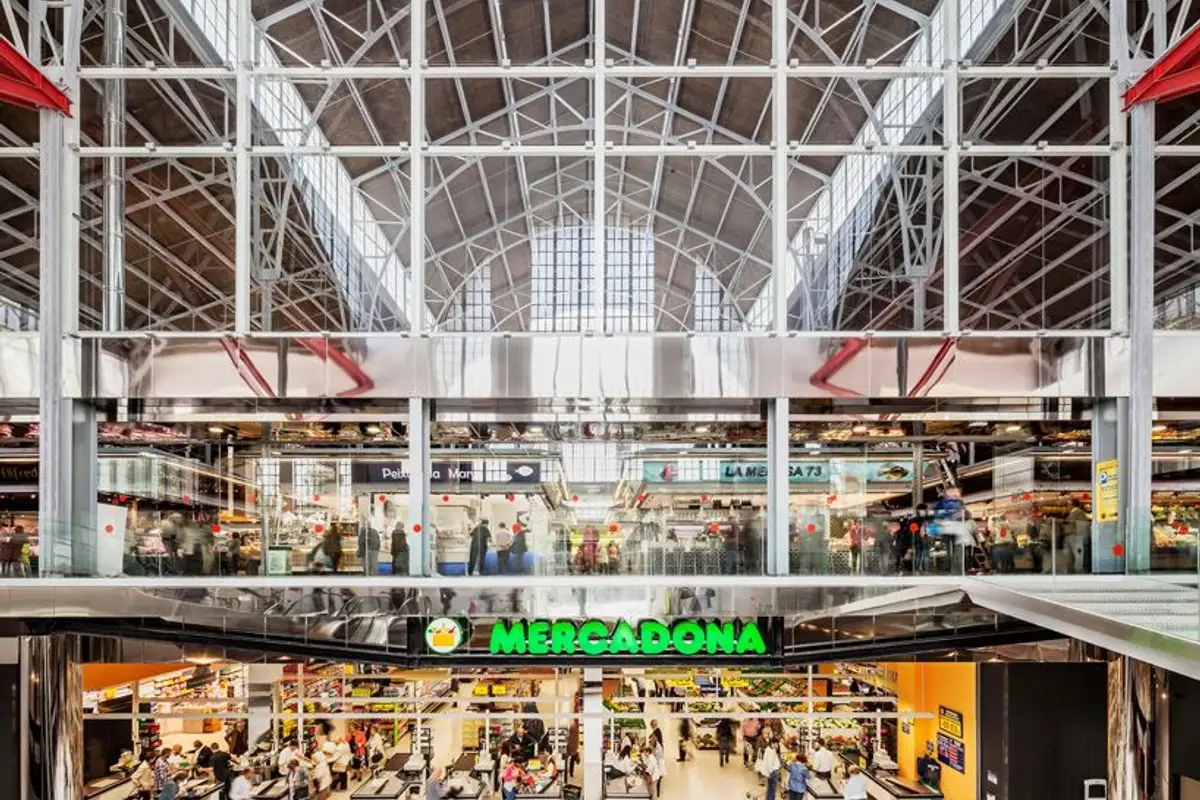
The roof structure was also preserved and repaired, with new spaces added inside to meet contemporary needs: the basement was excavated, creating two floors for ancillary services: logistics, 105 parking spaces, installations, a supermarket, and a recycling area.
A glazed facade was also added to separate the market space itself from the vestibule area. Visitor access was concentrated in a spacious vestibule located on Carrer de Mallorca, which offers a view of the entire market.
The initial volume remained intact, but the adjacent surfaces were modified to improve the use of space, ensure optimal ventilation, maximize natural light, and organize the surrounding urban environment.
The stalls were enlarged to allow for the incorporation of refrigerators and thus facilitate the work of vendors who previously had to frequently travel to the ground floor warehouses before the renovation.
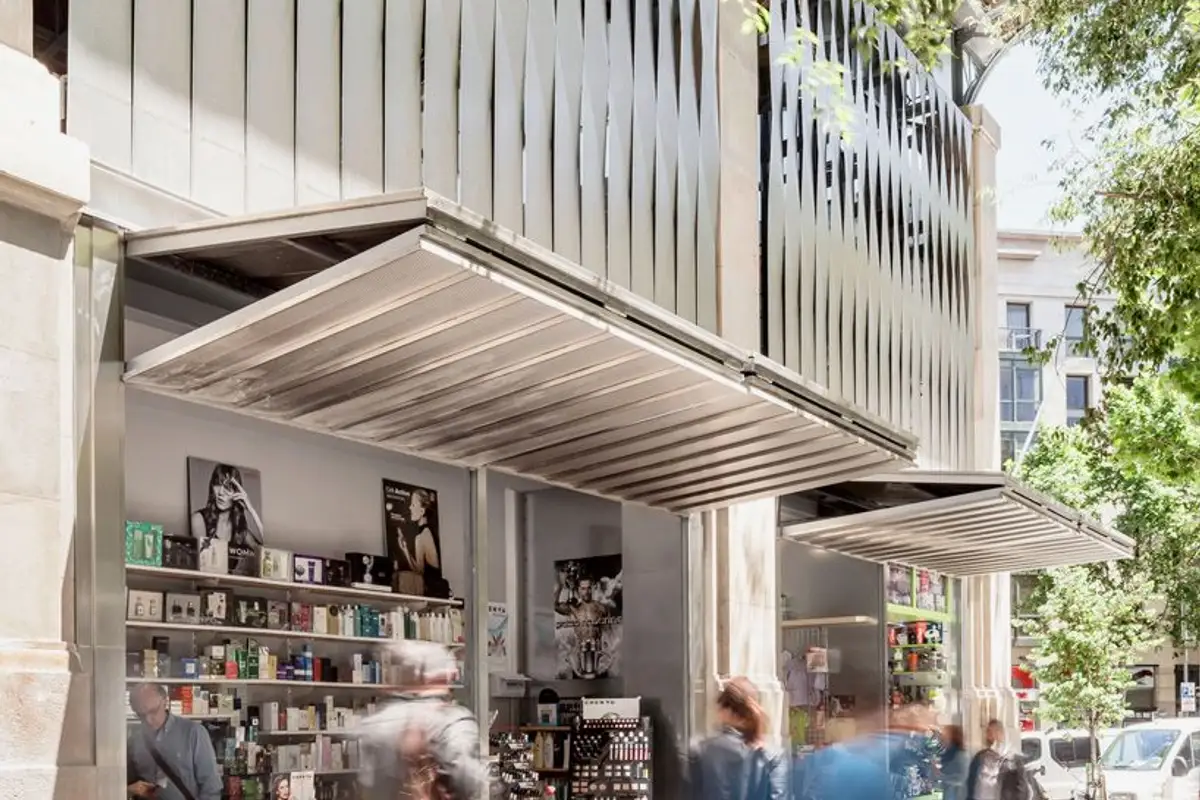
The building's facades were reconfigured to allow natural light to penetrate the interior, controlling harmful solar radiation through perforated elements that regulate the light.
The interior space is now bathed in a soft light.
The market's interior is conceived as a Roman city. Two orthogonal axes (N-S and E-W) form the plan around which the stalls are arranged, each retaining its individuality and specificity.
The building's facades are dynamic, allowing for the integration of stalls and their closure during the night.