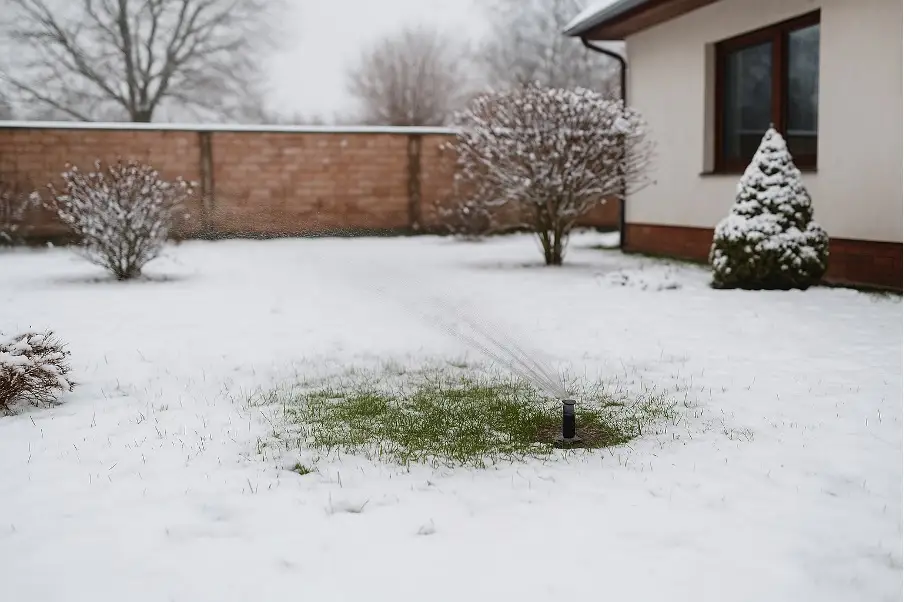
As temperatures drop and autumn comes to an end, plants, lawns, and the entire garden enter a period of dormancy. The same happens with your irrigation system: water is no longer needed at the same rate, and with the first frosts, serious problems can arise if you don't drain the entire system in time.
Many homeowners postpone this step or ignore it altogether. However, the truth is simple: water remaining in pipes, sprinklers, solenoid valves, or pumps can cause cracks, blockages, damage, and high costs come spring. That's why Irigarden specialists recommend preparing your system as early as October-November, before any risk of frost.
Safe methods for draining irrigation systems
Automatic system drainage – helpful but not always sufficient
If you havelawn irrigation systems on irigarden.roequipped with automatic drain valves, all you need to do is:
close the main water supply valve;
open the solenoid valves manually, one by one.
This method can work, but it doesn't guarantee 100% water removal, especially in long circuits, on slopes, or in solenoid valves where small amounts of water may remain.
Draining the system with a compressor – the recommended method
Irigarden recommends this method because it is the safest and most complete. The process involves introducing compressed air into the circuits so that the air pushes all the water out. It seems simple, but there are a few important steps.
How to properly drain an irrigation system – Steps recommended by Irigarden
For professional draining, you will need:
a compressor
a pressure gauge pistol
a spiral hose
an adapter for connecting the pistol to the solenoid valve distributor
The adapter must be made according to how your distributor was designed. If you don't know exactly what you need or want a correctly made adapter, you can ask the Irigarden team for help by phone, email, or chat.
Step 2 – Draining each circuit individually
Before anything else:
close the main valve or unplug the pump if it runs on a well.
Then:
Connect the compressor pistol to the distributor.
Introduce air up to 4 BAR.
Open the first solenoid valve manually.
Let the air circulate until the sprinklers only emit vapor, without water.
This is how you completely drain one zone. Repeat for each circuit.
Step 3 – Draining the pump